


pan
Translingual
[edit]Etymology
[edit]Clipping of English Panjabi, from Punjabi ਪੰਜਾਬੀ (pãjābī), from Classical Persian پنجابی (panjābī).
Symbol
[edit]pan
See also
[edit]English
[edit]
Pronunciation
[edit]Etymology 1
[edit]From Middle English panne, from Old English panne, from Proto-West Germanic *pannā, from Proto-Germanic *pannǭ. Further origin uncertain.
Alois Walde firstly suggests that it might be from Late Latin panna, from Latin patina (“broad, shallow dish, pan, stewpan”), from Ancient Greek πατάνη (patánē, “kind of flat dish”), which is probably from Pre-Greek. But the sound shifting from /patina/ → /patna/ → /panna/ raises questions as -tn- to -nn- is rarely seen in Latin.
The mainstream theory as of now (Friedrich Kluge, Julius Pokorny, Guus Kroonen) suggests that it is from Late Latin panna. But its sparse attestation only in the frontier inscriptions and not widespread in most Romance languages raises doubts among a few scholars (notably Michiel de Vaan), being skeptical about its origin, and open for any interpretations (Oxford English Dictionary).
Vladmir Orel, in his work Albanian Etymological Dictionary, suggests that both Proto-Germanic *pannǭ and Late Latin panna could be from a non-IE Mediterranean substrate word, considering that classical Latin attestations are scarce and distributed in a specific region, and Proto-Germanic loanwords from non-IE substrates often include agricultural terms, seafaring vocabulary, or animal names. Although, this substrate hypothesis is controversial and most scholars remain skeptical about it.
Cognate with West Frisian panne, Saterland Frisian Ponne, Dutch pan, German Low German Panne, Pann, German Pfanne, Danish pande, Swedish panna, Icelandic panna.
Noun
[edit]pan (plural pans or (humorous) pen)
.jpg)
- A wide, flat receptacle used around the house, especially for cooking.
- The contents of such a receptacle.
- A cylindrical receptacle about as tall as it is wide, with one long handle, usually made of metal, used for cooking in the home.
- (Ireland) A deep plastic receptacle, used for washing or food preparation; a basin.
- A wide receptacle in which gold grains are separated from gravel by washing the contents with water.
- (geography, geology) An expanse of level land located in a depression, especially
- A pond or lake, considered as the expanse of land upon which the water sits.
- (especially South Africa) A dry lake or playa, especially a salt flat.
- (South Africa) Synonym of playa lake: a temporary pond or lake in a playa.
- Ellipsis of salt pan: a flat artificial pond used for collecting minerals from evaporated water.
- (geology) Ellipsis of hardpan: a hard substrate such as is formed in pans.
- (geology, obsolete South Africa) Synonym of pipe: a channel for lava within a volcano; the cylindrical remains of such channels.
- Strong adverse criticism. quotations ▼
- (chiefly Ireland)[1] A loaf of bread; a pan-loaf. [from 1970s][1]
- (obsolete) The chamber pot in a close stool; (now) the base of a toilet, consisting of the bowl and its support.
- A bedpan. quotations ▼
- (slang) A human face, a mug. quotations ▼
- (roofing) The bottom flat part of a roofing panel that is between the ribs of the panel.
- A closed vessel for boiling or evaporating as part of manufacture; a vacuum pan.
- (firearms) The part of a matchlock, flintlock, or wheellock firearm that holds the priming.
synonyms ▲hypernyms, holonym, comeronym ▼quotations ▼
- Synonyms: flash pan, priming pan
- flash in the pan
- The skull, considered as a vessel containing the brain; the brainpan.
- (figurative) The brain, seen as one's intellect. quotations ▼
- (carpentry) A recess, or bed, for the leaf of a hinge.
- (music) Ellipsis of steelpan. quotations ▼
Usage notes
[edit]Whether a saucepan is a type of pot, a type of pan, or neither, depends on the speaker's taxonomy of cookware. There are three competing ways of drawing distinctions, all widespread: (1) pots and pans are distinguished by their depth and use, in which case a saucepan is actually a pot despite its name, (2) pots and pans are distinguished by type and/or number of handles, in which case a saucepan is in fact a pan, and (3) both vessel depth and handles are distinguishing features, in which case saucepans form a separate third class that is sibling to pots and pans. Scheme (1) is most widespread in the US and US-influenced parts of Canada, whereas (2) is more typical of the UK and Commonwealth countries; (3) does not split as cleanly along these regional lines.
Due to their typical shallowness, sauciers may be considered pans, not pots, even by those who label saucepans as pots.
Synonyms
[edit]- (flat receptacle): frying pan, skillet, cookie sheet, tin
- (tall receptacle): saucepan
- (chamber pot): See Thesaurus:chamber pot
- (toilet): See Thesaurus:toilet
Hypernyms
[edit]- (expanse of flat land in a depression): salt pan, salt flat, alkali pan
Hyponyms
[edit]- (expanse of flat land in a depression): flat
Derived terms
[edit]- ashpan
- ash pan
- bakepan
- baking pan
- bedpan
- best thing since sliced pan
- brainpan
- bratt pan
- bread pan
- cakepan
- calandria pan
- cat in the pan
- chef's pan
- chip pan
- claypan
- deadpan
- dishpan
- down the pan
- drain pan
- dripping pan
- dustpan
- firepan
- flash in the pan
- flash pan
- floorpan
- footpan
- frying pan
- frypan
- go down the pan
- hardpan
- harnpan
- headpan
- hotel pan
- jelly roll pan
- kneepan
- loaf pan
- maslin pan
- milk pan
- milkpan
- moo goo gai pan
- moorpan
- muffin pan
- oil pan
- paella pan
- pan bread
- panbroil
- pancake
- pan drop
- panfish
- pan flute
- pan former
- pan-fry
- panful
- pan haggerty
- panhandle
- Panhead
- panhouse
- panlike
- pan-loaf
- panman
- pan man
- pan-nationalism
- pannikin
- pannist
- panphobic
- pan pipe
- pan pipes
- pan pizza
- pan pot
- pansmith
- panspot
- pantile
- panware
- panwoman
- panyard
- pattypan
- pie pan
- pizza pan
- ploughpan
- plowpan
- preserving pan
- priming pan
- Pullman pan
- roasting pan
- salt pan
- saucepan
- saute pan
- scalepan
- sheet pan
- skidpan
- skull-pan
- skypan
- sliced pan
- soap pan
- solution pan
- steelpan
- stewpan
- swing pan
- track pan
- warming pan
- washpan
- weathering pan
- workpan
Descendants
[edit]Translations
[edit]- The translations below need to be checked and inserted above into the appropriate translation tables. See instructions at Wiktionary:Entry layout § Translations.
Verb
[edit]
pan (third-person singular simple present pans, present participle panning, simple past and past participle panned)
- (transitive) To wash in a pan (of earth, sand etc. when searching for gold).
coordinate term ▲quotations ▼
- Coordinate term: sluice
- (transitive) To disparage; to belittle; to put down; to harshly criticize, especially a work (book, movie, etc.)
synonym ▲quotations ▼
- Synonyms: see Thesaurus:criticize
- (intransitive, with out, to pan out) To turn out well; to be successful.
- (transitive, informal, of a contest) To beat one's opposition convincingly.
Derived terms
[edit]Translations
[edit]See also
[edit]- lavatory (“place where gold is panned”) (obsolete)
Etymology 2
[edit]Verb
[edit]pan (third-person singular simple present pans, present participle panning, simple past and past participle panned)
- (intransitive) (of a camera) To turn horizontally. coordinate terms ▲quotations ▼
- (photography, intransitive) To move the camera lens angle while continuing to expose the film, enabling a contiguous view and enrichment of context. In still-photography large-group portraits the film usually remains on a horizontal fixed plane as the lens and/or the film holder moves to expose the film laterally. The resulting image may extend a short distance laterally or as great as 360° from the point where the film first began to be exposed. (Can we verify(+) this sense?) quotations ▼
- (imaging, intransitive) To shift an image relative to the display window without changing the viewing scale. (Can we verify(+) this sense?)
- (sound engineering, transitive) To spread a sound signal into a new stereo or multichannel sound field, typically giving the impression that it is moving across the sound stage.
- (sound engineering, intransitive) (of a sound) To move in the multichannel sound field.
Derived terms
[edit]Translations
[edit]See also
[edit]Noun
[edit]pan (plural pans)
- A sequence in a film in which the camera pans over an area. quotations ▼
Derived terms
[edit]Etymology 3
[edit]Noun
[edit]pan (uncountable)
- Alternative form of paan.
Etymology 4
[edit]Compare French pan (“skirt, lappet”), Latin pannus (“a cloth, rag”). Doublet of pagne, pane, and pannus.
Verb
[edit]pan (third-person singular simple present pans, present participle panning, simple past and past participle panned)
- To join or fit together; to unite. quotations ▼
Etymology 5
[edit]From Old English. See pane.
Noun
[edit]pan (plural pans)
- A part; a portion.
- (fortifications) The distance comprised between the angle of the epaule and the flanked angle.
- A leaf of gold or silver.
Etymology 6
[edit]Clipping of pansexual or panromantic.
Adjective
[edit]pan (not comparable)
Coordinate terms
[edit]Etymology 7
[edit]Clipping of pantograph.
Noun
[edit]pan (plural pans)
- (rail transport, informal) Clipping of pantograph.
Synonyms
[edit]- (pantograph): panto
See also
[edit]References
[edit]- ↑ Jump up to: 1.0 1.1 “pan, n.1”, in OED Online
 , Oxford: Oxford University Press, launched 2000.

Anagrams
[edit]Afrikaans
[edit]Etymology
[edit]From Dutch pan, from Middle Dutch panne, from Old Dutch *panna, from Latin panna, contraction of patina. The sense “lake, pond” is likely borrowed from or influenced by English pan.
Pronunciation
[edit]Noun
[edit]pan (plural panne)
Synonyms
[edit]- (lake): meer
Aragonese
[edit]Etymology
[edit]From Latin pānis, pānem. Cognate with Galician pan, Portuguese pão.
Noun
[edit]pan m
References
[edit]- Bal Palazios, Santiago (2002), “pan”, in Dizionario breu de a luenga aragonesa, Zaragoza, →ISBN
Asturian
[edit]Etymology
[edit]From Latin pānis, pānem.
Noun
[edit]pan m (plural panes)
Atong (India)
[edit]Pronunciation
[edit]Etymology 1
[edit]Noun
[edit]pan (Bengali script পান)
Etymology 2
[edit]Classifier
[edit]pan- (Bengali script পান)
- used with apparatus, appliances, mechanical and electrical things, cars, bikes, bicycles, mortars and umbrellas
References
[edit]- van Breugel, Seino. 2015. Atong-English dictionary, second edition. Available online: https://www.academia.edu/487044/Atong_English_Dictionary.
Bambara
[edit]Pronunciation
[edit]Verb
[edit]pan
References
[edit]- 2007. The UCLA Phonetics Lab Archive. Los Angeles, CA: UCLA Department of Linguistics.
Cebuano
[edit]Etymology
[edit]Pronunciation
[edit]Noun
[edit]pan (Badlit spelling ᜉᜈ᜔)
Related terms
[edit]Central Bikol
[edit]Etymology
[edit]Pronunciation
[edit]Noun
[edit]pan (Basahan spelling ᜉᜈ᜔)
Related terms
[edit]Chavacano
[edit]Etymology
[edit]Inherited from Spanish pan (“bread”).
Pronunciation
[edit]Noun
[edit]pan
Chuukese
[edit]Noun
[edit]pan
- branch (with its leaves)
Cornish
[edit]Etymology
[edit]From Old Cornish pan, from Proto-Celtic *kʷani, from Proto-Indo-European *kʷos, *kʷis. Cognate with Breton pa, Scottish Gaelic and Manx cuin, and Welsh pan.
Adjective
[edit]pan
Conjunction
[edit]pan (triggers soft mutation)
Derived terms
[edit]Mutation
[edit]| radical | soft | aspirate | hard | mixed |
|---|---|---|---|---|
| pan | ban | fan | unchanged | unchanged |
Note: Certain mutated forms of some words can never occur in standard Cornish.
All possible mutated forms are displayed for convenience.
Cypriot Arabic
[edit]Etymology
[edit]Verb
[edit]pan I (present pipán) (intransitive)
References
[edit]- Borg, Alexander (2004), A Comparative Glossary of Cypriot Maronite Arabic (Arabic–English) (Handbook of Oriental Studies; I.70), Leiden and Boston: Brill, page 171
Czech
[edit]Pronunciation
[edit]- IPA(key): [ˈpan]
Audio: Duration: 1 second. (file) Audio: Duration: 1 second. (file) - Hyphenation: pan
- Homophone: Pan
- Rhymes: -an
Noun
[edit]pan m anim
- alternative form of pán
Usage notes
[edit]- This is the form used when followed by a name, title, occupation etc.
- pan Novák ― Mr Novák
- Pane předsedo, dámy a pánové... ― Mr Chairman, ladies and gentlemen...
- Vítejte, pane rytíři. ― Welcome, Sir Knight.
- Kdy přijde pan doktor, sestřičko? ― When will the doctor come, nurse?
Declension
[edit]Further reading
[edit]- “pan”, in Kartotéka Novočeského lexikálního archivu (in Czech)
- “pan”, in Slovník spisovného jazyka českého (in Czech), 1960–1971, 1989
Dutch
[edit]Etymology
[edit]From Middle Dutch panne, from Old Dutch *panna, from Proto-West Germanic *pannā, from Proto-Germanic *pannǭ (“pan”).
Pronunciation
[edit]Noun
[edit]pan f (plural pannen, diminutive pannetje n)
- pan, especially for cooking
- (Netherlands) cooking pot
synonym ▲
- Synonym: pot
- (uncommon) roof tile
synonym ▲
- Synonym: dakpan
Derived terms
[edit]Descendants
[edit]- Afrikaans: pan
- Jersey Dutch: pān
- Negerhollands: pan
- → Caribbean Javanese: pan
- → Indonesian: panci (from the diminutive)
- → Javanese: ꦥꦚ꧀ꦕꦶ (panci), ꦮꦚ꧀ꦕꦶ (wanci) (from the diminutive)
- → Munsee: pán
- → Papiamentu: panchi, pannetsji, pannetsje (from the diminutive)
- → Sranan Tongo: pan
- → Saramaccan: pánu
Anagrams
[edit]Emilian
[edit]Etymology
[edit]Pronunciation
[edit]Noun
[edit]pan m (plural pan)
References
[edit]Lepri, Luigi; Vitali, Daniele (2002), “pan”, in Dizionario Bolognese-Italiano, Italiano-Bolognese. Dizionèri Bulgnaiṡ-Itagliàn, Itagliàn-Bulgnaiṡ, 2nd edition, Bologna: Pendragon, →ISBN
Franco-Provençal
[edit]Etymology
[edit]Noun
[edit]pan m (plural pans) (ORB, broad)
References
[edit]- pain in DicoFranPro: Dictionnaire Français/Francoprovençal – on dicofranpro.llm.umontreal.ca
- pan in Lo trèsor Arpitan – on arpitan.eu
French
[edit]Pronunciation
[edit]- IPA(key): /pɑ̃/
Audio: Duration: 1 second. (file) Audio (France (Vosges)): Duration: 1 second. (file) Audio (France): Duration: 1 second. (file) Audio (France (Grenoble)): Duration: 1 second. (file) Audio (France (Agen)): Duration: 1 second. (file) - Homophones: pans, paon, paons, pend, pends
Etymology 1
[edit]Inherited from Old French pan, from Latin pannus. Doublet of pagne.
Noun
[edit]pan m (plural pans)
Etymology 2
[edit]Onomatopoeic.
Interjection
[edit]pan
Further reading
[edit]- “pan”, in Trésor de la langue française informatisé [Digitized Treasury of the French Language], 2012
Anagrams
[edit]Friulian
[edit]Etymology
[edit]From Latin pānis, pānem.
Noun
[edit]pan m (plural pans)
Galician
[edit].jpg)
Alternative forms
[edit]Etymology
[edit]From Old Galician-Portuguese pan, from Latin pānis, pānem. Cognate with Portuguese pão.
Pronunciation
[edit]Noun
[edit]pan m (plural pans)
- (uncountable) bread quotations ▼
- a piece of bread
synonym ▲
- Synonym: peza
- grain, corn, cereal quotations ▼
- (by extension) food
synonym ▲
- Synonym: comida
Related terms
[edit]References
[edit]- Seoane, Ernesto Xosé González; Granja, María Álvarez de la; Agrelo, Ana Isabel Boullón (2006–2022), “pan”, in Dicionario de Dicionarios do galego medieval [Dictionary of dictionaries of Medieval Galician] (in Galician), Santiago de Compostela: Instituto da Lingua Galega
- “pan” in Xavier Varela Barreiro & Xavier Gómez Guinovart: Corpus Xelmírez - Corpus lingüístico da Galicia medieval. SLI / Grupo TALG / ILG, 2006-2016.
- Antón Luís Santamarina Fernández, editor (2006–2013), “pan”, in Dicionario de Dicionarios da lingua galega [Dictionary of Dictionaries of the Galician language] (in Galician), Santiago de Compostela: Instituto da Lingua Galega
- Antón Luís Santamarina Fernández, Ernesto Xosé González Seoane, María Álvarez de la Granja, editors (2003–2018), “pan”, in Tesouro informatizado da lingua galega (in Galician), Santiago de Compostela: Instituto da Lingua Galega
- Rosario Álvarez Blanco, editor (2014–2024), “pan”, in Tesouro do léxico patrimonial galego e portugués (in Galician), Santiago de Compostela: Instituto da Lingua Galega, →ISSN
Istriot
[edit]Etymology
[edit]From Latin pānis, pānem.
Noun
[edit]pan m
Japanese
[edit]Romanization
[edit]pan
Ladino
[edit]Etymology
[edit]From Old Spanish pan (“bread”).
Noun
[edit]pan m (Hebrew spelling פאן)[1]
References
[edit]Leonese
[edit]Etymology
[edit]From Latin pānis, pānem.
Noun
[edit]pan m
References
[edit]- “pan”, in Diccionario Castellano-Leonés / Leonés-Castellano [Spanish-Leonese / Leonese-Spanish Dictionary] (in Spanish), La Asociación L'Alderique, 2012–2026
Ligurian
[edit]Etymology
[edit]From Latin pānis, pānem.
Pronunciation
[edit]Noun
[edit]pan m (invariable)
Livonian
[edit]Etymology
[edit]Borrowed from Middle Low German panne.
Pronunciation
[edit]Noun
[edit]pan
- pan (vessel for frying food)
Declension
[edit]| singular (ikšlu’g) | plural (pǟgiņlu’g) | |
|---|---|---|
| nominative (nominatīv) | pan | pǭnõd |
| genitive (genitīv) | pan | pǭnõd |
| partitive (partitīv) | pannõ | pǭnidi |
| dative (datīv) | pannõn | pǭnõdõn |
| instrumental (instrumentāl) | pannõks | pǭnõdõks |
| illative (illatīv) | pannõ | pǭniž |
| inessive (inesīv) | pansõ | pǭnis |
| elative (elatīv) | panstõ | pǭnist |
References
[edit]- Tiit-Rein Viitso; Valts Ernštreits (2012–2013), “pan”, in Līvõkīel-ēstikīel-lețkīel sõnārōntõz [Livonian-Estonian-Latvian Dictionary][6] (in Estonian and Latvian), Tartu, Rīga: Tartu Ülikool, Latviešu valodas aģentūra
Lombard
[edit]Etymology
[edit]From Latin pānis, pānem.
Pronunciation
[edit]Noun
[edit]pan m (invariable)
Maguindanao
[edit]Etymology
[edit]Pronunciation
[edit]Noun
[edit]pan
Malay
[edit]Noun
[edit]pan
Mandarin
[edit]Romanization
[edit]pan
- nonstandard spelling of pān
- nonstandard spelling of pán
- nonstandard spelling of pǎn
- nonstandard spelling of pàn
Usage notes
[edit]- Transcriptions of Mandarin into the Latin script often do not distinguish between the critical tonal differences employed in the Mandarin language, using words such as this one without indication of tone.
Middle English
[edit]Etymology 1
[edit]Noun
[edit]pan
- alternative form of panne (“pan”)
Etymology 2
[edit]Noun
[edit]pan
- alternative form of pane (“fabric, fur; a portion”)
Occitan
[edit]Etymology
[edit]From Old Occitan pan, from Latin pānis, pānem.
Pronunciation
[edit]Noun
[edit]pan m (plural pans)
Derived terms
[edit]Related terms
[edit]Old French
[edit]Etymology
[edit]Noun
[edit]pan oblique singular, m (oblique plural pans, nominative singular pans, nominative plural pan)
- bit; piece; part
- (specifically) a piece of armor
- Et de l'hauberc li runpirent les pans
- They broke apart parts of his armor
- Et de l'hauberc li runpirent les pans
Derived terms
[edit]Descendants
[edit]References
[edit]- Frédéric Godefroy (1880–1902), “pan”, in Dictionnaire de l’ancienne langue française et de tous ses dialectes du IXe au XVe siècle […], Paris: F[riedrich] Vieweg; Émile Bouillon, →OCLC.
Old Galician-Portuguese
[edit]Alternative forms
[edit]Etymology
[edit]Inherited from Latin pānem. Cognate with Old Spanish pan.
Noun
[edit]pan m (plural pães)
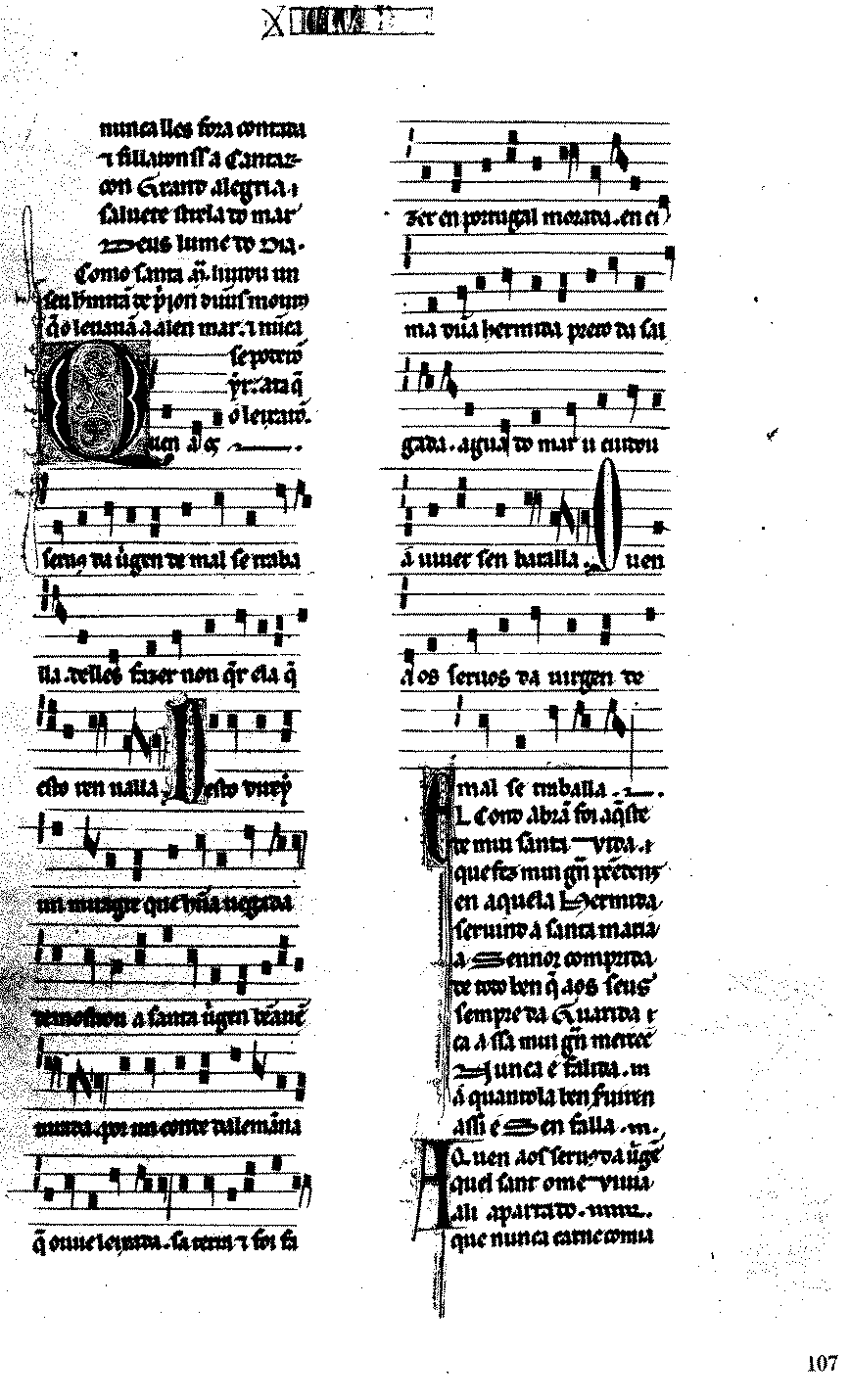
Descendants
[edit]- Fala: pan
- Galician: pan
- Portuguese: pão
- Guinea-Bissau Creole: pon
- Kabuverdianu: pom
- Korlai Creole Portuguese: pãw
- Kristang: pang
- Papiamentu: pan
- → Bengali: পাঁউরুটি (pãuruṭi)
- → Burmese: ပေါင်မုန့် (paungmun.) (compounded with မုန့် (mun., “snack”))
- → Gujarati: પાઉં (pāũ), પાંઉ (pā̃u)
- ⇒ Hindi: पावरोटी (pāvroṭī)
- → Japanese: パン (pan)
- → Kadiwéu: paon
- → Korean: 빵 (ppang)
- → Makalero: paun (“bread”)
- → Malay: paung
- → Marathi: पाव (pāv)
- → Nheengatu: pãu
- → Sinhalese: පාන් (pān)
- → Tamil: பாண் (pāṇ)
- → Tetum: paun
- → Thai: ปัง (bpang)
References
[edit]- Ferreiro, Manuel (2014–2026), “pan”, in Universo Cantigas: edición crítica da poesía medieval galego-portuguesa [Universo Cantigas: critical edition of Galician-Portuguese medieval poetry] (in Galician), A Coruña: University of A Coruña, →ISSN
- Seoane, Ernesto Xosé González; Granja, María Álvarez de la; Agrelo, Ana Isabel Boullón (2006–2022), “pan”, in Dicionario de Dicionarios do galego medieval [Dictionary of dictionaries of Medieval Galician] (in Galician), Santiago de Compostela: Instituto da Lingua Galega
- Barreiro, Xavier Varela; Guinovart, Xavier Gómez (2006–2018), “pan”, in Corpus Xelmírez: corpus lingüístico da Galicia medieval [Corpus Xelmírez: linguistic corpus of Medieval Galicia] (in Galician), Santiago de Compostela: Instituto da Lingua Galega
Old Polish
[edit]Etymology
[edit]Inherited from Proto-Slavic *gъpanъ. First attested in the 13th century. Displaced gospodzin.
Pronunciation
[edit]Noun
[edit]pan m pers (female equivalent pani or panna)
- (attested in Greater Poland) lord (master of a feudal manor) quotations ▼
- ducal or princely official quotations ▼
- (more specifically) beaver official (ducal lord or acting official in charge of beavers, the mammal)
synonym ▲quotations ▼
- Synonym: bobrownik
- (attested in Lesser Poland, Silesia) dignitary quotations ▼
- dignitary of property quotations ▼
- (military) cavalry officer quotations ▼
- (attested in Greater Poland) nobleman quotations ▼
- (in the plural, law, attested in Greater Poland) court officials quotations ▼
- (attested in Greater Poland, Masovia) lord (one possessing similar mastery over others; any feudal superior generally; any nobleman or aristocrat; any chief, prince, or sovereign ruler) quotations ▼
- (attested in Greater Poland, Masovia) title of respect or formality often used with nobility or officials quotations ▼
- (attested in Greater Poland) lord, master (male head of a household, a father or husband) quotations ▼
- husband (male member of a marriage)
synonym ▲quotations ▼
- Synonym: mąż
- (attested in Lesser Poland) Lord (title of God) quotations ▼
Derived terms
[edit]Descendants
[edit]References
[edit]- B. Sieradzka-Baziur, Ewa Deptuchowa, Joanna Duska, Mariusz Frodyma, Beata Hejmo, Dorota Janeczko, Katarzyna Jasińska, Krystyna Kajtoch, Joanna Kozioł, Marian Kucała, Dorota Mika, Gabriela Niemiec, Urszula Poprawska, Elżbieta Supranowicz, Ludwika Szelachowska-Winiarzowa, Zofia Wanicowa, Piotr Szpor, Bartłomiej Borek, editors (2011–2015), “pan”, in Słownik pojęciowy języka staropolskiego [Conceptual Dictionary of Old Polish] (in Polish), Kraków: IJP PAN, →ISBN
Old Spanish
[edit]Etymology
[edit]Noun
[edit]pan m (plural panes)
Descendants
[edit]Papiamentu
[edit]
Etymology
[edit]Noun
[edit]pan
Piedmontese
[edit]Etymology
[edit]From Latin pānis, pānem.
Pronunciation
[edit]Noun
[edit]pan m
Pochutec
[edit]Etymology
[edit]Noun
[edit]pan
References
[edit]- Boas, Franz (July 1917), “El Dialecto mexicano de Pochutla, Oaxaca”, in International Journal of American Linguistics (in Spanish), volume 1, number 1, , →JSTOR, pages 9–44
Polish
[edit]Etymology
[edit]Inherited from Old Polish pan.
Pronunciation
[edit]Audio 1: Duration: 1 second. (file) Audio 2: Duration: 1 second. (file) Audio 3: Duration: 1 second. (file) - Rhymes: -an
- Syllabification: pan
- Homophones: Pan, PAN, pan-
Noun
[edit]pan m pers (female equivalent pani, diminutive panek, augmentative panisko, abbreviation p. or pp.)
- gentleman, man (specific male person, especially one unknown to the speaker)
- Jakiś pan mi pomógł. ― A certain gentleman helped me.
- master, lord (person with power over something)
- sir (rich, well-presenting person)
synonym ▲
- Synonym: panisko
- lord (master of a house)
- teacher
synonym ▲
- Synonym: nauczyciel
- master (owner of a household pet)
- Mr, mister (title before a last name)
- (Middle Polish) husband (male member of a marriage)
synonym ▲
- Synonym: mąż
- (Middle Polish) protector
synonym ▲
- Synonym: protektor
- (Middle Polish) owner
synonym ▲
- Synonym: właściciel
- (Chełmno) father
synonym ▲
- Synonym: ojciec
Declension
[edit]Derived terms
[edit]- być za pan brat
- panoszyć impf
- panować impf
Descendants
[edit]Pronoun
[edit]pan m (feminine pani)
- you polite second person m-personal nominative, it takes verbs as third-person sg form coordinate terms ▲
Declension
[edit]See also
[edit]Trivia
[edit]According to Słownik frekwencyjny polszczyzny współczesnej (1990), pan is one of the most used words in Polish, appearing 7 times in scientific texts, 10 times in news, 12 times in essays, 373 times in fiction, and 1417 times in plays, each out of a corpus of 100,000 words, totaling 1819 times, making it the 22nd most common word in a corpus of 500,000 words.[1]
References
[edit]Further reading
[edit]- pan in Wielki słownik języka polskiego, Instytut Języka Polskiego PAN
- pan in Polish dictionaries at PWN
- Maria Renata Mayenowa; Stanisław Rospond; Witold Taszycki; Stefan Hrabec; Władysław Kuraszkiewicz (2010-2023), “pan”, in Słownik Polszczyzny XVI Wieku [A Dictionary of 16th Century Polish]
- “PAN”, in Elektroniczny Słownik Języka Polskiego XVII i XVIII Wieku [Electronic Dictionary of the Polish Language of the XVII and XVIII Century], 19.11.2009
- Samuel Bogumił Linde (1807–1814), “pan”, in Słownik języka polskiego
- Aleksander Zdanowicz (1861), “pan”, in Słownik języka polskiego, Wilno 1861
- A. Kryński, W. Niedźwiedzki, editors (1908), “pan”, in Słownik języka polskiego (in Polish), volume 4, Warsaw, page 30
- pan in Narodowy Fotokorpus Języka Polskiego
- Gustaw Pobłocki (1887), “pan”, in Słownik kaszubski z dodatkiem idyotyzmów chełmińskich i kociewskich (in Polish), 2 edition, Chełmno, page 137
- Stanisław Ciszewski (1916), “pan”, in “Przyczynek do słownika gwary wielkopolskiej”, in Prace Filologiczne[20] (in Polish), volume 8, z. 1, Warsaw: skł. gł. w Księgarni E. Wende i Ska, page 96
Romansh
[edit]Alternative forms
[edit]Etymology
[edit]From Latin pānis, pānem.
Noun
[edit]pan m (plural pans)
Scots
[edit]Verb
[edit]pan (third-person singular simple present pans, present participle pannin, simple past and past participle panned)
- (slang) break, smash (particularly of windows)
- Eh'm gonnae pan yer windaes in! ― I'm going to smash your windows!
Southwestern Dinka
[edit]Noun
[edit]pan
References
[edit]- Dinka-English Dictionary[21], 2005
Spanish
[edit]
Etymology
[edit]Inherited from Old Spanish pan, from Latin pānem, perhaps from Proto-Indo-European *peh₂- (“to feed, to graze”). Compare Catalan pa, French pain, Galician pan, Italian pane, Occitan pan, Portuguese pão, and Romanian pâine. Cognate with English company and pantry.
Pronunciation
[edit]Noun
[edit]pan m (plural panes)
- bread (food made by baking cereal dough)
quotations ▼
- Para mi desayuno, tomo pan y leche.
- For my breakfast, I have bread and milk.
- bun (such as the kind used on a hamburger or hot dog)
- (figurative) money, dough
- (figurative) work, job
Hyponyms
[edit]- pan ácimo
- pan bimbo
- pan blanco (“white bread”)
- pan de especias
- pan de jengibre
- pan de molde
- pan de pita
- pan de sal
- pan dulce
- pan flauta
- pan francés
- pan integral (“whole wheat bread, wholemeal bread”)
- pan lactal
- pan mataniños
- pan rebanado
- pan tostado
- pan tumaca
Derived terms
[edit]- a buen hambre no hay pan duro
- a falta de pan, buenas son tortas
- a mucha hambre, no hay pan duro
- a pan y agua
- apanar
- árbol de pan (“breadfruit tree”)
- árbol del pan
- barra de pan
- buen pan
- contigo, pan y cebolla
- dame pan y llámame tonto
- Dios da pan a quien no tiene dientes
- el pan nuestro de cada día
- empanar
- empanizar
- flauta de pan
- fruta de pan
- fruto del árbol del pan
- ganarse el pan (“to make or earn a living, to bring home the bacon”)
- hacerse el de los panes
- llamar al pan, pan, y al vino, vino
- pan comido
- pan con pan, comida de tontos
- pan de azúcar
- pan de cada día
- pan de caja (“sliced bread”)
- pan de carne (“meatloaf”) (River Plate)
- pan de Dios
- pan de indio
- pan de molde
- pan de oro
- pan de puerco
- pan de ranas
- pan duro (“stale bread”)
- pan integral
- pan molido (“breadcrumbs”) (Mexico, Peru)
- pan para hoy, hambre para mañana
- pan rallado (“breadcrumbs”)
- panadería
- pancito
- panecillo
- panecito
- panificador
- panificadora
- pedazo de pan
Related terms
[edit]Descendants
[edit]Further reading
[edit]- “pan”, in Diccionario de la lengua española [Dictionary of the Spanish Language] (in Spanish), online version 23.8.1, Royal Spanish Academy [Spanish: Real Academia Española], 15 December 2025
Unami
[edit]Etymology
[edit]By surface analysis, pa (“to be coming”) + -n (subordinative suffix).
Verb
[edit]pan
- indefinite subordinative of pa
References
[edit]- Rementer, Jim with Pearson, Bruce L. (2005), “pan”, in Grant Leneaux, Raymond Whritenour, editors, The Lenape Talking Dictionary, The Lenape Language Preservation Project
Venetan
[edit]Etymology
[edit]From Latin pānis, pānem. Compare Italian pane and Neapolitan pane.
Pronunciation
[edit]Noun
[edit]pan m (plural pani)
Walloon
[edit]Etymology
[edit]Pronunciation
[edit]Noun
[edit]pan m (plural pans)
Welsh
[edit]Etymology
[edit]From Proto-Celtic *kʷani, ultimately from Proto-Indo-European *kʷos, *kʷís (interrogative pronoun). Cognate with Cornish pan (“when”, conjunction) Breton pa (“when”, conjunction), and Scottish Gaelic cuin (“when?”). Compare also Latin quando (“when?”), Proto-Germanic *hwan (“when?”).[1]
Pronunciation
[edit]Conjunction
[edit]pan
Mutation
[edit]| radical | soft | nasal | aspirate |
|---|---|---|---|
| pan | ban | mhan | phan |
Note: Certain mutated forms of some words can never occur in standard Welsh.
All possible mutated forms are displayed for convenience.
References
[edit]- ^ R. J. Thomas, G. A. Bevan, P. J. Donovan, A. Hawke, et al., editors (1950–present), “pan1, ban3”, in Geiriadur Prifysgol Cymru Online (in Welsh), University of Wales Centre for Advanced Welsh & Celtic Studies
Ye'kwana
[edit]| ALIV | pan |
|---|---|
| Brazilian standard | pan |
| New Tribes | pan |
Etymology
[edit]Unadapted borrowing from Spanish pan.
Pronunciation
[edit]Noun
[edit]pan
References
[edit]- Hall, Katherine Lee (1988), The morphosyntax of discourse in De'kwana Carib, volumes I and II, Saint Louis, Missouri: PhD Thesis, Washington University, page 216: “All nasal phonemes occur syllable finally but not in word-final position, except for the nasal velar allophone [ŋ] of the phoneme /n/ which appears word-finally in lexical items borrowed from Spanish (paŋ 'bread', […] ).”
Yogad
[edit]Etymology
[edit]Borrowed from Spanish pan (“bread”).
Noun
[edit]pan
Zou
[edit]Adjective
[edit]pan
References
[edit]- Lukram Himmat Singh (2013), A Descriptive Grammar of Zou (PhD thesis), Canchipur: Manipur University, page 45
- Translingual terms derived from English
- Translingual clippings
- Translingual terms derived from Punjabi
- Translingual terms derived from Classical Persian
- Translingual lemmas
- Translingual symbols
- ISO 639-2
- ISO 639-3
- English 1-syllable words
- English terms with IPA pronunciation
- English terms with audio pronunciation
- English terms with homophones
- Rhymes:English/æn
- Rhymes:English/æn/1 syllable
- English terms inherited from Proto-West Germanic
- English terms derived from Middle English
- English terms derived from Proto-Germanic
- English terms derived from Late Latin
- English terms derived from Latin
- English terms inherited from Middle English
- English terms derived from Old English
- English terms derived from Ancient Greek
- English terms derived from Proto-West Germanic
- English terms derived from a Pre-Greek substrate
- English terms inherited from Proto-Germanic
- English terms inherited from Old English
- English lemmas
- English nouns
- English countable nouns
- English nouns with irregular plurals
- Irish English
- en:Geography
- en:Geology
- South African English
- English ellipses
- English terms with obsolete senses
- English terms with quotations
- English slang
- en:Roofing
- en:Firearms
- English terms with collocations
- en:Carpentry
- en:Musical instruments
- English verbs
- English transitive verbs
- English intransitive verbs
- English informal terms
- English clippings
- en:Photography
- en:Sound engineering
- English uncountable nouns
- English doublets
- English adjectives
- English uncomparable adjectives
- en:Rail transportation
- English 3-letter words
- en:Breads
- en:Cookware and bakeware
- en:Landforms
- en:Sexual orientations
- Afrikaans terms inherited from Dutch
- Afrikaans terms derived from Dutch
- Afrikaans terms inherited from Middle Dutch
- Afrikaans terms derived from Middle Dutch
- Afrikaans terms inherited from Old Dutch
- Afrikaans terms derived from Old Dutch
- Afrikaans terms derived from Latin
- Afrikaans terms derived from English
- Afrikaans terms with IPA pronunciation
- Afrikaans terms with audio pronunciation
- Afrikaans lemmas
- Afrikaans nouns
- Aragonese terms inherited from Latin
- Aragonese terms derived from Latin
- Aragonese lemmas
- Aragonese nouns
- Aragonese masculine nouns
- Asturian terms inherited from Latin
- Asturian terms derived from Latin
- Asturian lemmas
- Asturian nouns
- Asturian masculine nouns
- Atong (India) terms with IPA pronunciation
- Atong (India) lemmas
- Atong (India) nouns
- Atong (India) nouns in Latin script
- Atong (India) classifiers
- Atong (India) classifiers in Latin script
- Bambara terms with IPA pronunciation
- Bambara lemmas
- Bambara verbs
- bm:Gaits
- Cebuano terms borrowed from Spanish
- Cebuano terms derived from Spanish
- Cebuano terms with IPA pronunciation
- Cebuano lemmas
- Cebuano nouns
- Cebuano terms with Badlit script
- ceb:Breads
- Central Bikol terms borrowed from Spanish
- Central Bikol terms derived from Spanish
- Central Bikol terms with IPA pronunciation
- Central Bikol lemmas
- Central Bikol nouns
- Central Bikol terms with Basahan script
- Chavacano terms inherited from Spanish
- Chavacano terms derived from Spanish
- Chavacano terms with IPA pronunciation
- Chavacano lemmas
- Chavacano nouns
- Chuukese lemmas
- Chuukese nouns
- Cornish terms inherited from Old Cornish
- Cornish terms derived from Old Cornish
- Cornish terms inherited from Proto-Celtic
- Cornish terms derived from Proto-Celtic
- Cornish terms derived from Proto-Indo-European
- Cornish lemmas
- Cornish adjectives
- Cornish conjunctions
- Cypriot Arabic terms belonging to the root p-y-n
- Cypriot Arabic terms inherited from Arabic
- Cypriot Arabic terms derived from Arabic
- Cypriot Arabic lemmas
- Cypriot Arabic verbs
- Cypriot Arabic form-I verbs
- Cypriot Arabic intransitive verbs
- Czech terms with IPA pronunciation
- Czech terms with audio pronunciation
- Czech terms with homophones
- Rhymes:Czech/an
- Rhymes:Czech/an/1 syllable
- Czech non-lemma forms
- Czech noun forms
- Czech terms with collocations
- Czech terms with usage examples
- Czech masculine animate nouns
- Czech hard masculine animate nouns
- Czech nouns with multiple stems
- Dutch terms inherited from Middle Dutch
- Dutch terms derived from Middle Dutch
- Dutch terms inherited from Old Dutch
- Dutch terms derived from Old Dutch
- Dutch terms inherited from Proto-West Germanic
- Dutch terms derived from Proto-West Germanic
- Dutch terms inherited from Proto-Germanic
- Dutch terms derived from Proto-Germanic
- Dutch terms with IPA pronunciation
- Dutch terms with audio pronunciation
- Rhymes:Dutch/ɑn
- Rhymes:Dutch/ɑn/1 syllable
- Dutch lemmas
- Dutch nouns
- Dutch nouns with plural in -en
- Dutch feminine nouns
- Netherlands Dutch
- Dutch terms with uncommon senses
- nl:Cookware and bakeware
- Emilian terms inherited from Latin
- Emilian terms derived from Latin
- Emilian terms with IPA pronunciation
- Emilian lemmas
- Emilian nouns
- Emilian masculine nouns
- Franco-Provençal terms inherited from Latin
- Franco-Provençal terms derived from Latin
- Franco-Provençal lemmas
- Franco-Provençal nouns
- Franco-Provençal countable nouns
- Franco-Provençal masculine nouns
- ORB, broad
- French 1-syllable words
- French terms with IPA pronunciation
- French terms with audio pronunciation
- French terms with homophones
- French terms inherited from Old French
- French terms derived from Old French
- French terms inherited from Latin
- French terms derived from Latin
- French doublets
- French lemmas
- French nouns
- French countable nouns
- French masculine nouns
- French terms with usage examples
- French interjections
- Friulian terms inherited from Latin
- Friulian terms derived from Latin
- Friulian lemmas
- Friulian nouns
- Friulian masculine nouns
- Galician terms inherited from Old Galician-Portuguese
- Galician terms derived from Old Galician-Portuguese
- Galician terms inherited from Latin
- Galician terms derived from Latin
- Galician terms with IPA pronunciation
- Rhymes:Galician/aŋ
- Rhymes:Galician/aŋ/1 syllable
- Galician lemmas
- Galician nouns
- Galician countable nouns
- Galician masculine nouns
- Galician uncountable nouns
- Galician terms with quotations
- gl:Breads
- gl:Foods
- Istriot terms inherited from Latin
- Istriot terms derived from Latin
- Istriot lemmas
- Istriot nouns
- Istriot masculine nouns
- Japanese non-lemma forms
- Japanese romanizations
- Ladino terms inherited from Old Spanish
- Ladino terms derived from Old Spanish
- Ladino lemmas
- Ladino nouns
- Ladino nouns in Latin script
- Ladino masculine nouns
- Ladino terms with quotations
- Leonese terms inherited from Latin
- Leonese terms derived from Latin
- Leonese lemmas
- Leonese nouns
- Leonese masculine nouns
- Ligurian terms inherited from Latin
- Ligurian terms derived from Latin
- Ligurian terms with IPA pronunciation
- Ligurian lemmas
- Ligurian nouns
- Ligurian masculine nouns
- Livonian terms borrowed from Middle Low German
- Livonian terms derived from Middle Low German
- Livonian terms with IPA pronunciation
- Livonian lemmas
- Livonian nouns
- Lombard terms inherited from Latin
- Lombard terms derived from Latin
- Lombard terms with IPA pronunciation
- Lombard lemmas
- Lombard nouns
- Lombard masculine nouns
- lmo:Breads
- Maguindanao terms borrowed from Spanish
- Maguindanao terms derived from Spanish
- Maguindanao terms with IPA pronunciation
- Rhymes:Maguindanao/an
- Rhymes:Maguindanao/an/1 syllable
- Maguindanao lemmas
- Maguindanao nouns
- Malay lemmas
- Malay nouns
- Hanyu Pinyin
- Mandarin non-lemma forms
- Mandarin nonstandard forms
- Middle English alternative forms
- Occitan terms inherited from Old Occitan
- Occitan terms derived from Old Occitan
- Occitan terms inherited from Latin
- Occitan terms derived from Latin
- Occitan terms with audio pronunciation
- Occitan lemmas
- Occitan nouns
- Occitan countable nouns
- Occitan masculine nouns
- oc:Breads
- Old French terms inherited from Latin
- Old French terms derived from Latin
- Old French lemmas
- Old French nouns
- Old French masculine nouns
- Old Galician-Portuguese terms derived from Latin
- Old Galician-Portuguese terms derived from the Proto-Indo-European root *peh₂-
- Old Galician-Portuguese terms inherited from Latin
- Old Galician-Portuguese terms derived from Proto-Indo-European
- Old Galician-Portuguese lemmas
- Old Galician-Portuguese nouns
- Old Galician-Portuguese masculine nouns
- Old Galician-Portuguese terms with quotations
- Old Galician-Portuguese metonyms
- roa-opt:Breads
- roa-opt:Grains
- Old Polish terms derived from Proto-Indo-European
- Old Polish terms derived from the Proto-Indo-European root *peh₂-
- Old Polish terms derived from Proto-Iranian
- Old Polish terms derived from Proto-Slavic
- Old Polish terms inherited from Proto-Slavic
- Old Polish terms derived from Proto-Indo-Iranian
- Old Polish terms with IPA pronunciation
- Old Polish lemmas
- Old Polish nouns
- Old Polish masculine nouns
- Old Polish personal nouns
- Greater Poland Old Polish
- Old Polish terms with quotations
- Lesser Poland Old Polish
- Silesia Old Polish
- zlw-opl:Military ranks
- zlw-opl:Law
- Masovia Old Polish
- zlw-opl:Male people
- zlw-opl:Titles
- Old Spanish terms derived from Proto-Indo-European
- Old Spanish terms derived from Latin
- Old Spanish terms derived from the Proto-Indo-European root *peh₂-
- Old Spanish terms inherited from Latin
- Old Spanish lemmas
- Old Spanish nouns
- Old Spanish masculine nouns
- Old Spanish terms with quotations
- Papiamentu terms derived from Spanish
- Papiamentu lemmas
- Papiamentu nouns
- Piedmontese terms inherited from Latin
- Piedmontese terms derived from Latin
- Piedmontese terms with IPA pronunciation
- Piedmontese lemmas
- Piedmontese nouns
- Piedmontese masculine nouns
- Pochutec terms borrowed from Spanish
- Pochutec terms derived from Spanish
- Pochutec lemmas
- Pochutec nouns
- Polish terms derived from Proto-Slavic
- Polish terms derived from the Proto-Indo-European root *peh₂-
- Polish terms derived from Proto-Indo-European
- Polish terms derived from Old Polish
- Polish terms inherited from Old Polish
- Polish terms derived from Proto-Iranian
- Polish terms derived from Proto-Indo-Iranian
- Polish terms inherited from Proto-Slavic
- Polish 1-syllable words
- Polish terms with IPA pronunciation
- Middle Polish
- Chełmno-Dobrzyń Polish
- Central Greater Poland Polish
- Polish terms with audio pronunciation
- Rhymes:Polish/an
- Rhymes:Polish/an/1 syllable
- Polish terms with homophones
- Polish lemmas
- Polish nouns
- Polish masculine nouns
- Polish personal nouns
- Polish terms with usage examples
- Chełmno Polish
- Polish pronouns
- Polish polite terms
- Polish terms of address
- pl:Male family members
- pl:Male people
- pl:Titles
- Romansh terms inherited from Latin
- Romansh terms derived from Latin
- Romansh lemmas
- Romansh nouns
- Romansh masculine nouns
- Vallader Romansh
- Romansh uncountable nouns
- Romansh countable nouns
- rm:Breads
- rm:Foods
- Scots lemmas
- Scots verbs
- Scots slang
- Scots terms with usage examples
- Southwestern Dinka lemmas
- Southwestern Dinka nouns
- Spanish terms with usage examples
- Spanish terms inherited from Old Spanish
- Spanish terms derived from the Proto-Indo-European root *peh₂-
- Spanish terms inherited from Latin
- Spanish terms derived from Old Spanish
- Spanish terms derived from Latin
- Spanish terms derived from Proto-Indo-European
- Spanish 1-syllable words
- Spanish terms with IPA pronunciation
- Rhymes:Spanish/an
- Rhymes:Spanish/an/1 syllable
- Spanish lemmas
- Spanish nouns
- Spanish countable nouns
- Spanish masculine nouns
- Spanish terms with quotations
- es:Breads
- Spanish 3-letter words
- Unami terms suffixed with -n
- Unami non-lemma forms
- Unami verb forms
- Venetan terms inherited from Latin
- Venetan terms derived from Latin
- Venetan terms with IPA pronunciation
- Venetan lemmas
- Venetan nouns
- Venetan masculine nouns
- Walloon terms inherited from Latin
- Walloon terms derived from Latin
- Walloon terms with IPA pronunciation
- Walloon lemmas
- Walloon nouns
- Walloon masculine nouns
- Welsh terms derived from Proto-Indo-European
- Welsh terms derived from the Proto-Indo-European root *kʷ-
- Welsh terms inherited from Proto-Celtic
- Welsh terms derived from Proto-Celtic
- Welsh terms inherited from Proto-Indo-European
- Welsh terms with IPA pronunciation
- Rhymes:Welsh/an
- Rhymes:Welsh/an/1 syllable
- Welsh lemmas
- Welsh conjunctions
- Ye'kwana terms borrowed from Spanish
- Ye'kwana terms derived from Spanish
- Ye'kwana terms with IPA pronunciation
- Ye'kwana lemmas
- Ye'kwana nouns
- Yogad terms borrowed from Spanish
- Yogad terms derived from Spanish
- Yogad lemmas
- Yogad nouns
- Zou lemmas
- Zou adjectives