search
Michael Kuenne
Journalist

The Dictator is Dead. Why is the Left Crying?
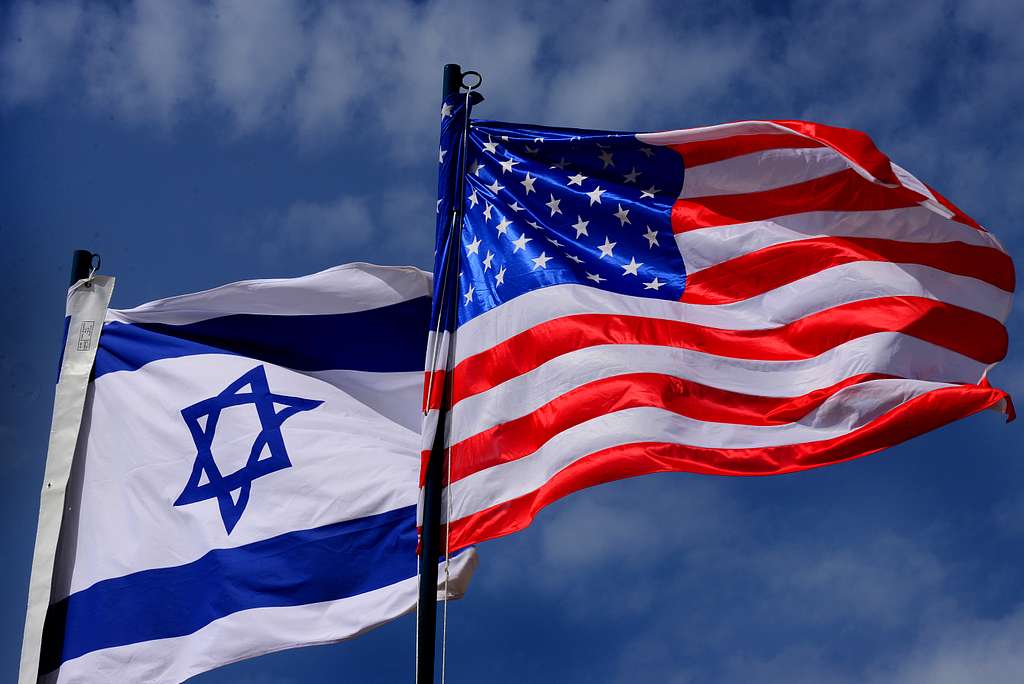
Ayatollah Khamenei is dead, and the Middle East may finally have a chance at a safer future. But instead of acknowledging a massive victory for human rights, armchair diplomats are rushing to defend the regime.

The Middle East just went through a seismic shift; they did the unthinkable, they took out Supreme Leader Ayatollah Ali Khamenei. The head of the snake has finally been cut off. This was a massive, historic victory for the free world, spearheaded by the two greatest forces for stability and democracy in the region.
If you want to know what this means to the people actually living under the boot of that regime, look at the videos flooding the internet. Despite the chaos, countless Iranians and the global diaspora are celebrating. They are dancing in the streets and shedding tears of relief. For over four decades, this was a regime that executed dissidents from cranes, gunned down thousands of its own citizens in the streets for daring to protest, funded terrorist proxies across the globe, and beat women to death in police custody over the state’s draconian hijab laws. For the Iranian people, the architect of their misery is finally gone.

For the Iranian people, the guy who built that nightmare is finally gone.

And yet, we are watching a staggering display of moral blindness. In their obsessive, rigid need to cast America and Israel as the eternal villains of every single story, the far-left has somehow morphed into the pro-bono PR department for one of the most oppressive, misogynistic, and bloodthirsty dictatorships on earth. They are so blinded by their hatred of Western foreign policy that they physically cannot bring themselves to take a win for the Iranian people.

They are having a collective meltdown.

Look at Representative Ilhan Omar. While Iranians are finally breathing a sigh of relief, she’s on X, complaining that the U.S. “loves to strike Muslim countries during Ramadan” and trying to spin the assassination of a master terrorist into some kind of religious hate crime. Give me a break. To frame the elimination of a theocratic dictator as an act of bigotry is an absolute insult to the millions of devout Muslims inside Iran who have been tortured, imprisoned, and impoverished by Khamenei’s thugs for decades.
It is easy to sit in an air-conditioned congressional office and draft tweets about imperialism. It is an entirely different reality when rockets are raining down on your cities, and a nuclear-ambitious madman is promising to wipe your country off the map.
But you know what? Let them melt down. While the progressive squad plays the victim card on social media, the adults in the room finally took charge. We can no longer afford to let the loudest, most historically illiterate voices in Washington dictate how the free world handles a very real, very heavily armed terrorist state.
For decades, Israel has been forced to live on the absolute bleeding edge of the free world, fighting tooth and nail for its fundamental right to exist. They aren’t fighting theoretical wars in university faculty lounges or European parliaments; they are surrounded on multiple fronts by heavily armed, radicalized proxy armies, all funded, trained, and directed by the puppet masters in Tehran. Israel and America didn’t just defend their own borders. They did the entire civilized world a massive, generational favor. They did the dirty, dangerous work that the UN and European diplomats were frankly too cowardly to do. They walked right up to the epicenter of global terrorism and cut the power. Let the talking heads hyperventilate about “escalation” all they want. Sometimes, to stop a cancer from spreading, you need a surgeon who isn’t afraid to cut.

When America and Israel stand shoulder-to-shoulder, the world is a measurably safer place. Period.

Real deterrence isn’t built on strongly worded letters, endless Geneva summits, or hand-wringing UN resolutions. It is built on the undeniable reality that if you fund terror, if you butcher your own citizens, and if you swear death to America and Israel, there will be a reckoning. And that reckoning just arrived. It is about time the politicians sitting comfortably in their air-conditioned offices in Washington, London, and Brussels shut their mouths and took some notes. Instead of drafting another pathetic statement condemning the very forces that keep them safe, they should be thanking the U.S. and Israeli armed forces for having the spine to do the hard work.
If these progressive pundits and armchair diplomats want to know what real justice looks like, they need to drop their ideological blinders and actually listen to the Iranians dancing, crying, and celebrating in the streets today.
The dictator is dead. The good guys won this round. It’s okay to say it out loud.
About the Author
Michael Kuenne works as a journalist on antisemitism, extremism, and rising threats to Jewish life. His reporting continually sheds light on the dangers that come from within radical ideologies and institutional complicity, and where Western democracies have failed in confronting the new rise of Jew-hatred with the due urgency it does call for. With hard-hitting commentary and muckraking reporting, Kuenne exposed how the antisemitic narratives shape policymaking, dictate public discourse, and fuel hate toward Israel. His writings have appeared in a number of international media outlets, including The Times of Israel Blogs. Kuenne has become a voice heard for blunt advocacy in regard to Israel's right to self-defense, critiquing ill-conceived humanitarian policies serving only to empower terror, while demanding a moral clarity which seems beyond most Western leaders. With a deep commitment to historical truth, he has covered the resurgence of Holocaust distortion in political rhetoric, the dangerous normalization of antisemitic conspiracies in mainstream culture, and false equivalencies drawn between Israel's actions and the crimes of its enemies. His reporting dismantles sanitized language that whitens the record of extremism and insists on calling out antisemitism-whether from the far right, the far left, or Islamist movements, without fear or hesitation.
Related Topics
Related Posts

Germany’s Cultural Elite Is Playing With Fire

Abdallah Alkhatib, director of Chronicles From the Siege, accepts the GWFF Prize for Best First Feature at the 76th Berlin International Film Festival in Berlin, Germany, in 2026. Photo: Richard Hübner, Berlinale 2026

Words matter most when spoken from positions of power. At the Berlinale, one of Europe’s most prestigious, taxpayer-funded cultural stages, an accusation of genocide was delivered calmly, and rewarded with applause. What followed was not merely a controversial moment, but a revealing failure of moral and institutional judgment.

When Syrian-Palestinian filmmaker Abdallah Alkhatib accepted the Best Feature Film Debut award Saturday night at the 76th Berlinale for Chronicles From the Siege, he used the ceremony to accuse Israel of genocide and Germany of complicity. The charge was delivered calmly, confidently, and from one of Europe’s most prestigious, publicly funded cultural stages.
What followed mattered more than the speech itself. The audience applauded. The festival did not intervene. Only Carsten Schneider, Germany’s Federal Minister for the Environment, Climate Action, Nature Conservation, and Nuclear Safety, chose to leave the hall.
The Berlinale is not an activist gathering. It is Germany’s flagship film festival, financed substantially by federal and state funds and presented as a symbol of the country’s postwar moral seriousness. Statements made from its stage do not remain personal opinions. They acquire institutional legitimacy.
That is why Alkhatib’s accusation cannot be waved away as expressive outrage. “Genocide” is not a metaphor. It is a legal term defined by the Genocide Convention, requiring demonstrable intent to destroy a people as such. The charge of genocide leveled against Israel collapses under any serious, good-faith application of international law. The Convention requires specific intent to destroy a people as such, an intent Israel has neither expressed nor demonstrated, even as it fights a war forced upon it by Hamas’s Oct. 7 massacre. Israel’s war in Gaza, launched after that attack and directed at dismantling a terrorist organization embedded in dense urban terrain, is accompanied by evacuation warnings and civilian advisories that reflect Israel’s ongoing effort, rare among modern militaries facing comparable asymmetric threats, to distinguish between civilians and a terrorist enemy deliberately operating among them. Civilian suffering in war is horrific. It is also not evidence of genocidal intent.
Conflating the two is not moral clarity. It is a distortion of law.
In Europe’s cultural institutions, however, precision has become optional. The word “genocide” now functions less as a claim to be examined than as a signal to be displayed. Once invoked, it halts inquiry. Questioning it risks immediate moral suspicion. That dynamic is exactly what unfolded in Berlin.
Alkhatib’s warning that “we will remember who stood with us and who stood against us” revealed the logic at work. This was not the language of grief. It was the language of power, of future reputational sorting, of moral debt to be collected later. It presumed authority. It assumed consequences.
The audience reaction confirmed that such framing has become normalized. Across European cultural spaces, Israel is increasingly cast as a uniquely illegitimate actor rather than a sovereign state confronting adversaries committed to its destruction. Jewish history is acknowledged ceremonially; Jewish agency in the present is treated as suspect.
Director Abdallah Alkhatib poses with producer Taqiyeddine Issaad after Chronicles From the Siege won the GWFF Prize for Best First Feature at the 76th Berlinale in Berlin, Germany, February 21, 2026. Photo: Alexander Janetzko, Berlinale 2026
Israel exists precisely because Jews learned, at catastrophic cost, that moral permission to survive cannot be outsourced. To treat Jewish self-defense as a moral problem rather than a historical necessity is not enlightenment; it is amnesia.
The contradiction runs deep. Germany has built an extensive culture of remembrance centered on Jewish victimhood and European guilt. Yet when Jews act collectively to defend themselves through a state, that agency is increasingly portrayed as pathological. Trauma is universalized in museums and memorials; self-defense is delegitimized in politics and culture.
This inversion did not happen by accident. Cultural institutions have grown insulated from public accountability while remaining dependent on public funding. They prioritize moral signaling over argument, alignment over analysis. The result is an environment where extreme accusations can be made without challenge, provided they conform to the prevailing ideological posture.
Schneider’s decision to leave the hall was therefore neither theatrical nor courageous. It was procedural, the bare minimum response once a line had been crossed from expression into institutional accusation. Walking out acknowledged what applause tried to obscure: that something with historical gravity and political consequence had just been said under state sponsorship.
Germany’s postwar moral authority rests on restraint, precision, and responsibility. That authority erodes when taxpayer-funded platforms lend legitimacy to charges that empty words like “genocide” of their meaning and transform them into tools of political pressure against the world’s only Jewish state.
This is not about suppressing criticism of Israel. Criticism is legitimate and necessary in any democracy. It is about refusing to subsidize defamation masquerading as moral concern. When publicly financed institutions blur that distinction, they place the state itself on one side of a profoundly dangerous moral ledger.
The Bundestag should take note. If Germany’s cultural elite cannot distinguish between critique and blood libel, between lawful argument and legal falsehood, then federal funding of such platforms deserves serious review. Taxpayers are not obliged to underwrite ideological theater that trades historical responsibility for moral exhibitionism.
Israel does not require moral approval from Europe’s cultural institutions to defend its citizens. But when those institutions weaponize the language of genocide against the Jewish state, they inflict real damage, not only on historical truth, but on Jewish security in the present. Germany, of all nations, should understand where that road leads. If the cultural elite forgets that lesson, the consequences will not remain confined to festival stages.
About the Author
Michael Kuenne works as a journalist on antisemitism, extremism, and rising threats to Jewish life. His reporting continually sheds light on the dangers that come from within radical ideologies and institutional complicity, and where Western democracies have failed in confronting the new rise of Jew-hatred with the due urgency it does call for. With hard-hitting commentary and muckraking reporting, Kuenne exposed how the antisemitic narratives shape policymaking, dictate public discourse, and fuel hate toward Israel. His writings have appeared in a number of international media outlets, including The Times of Israel Blogs. Kuenne has become a voice heard for blunt advocacy in regard to Israel's right to self-defense, critiquing ill-conceived humanitarian policies serving only to empower terror, while demanding a moral clarity which seems beyond most Western leaders. With a deep commitment to historical truth, he has covered the resurgence of Holocaust distortion in political rhetoric, the dangerous normalization of antisemitic conspiracies in mainstream culture, and false equivalencies drawn between Israel's actions and the crimes of its enemies. His reporting dismantles sanitized language that whitens the record of extremism and insists on calling out antisemitism-whether from the far right, the far left, or Islamist movements, without fear or hesitation.
Related Topics
Related Posts

A free Iran would welcome Israel’s prime minister

Reza Pahlavi. Photo: Gage Skidmore (CC BY-SA 2.0, Wikimedia)

For more than four decades, the Islamic Republic of Iran has defined itself through hostility toward Israel and the normalization of antisemitic rhetoric, exporting terror, financing proxy wars, and making eliminationist rhetoric toward Israel a pillar of state ideology. As Iranians continue to challenge the regime at home, I spoke with Reza Pahlavi, the exiled son of Iran’s last shah and a prominent opposition voice, about what would replace it, and whether a free Iran would openly reverse the ideology that has made Israel its primary enemy.

In written responses to my questions, Pahlavi did not offer the West a plea. He offered a proposition. Asked whether he would host Israel’s prime minister in Tehran during a transitional period following the fall of the Islamic Republic, Pahlavi replied without hesitation: “Of course.” He did not hedge or frame the idea as symbolic. He spoke of it as a natural outcome of a post-mullah Iran, one in which hostility toward Israel is understood not as an expression of Iranian identity, but as an imposed ideology enforced by a coercive state.
Pahlavi added that he would also welcome President Donald Trump in a free Iran, envisioning the first visit by a sitting American president since Jimmy Carter’s visit to Iran in late 1977. The symbolism, he said, would be unmistakable: Iran’s return to the international community, and the collapse of a regime whose power has long rested on permanent confrontation.
For Israel, the implications extend far beyond symbolism. The fall of Tehran’s current regime would redraw the Middle East’s strategic map overnight. Iran is not merely an adversary; it is a central sponsor and organizer of the region’s terror and proxy networks, funding and directing forces that have encircled Israel for years.
Pahlavi argued that the Islamic Republic does not represent Iran’s people, but occupies the country through repression, propaganda, and fear. Its slogans, including “Death to Israel,” should not be mistaken for a reliable measure of public sentiment, he said, but understood as tools of ideological control. Normal relations with Israel and the United States would bring opportunity, security, and regional stability, not endless war.
He tied this vision to practical cooperation, including water management and environmental expertise, echoing themes he raised during his 2023 visit to Israel. That visit, he said, was not performative. It reflected what a future relationship could look like: pragmatic, forward-looking, and focused on improving the lives of ordinary Iranians after decades of severe mismanagement by the clerical regime.
To skeptics who argue that Iranian society is not ready for such normalization, Pahlavi’s response was blunt. The regime’s rhetoric, he said, should not be mistaken for public sentiment. Many Iranians recognize that permanent hostility has delivered only isolation and hardship, while cooperation and normal relations bring opportunity and security. They want a free country at peace with the world, including with Israel.
Pahlavi also laid out what he believes Western governments must do now.
He called for targeted measures against the regime’s coercive apparatus, particularly the Islamic Revolutionary Guard Corps, while drawing a clear distinction between Iran’s citizens and those enforcing repression at gunpoint. Democratic governments, he said, should sever the regime’s financial lifelines, keep Iran connected to the outside world, expel regime diplomats, and pursue accountability for crimes against humanity, while pressing for the release of all political prisoners.
Most critically, he argued that the West must be prepared to recognize a legitimate transitional authority quickly if the regime collapses, to prevent chaos, power vacuums, or the re-emergence of hardline forces under a different name.
His sharpest words were reserved for Supreme Leader Ali Khamenei.

“Ali Khamenei, you have a final chance to leave the country; if you do not, we, the people of Iran, will topple you and you will face justice for your crimes against our nation,” Pahlavi said.

He paired that warning with a message aimed at mid-level enforcers: accountability would focus on leadership, but there would be a path forward for those who refuse unlawful orders and stand with the nation. Even exile, he added, would not shield the regime’s architects from justice.
If he were in charge tomorrow, Pahlavi said, his foreign-policy priorities would be immediate and unambiguous: end Iran’s sponsorship of terrorism by dismantling proxy networks; withdraw from destabilizing regional conflicts; normalize relations beginning with the United States and Israel; and fully dismantle the regime’s nuclear program under international supervision.
He pointed to a transition blueprint, the Iran Prosperity Project, envisioning a technocratic interim structure followed by a democratic process in which Iranians themselves would decide their country’s future system of governance.
Debate will continue over whether Pahlavi is the figure capable of unifying Iran’s fractured opposition. But one fact is indisputable. At a moment when the Islamic Republic appears under greater internal and external pressure than at any point in recent years, he is placing a concrete proposition before the world, and before Israel.
Iran’s people are risking everything. History will not only record how this regime ends, but who was prepared to act when the moment arrived. The free world can help Iranians dismantle one of the world’s most persistent state sponsors of terrorism, or watch it survive yet another crisis through hesitation and delay.
About the Author
Michael Kuenne works as a journalist on antisemitism, extremism, and rising threats to Jewish life. His reporting continually sheds light on the dangers that come from within radical ideologies and institutional complicity, and where Western democracies have failed in confronting the new rise of Jew-hatred with the due urgency it does call for. With hard-hitting commentary and muckraking reporting, Kuenne exposed how the antisemitic narratives shape policymaking, dictate public discourse, and fuel hate toward Israel. His writings have appeared in a number of international media outlets, including The Times of Israel Blogs. Kuenne has become a voice heard for blunt advocacy in regard to Israel's right to self-defense, critiquing ill-conceived humanitarian policies serving only to empower terror, while demanding a moral clarity which seems beyond most Western leaders. With a deep commitment to historical truth, he has covered the resurgence of Holocaust distortion in political rhetoric, the dangerous normalization of antisemitic conspiracies in mainstream culture, and false equivalencies drawn between Israel's actions and the crimes of its enemies. His reporting dismantles sanitized language that whitens the record of extremism and insists on calling out antisemitism-whether from the far right, the far left, or Islamist movements, without fear or hesitation.
Related Topics
Related Posts
Sign in or Register
Please use the following structure: example@domain.com
Or Continue with
By registering you agree to the terms and conditions
Register to continue
Or Continue with
Log in to continue
Sign in or Register
Or Continue with
check your email
Check your email
We sent an email to you at .
It has a link that will sign you in.