Advertisement
Advertisement

Singapore

MFA advises Singaporeans to leave Iran while flights remain available

MFA advises Singaporeans to leave Iran while flights remain available

Iranians attend an anti-government protest in Tehran on Jan 8, 2026. (File photo: AP)

Listen
2 min
New: You can now listen to articles.

This audio is generated by an AI tool.

25 Feb 2026 06:51PM
Read a summary of this article on FAST.
FAST

SINGAPORE: Singaporeans who are currently in Iran should remain vigilant, monitor the situation closely, and leave as soon as practicable while flights remain available, the Ministry of Foreign Affairs (MFA) said on Wednesday (Feb 25). 

They should also avoid demonstrations and places where large crowds congregate, MFA added.

In its travel advisory, the ministry also advised Singaporeans to continue to defer all travel to Iran amid heightened regional tensions and recent protests.

Iran has seen nationwide demonstrations in recent months over economic woes, which prompted a violent government crackdown that killed thousands of people. 

The US-based Human Rights Activists News Agency has recorded more than 7,000 deaths, while warning the full toll is likely far higher. 

The crackdown prompted US President Donald Trump to threaten to intervene militarily. 

Trump’s threats have more recently shifted to Iran’s nuclear programme, which Western governments fear is aimed at producing a bomb. The US has ramped up pressure on Iran with a massive military build-up around the Gulf. 

Trump ordered strikes on Iran's nuclear facilities last year, and has threatened further action if a nuclear deal is not reached.

The US and Iran are scheduled to meet for a third round of talks on Thursday in an effort to reach a diplomatic solution. 

“Singapore has no diplomatic mission in Iran, which constrains our ability to extend consular assistance in an emergency,” MFA said.

“Singaporeans are strongly encouraged to eRegister with the Ministry of Foreign Affairs.”

Other countries, including India, Germany and Italy, have also urged their citizens to leave Iran amid security concerns. 

Source: CNA/co

Sign up for our newsletters

Get our pick of top stories and thought-provoking articles in your inbox

Subscribe here
Inbox
FAST
Advertisement

Commentary

Commentary: Why we freeze – and film – when we see disruptive behaviour in public

Disruptive behaviour in public is often a sign that someone needs help. How we respond to that reflects the kind of society we are, says psychiatrist Dr Jared Ng.

Commentary: Why we freeze – and film – when we see disruptive behaviour in public
A young man consoling and offering support to another person. (Photo: iStock/Pressmaster)
Listen
7 min
New: You can now listen to articles.

This audio is generated by an AI tool.

26 Feb 2026 06:00AM (Updated: 26 Feb 2026 07:44AM)
Read a summary of this article on FAST.
FAST

SINGAPORE: Every few months, a video circulates online. A woman spits water at commuters on an MRT train. A man removes his clothes in public and starts arguing with strangers. The faces change, but the public reaction rarely does.

Why did no one step in? Why did people just stand around? Why were phones raised instead?

These questions reflect discomfort and uncertainty. Most people are not indifferent. They are just unsettled and unsure what the right response should be.

But the repeated nature of these incidents and videos that go viral suggests that we are still struggling, as a society, to understand what erratic or disruptive behaviour in public represents, and what can reasonably be expected of ordinary members of the public.

CONFLICT AVOIDANCE AND PUBLIC PARALYSIS

Singaporeans are sometimes described as "conflict-averse". Many of us are taught from young to keep to ourselves and avoid confrontation. In crowded public spaces, this tendency has clear benefits. It allows millions of people to share trains and buses with a basic level of order. Most days, it works.

The difficulty arises when restraint turns into paralysis. When behaviour crosses a line from mildly disruptive to visibly distressing, people freeze. Some avert their eyes or step away. Some begin recording. Few intervene, not because they do not care, but because they do not know what intervention should look like, or fear making things worse.

This is not new. What has changed is what happens next.

When I was in primary school, I used to walk past a hawker centre on my way home. Every so often, there was an elderly woman standing alone, pointing at thin air, shouting colourful Hokkien vulgarities at no one in particular. 

As a child, I was frightened and would stay far away. I remember parents instinctively pulling their children closer and steering them past her. No one confronted her, but no one filmed her either.

Looking back, that scene was not very different from what we see today. People kept their distance. The difference now is not the behaviour. It is what happens next.

If that same scene played out today, there would almost certainly be phones raised. The woman would be recorded, shared, dissected and labelled. The lack of help has not changed, but its consequences have. What was once a moment of quiet discomfort would now likely become permanent digital evidence of someone's distress.

WHEN BREAKDOWNS GO VIRAL

In my clinical work, I have met patients who only later realised that their breakdowns were filmed and shared online. By the time they sought help, they were already burdened by shame.

From the outside, these incidents look sudden. In reality, they are often the endpoint of something much longer.

When mental illness is involved, the person has usually been struggling for months or years. Family members may already be exhausted. Treatment may have been delayed or stopped. Stressors may have accumulated quietly.

Even when there is no mental illness involved, what the public sees is rarely the full story. But once a video spreads, context disappears. And when we share these videos, we are consuming someone else's worst day as entertainment, or harvesting it for likes and comments. We are turning a human being in crisis into a spectacle, a warning or a meme.

We must ask ourselves a harder question: What do we hope to achieve when we press record?

Some argue that filming increases accountability or protects witnesses. In cases of active harm or violence, documentation can matter. But filming a distressed individual who poses no immediate threat serves no such purpose.

It does not make anyone safer. It does not help the person in distress. Instead, it teaches society that breakdowns are something to mock, to fear or to outsource entirely to institutions.

The comments that follow are predictable – "Lock them up in a mental hospital" or "Why are these people allowed out?" These reactions usually come from fear rather than malice. But institutionalisation is not a solution to public discomfort. Mental health care works best when it is timely, community-based and respectful. Viral shaming achieves none of these.

WHAT SAFE INTERVENTION LOOKS LIKE

When people hesitate to intervene, it is often because they are afraid. They worry about personal safety, legal consequences or about being blamed if something goes wrong. These concerns are valid.

Intervention is too often framed as either stepping in physically or doing nothing at all. This is a false choice. There are many forms of help that do not involve physical confrontation, and knowing when not to intervene directly is part of responsible action.

If you witness someone in visible distress in public, consider the following:

1. Do not crowd, stare or film
These actions increase anxiety and perceived threat. If there is no immediate danger, giving space is often the kindest response.

2. Alert staff early
Public transport staff and security often have direct lines to control rooms and emergency services. Your role is not to replace these systems, but to activate them. The earlier they are informed, the more options they have.

3. If you must stay nearby, stay calm and quiet
If the situation feels safe and the person seems receptive, a simple "Are you okay?" in a gentle tone may help but avoid questioning or engaging with distressing content. Empathy is key.

4. Recognise your limits
No one should expect members of the public to physically intervene, especially in situations involving weapons or active violence. Self-preservation and the safety of others come first.

Singapore has made real progress in mental health literacy. But awareness alone is not enough. People need to know what to do and what not to do, without being shamed for choosing safety.

It is about understanding that erratic behaviour in public is not content to be harvested for likes or comments. It is often a sign that someone, somewhere, needs help. How we respond to that need, whether we reach for our phones or pause to act more thoughtfully, says a great deal about the kind of society we are.

Jared Ng is a psychiatrist in private practice. He was previously chief of the Department of Emergency and Crisis Care at the Institute of Mental Health.

Source: CNA/sk

Sign up for our newsletters

Get our pick of top stories and thought-provoking articles in your inbox

Subscribe here
Inbox
FAST
Advertisement

Singapore

13-year-old reported missing in Kallang River, search to resume on Thursday morning

The police were alerted to a case of suspected drowning at the Kallang River at about 4.30pm on Wednesday.

13-year-old reported missing in Kallang River, search to resume on Thursday morning

SPF and SCDF personnel seen at the Kallang River at about 5.30pm on Feb 25, 2026. (Photos: CNA reader)

Listen
1 min
New: You can now listen to articles.

This audio is generated by an AI tool.

25 Feb 2026 10:45PM (Updated: 25 Feb 2026 10:50PM)
Read a summary of this article on FAST.
FAST

SINGAPORE: A 13-year-old boy was reported missing in the Kallang River on Wednesday (Feb 25), with search and rescue operations suspended until the next morning due to low visibility. 

The police commenced search operations with the Singapore Civil Defence Force (SCDF) after they were alerted to a case of suspected drowning at the Kallang River at about 4.30pm.

Preliminary investigations do not suspect foul play and investigations are ongoing, the police added. 

SCDF said that its firefighters and rescuers from the Disaster Assistance and Rescue Team (DART) responded to the incident. DART rescuers conducted an underwater search in the area where the victim was last seen.

"After more than four hours of search, operations were suspended as a safety precaution due to low visibility as nightfall approached. The search will resume at first light the following morning," said SCDF. 

An eyewitness told CNA that police and SCDF personnel were seen in the area near the Kallang MRT station at about 5.30pm. A section of the area was cordoned off.

Another eyewitness who was jogging along the river noted the authorities were still at the scene at about 8.20pm.

If you would like to send in information, photos or videos about something newsworthy, submit your news tips on CNA Eyewitness or on WhatsApp.

Source: CNA/fh(zl)

Sign up for our newsletters

Get our pick of top stories and thought-provoking articles in your inbox

Subscribe here
Inbox
FAST
Advertisement

Singapore

Thailand election body confirms win by PM Anutin's party

Thailand election body confirms win by PM Anutin's party

Thailand's caretaker Prime Minister and Bhumjaithai Party leader Anutin Charnvirakul gestures as he walks to attend a Cabinet meeting at the Government House, after the party won the general election, in Bangkok, Thailand, on Feb 10, 2026. (File photo: Reuters/Chalinee Thirasupa)

25 Feb 2026 09:17PM (Updated: 26 Feb 2026 08:17AM)
Read a summary of this article on FAST.
FAST

BANGKOK: Thailand's Election Commission confirmed the victory of caretaker Prime Minister Anutin Charnvirakul's conservative party on Wednesday (Feb 25), ratifying most of the results of this month's vote.

The commission certified the results for 396 newly elected MPs in the 500-seat lower house, with Anutin's Bhumjaithai party winning 170 constituencies, the most of any party, according to a statement.

The reformist People's Party - which had been polling first ahead of the Feb 8 election - came in second, with 88 constituencies, the commission said.

Pheu Thai, the populist party of jailed former leader Thaksin Shinawatra, came in third with 58 seats, according to the ratified results.

With no party winning an outright majority, Bhumjaithai and Pheu Thai have agreed to form a coalition.

Several smaller parties would also join, Bhumjaithai has said.

The pro-military and pro-monarchy party had its best electoral performance ever, riding a wave of nationalism following two rounds of deadly border clashes with Cambodia last year.

Pheu Thai, Thailand's most successful party of the 21st century, meanwhile, had its worst election result ever.

The two parties were previously coalition partners until Anutin pulled out in June following a leaked phone conversation of his predecessor, Pheu Thai's Paetongtarn Shinawatra.

In the call, she referred to former Cambodian leader Hun Sun as "uncle" and called a Thai military commander her "opponent", triggering outrage during a period of heightened tensions over the two countries' disputed border.

Votes cast in three of the nation's 400 constituencies are being recounted following concerns about the transparency of the tallying process.

At a single polling station in northern Thailand, voters will recast their ballots on Mar 1 after the number of people who registered at the site on election day did not match the number of ballots received.

While the Election Commission has yet to confirm winners of the 100 seats reserved for politicians elected from their party's ranked candidate list, preliminary results showed Bhumjaithai far ahead in the total projected seat count, with more than 190.

People's Party won nearly 120 total seats and Pheu Thai, less than 80, according to the preliminary results from the commission.

It must certify the election of 95 per cent of lawmakers before the new parliament can convene and choose a house speaker and prime minister.

Listen:

Source: AFP/rl

Sign up for our newsletters

Get our pick of top stories and thought-provoking articles in your inbox

Subscribe here
Inbox
Advertisement

Singapore

Food outlets unfazed by Deliveroo exit, but delivery riders fear less competition

Food delivery riders are voicing concerns over reduced competition due to Deliveroo's impending exit, while most F&B businesses say the impact will be minimal due to low order volumes from the platform.

Food outlets unfazed by Deliveroo exit, but delivery riders fear less competition

A Deliveroo delivery rider. (File photo: Reuters/Toby Melville)

Listen
6 min
New: You can now listen to articles.

This audio is generated by an AI tool.

25 Feb 2026 08:46PM (Updated: 25 Feb 2026 09:40PM)
Read a summary of this article on FAST.
FAST

SINGAPORE: While delivery riders expressed concerns about a potential monopoly, food and beverage businesses were largely unconcerned about news that Deliveroo will exit Singapore's market.

F&B outlets said orders from the food delivery platform were negligible, adding that they would turn to the remaining two competitors, Grab and Foodpanda, to fulfil online orders instead.

It was mostly the same story for riders, many of whom had already turned to other platforms due to declining orders from Deliveroo.

The company announced on Wednesday (Feb 25) that its last day of service would be on Mar 4, and that it would begin "an orderly wind-down process".

Delivery rider Alvin Lim expressed surprise at the latest development, given the recent acquisition by DoorDash.

Mr Lim, 34, said he actively used Deliveroo even though it had the lowest number of orders among the three platforms. The platform accounts for only 10 per cent of his earnings, but offered the most flexibility as riders could choose to accept or decline orders without facing penalties, he said.

"This flexibility is a major advantage, but I believe it also comes with drawbacks. Orders that are further away are often rejected by riders, which forces Deliveroo to increase the payout to attract someone to take them.

"Additionally, when riders are unwilling to accept certain orders, Deliveroo may need to compensate customers for late deliveries."

Other riders, such as Mr Pham Quoc Tin, 38, were unsurprised by the move.

Mr Tin, who was wearing a Deliveroo jacket when he spoke to CNA, said he had decided to help the platform with deliveries on Wednesday upon hearing of its impending closure.

He had been expecting the platform to close since last year due to a lack of riders and orders.

The part-time delivery rider said he began delivering for the platform in 2023 but stopped a year later due to infrequent orders, which mostly came during peak hours.

It was a similar story for Mr Raden Yahya, 32, who only used the platform sporadically after starting food delivery in 2017.

"When I see the fare, S$3.99 (US$3.15) I straightaway turn it off and go to other platforms," Mr Raden said.

"I used to be with them before COVID-19 ... the fare (was) getting lower, it could go as low as S$3 per delivery. The demand is not there," he said.

However, both Mr Tin and Mr Raden noted that earnings from Foodpanda were on the decline, with the former noticing a 50 to 60 per cent drop over around seven months.

Mr Lim said: "I'm worried Foodpanda might follow (Deliveroo's fate) if they fail to be profitable in Singapore. Then the only option will be Grab (and) they will monopolise the market."

Echoing his concern, Mr Raden said, "As long as there is still a competitor with other platforms, I don't think it's harmful, but let's say there's only left one then I'll be concerned because they can just charge any amount to the riders."

Another delivery rider of six years, who wanted to be known as Mr Tan, said Deliveroo orders accounted for 50 per cent of his earnings, as he used that service and Grab in equal measure daily.  

The 64-year-old rider said he felt shocked when he heard the news. "There goes my money", he said. 

He preferred Deliveroo for its flexibility of cancelling orders without penalty, and because it had better rates for him as he was willing to go the distance for deliveries. 

Deliveroo said on Wednesday that the decision to exit Singapore was part of a broader review of the company’s international portfolio. It had entered Singapore in November 2015 and was acquired by DoorDash in May 2025.

Delivery riders and businesses were informed of the impending closure via email earlier on Wednesday.

The email stated that Deliveroo had made the "difficult decision" to end operations in Singapore after considering its options.

"This decision was not taken lightly. Our focus has always been on offering great value to customers and partners, and importantly, flexible, competitive opportunities for you, our riders. Over the past 11 years in Singapore, we are proud of what we have achieved together," it added.

"However, following a review of country-specific conditions, the company has concluded that ending operations in Singapore is unfortunately the most appropriate course of action."

Riders were told they could continue delivering orders until 3pm on Mar 4, with fees paid for every delivery accepted and completed until then.

These will be processed on Mar 4, and any outstanding fees and incentives will be paid on Mar 10.

However, riders like Mr Tan said they will stop using Deliveroo way before it ceases operation for fear that payments will be disrupted once the system goes offline. 

F&B OUTLETS UNFAZED

F&B businesses CNA spoke to were unfazed, citing the low number of online orders they received through Deliveroo compared with its competitors. Most told CNA that they would simply switch platforms and asked what the off-boarding process would be like, including what would happen to the Deliveroo devices they had. 

A stall assistant at Nasi Lemak Ayam Taliwang, Muhammad Asri, said he usually received two to three orders a month through the Deliveroo terminal, compared to the same amount in a week from the other platforms.

The 49-year-old said the figure was negligible and the stall would simply continue its online services with the remaining two platforms.

Another stall assistant, who wanted to be known as Mr Fang, remained unbothered by the news even though Deliveroo is the only service he currently subscribes to.

The 30-year-old, who runs a herbal soup stall in a hawker centre, said he dropped his subscriptions to the other platforms and kept Deliveroo two to three years ago as its fees were cheaper.

However, he has noticed a drop in average monthly orders via the service from 300 to 200 in the past five months.

Mr Fang said online sales were still a negligible proportion compared to what his stall draws daily - about 900 in-person orders.

He will simply switch to another platform when the time comes, he said.

Source: CNA/wt(zl)

Sign up for our newsletters

Get our pick of top stories and thought-provoking articles in your inbox

Subscribe here
Inbox
Advertisement

Singapore

Budget 2026 debate: WP MPs urge more support for families, solutions to raise fertility rate

The Workers’ Party (WP) Members of Parliament also asked about education and caregiving needs on the second day of the Budget debate.

Budget 2026 debate: WP MPs urge more support for families, solutions to raise fertility rate

Workers' Party MPs Louis Chua, He Ting Ru and Abdul Muhaimin Abdul Malik speaking in parliament on the second day of the Budget 2026 debate, Feb 25, 2026.

Listen
7 min
New: You can now listen to articles.

This audio is generated by an AI tool.

25 Feb 2026 08:38PM (Updated: 25 Feb 2026 09:59PM)
Read a summary of this article on FAST.
FAST

SINGAPORE: Workers’ Party (WP) Members of Parliament on Wednesday (Feb 25) called for more support for families in Singapore, with various proposals including a personal income tax exemption for some mothers.

Speaking in parliament on the second day of the Budget 2026 debate, MP Louis Chua (WP-Sengkang) said that the trajectory of Singapore’s total fertility rate (TFR), which fell below 1 in 2023 and remained at 0.97 in 2024, poses a profound threat to long-term sustainability.

He added that the authorities must do more to “nurture a fertile environment” for parents to grow their families.

“If we can establish an AI council to provide strategic direction and to drive Singapore’s AI agenda, where is the equivalent council or dedicated, high-level focus to act with clarity and resolve on our existential demographic challenge?” he asked.

“The truth we must confront is whether the government is genuinely committed to structural solutions for our fertility crisis, or whether it is increasingly leaning on immigration as an easier way out.”

Mr Chua said that Singapore must be bold and innovative in its approach to raising its TFR, citing the example of Hungary’s “aggressive pro-natalist policies”, which include fully exempting mothers with three children from paying personal income tax.

Hungary expanded the policy so that mothers under 30 with at least one child will also be exempt from this year.

“Are we willing to be this bold in our approach, and exempt mothers from personal income taxes?” asked Mr Chua.

“The bottom line is that structural issues to our low TFR, such as work-life balance, societal expectations, and the high cost of raising children, must be comprehensively addressed.”

Video Player is loading.
Current Time 0:00
Duration 18:49
Loaded: 0.88%
Stream Type LIVE
Remaining Time 18:49
 
1x
    • Chapters
    • descriptions off, selected
    • captions off, selected
    • en (Main), selected
    Current Time 0:00
    Duration 0:00
    Loaded: 0%
    Stream Type LIVE
    Remaining Time 0:00
     
    1x
      18:49 Min

      Singapore’s national coffers are “fuller than ever”, yet the structural burdens on the average household remain stubbornly heavy, said MP Louis Chua. Speaking in parliament on Wednesday (Feb 25), he pointed out that the persistent issue of “fiscal marksmanship” raises fundamental questions on whether the government is consistently taking more from the economy than it truly needs and the implications for the private sector. He said the sheer magnitude and regularity of these upward revisions suggest a systemic issue and asked if the urgency behind tax increases was truly justified. Mr Chua also called for better structural levers that automatically adjust to reflect the economic realities Singaporeans face, instead of handouts that may or may not be renewed. 

      HEALTHIER NOT JUST WEALTHIER

      MP He Ting Ru (WP-Sengkang) spoke on the importance of making Singapore a healthier society to live in, rather than simply a wealthier one. 

      Touching on caregiver support, she stressed that care has always required “presence, trust, and reciprocity” and is not merely a resource to be allocated.

      While there has been progress in caregiver support, there is still work to do for an economy that supports employees who also do unpaid care work, Ms He added. 

      “The government must foster workplaces where workers do not feel like taking this leave would limit their careers, or make them feel like difficult workers with scheduling problems,” she said. “We must see workers as whole persons with obligations that extend beyond work.”

      Ms He also discussed overcrowding and the impact it could have on Singaporeans. 

      In her speech, she referenced a written parliamentary reply last month by Minister in the Prime Minister’s Office Indranee Rajah to a question from MP Fadli Fawzi (WP-Aljunied) on whether the government expects Singapore's total population to be at, above, or below 6.9 million beyond 2030.

      Ms Indranee said scenarios showed that Singapore’s population is expected to remain significantly below 6.9 million by 2030, and that 6.9 million remains relevant as a planning parameter for the 2030s. 

      She added that Singapore’s future population size depends on various demographic trends, such as birth rates, life expectancies, and migration, as well as future social and economic needs. 

      “If 6.9 million is just a planning parameter, then the question Singaporeans living in high-density communities like Sengkang need to see answered is this: at that parameter, what precisely does our infrastructure plan to provide, and at what point does this provision start to cause discomfort?” asked Ms He.

      “The instinct to avoid having conversations about our population limits may backfire. It is a visible uncertainty that may cause anxiety, and actively dampen positive emotions. It is thus fair for Singaporeans to ask for greater clarity.”

      She asked if the government would consider releasing population projections for each region as part of its Urban Redevelopment Authority plans.

      Singapore's total population hit a new high of 6.11 million as of June 2025, with the increase mainly due to the growth in the non-resident population. 

      Video Player is loading.
      Current Time 0:00
      Duration 18:54
      Loaded: 0.87%
      Stream Type LIVE
      Remaining Time 18:54
       
      1x
        • Chapters
        • descriptions off, selected
        • captions off, selected
        • en (Main), selected
        Current Time 0:00
        Duration 0:00
        Loaded: 0%
        Stream Type LIVE
        Remaining Time 0:00
         
        1x
          18:54 Min

          Will the government state the maximum population allowable in Singapore and how it plans to deal with that number? Will it also consider releasing population projections by region as part of URA plans? MP He Ting Ru asked these questions in parliament on Wednesday (Feb 25). She said it is fair for residents in high-density estates such as her Sengkang constituency to seek clarity. Releasing that information, she said, will provide a clear picture of whether regional infrastructure is or will be sufficient for comfort and help Singaporeans advocate more meaningfully for urban-related well-being issues such as access to nature and blue spaces.

          TACKLING GAPS

          MP Abdul Muhaimin Abdul Malik (WP-Aljunied) raised questions about various support schemes currently in place for families.

          While he welcomed the announcement that families will receive an additional S$500 (US$395) in Child LifeSG credits for each Singaporean child aged 12 and below, Mr Abdul Malik said that Budget 2026 contains no "equivalent measures" for families with children who have moved beyond primary school.

          “I invite the ministry to clarify whether it was a conscious decision to limit flexible support to children aged 12 and below, leaving families with older children without an equivalent, or whether this gap has simply not been revisited as family expenses have evolved,” he said.

          In his Budget 2026 speech, Prime Minister Lawrence Wong also announced that the monthly household income threshold for means-tested preschool subsidies will be raised to S$15,000, up from S$12,000. This will kick in from the start of next year.  

          To strengthen support for student care, the government will raise the monthly household income threshold for Student Care Fee Assistance from S$4,500 to S$6,500, allowing more families to qualify.

          While Mr Muhaimin said he supported both measures fully, he asked if a “transitional” measure that targets families between the old and new thresholds could be introduced in the interim.

          “Singapore’s financial year begins on Apr 1, and many budget measures take effect on that date. And this is not a new subsidy category being built from scratch – MOE (Ministry of Education) and ECDA (Early Childhood Development Agency) already have the means-testing infrastructure, the disbursement systems, and the operator reimbursement processes in place,” he said.

          “So what specifically requires this expansion to wait until January 2027, rather than taking effect at the start of the financial year in April 2026?  If this is a deliberate policy decision rather than one driven by operational constraints, we must recognise that the families who were promised this relief will continue to bear a significant financial burden for an additional nine months.”

          Video Player is loading.
          Current Time 0:00
          Duration 16:56
          Loaded: 0.98%
          Stream Type LIVE
          Remaining Time 16:56
           
          1x
            • Chapters
            • descriptions off, selected
            • captions off, selected
            • en (Main), selected
            Current Time 0:00
            Duration 0:00
            Loaded: 0%
            Stream Type LIVE
            Remaining Time 0:00
             
            1x
              16:56 Min

              A published review of whether the structure of support for families with post-primary school-aged children is well-matched to the costs they bear. A stated coverage target and coach investment plan for ComLink+. An explanation of why this plan cannot start earlier in April this year; if this gap cannot be closed, a transitional bridging measure for families who are caught having to wait. MP Abdul Muhaimin Abdul Malik made these proposals in parliament on Wednesday (Feb 25), stressing the need to address the gap between the announcement and delivery of support for families in need.

              In his speech, MP Jamus Lim (WP-Sengkang) stressed that Singapore’s education system cannot proceed with “business as usual” amid the advent of the artificial intelligence age.

              “We need change not because our educational system is failing to deliver today, but because it is not adapted to deliver tomorrow,” he said. “This is the hardest type of change, requiring foresight, wisdom, and courage.”

              Associate Professor Lim’s proposals included a shift away at the secondary school level from “major, high-stakes exams” to gauge student understanding and evaluate performance, as they would be less relevant in an AI age.

              He said that while the Ministry of Education formally abolished midyear exams previously, the effort remains “halfhearted” without an accompanying rebalancing of the weight placed on exams and tests versus other forms of assessment.

              “We need a mindset shift: away from testing as a signal of competence and a means of screening students, to a way to check progress and identify if any particular student may have inadvertently fallen behind.”

              Source: CNA/mt(mi)

              Sign up for our newsletters

              Get our pick of top stories and thought-provoking articles in your inbox

              Subscribe here
              Inbox
              Advertisement

              Singapore

              Budget 2026 debate: MPs propose higher salary cap for Jobseeker Support Scheme

              Advance retrenchment notifications, stronger support for the unemployed and rethinking entry-level jobs were among the MPs' suggestions during the debate. 

              Budget 2026 debate: MPs propose higher salary cap for Jobseeker Support Scheme

              People walk on the street during lunch break at Raffles Place in Singapore on Jan 22, 2025. (File photo: AFP/Roslan Rahman)

              Listen
              10 min
              New: You can now listen to articles.

              This audio is generated by an AI tool.

              25 Feb 2026 08:38PM (Updated: 26 Feb 2026 08:18AM)
              Read a summary of this article on FAST.
              FAST

              SINGAPORE: Proposals to raise the salary cap for receiving unemployment benefits under the Jobseeker Support Scheme were among the measures Members of Parliament (MPs) called for on Wednesday (Feb 25) to support workers.

              Better protections for contract workers, as well as a rethinking of entry-level jobs, were also on the agenda as parliament debated the 2026 Budget.

              Eight lawmakers from the labour movement were among the 26 MPs who spoke on the second day of debate.

              They called on the government to raise the income ceiling for the Jobseeker Support Scheme from S$5,000 (US$3,950) to S$7,600.

              This is to match the median gross monthly income of professionals, managers, executives and technicians (PMETs), labour chief Ng Chee Meng said.

              “As more PMEs may experience churn, it is timely for the government to review this income threshold,” said the National Trades Union Congress (NTUC) secretary-general.

              The Jobseeker Support Scheme provides up to S$6,000 for people who have lost their jobs involuntarily. They must participate in job search activities to receive payouts.

              The first-of-its-kind scheme in Singapore was introduced in April 2025 and had received over 7,200 applications as of the end of August 2025.

              Video Player is loading.
              Current Time 0:00
              Duration 19:31
              Loaded: 0.85%
              Stream Type LIVE
              Remaining Time 19:31
               
              1x
                • Chapters
                • descriptions off, selected
                • captions off, selected
                • en (Main), selected
                Current Time 0:00
                Duration 0:00
                Loaded: 0%
                Stream Type LIVE
                Remaining Time 0:00
                 
                1x
                  19:31 Min

                  Budget 2026 must reassure Singaporean workers who are anxious about their place in a changing economy, said MP Patrick Tay. Speaking in parliament on Wednesday (Feb 25), he pointed out that in this era of AI, ageing and global uncertainty, Singaporeans are not asking for guarantees but want fairness and opportunity, as well as see their effort rewarded. He outlined the various ways the Budget must work for the “five Us” - the unemployed, underemployed, under-represented, untrained and underserved. 

                  About 60 per cent of the applications were rejected, and one of the top three reasons was applicants exceeding the monthly income threshold of S$5,000.

                  “I therefore opine that more can be done to support the broad middle of involuntarily unemployed workers,” said MP Patrick Tay (PAP-Pioneer), who is also NTUC assistant secretary-general.

                  Easing financial pressure helps unemployed workers avoid rushing into poor job matches that lead to underemployment, he added.

                  The Manpower Ministry previously said that the S$5,000 threshold slightly exceeds the median income of full-time employed residents in 2024, which was about S$4,900 (excluding employers' Central Provident Fund contributions).

                  RETRENCHMENT NOTICES

                  Labour MPs also called for companies carrying out retrenchments to notify the government before they do so, and not after. 

                  Currently, companies with at least 10 employees must notify the Ministry of Manpower of any retrenchment within five working days after the affected employee is informed. 

                  An administrative penalty of S$1,000 can be imposed if the employer fails to do so.

                  Mr Tay said there should be stronger penalties and “not just a slap on the wrist”. 

                  He also asked the government to consider sharing information with unions on sectors and companies that might be disrupted due to economic restructuring, including expected scale of impact and timeline, past retrenchment incidence and past retrenchment benefit level.

                  Seeking clarification, Workers’ Party chief Pritam Singh noted that NTUC had already made known its intention to seek advance mandatory retrenchment notification before the Budget debate.

                  He also noted that the CEO of the Singapore National Employers Federation (SNEF) had expressed strong reservations against the proposal in a forum letter in the Straits Times on Feb 13.

                  “In view of the tripartite framework, has there been agreement with SNEF on this particular point?” Mr Singh asked.

                  Mr Tay replied that tripartite partners were in the midst of negotiations on the matter in the tripartite work group to review the Employment Act.

                  “We are looking at this carefully to balance the interests of the respective tripartite partners. But what I’ve shared earlier is our NTUC standpoint,” he said.

                  According to advance estimates, there were 14,400 retrenchments in Singapore in 2025, up from 13,020 in 2024.

                  Video Player is loading.
                  Current Time 0:00
                  Duration 13:19
                  Loaded: 1.24%
                  Stream Type LIVE
                  Remaining Time 13:19
                   
                  1x
                    • Chapters
                    • descriptions off, selected
                    • captions off, selected
                    • en (Main), selected
                    Current Time 0:00
                    Duration 0:00
                    Loaded: 0%
                    Stream Type LIVE
                    Remaining Time 0:00
                     
                    1x
                      13:19 Min

                      Employers should set organisational norms around after-hours responsiveness, escalation rules and protected focus time, NMP Sanjeev Kumar Tiwari said in parliament on Wednesday (Feb 25). He noted that rest is not about doing less, but about sustaining effort over longer careers. Without sustainable norms, he added, even the best upskilling will under-deliver as burnout erodes adaptability and retention. Mr Tiwari also spoke against fixed-term contracts, especially annual renewals, where older workers are disproportionately represented. He said these give rise to uncertainty which makes long-term planning and upskilling harder.

                      Nominated MP Sanjeev Kumar Tiwari, who sits on NTUC’s central committee, said that early notification to unions is the difference between “proactive help and reactive damage control”.

                      “We should institutionalise advance retrenchment notifications across all firms, including for PMEs, so that affected workers can be rendered meaningful assistance early and with dignity,” he said.

                      YOUNG WORKERS

                      Several MPs also spoke about how young adults entering the workforce can be better supported, especially in the age of artificial intelligence.  

                      NTUC deputy secretary-general Desmond Choo highlighted how a new industrial policy is needed for entry-level jobs. 

                      “We must fundamentally redefine what it means to be entry-level in the Singaporean economy of the future,” he added.

                      He said that while a worker’s value in the past lay in production, entry-level roles in the future must increasingly be defined by supervision, integration and judgment.

                      “Audit AI's output for truth and bias, integrate systems securely, provide context, empathy … that machines cannot replicate.

                      “Now this is a higher value role, but it’s also a harder role because it assumes a level of maturity and skill earlier in one’s career.”

                      He suggested that some traditional execution roles can be converted into structured apprenticeships with core elements of AI oversight or AI integration. 

                      Industry leaders must also be identified to lead AI transformation in the workforce. 

                      Mr Choo also suggested that students be equipped with semi-senior entry responsibilities from the start of their careers. 

                      “AI literacy cannot be optional. It must be foundational. Every graduate should be proficient, not only in theory, but in practical AI usage.” 

                      He also proposed accelerating reskilling timelines, suggesting the government assess whether earlier access to training support may be needed in this new environment.

                      Mr Tay also spoke on the Graduate Industry Traineeships (GRIT) scheme that was launched last October. 

                      He suggested launching an enhanced version of the scheme in high-growth and high-demand sectors, with opportunities ranging from one to two years and with monthly traineeship allowances on-par with starting salaries. 

                      The scheme is intended for fresh graduates from universities, polytechnics, the Institute of Technical Education and other educational institutions who have no prior work experience. It is also open to graduates with master's degrees or doctorates.

                      “Host organisations must convert trainees into permanent full-time employees unless a valid reason and supporting evidence are submitted.

                      “The government can also set aside more resources to groom early-career professionals by sending them for overseas work postings,” Mr Tay said.

                      MP Jamus Lim (WP-Sengkang) spoke about how AI is upending Singapore's approach to educating its future workers.

                      "The advent of AI will mean an erosion of the edge in knowledge and ability that our schooling system had previously been able to confer," he said.

                      "We must not be now lulled into a false sense of security by our nation's current unemployment rate, which has yet to capture the potential displacements of jobs that could result when AI and robotics become more entrenched in the economy," he added.

                      "The future is much better inferred from the unemployment rate of new workers," he said.

                      CONTRACT WORKERS

                      MPs also raised concerns about the challenges faced by workers on fixed-term contracts as well as PMEs.

                      NMP Mr Tiwari said the continued use of fixed-term contracts, particularly annual renewals, places pressure on workers.

                      He noted that the share fell slightly in 2025, with over 90 per cent of resident employees now in permanent roles. However, about 7 per cent remain on fixed-term contracts, with older workers disproportionately represented along one-year contracts

                      “For them, renewal uncertainty makes long-term planning and upskilling harder, which puts them at risk of falling behind.

                      “This issue is felt acutely by mature workers who already face longer job searches. Their reality should push us beyond administratively convenient renewals towards clearer pathways to permanency where work is ongoing.”

                      Mr Tiwari called for greater transparency on contract terms, renewal patterns and pathways to permanency.

                      Echoing these concerns, Mr Tay asked the government to encourage employers to place fixed-term contract workers in permanent roles after two cycles of contract renewals.

                      Video Player is loading.
                      Current Time 0:00
                      Duration 14:54
                      Loaded: 1.11%
                      Stream Type LIVE
                      Remaining Time 14:54
                       
                      1x
                        • Chapters
                        • descriptions off, selected
                        • captions off, selected
                        • en (Main), selected
                        Current Time 0:00
                        Duration 0:00
                        Loaded: 0%
                        Stream Type LIVE
                        Remaining Time 0:00
                         
                        1x
                          14:54 Min

                          Singapore is moving towards becoming an AI-enabled economy, but it is also becoming a super-aged society. A major priority is to ensure that AI strengthens workers rather than displaces them and senior workers can have a big role to play. Senior Minister of State and NTUC Deputy Secretary-General Desmond Tan said this in parliament on Wednesday (Feb 25). He said Singapore aims to build a cross-generational workforce, where older workers bring experience as mentors and coaches while younger workers bring digital confidence and new technological capabilities. "AI playbooks" have been launched to guide companies on business transformation and supporting workers’ upskilling. A tripartite workgroup is also studying if more support can be given to long-term unemployed seniors looking to re-enter the workforce.

                          SENIOR WORKERS AND FLEXIBLE WORK

                          As Singapore becomes a super-aged society, supporting seniors who want to work was the focus for NTUC deputy secretary-general Desmond Tan.

                          Singapore’s ageing population is a primary reason for the steady decline in the country's labour force participation rate.

                          A tripartite work group on senior employment is studying whether additional and more dedicated support can be given to long-term unemployed seniors who want to return to the workforce, said Mr Tan.

                          He noted that many seniors still face barriers to employment through hiring filters and reduced benefits at re-employment. They also worry about keeping up with technology.

                          “Employers have also cited difficulties such as mismatched salary expectations, skills gaps and concerns about higher wages,” said the senior minister of state in the Prime Minister’s Office.

                          He stressed the importance of giving seniors the choice and flexibility to contribute meaningfully, and called on employers to continue developing flexible career options.

                          NTUC assistant secretary-general Yeo Wan Ling, who spoke about making workplaces more inclusive for women, noted it has been over a year since employers had to put in place a process for considering flexible work arrangement requests.

                          “Awareness is high, yet in our NTUC Women and Family surveys, more than half of workers have never made a request. Not because they do not need flexibility, but because they fear being seen as less committed,” she said.

                          “They fear slower progression. They fear subtle discrimination. Indeed, we have created permission. But we have not fully created safety.”

                          Listen:

                          Source: CNA/cj(mi)

                          Sign up for our newsletters

                          Get our pick of top stories and thought-provoking articles in your inbox

                          Subscribe here
                          Inbox
                          Advertisement

                          Singapore

                          Budget 2026 debate: MPs call for SkillsFuture to be more targeted, personalised for workers

                          MPs raised concerns ranging from "choice paralysis" on the SkillsFuture platform to being more selective about which courses to fund.

                          Budget 2026 debate: MPs call for SkillsFuture to be more targeted, personalised for workers

                          SkillsFuture is Singapore's national movement for upskilling and reskilling. (File photo: iStock/mapo)

                          Listen
                          5 min
                          New: You can now listen to articles.

                          This audio is generated by an AI tool.

                          25 Feb 2026 08:24PM (Updated: 26 Feb 2026 08:19AM)
                          Read a summary of this article on FAST.
                          FAST

                          SINGAPORE: Members of Parliament on Wednesday (Feb 25) called for SkillsFuture Singapore to be made more responsive to workers' needs, as debate on the national budget entered its second day.

                          They also raised concerns about ageing public housing estates, calling on the government to expand maintenance support for older Housing and Development Board (HDB) blocks.

                          MP Melvin Yong (PAP-Radin Mas) acknowledged that SkillsFuture has successfully embedded a culture of continuous learning, but warned of a "structural weakness" at its core: too many course options and too little guidance, leading to "choice paralysis".

                          He proposed integrating artificial intelligence to generate personalised training recommendations based on a worker’s experience, career trajectory, aspirations and life stage.

                          Video Player is loading.
                          Current Time 0:00
                          Duration 15:40
                          Loaded: 1.05%
                          Stream Type LIVE
                          Remaining Time 15:40
                           
                          1x
                            • Chapters
                            • descriptions off, selected
                            • captions off, selected
                            • en (Main), selected
                            Current Time 0:00
                            Duration 0:00
                            Loaded: 0%
                            Stream Type LIVE
                            Remaining Time 0:00
                             
                            1x
                              15:40 Min

                              Lower-income workers experienced stronger gains, according to statistics on real household income growth over the past decade. The findings reflect deliberate policy choices and affirm the impact of the Progressive Wage Model (PWM). MP Melvin Yong said this in parliament on Wednesday (Feb 25). On the local qualifying salary (LQS) requirement, he proposed three actions for the government to consider. He also said that beyond government support measures, the most sustainable answer to cost-of-living pressures remains wage growth, which ties back to the PWM, LQS and tripartite resolve.

                              He also called for the platform to be linked with the National Trades Union Congress' (NTUC) AI-powered Career Coach portal, which offers job matching, resume writing support and interview practice.

                              “SkillsFuture must therefore shift from being course-centric to being worker-centric,” he said.

                              “If we are serious about AI, let us use AI to empower every worker – not just those who are already digitally fluent.”

                              MP Poh Li San (PAP-Sembawang West) spoke against funding courses without strategic intent.

                              “We cannot just fund courses willy-nilly,” she said. “No number of Japanese pastry lessons or scented candle classes will get us where we need to be to compete against a world which is AI-enabled and technology-powered.”

                              She called for training to be anchored in institutes of higher learning and the Institute of Technical Education, with market-recognised certifications. To help mid-career workers stay competitive, she also proposed that the government fund retraining or reskilling for workers every 10 years from the age of 40.

                              Several MPs welcomed the government’s decision to merge SkillsFuture Singapore with Workforce Singapore (WSG), saying the move would end long-standing fragmentation between training and employment support.

                              MP Wan Rizal (PAP-Jalan Besar) said workers have been uncertain whether upskilling would truly improve their job prospects.

                              “This structural reform improves coordination between training, career guidance and, most importantly, job matching,” he said. “It begins to address the fragmentation that I raised previously.”

                              AGEING HDB ESTATES

                              On housing, MPs Joan Pereira (PAP-Tanjong Pagar) and Liang Eng Hwa (PAP-Bukit Panjang) urged the government to do more to address the deterioration of older public housing blocks.

                              Ms Pereira said not all HDB buildings age the same way, and that some residents, such as those in the Henderson Crescent area, are facing persistent problems in their homes.

                              Video Player is loading.
                              Current Time 0:00
                              Duration 11:37
                              Loaded: 1.42%
                              Stream Type LIVE
                              Remaining Time 11:37
                               
                              1x
                                • Chapters
                                • descriptions off, selected
                                • captions off, selected
                                • en (Main), selected
                                Current Time 0:00
                                Duration 0:00
                                Loaded: 0%
                                Stream Type LIVE
                                Remaining Time 0:00
                                 
                                1x
                                  11:37 Min

                                  In parliament on Wednesday (Feb 25), MP Joan Pereira made an appeal to the government “to invest more expeditiously” in the rejuvenation of Singapore’s older Housing and Development Board (HDB) estates as more of them cross the 50-year mark. She called for HDB to review its Home Improvement Programme (HIP) policy and consider an additional round of HIP to take into account specific issues faced by a particular HDB estate. She also called upon the Ministry of National Development to review the criteria for the Voluntary Early Redevelopment Scheme on a case-by-case basis, depending on the particular condition of the blocks.

                                  “When one has to deal with unexpected and recurring problems, such as water ingress, mould and spalling concrete, our homes can become sources of stress and anxiety instead,” she said, adding that repeated repairs also strain household finances.

                                  She asked HDB to review its Home Improvement Programme (HIP) and consider an additional, more flexible round of improvements tailored to the specific needs of affected estates. This would also keep flats attractive to prospective buyers, she added.

                                  Mr Liang said budget surpluses could be directed towards enhanced grants for ageing estates, covering repairs for water seepage and structural deterioration, subsidies for flats without lift excess and expanded funding for barrier-free accessibility improvements.

                                  “As our housing stock matures, proactive maintenance support would increasingly be needed to upkeep the estates and to sustain quality liveability,” he said.

                                  PROPERTY TAXES

                                  Ms Pereira also raised the burden of property taxes on elderly residents in private estates, suggesting that given Singapore's budget surplus, taxes could be better calibrated with longer-term support for owner-occupiers, especially retirees.

                                  “The anxiety is real, especially as they are no longer earning an income, and yet face increasingly higher property taxes that they are paying for, out of their own savings,” she said.

                                  But MP Xie Yao Quan (PAP-Jurong Central) flagged growing pressure on Singapore's finances, citing a Ministry of Finance projection that government spending will increase to around 19.5 per cent of gross domestic product by 2030.

                                  While total revenue is estimated at 19.4 per cent of GDP in 2026, Mr Xie said it was unclear whether that figure could serve as a reliable guide for future years.

                                  To meet long-term spending needs, he argued that Singapore should tax assets more significantly. Asset-related taxes – comprising property tax and estate duty – currently stand at an estimated 0.9 per cent of GDP for the 2026 financial year.

                                  “We should aim to raise property tax collections to 1.2 per cent of GDP in the long term, and focus on the top tier of residential properties,” he said.

                                  Video Player is loading.
                                  Current Time 0:00
                                  Duration 17:55
                                  Loaded: 0.92%
                                  Stream Type LIVE
                                  Remaining Time 17:55
                                   
                                  1x
                                    • Chapters
                                    • descriptions off, selected
                                    • captions off, selected
                                    • en (Main), selected
                                    Current Time 0:00
                                    Duration 0:00
                                    Loaded: 0%
                                    Stream Type LIVE
                                    Remaining Time 0:00
                                     
                                    1x
                                      17:55 Min

                                      Can the revenue mix in Budget 2026 be sustained? Can it become a viable blueprint for fiscal security in subsequent budgets? That is the key question when it comes to "fiscal marksmanship", said MP Xie Yao Quan. Speaking in parliament on Wednesday (Feb 25), he said that Singapore’s fundamental mission is about raising revenues structurally to around 19.5 per cent of GDP by 2030 to meet the country’s long-term spending needs. “It is fiscal marksmanship not year to year, but over many years,” he said, adding that raising the Goods and Services Tax has been essential in helping the country achieve fiscal marksmanship for the long term. 

                                      Mr Xie also called for stamp duty to be made "much more progressive", proposing a new tier for residential properties above S$5 million (US$4 million), taxed at a marginal rate of 15 per cent.

                                      “We can and should raise asset-related taxes quite a bit more to meet our long-term future spending needs,” he said.

                                      Listen:

                                      Source: CNA/an(cy)

                                      Sign up for our newsletters

                                      Get our pick of top stories and thought-provoking articles in your inbox

                                      Subscribe here
                                      Advertisement

                                      Singapore

                                      Several YouTrip customers charged for declined transactions, platform working to reverse payments

                                      Several customers were unable to use their YouTrip cards on Tuesday (Feb 24) but were charged for the failed transactions the next day. 

                                      Several YouTrip customers charged for declined transactions, platform working to reverse payments
                                      YouTrip said on Feb 25, 2026, that it was working to reverse transactions that were charged to customers wrongly after users faced issues with their cards. (File photo: Facebook/YouTrip)
                                      Listen
                                      3 min
                                      New: You can now listen to articles.

                                      This audio is generated by an AI tool.

                                      25 Feb 2026 07:37PM (Updated: 25 Feb 2026 09:03PM)
                                      Read a summary of this article on FAST.
                                      FAST

                                      SINGAPORE: Multi-currency e-wallet YouTrip said on Wednesday (Feb 25) that it was working to reverse transactions that were erroneously charged to customers after users faced issues with their card payments.

                                      The Singapore-based operator said it was aware that some of its users had their card transactions declined on Tuesday.

                                      Several customers have since complained online that they were charged for the attempted transactions even though they were unsuccessful the day before.

                                      In response to CNA’s queries, YouTrip said the issue with card transaction declines was resolved, and all payment functions had returned to normal since around 9pm on Tuesday.

                                      “We are currently in direct contact with, and providing support to, users whose transactions were charged or pending despite being declined at the point of sale during that period,” it said.

                                      It did not specify how many customers were affected by the transaction declines.

                                      One affected user told CNA that he failed repeatedly to use his YouTrip card to purchase a Japanese high-speed train ticket on Tuesday afternoon.

                                      “I re-tried several times … but each attempt failed,” said Raymond, who asked to be known by his first name only for privacy reasons.

                                      “There was no successful confirmation on the merchant’s end, so I eventually decided to use another card, which worked immediately.”

                                      He discovered on Wednesday that the failed transactions were reflected in his YouTrip account, bringing his yen balance to a negative amount.

                                      Screenshots he shared with CNA showed he was charged seven times, with the same amount directed to the same merchant for each transaction. The total charge amounted to about S$1,600 (US$1,200).

                                      Some other users expressed their frustration in the comment section of YouTrip’s latest Facebook post, with more than 20 commenters complaining that their cards had not worked on Tuesday.

                                      “I’m in Japan and YouTrip is not working. All my money is in the card. Help!” said one commenter.

                                      “I will cancel my YouTrip card because of this incident,” wrote another user, who added that they were left embarrassed at a Japanese ramen stall due to the issue.

                                      Many of the comments also said they were later charged for the unsuccessful transactions.

                                      YouTrip said it was working to ensure that all affected transactions were reversed, with the affected amounts credited back to users’ YouTrip wallets at “the earliest possible time”.

                                      “We want to assure our community that all funds are safe,” said YouTrip.

                                      “Our customer service team will provide users with an update once this process is completed for their individual accounts.”

                                      It told CNA that users with any queries could reach out to its customer service team for support.

                                      Raymond said he was fortunate to still be in Singapore when his card failed, which made dealing with the problem much easier.

                                      “If I were stuck overseas like many others, the experience would have been far worse,” he said.

                                      “Seeing a negative balance is definitely a bad experience,” Raymond said. “It's a good idea for others to have backup cards when travelling abroad.” 

                                      If you would like to send in information, photos or videos about something newsworthy, submit your news tips on CNA Eyewitness or on WhatsApp.

                                      Source: CNA/rl(rj)

                                      Sign up for our newsletters

                                      Get our pick of top stories and thought-provoking articles in your inbox

                                      Subscribe here
                                      Advertisement

                                      Singapore

                                      Large crowds expected at columbaria, Choa Chu Kang cemetery in lead-up to Qing Ming

                                      Large crowds expected at columbaria, Choa Chu Kang cemetery in lead-up to Qing Ming

                                      Mandai Crematorium and Columbarium in Singapore. (Photo: Anne-Marie Lim)

                                      Listen
                                      3 min
                                      New: You can now listen to articles.

                                      This audio is generated by an AI tool.

                                      25 Feb 2026 05:41PM (Updated: 25 Feb 2026 05:57PM)
                                      Read a summary of this article on FAST.
                                      FAST

                                      SINGAPORE: Large crowds are expected at Choa Chu Kang Cemetery, Choa Chu Kang Columbarium, Mandai Columbarium and Yishun Columbarium in the lead-up to Qing Ming, the National Environment Agency (NEA) said on Wednesday (Feb 25).

                                      In its advisory, the agency listed 11 peak days, comprising Good Friday on Apr 3, and the 10 Saturdays and Sundays between Mar 21 and Apr 19, which include Hari Raya Puasa on Mar 21 and Qing Ming Day on Apr 5.

                                      NEA said that visitors are encouraged to visit the locations outside of peak days.

                                      To cater to the anticipated crowd, all three columbaria will be open 24 hours from Mar 21 to Apr 19.

                                      The two inland ash scattering gardens - Garden of Peace and Garden of Serenity - will be closed to visitors on the 11 peak days, NEA said.

                                      Only next-of-kin with an approved schedule for inland ash scattering services will be allowed into both gardens on these 11 peak days, the agency added.

                                      Members of the public may still visit these locations outside of the peak days or on weekdays between Mar 21 and Apr 19.

                                      VISITING ARRANGEMENTS

                                      NEA reminded visitors heading to Choa Chu Kang Cemetery and Choa Chu Kang Columbarium that Lim Chu Kang has been realigned from Jalan Bahar to a new junction with Old Choa Chu Kang Road.

                                      Several bus services - numbers 172, 405, and 975 have been rerouted - with new and existing bus stops relocated along the realigned roads.

                                      It also encouraged visitors to use free shuttle bus services available on the 11 peak days, or public transport services to reach Choa Chu Kang and Mandai Columbaria.

                                      Shuttle buses to Choa Chu Kang Columbarium will depart from Yew Tee MRT Station, while those to Mandai Columbarium will depart from Khatib MRT Station.

                                      Visitors who plan to park at Choa Chu Kang and Mandai columbaria are required to make an e-appointment, NEA said.

                                      At Choa Chu Kang Columbarium, e-appointments are required for visits between 6am and 4pm on Hari Raya Puasa, Qing Ming, Good Friday and the Saturdays and Sundays between Mar 21 and Apr 19.

                                      For Mandai Columbarium, this applies to all visits between 6am and 6pm from Mar 21 to Apr 19.

                                      E-appointment slots in two-hour intervals will be available for booking from 10am on Mar 9 for Choa Chu Kang Columbarium and for Mandai Columbarium.

                                      Visitors will be required to show proof of their successful e-appointment bookings, such as a confirmation email, before they are allowed to park in the locations during the stipulated dates and times.

                                      An e-appointment is not required for vehicles entering Choa Chu Kang and Mandai columbaria outside the specified dates and times, NEA said.

                                      Visitors taking public transport and motorists dropping off passengers also do not need appointments.

                                      Real-time information on the traffic conditions at the columbaria will be available online during the period.

                                      Access to all occupied niches in the Choa Chu Kang Columbarium is available, but visitors are reminded to keep out of the hoarded areas where there are ongoing works.

                                      Source: CNA/fh

                                      Sign up for our newsletters

                                      Get our pick of top stories and thought-provoking articles in your inbox

                                      Subscribe here
                                      Advertisement

                                      Singapore

                                      Man who handled S$11.6 million for syndicate, kept house for hackers at Mount Sinai bungalow gets jail

                                      After his boss fled Singapore just before the 10 people caught up in a billion-dollar money laundering case were nabbed, Chen Yiren tried to escape but was caught at Woodlands Checkpoint.

                                      Man who handled S$11.6 million for syndicate, kept house for hackers at Mount Sinai bungalow gets jail

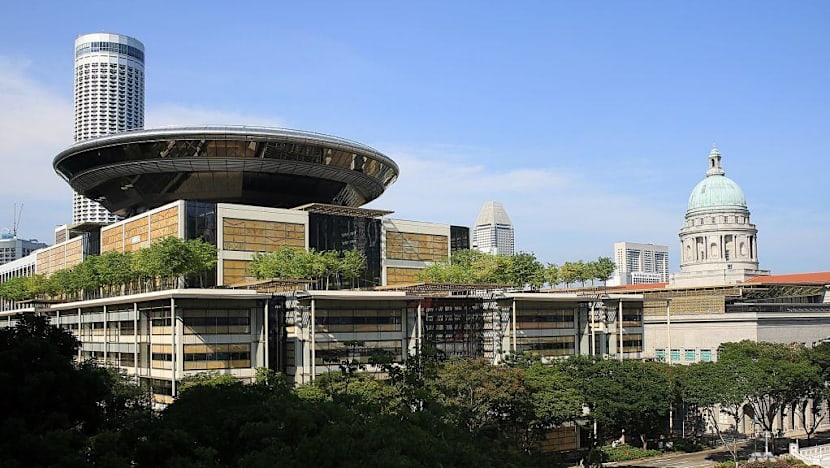
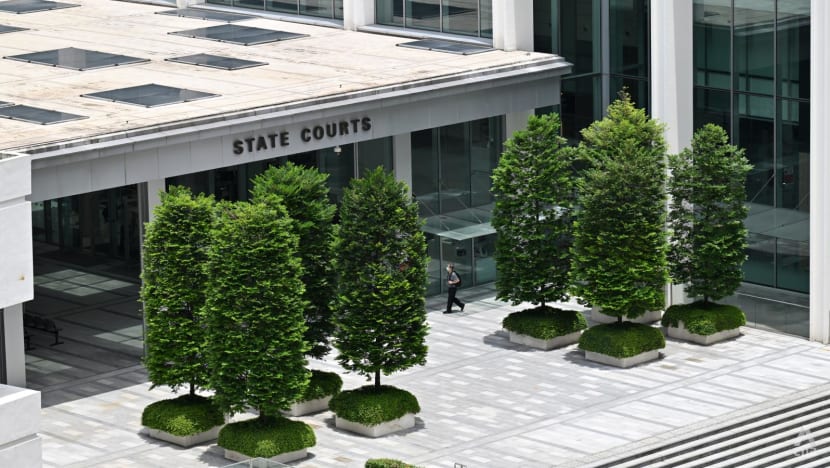
                                      The State Courts of Singapore (File photo: CNA/Jeremy Long)

                                      Listen
                                      7 min
                                      New: You can now listen to articles.

                                      This audio is generated by an AI tool.

                                      25 Feb 2026 04:13PM (Updated: 25 Feb 2026 08:21PM)
                                      Read a summary of this article on FAST.
                                      FAST

                                      SINGAPORE: A Chinese national came to Singapore on a fraudulent work pass and found a job performing tasks for a criminal syndicate. He handled S$11.6 million (US$9.2 million) for the organisation and set up a bungalow for three hackers, also from China, to use as a base.

                                      Chen Yiren, 44, was sentenced to about 22 months' jail and given a fine of S$8,000 on Wednesday (Feb 25).

                                      He pleaded guilty to four charges which included receiving money used by a syndicate to facilitate offences, making a false statement in a work permit application, and working as a housekeeper without a valid work pass.

                                      Another seven charges were considered in sentencing.

                                      THE CASE

                                      The court heard that Chen paid an agent in China sometime before 2022 for help in applying for a work permit in Singapore.

                                      He managed to obtain a work permit under Kowata Engineering & Construction as a process maintenance and construction worker, and came to Singapore in June 2022.

                                      Although he attended some training for the job, he did not work for the company but instead looked for his own work.

                                      He was introduced to 38-year-old Ni-Vanuatu citizen Xu Liangbiao, who is now wanted. He left Singapore a day after a billion-dollar money laundering case that broke in August 2023.

                                      Xu left Singapore a day before arrests were made on Aug 15, 2023 and his current whereabouts are unknown.

                                      Xu told Chen that he had rented a property at 48B Jalan Kampong Chantek in Bukit Timah and needed help to furnish it, offering to pay Chen.

                                      Chen agreed, and began assisting Xu with various errands in exchange for an initial monthly salary of 20,000 yuan (S$3,674) that later increased to 30,000 yuan.

                                      Among his duties, Chen collected money on Xu's behalf at the house at Jalan Kampong Chantek through delivery riders dispatched from moneychangers.

                                      For authentication, the delivery riders would check against a photo of a dollar note Chen showed them with a specific serial number.

                                      Between late 2022 and Sep 9, 2024, Chen received almost S$11.6 million in total over 23 occasions under Xu's directions.

                                      Although Chen found it suspicious that he was asked to receive such large amounts of money in cash - the largest single sum was over S$1.3 million - he saw himself as merely Xu's worker and did not ask him about it.

                                      On Xu's directions, Chen spent about S$2.49 million on the monthly rentals of various properties, which Xu intended to use as residences and bases for himself and other accomplices for criminal activity.

                                      These properties included an apartment at Fraser Suites in River Valley Road with a monthly rental of S$11,000, a bungalow at Jalan Lim Tai See in the Holland area for a rental of S$17,000 per month and a bungalow at Mount Sinai which cost S$33,000 per month to rent.

                                      Chen also used some of the money to hire a driver for himself and to subscribe to a broadband service at Mount Sinai.

                                      THE HACKERS' BUNGALOW

                                      The prosecution said Xu was known to be interested in maintaining overseas gambling websites to earn money. He invited three Chinese men to Singapore intending to employ them as hackers to obtain personal data so he could send targeted advertisements for gambling websites.

                                      The three intended hackers, Yan Peijian, Huang Qinzheng and Liu Yuqi, came to Singapore sometime around September 2022 at Xu's invitation.

                                      Xu asked Chen to help look for accommodation for them, and Chen rented the Mount Sinai bungalow, with the trio moving in around Nov 1, 2023.

                                      Chen then essentially acted as a housekeeper by supporting the three hackers' living expenses from the money Xu sent him, paying for rental, arranging for moonlighting foreign workers to cook and clean there and settling the broadband connection.

                                      Chen also helped Xu safekeep a collection of liquor, including vintage editions of The Macallan whisky, Maotai and Martel liquors and red wines.

                                      After Xu fled Singapore, he gave Chen instructions to have the liquor transferred to a facility for safekeeping.

                                      Chen knew the collection was valuable, and he also knew that these instructions came shortly after news broke of the arrest of 10 Chinese nationals for money laundering.

                                      Despite this, he engaged movers to move about 40 crates of liquor to a storage facility in Changi.

                                      Xu's collection of liquor was later seized and found to consist of 414 bottles with a total value of at least S$7 million.

                                      Around April 2024, Chen's work pass came up for renewal and he successfully applied to renew it under the same falsely declared job. 

                                      In September 2024, Chen received a call from his property agent, saying there were many policemen at the Mount Sinai home.

                                      Knowing that the hackers could be in trouble, Chen tried to leave Singapore for Kuala Lumpur, but was stopped at Woodlands Checkpoint.

                                      He was arrested and various devices, a Toyota Alphard and cash including S$14,250 were seized from him.

                                      SENTENCING ARGUMENTS

                                      The prosecution sought at least 24 months and four weeks' jail and a fine of S$8,000 for Chen.

                                      Although the syndicate did not directly target Singapore, avoiding targeting Singapore websites and government websites, there was reputational damage to the country as it was the hub of the group's illegal activities, said Deputy Public Prosecutor Shaun Lim.

                                      Foreign government-related data was found on the hackers' devices, despite the fact that they claimed to have avoided targeting government websites, said Mr Lim.

                                      He said the amount handled by Chen was very large and was a significant amount of resources handled on behalf of the syndicate, as could be seen from their ability to rent multiple properties to live in and use as operational bases.

                                      Chen played a key role in the group, as he was effectively a paymaster or an agent making arrangements on Xu's behalf, said Mr Lim.

                                      While Chen was not privy to the exact details of the syndicate's operations, this was directly attributable to his "wilful blindness", since he was well aware that Xu might be engaging in illegal activity but chose not to question him for fear of losing a lucrative situation, said Mr Lim.

                                      Chen had offended over almost two years, he added.

                                      Chen's lawyer, Mr Kenrick Lam from Templars Law, sought 14 months and four weeks' jail instead, with a fine of S$7,000 to S$8,000.

                                      He said Chen was merely a follower in the broader scheme of the syndicate's operations, without any control or decision-making authority.

                                      The three hackers played a more significant and substantive role, argued the lawyer.

                                      Chen did not have any direct involvement in the core criminal conduct of the syndicate, and any benefits he gained were "vastly disproportionate to the amount involved" in the current offences, said Mr Lam.

                                      The three hackers were given more than 28 months' jail each at earlier hearings.

                                      Source: CNA/ll

                                      Sign up for our newsletters

                                      Get our pick of top stories and thought-provoking articles in your inbox

                                      Subscribe here
                                      Advertisement

                                      Singapore

                                      Singapore records 27.6% drop in scam cases in 2025

                                      Government officials impersonation scam cases jumped 123.6 per cent last year, however.

                                      Singapore records 27.6% drop in scam cases in 2025

                                      There were 37,308 scam cases in 2025, a 27.6 per cent drop from the 51,501 cases recorded in 2024. (Photo: iStock/tolgart)

                                      Listen
                                      10 min
                                      New: You can now listen to articles.
                                      This audio is generated by an AI tool.

                                      25 Feb 2026 03:00PM (Updated: 25 Feb 2026 08:07PM)
                                      Read a summary of this article on FAST.
                                      FAST

                                      SINGAPORE: The number of scam cases in Singapore fell 27.6 per cent in 2025, after increases in the past few years. 

                                      There were 37,308 such cases last year, down from the 51,501 cases recorded in 2024, the Singapore Police Force (SPF) said in its annual statistics on scams and cybercrime released on Wednesday (Feb 25).

                                      This is the first time SPF has seen a decrease in the total number of scam cases since it began reporting scam statistics separately in 2023, the police said in response to queries from CNA.

                                      Scams accounted for the majority of the total scam and cybercrime cases last year (88.9 per cent), which also saw a drop by 24.8 per cent to 41,974. 

                                      The total amount lost to scams also decreased by 17.9 per cent from about S$1.124 billion (US$889 million) in 2024 to around S$913.1 million in 2025. 

                                      Cryptocurrency losses continue to form a "considerable" percentage of scam losses – around 20 per cent – accounting for about S$182.2 million, said the police.

                                      Significant decreases were also seen in the number of cases reported for e-commerce scams, job scams and fake friend call scams. Meanwhile, the number of government officials impersonation scams jumped. 

                                      The total amount lost to fraudsters also dipped significantly for malware-enabled scams, business email compromise scams, job scams and fake friend call scams. 

                                      The police attributed the decrease in scam cases and scam losses to anti-scam strategies and public education efforts that made it "more challenging for scammers to succeed". 

                                      SPF noted that its Anti-Scam Command (ASCom) managed to recover about S$140.5 million of scam losses in 2025. Together with its partners, ASCom also helped victims avert at least S$348 million in potential losses, the police added.

                                      They, however, also highlighted that self-effected transfers – where individuals willingly transfer money to scammers – made up 81.8 per cent of total reported scam cases last year. 

                                      In these cases, scammers did not gain direct control of the victims' accounts, but manipulated them into performing monetary transactions through deception and social engineering.

                                      In 2025 alone, more than 7,000 money mules and scammers suspected of involvement in scam cases were investigated. Over 940 of them have been charged by the police to date, said SPF.  

                                      The police added that the situation is still "very concerning" despite the drop in numbers, and tackling scams remains a key priority for the government.

                                      Minister of State for Home Affairs Goh Pei Ming similarly noted that the "fight is far from over". 

                                      "Scams remain the most prevalent crime type in Singapore, and the overall numbers remain high," he said, adding that scammers continue to adapt their techniques and exploit new vulnerabilities.

                                      Mr Goh said that the government will "double down" on efforts to combat scams and "continue to rally both international and local partners to disrupt the scam lifecycle". 

                                      SCAMS OF CONCERN

                                      The police flagged the top five scam types of concern in 2025, with e-commerce scams topping the list. They were followed by phishing scams, job scams, investment scams and government officials impersonation scams. 

                                      Of these, government officials impersonation scam numbers saw a spike, while figures fell for the rest. 

                                      The number of government officials impersonation scams reported last year more than doubled – by 123.6 per cent to 3,363 cases in 2025, from 1,504 in 2024. 

                                      The police observed new trends in how victims transferred money to scammers in this scam type. These include transferring funds from their bank accounts to accounts with payment service providers such as YouTrip, which are controlled by the scammers, via PayNow.

                                      In another method, scammers requested victims to open cryptocurrency accounts, fund them through fiat money transfers from the victims' bank accounts, buy cryptocurrency, and then transfer the cryptocurrency to accounts controlled by the scammers. 

                                      Meanwhile, e-commerce scams, despite having the highest number of cases, recorded a 42.5 per cent drop in cases from 11,665 in 2024 to 6,703 in 2025. 

                                      Pokemon trading cards were highlighted as the item most commonly involved in e-commerce scams, making up 13.6 per cent of related cases. In comparison, these cards accounted for just 1 per cent of e-commerce scams in 2024. 

                                      Victims typically come across listings of Pokemon trading cards on Carousell. After expressing interest in the product or pre-order, they are instructed to make payment or an initial deposit via PayNow or bank transfers. 

                                      The victims only realise they have been scammed when they fail to receive the items, or when the sellers become uncontactable.

                                      Apart from Carousell, Facebook Marketplace was also commonly used by scammers to perpetrate such scams.

                                      As for the amounts lost to scammers, investment scams took the top spot, with about S$336.2 million lost – a 4.8 per cent increase from 2024. 

                                      Government officials impersonation scams came in second, with losses surging 60.5 per cent to about S$242.9 million in 2025.

                                      But losses from other scams, such as e-commerce, phishing and business email compromise scams, declined. Business email compromise scams recorded the steepest fall, dropping by 60.1 per cent.

                                      SCAM VICTIMS

                                      On the profiles of scam victims, the police noted that the elderly, aged 65 and above, formed the second-smallest proportion – after youths – with 14.8 per cent. 

                                      But the average amount lost by the elderly was more than S$37,000 per victim – the highest across all age groups. 

                                      About 22.5 per cent of elderly victims fell prey to investment scams; 21 per cent to government officials impersonation scams; and 17.2 per cent to phishing scams. 

                                      Adults aged 30 to 49 made up the highest proportion of scam victims, accounting for 36.1 per cent of victims. More than 20 per cent were victims of e-commerce scams. This age group also fell prey to phishing and job scams. 

                                      Overall, 85.2 per cent of the scam victims in 2025 were made up of youths, young adults and adults aged below 65.

                                      TOP CONTACT METHODS 

                                      Social media, messaging platforms, phone calls and online shopping platforms were found to be the top methods scammers use to reach victims.

                                      In particular, while social media, messaging platforms and online shopping platforms have remained the top contact methods for scammers, there has been a decrease in reported scam cases involving these avenues, said the police. 

                                      Cases where scammers contacted victims through social media declined by 30.3 per cent, and those involving messaging platforms fell by 38.2 per cent.

                                      Among online shopping platforms, Shopee saw the most substantial decline in scams, with cases dropping 60.4 per cent. 

                                      Carousell saw a 24.6 per cent reduction in cases, while cases on Facebook Marketplace fell 23.5 per cent.

                                      "Notably, scam cases involving designated online service providers under the Online Criminal Harms Act (OCHA), which came into effect in 2024, have declined significantly by 36.5 per cent," SPF said. 

                                      OCHA allows the government to order the takedown of websites, apps and online accounts suspected to be used for criminal activities. 

                                      Two codes of practice were issued to online communication services and e-commerce services, requiring platforms such as Meta, Telegram, WeChat and Carousell to put in place appropriate systems or measures to proactively disrupt scams and malicious cyber activities affecting people in Singapore. 

                                      Still, the scam situation on these platforms "remains worrying", said the police. Online platforms were used by scammers to reach out to victims in 84.1 per cent of all scam cases.

                                      Meta platforms were involved in 35.4 per cent of all scam cases, with Facebook alone accounting for 18 per cent of cases. 

                                      Phone calls too are a contact method of concern for the police, though there was an 18.7 per cent decrease in scams involving this platform last year. 

                                      From January to December 2025, SPF disrupted more than 105,000 mobile lines that were scam-related across all telecommunication operators. 

                                      "This was more than double the number of lines disrupted in 2024," said the police. The telco with the largest number of disrupted local mobile lines was SIMBA, with more than 39,300 lines, they added. 

                                      The police, Infocomm Media Development Authority (IMDA) and telcos will continue to build stronger safeguards and anti-scam measures to prevent the misuse of SIM cards for criminal activities, said SPF. 

                                      IMDA announced last month that individuals will only be able to register up to 10 postpaid SIM cards across all telcos from the end of February to prevent illicit use. 

                                      The new rules will be applied to new subscriptions to minimise the impact on the legitimate use of such SIM cards. 

                                      The agency, in collaboration with the Government Technology Agency of Singapore, will launch a self-help postpaid SIM card checker as part of a trial for the public to check on the number of postpaid SIM cards that are counted as part of the 10-card limit.

                                      The beta version of the self-help tool will be launched on Feb 26 at https://go.gov.sg/simcardhowmany and can be accessed by logging into Singpass.

                                      Source: CNA/ng

                                      Sign up for our newsletters

                                      Get our pick of top stories and thought-provoking articles in your inbox

                                      Subscribe here
                                      Advertisement

                                      Also worth reading

                                      Advertisement