Advertisement
Advertisement

Commentary

Commentary: Stop mourning strata-titled malls and start ensuring their survival

Singapore does not need more “Grade A” malls. Instead, we need “Grade A” ideas to strategically adapt “Grade B” spaces like strata-titled malls, says SUTD's Calvin Chua.

Commentary: Stop mourning strata-titled malls and start ensuring their survival

File photo of Upper Serangoon Shopping Centre, a freehold strata-titled development on Upper Serangoon Road. (Photo: CNA/Tang See Kit)

Listen
7 min
New: You can now listen to articles.

This audio is generated by an AI tool.

23 Feb 2026 06:00AM (Updated: 23 Feb 2026 01:29PM)
Read a summary of this article on FAST.
FAST

SINGAPORE: Singapore’s ageing strata-titled malls usually make the news for familiar reasons – stalled lifts and broken escalators, sparse footfall and perhaps a few questionable establishments – painting a dismal picture of a property in decline.

Attention also falls on these malls, once grand dames of Singapore’s retail scene, when there are en bloc plans. From there, they typically face one of three fates.

The first is what I call a “funeral party”. This was the case for Peace Centre whose demolition following a successful collective sale in 2021 was postponed, allowing it to see a final burst of life in the form of a vibrant hub for local artists and pop-ups until early-2024. Such creative activations, however, remain the exception – a temporary stay of execution before the wrecking ball arrives.

Another scenario is reserved for landmarks like Golden Mile Complex, where the building’s shell is conserved. Even then, a paradox exists: The structure is saved, but the original community has been displaced.

The third, and most common, fate is limbo. Collective sales don’t always work out, even after multiple bids like for Upper Serangoon Shopping Centre and Singapore Shopping Centre. These failed attempts often leave mall owners in a stalemate – unwilling to invest further in hope of a future sale, yet unable to sell as the building’s condition continues to deteriorate.

These three fates reveal a broader reality: In our pursuit of shiny new “Grade A” properties, we are neglecting some of these older buildings which may be “Grade B” in real estate terms but possess heritage and cultural value. 

If we aspire to build a culturally vibrant and community-oriented city, we must preserve the very spaces that make that future possible.

ESSENTIAL THIRD SPACES

To the average shopper, a mall like Beauty World Centre might appear boring and dated. But for its long-time tenants and patrons, it is a familiar community anchor. It serves as a vital third space - a sociological term referring to a neutral ground for social life that exists outside the pressures of home and the productivity of work.

An overhead bridge connecting Beauty World Centre to Rifle Range Nature Park, on Jan 22, 2026. (Photo: CNA/Ooi Boon Keong)

This is best embodied by the centenarian Madam Sie who went viral on social media in 2024 after being spotted managing a provision shop at Beauty World. She prefers doing so, as staying at home was boring, according to interviews with her son who owns the shop.

Alongside other long-time shop owners like Uncle Yap, who has managed a wedding decoration shop there for 50 years and is a familiar face to many patrons including myself, they form a social fabric that new REIT-owned malls, with their turnover rates, cannot replicate.

Hence, when we lose these malls, we do not just lose real estate; we lose the “living rooms” of our silver generation and our heritage businesses.

We also lose the unique experience that only strata-titled malls can offer, such as those that developed a niche positioning organically over the years like Queensway Shopping Centre and Sim Lim Square.

MOVING BEYOND THE WRECKING BALL

To move away from the teardown-and-start-over model, we must stop viewing strata-titled malls simply with nostalgia or tradable pieces of real estate, and start thinking of them as infrastructure to be strategically adapted. Government policies can help to nudge developers and other actors in this direction.

1. Fractional adaptation

The impasse of multiple failed collective sales highlights the need for a “fractional adaptation” approach. Instead of the all-or-nothing en bloc model, we should incentivise developers to buy into a building partially.

By strategically allowing for partial collective sales and offering adaptive reuse incentives – similar to those offered to the potential new owners of Golden Mile Tower last year during a collective sale exercise to nudge the conservation of the iconic cinema block – we can break the monolithic scale of the “mega-block” into independently-managed “micro cultural nodes”.

This will allow more flexible responses to changing retail demands. It may even encourage the creation of spaces with organic human-scale qualities, like KOTE in Seoul, Sala Saneha in Bangkok and others in the region.

Adaptive reuse, even if partial, also addresses the massive environmental cost of embodied carbon, as retrofitting an existing building saves a carbon debt that new buildings take decades to repay.

Located in Chinatown, the iconic People’s Park Complex is a 31-storey mixed-use commercial and residential development, which comprises offices and apartments above a shopping centre. (Photo: Brilliance Capital)

But, even if the structure of a mall is preserved, it might not house the old tenants and their businesses anymore. So we should complement this with a heritage quota, like the one proposed by non-profit heritage group Docomomo Singapore last year in its position paper on the potential conservation of People’s Park Complex. This can be a quota to retain a percentage of existing businesses, ensuring that the Madam Sies and Uncle Yaps of our country are not evicted and our social fabric can be preserved.

2. Turning the “funeral party” into an interim incubator

The activation of Peace Centre was a creative success, but it lacked the involvement of the building’s original tenants and owners.

In this case, efforts such as the Enterprise Singapore’s Sprout@AMK – a 12-month initiative helping heartland enterprises testbed innovative ideas – may be refined for strata-titled malls that have clinched a successful collective sale.

For existing and even new tenants in search of temporary spaces, having such a programme can serve as a transitional incubator for new business ideas and community services. For developers, they can use this time to finalise designs and approvals, sandbox new retail concepts and technology, while scouting for potential tenant mix for its new development from the pool of existing tenants.

A performance at the Thryft store at Peace Centre on Jan 26, 2024.

3. Integration into urban design strategies

Urban design guidelines can serve as a catalyst for adaptive reuse, particularly in strata mall clusters such as Beauty World and along Jalan Sultan.

These clusters possess character but often suffer from a lack of integration with their surroundings. Urban design can reimagine these clusters as cohesive precincts, alongside the offering of plot ratio or floor area incentives in exchange for meaningful public realm contributions, such as the carving out of public plazas or the improvement of through-block pedestrian connectivity.

By having better urban connections that weave older buildings into the surrounding neighbourhood fabric, we can influence the economic viability of these malls from the outside in.

Singapore does not need more “Grade A” malls; what we need are “Grade A” ideas to enliven “Grade B” spaces that allow our city to breathe and age with dignity.

Calvin Chua is Associate Professor of Practice at the Singapore University of Technology and Design and founder of research-led design firm Spatial Anatomy.

Source: CNA/sk

Sign up for our newsletters

Get our pick of top stories and thought-provoking articles in your inbox

Subscribe here
Inbox
FAST
Advertisement

Singapore

Budget 2026 debate: PAP MPs call for prudence, caution amid global uncertainties

Members of Parliament from the People's Action Party also urged for more social support for vulnerable groups in society.

Budget 2026 debate: PAP MPs call for prudence, caution amid global uncertainties

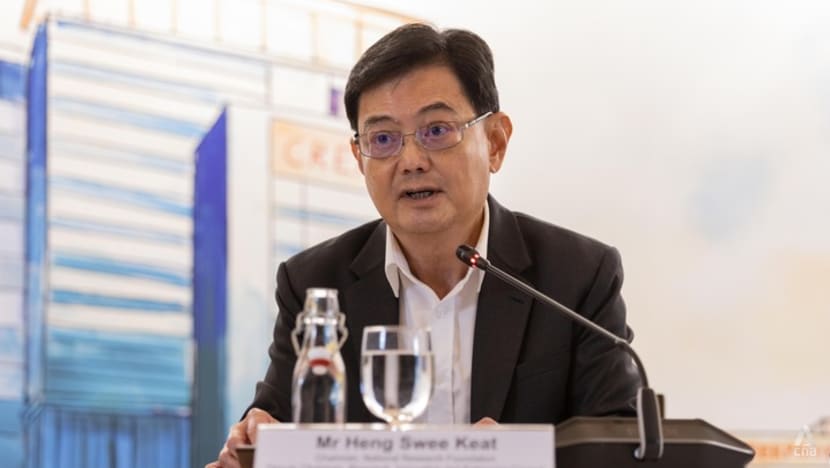
MPs Saktiandi Supaat, David Hoe and Yip Hon Weng speaking in parliament on Feb 24, 2026.

Listen
7 min
New: You can now listen to articles.

This audio is generated by an AI tool.

24 Feb 2026 07:59PM (Updated: 24 Feb 2026 08:04PM)
Read a summary of this article on FAST.
FAST

SINGAPORE: Members of Parliament from the ruling People’s Action Party (PAP) on Tuesday (Feb 24) called for prudence amid global uncertainties, as Singapore recorded a surplus of S$15 billion (US$11.8 billion) for the 2025 financial year.

More than 30 MPs spoke in parliament on the first day of the Budget 2026 debate, with some raising suggestions on how the most vulnerable in society can be better supported

The surplus for the current financial year is more than double the earlier estimate of S$6.8 billion.

A number of PAP MPs opened their speeches by noting heightened global uncertainty due to geopolitical tensions.

“The global environment is rapidly evolving. We are witnessing heightened geopolitical rivalry, economic fragmentation and a growing willingness by some states to prioritise what they believe to be national interests over collective commitments,” said MP Vikram Nair (PAP-Sembawang).

“While international law remains indispensable, we must also be realistic and prepare for a world in which non-compliance is going to be more common and where major powers may not always abide by either the letter or the spirit of international commitments.”

Prime Minister Lawrence Wong said in his Budget speech last Thursday that the stronger economic position was partly driven by better-than-expected economic performance, highlighting the increase in corporate income tax collections.

The financial year 2025 ends on Mar 31, 2026.

PRUDENCE AND CAUTION

Despite the fiscal surplus, MPs called for prudence and caution in spending.

MP Saktiandi Supaat (PAP-Bishan-Toa Payoh) noted that residents had asked him why there were not more "goodies" in light of the Budget surplus.

"This is an understandable question, but the surplus reflects, in part, the volatility of the global environment. Unexpected developments, whether geopolitical tensions or trade disruptions, can quickly affect growth and revenue.

"While we performed better than expected in 2025 as our economy grew 5 per cent, beyond our expectations ... we cannot assume that such conditions will persist," Mr Saktiandi said.

Likewise, MP Yip Hon Weng (PAP-Yio Chu Kang) said that Singapore's prudence was an asset as it gave the country options to act in times of uncertainty.

"In a more dangerous world, fiscal strength is national defence. Our buffers are not excesses. They are strategic insurance," he said.

Video Player is loading.
Current Time 0:00
Duration 13:43
Loaded: 1.21%
Stream Type LIVE
Remaining Time 13:43
 
1x
    • Chapters
    • descriptions off, selected
    • captions off, selected
    • en (Main), selected
    13:43 Min

    Fiscal resilience is strategic capability as it preserves Singapore’s strategic autonomy, said MP Yip Hon Weng. Given its current surplus position, perhaps it can signal stability by avoiding further tax increases in the near term, he said in parliament on Tuesday (Feb 24). Mr Yip noted that the government may need to raise revenue but stressed that revenue adjustments should be designed with cost pressures firmly in mind. Where space exists, it should be used to cushion households and strengthen trust. Trust must also underpin Singapore’s AI transition, he said. If Singapore gets it right, it will not merely adopt AI but will guide, shape and humanise it.

    SUPPORTING SINGAPOREANS

    The PAP MPs noted that the surplus does not in itself ease the cost-of-living pressures faced by Singaporeans, with some turning to how resources can be better deployed to help individuals cope.

    Some MPs raised tax-related suggestions.

    Mr Saktiandi proposed raising the income tax threshold for tax exemptions from the current S$20,000 to S$25,000 or S$30,000, given that median incomes have increased.

    The median monthly household income in Singapore rose to S$12,446 last year, up from S$11,558 the year before, an increase of 6.8 per cent after adjusting for inflation.

    "More low and middle income earners enter the tax base not because they are significantly better off, but because the system has not been recalibrated," Mr Saktiandi said, adding that this would provide meaningful relief to low and middle income groups.

    Video Player is loading.
    Current Time 0:00
    Duration 17:46
    Loaded: 0.93%
    Stream Type LIVE
    Remaining Time 17:46
     
    1x
      • Chapters
      • descriptions off, selected
      • captions off, selected
      • en (Main), selected
      17:46 Min

      Parliament on Tuesday (Feb 24) began its debate on Budget 2026 delivered by Prime Minister Lawrence Wong. MP Saktiandi Supaat kicked off the debate by expressing support for the Budget and addressed the “life cycle economic security” of Singaporeans. He also touched on the retirement adequacy of Singaporeans and wanted to know the government’s assessment on the success of the Central Provident Fund (CPF) Board's Matched Retirement Savings Scheme. He also wanted to know more about the new CPF life-cycle investment products, and asked the CPF Board to provide scenario-based projections to strengthen confidence among Singaporeans so that they can adequately provide for themselves after retirement.

      Mr Yip proposed avoiding further tax increases in the near term, given the current surplus position.

      Similarly, MP Shawn Loh (PAP-Jalan Besar) said the fiscal surplus should give the government more confidence to assure Singaporeans that it would not take "major revenue-raising moves" up to 2035, barring any material adverse circumstances.

      Nominated MP Terence Ho said that a balance must be struck between setting aside funds for rainy days, investing in infrastructure capabilities and human capital, and strengthening social support.

      He also suggested reframing the Community Development Council (CDC) vouchers scheme as part of a broader social support framework.

      Vouchers and credits can be repositioned as a social dividend, an annual sum given to citizens that signifies that they have a stake in the country and its collective wealth, said Assoc Prof Ho.

      "The government can determine the size of the dividend it declares each year, depending on prevailing fiscal and economic conditions," he said.

      "The dividend should be universal and progressive, meaning that everyone receives something, or the less well off receive more. A social dividend would be a form of social support that complements the structural transfers, is flexible in size and sends a clear message of solidarity and inclusion."

      Echoing his sentiments, Mr Loh suggested a surplus sharing mechanism in the form of more CDC vouchers if the surplus exceeds a threshold.

      SOCIAL SUPPORT

      Some of the MPs also urged stronger support for families and vulnerable groups.

      MP David Hoe (PAP-Jurong East-Bukit Batok) asked for support for parents in the form of housing, reduced transport-related stress and childcare leave.

      To support large families, the government should make it easier for those planning to have more children to secure homes of an adequate size, Mr Hoe said.

      He suggested introducing larger “jumbo Build-to-Order” flats designed for modern families, including space for domestic helpers.

      These flats could be priced similarly to smaller units through additional subsidies, but with conditions — such as requiring couples to commit to having two or more children within five to seven years of the minimum occupation period.

      If they do not meet the condition, a clear downsizing pathway with subsidy clawbacks would apply, while allowing for reasonable exceptions such as medical fertility issues.

      Video Player is loading.
      Current Time 0:00
      Duration 17:01
      Loaded: 0.97%
      Stream Type LIVE
      Remaining Time 17:01
       
      1x
        • Chapters
        • descriptions off, selected
        • captions off, selected
        • en (Main), selected
        17:01 Min

        Singapore’s total fertility rate, which was at a historical low of 0.97 in 2024, suggests that Singapore has not been successful in shifting the needle on encouraging Singaporeans to have children, said MP David Hoe in parliament on Tuesday (Feb 24). He proposed a shift from “doing more in an aggregate manner, to doing better”, addressing the concerns of adequate space in HDB flats, mobility and commuting stress, paid childcare leave and accessibility to play areas for children. He also raised the issue of a widening opportunity gap and equitable access to opportunities among families with children.

        He also suggested keeping childcare leave provision under periodic review.

        Currently, parents get six days of paid childcare leave per child when their child is six years or younger. When the child is aged between seven and 12, the parent gets two days a year.

        Mr Hoe said that when a child turned seven, the government could still keep the number of childcare leave to six days a year and taper off the number of leave days, so it is not a sharp drop.

        MP Jackson Lam (PAP-Nee Soon) called for better support for seniors who are healthy and willing to continue working.

        He proposed piloting structured second-career pathways in sectors with strong labour demand and combining modular training, job redesign and clear job placements for workers aged 55 and above.

        Job-specific digital skills modules and a clearly identified senior skills track could lower barriers to participation, he added.

        "Ultimately, supporting seniors is not just about financial adequacy. It is about dignity, contribution and about sustaining intergenerational trust, and that trust strengthens us, especially in uncertain times."

        Source: CNA/wt(mi)

        Sign up for our newsletters

        Get our pick of top stories and thought-provoking articles in your inbox

        Subscribe here
        Inbox
        FAST
        Advertisement

        Singapore

        SBS Transit reports 2.7% dip in group revenue to S$1.52 billion for 2025

        The public transport operator also proposed a special dividend of 31.99 cents per ordinary share on top of a proposed final tax-exempt one-tier dividend of 8.66 cents per share.

        SBS Transit reports 2.7% dip in group revenue to S$1.52 billion for 2025

        A view of SBS Transit buses. (File photo: TODAY)

        Listen
        5 min
        New: You can now listen to articles.

        This audio is generated by an AI tool.

        24 Feb 2026 07:49PM
        Read a summary of this article on FAST.
        FAST

        SINGAPORE: Public transport operator SBS Transit on Tuesday (Feb 24) reported a 2.7 per cent fall in group revenue to S$1.52 billion (US$1.2 billion) for 2025. 

        Group operating costs slid by 2.5 per cent to S$1.45 billion mainly due to lower fuel and electricity costs from lower average diesel and electricity prices. 

        These were partially offset by higher rail licence charge and higher staff costs, SBS said. 

        The company also recorded a lower operating profit of S$68.1 million – a 6.9 per cent fall from the previous year. 

        Tax expense fell by 3.3 per cent to S$12.8 million mainly due to lower profits generated, SBS said. 

        Net profit attributable to shareholders slumped 13 per cent to S$61.2 million from the previous year.

        SBS Transit Group CEO Jeffrey Sim said: “We remain focused on strengthening our competitive edge in our bus operations as well as in enhancing our rail reliability. 

        “We will continue to work closely with the LTA in implementing the Rail Reliability Taskforce recommendations to deliver a safe and pleasant journey for our commuters.” 

        The company’s full-year revenue from its public transport service businesses – comprising bus and rail services – fell by 3 per cent to S$1.45 billion in 2025. 

        The decrease was mainly due to lower bus revenue, arising largely from the loss of the Jurong West bus package from September 2024, which resulted in lower mileage, SBS said. 

        Rival operator SMRT has taken over the 26 routes in the Jurong West bus package.

        The fall was partially offset by higher rail revenue, driven mainly by higher rail average fares and ridership.

        SBS Transit’s rail services saw mixed average daily ridership across its three lines. 

        The North East Line saw an increase of 2.2 per cent to 602,000, while the Downtown Line also recorded a 1.1 per cent rise to 470,000.

        The Sengkang-Punggol LRT reported a decrease in average daily ridership by 2.6 per cent to 157,000.

        Operating profit from the firm's public transport businesses fell by 16 per cent to S$45.1 million due mainly to lower bus revenue and higher rail licence charge. This was offset partially by lower fuel and electricity costs arising from lower diesel and electricity prices.

        Revenue from other commercial services rose by 5.1 per cent to S$62.8 million mainly due to advertisers launching more digital campaigns. 

        Operating profit from these services increased by 18.4 per cent to S$23 million, largely due to lower staff costs and advertising expenses. This was partially offset by higher advertising concession fees. 

        SBS Transit proposed a final tax-exempt one-tier dividend of 8.66 cents per share. The board also proposed a special dividend of 31.99 cents per ordinary share.

        The final and special dividend is subject to approval by shareholders at the company’s annual general meeting on Apr 23 and will be payable on May 11. 

        Including the interim tax-exempt one-tier dividend of 8.95 cents paid earlier, SBS will pay a total dividend of 49.60 cents per share for 2025, up 42.2 per cent from 2024.  

        Bus operations revenue is expected to fall after the loss of the Tampines Bus Package from July 2026, SBS Transit said. 

        Rail operations revenue is expected to grow due to sustained increases in ridership and fare adjustments that came into effect on Dec 27, 2025, the company added.

        Bus and train card fares went up by 9 to 10 cents per journey for adult commuters.

        Concession card holders such as students, seniors and people with disabilities saw their fares increase by 3 to 4 cents for journeys beyond 3.2km. 

        Overall, fares increased by 5 per cent. 

        Source: CNA/co

        Sign up for our newsletters

        Get our pick of top stories and thought-provoking articles in your inbox

        Subscribe here
        Inbox
        Advertisement

        Singapore

        Budget 2026 debate: Trust, inclusivity and worker support top MPs' concerns over Singapore's new AI strategy

        MPs on both sides of the House supported the Budget's focus on artificial intelligence, but warned of potential hurdles in embarking on this new national strategy.

        Budget 2026 debate: Trust, inclusivity and worker support top MPs' concerns over Singapore's new AI strategy

        File photo of people crossing the street at the central business district (CBD) in Singapore. (Photo: CNA/Syamil Sapari)

        Listen
        10 min
        New: You can now listen to articles.

        This audio is generated by an AI tool.

        24 Feb 2026 07:38PM (Updated: 24 Feb 2026 08:38PM)
        Read a summary of this article on FAST.
        FAST

        SINGAPORE: Singapore’s national AI push must be built on trust, ensure no worker or small business is left behind, and come with clear accountability, MPs said on Tuesday (Feb 24) as parliament debated the national budget.

        MPs on both sides of the House supported the artificial intelligence focus of the Budget unveiled by Prime Minister Lawrence Wong on Feb 12, but warned of potential hurdles in embarking on this national strategy.

        Mr Wong, who is also Finance Minister, announced that he will chair a new National AI Council to drive Singapore’s AI agenda.

        Several MPs said that trust in Singapore's legal framework, governance and institutions is itself a competitive advantage in an AI-driven world.

        "Trust is intangible, yet it behaves like infrastructure," said Mr Victor Lye (PAP-Ang Mo Kio). "Trust enables flows, capital, data, talent, goods, decisions. Trust increases resilience to shocks. Trust is the reliability premium that allows counterparties to transact, coordinate and commit to actions at scale."

        He called for the government to create trust infrastructure such as regulatory sandboxes and Singapore-verified credentials that would allow foreign companies and professionals to demonstrate compliance skills and experience.

        Mr Henry Kwek (PAP-Kebun Baru) called trust "the most precious commodity in the digital economy", noting that businesses will locate their AI operations where they have confidence in the legal system and the government behind it.

        "Singapore has spent decades building exactly that trust," he said.

        Ms Mariam Jaafar (PAP-Sembawang) said this reputation allows Singapore to overcome its lack of natural resources, limited land space and shrinking labour force.

        "We do not compete on scale and spend. We compete on coordination, trust, governance and execution," she said. 

        Singapore can build "the most trusted agentic systems and applications", creating AI that is safe, accountable and designed for real industries, she added.

        Minister of State for Digital Development and Information and for Education Jasmin Lau said that human accountability must remain central to AI governance.

        While AI can process and generate, it cannot be held responsible nor own the consequences of its actions, she said.

        "We will still need humans for ethics, for creativity and imagination, and for the ability to look someone else in the eye and say, ‘I take responsibility for this’.”

        SUPPORTING SMALL BUSINESSES

        MPs also highlighted the importance of ensuring that small- and medium-size enterprises (SMEs) are not left behind in AI adoption. They pointed out that while many of these businesses are open to adopting AI, they face structural gaps and uncertainty.

        Ms Lau noted that many SMEs have raised concerns that they cannot afford to be “guinea pigs” in AI adoption.

        “They have many personal experiences of trying out new technologies and then realising that the technologies became outdated too fast, and they are right to be cautious,” she said.

        As such, the government will create lower-risk and structured ways for SMEs to experiment, she said, adding that the government is refining its funding scheme. Initially, the barrier was set-up costs, which are already subsidised.

        Now, the barrier is capability and workflow redesign. Funding support will hence shift accordingly towards implementation, business process redesign, rescaling, and the “much harder work” of changing how an organisation actually operates, she said.

        “We will make sure we are accountable, but we must also make sure that our SMEs – most of whom are genuine and often already tight on resources – we must make sure they do not get turned away too early by onerous and cumbersome paperwork,” she said.  

        Nominated MP Mark Lee said that SMEs may lack the capacity for AI integration. AI implementation is expensive, and costs include software, data restructuring and upskilling workers, among others, he said.

        “Big firms have both the talent and financial muscle to spread this fixed cost. SMEs often cannot – if transformation succeeds, gains are gradual. If it fails, losses are immediate.”

        He added that support for AI adoption must hinge on clarity, or SMEs may misjudge eligibility or misallocate resources.

        MP Denise Phua (PAP-Jalan Besar) agreed that SMEs cannot be an “afterthought”. “AI is at the centre of our strategy, but on the ground, many business owners are still unsure what this means for survival, not just growth,” she said.

        She proposed providing precision support to them, rather than broad measures. This includes classifying firms into foundational, emerging or advanced stages of AI-readiness, so that support can be tailored to readiness.

        Ms Phua also suggested the provision of government-funded AI coaches, and the strengthening of intermediaries, such as the Singapore Business Federation, the National Trades Union Congress (NTUC) and SME Centres.

        “The goal is not to push every SME into complex AI systems overnight. The goal is disciplined, intentional transformation. If we get this right, AI becomes a renewal engine for SMEs. If we get it wrong, then we create a two-speed economy, not because help was absent, but because execution lacked precision,” she said.

        OPPORTUNITIES FOR ALL

        Beyond small businesses, MPs stressed that Singapore’s push for AI should be inclusive to individuals from different backgrounds.

        To ensure an inclusive social compact, blue-collar workers in manufacturing and logistics could use “physical AI”, said Mr Gerald Giam (WP-Aljunied).

        Examples include using collaborative robots to assist with heavy lifting in factories or employing AI as a translation tool for workers who struggle with English.

        “AI should be an equaliser that elevates technical mastery, not a wedge that separates our workforce,” he said.

        Mr Giam also proposed that the 400 per cent tax deductions on AI expenses should cover corporate AI subscriptions, to give workers access to corporate AI tools while keeping company data secure.

        “Giving every worker a digital assistant should be a baseline goal for a nation that aspires to be an AI leader. This ensures that the benefits of the technology are shared by the employee and the employer alike,” he said.

        Ensuring equitable access to AI starts early, noted Mr Darryl David (PAP-Ang Mo Kio).

        “Before we can talk about mastering AI software and advanced tools, we must ensure that every student starts from the same baseline. AI readiness depends on digital readiness,” he said.

        Advocating for personal learning devices to be extended to primary school students, he added that without reliable access to personal computing devices, students cannot develop foundational skills or experiment with digital tools in ways that will enable meaningful engagement with AI later.

        In her speech, Ms Lau also said that the continued evolution of AI will call for a review of "what education means for our children".

        "AI will force us to sharpen the focus of education on what truly matters – judgment, values and the ability to work with AI, rather than to compete with it,” she said.

        "How do we teach our children about AI, in particular, its limits, biases and blind spots? How do we balance the weightage of our education to emphasise character and social development?”

        HELPING WORKERS ADAPT

        MPs highlighted the understanding and awareness gap among workers when it comes to adopting AI and tapping the opportunities that come with it.

        They also sought clarity on the roadmaps and pathways at the industry and individual levels, for the new growth areas in an AI-enabled economy.

        "More than three years after ChatGPT changed the world, AI remains an enigma for much of our workforce and many of our businesses," noted Workers' Party secretary-general Pritam Singh (WP-Aljunied).

        He said he looked forward to seeing the “actionable strategies” from the government, calling for clear criteria and standards before AI-related subsidies and grants are disbursed.

        "AI-related grants and subsidies must be ringfenced for truly transformative productivity gains so that these taxpayer subsidies are not gamed or abused," he said, citing past lapses under the Productivity and Innovation Credit scheme.

        “We cannot repeat that mistake with taxpayer money with this latest productivity push through AI-related subsidies,” he added.

        In emerging industries such as AI, quantum, advanced manufacturing and biomedical sciences, many people opt out early simply because they lack exposure, noted Mr David Hoe (PAP-Jurong East-Bukit Batok).

        "They do not know what the work actually looks like, what the entry routes are, or what skills matter," he said.

        "Those with stronger networks can ask someone, get an introduction, or hear early about internships and externships. Those without networks often find out late, or not at all."

        The new statutory board created from the merger of Workforce Singapore and SkillsFuture Singapore would hopefully help students and workers without strong industry networks overcome this hidden disadvantage, he said.

        Mr Yip Hon Weng (PAP-Yio Chu Kang) noted that the recent AI coding revolution does not stop at engineers and programmers, but has implications for other knowledge workers.

        He called for clearly measurable labour outcomes, with KPIs that are "explicitly job linked" published annually.

        These could include the net number of new roles created, the wage uplift achieved and the time taken for workers' redeployment, said Mr Yip.

        Source: CNA/er

        Sign up for our newsletters

        Get our pick of top stories and thought-provoking articles in your inbox

        Subscribe here
        Inbox
        Advertisement

        Business

        Singapore Airlines Q3 profit tumbles due to loss of one‑off merger gain, higher fuel costs

        Singapore Airlines Q3 profit tumbles due to loss of one‑off merger gain, higher fuel costs

        A Singapore Airlines plane is seen among the planes in the static display at the Singapore Airshow in Singapore, Feb 16, 2022. (Photo: Reuters/Caroline Chia)

        24 Feb 2026 06:41PM (Updated: 24 Feb 2026 07:10PM)
        Read a summary of this article on FAST.
        FAST

        Singapore Airlines posted a nearly 69 per cent slide in third-quarter net profit on Tuesday (Feb 24), due to the absence of last year's one-off gain from the Air India-Vistara merger and rising fuel costs.

        The airline's share of losses from associated companies climbed by S$163 million (US$128 million) to S$178 million, reflecting a full-quarter share of Air India's losses this year, compared with only one month in the year-ago period.

        Vistara Airlines, in which Singapore Airlines had a 49 per cent stake, completed a merger with Air India in 2024 to establish a dominant full-service carrier for India's growing domestic and international markets.

        Additionally, record global travel demand kept older aircraft in service, pushing up fuel, maintenance, engine-leasing and inventory costs.

        The airline's expenditure rose to S$4.71 billion compared with S$4.59 billion, driven by higher non‑fuel costs and an increase in net fuel cost due to firmer prices and uplift volumes in the period.

        SIA's earnings swings come even as quarterly spending has stayed consistently above S$4 billion for five consecutive quarters, including the current reporting period.

        Singapore's flag carrier posted a net profit of S$505 million (US$398.6 million) for the three-month period ended December 31, compared with S$1.63 billion a year ago.

        "Sustained strength in passenger travel should help offset cargo softness and the share price should react positively given the convincing operating performance beat, though we remain watchful on Air India," said Tabitha Foo, equity research analyst at DBS Group Research.

        Passenger load factor, a measure of how many seats are filled on planes, for the group as a whole came in at 87.5 per cent for the quarter, compared with 87.2 per cent a year earlier.

        "We were expecting competition to intensify as airline capacity in Asia returned to pre-pandemic levels, but it appears some carriers are able to keep yields higher for longer," said Lorraine Tan, director at Morningstar.

        A similar trend was seen at Japan's ANA, she added, suggesting region-wide travel demand remains firm.

        Total revenue for the quarter rose 5.5 per cent to S$5.51 billion from the same period last year.

        Source: Reuters/nh

        Sign up for our newsletters

        Get our pick of top stories and thought-provoking articles in your inbox

        Subscribe here
        Inbox
        Advertisement

        Singapore

        LTA impounds 19 non-compliant active mobility devices in one-day operation

        The Land Transport Authority used a speed measurement device that can detect if AMDs have been modified to exceed the maximum speed limit of 25kmh even when they are stationary.

        LTA impounds 19 non-compliant active mobility devices in one-day operation

        Active mobility devices impounded during LTA’s enforcement operation being towed at Admiralty on Feb 23, 2026. (Photo: CNA/Ili Mansor)

        Listen
        3 min
        New: You can now listen to articles.

        This audio is generated by an AI tool.

        24 Feb 2026 05:00PM (Updated: 24 Feb 2026 07:24PM)
        Read a summary of this article on FAST.
        FAST

        SINGAPORE: Using technology that detects active mobility devices (AMDs) modified to exceed the maximum speed limit, the Land Transport Authority (LTA) impounded 19 devices in a one-day operation at Admiralty on Monday (Feb 23).

        Of the 19 non-compliant devices, five of them were caught using such speed detection capabilities, while 36 offences were detected. 

        The speed measurement device, developed with Temasek Polytechnic, can detect devices that have been modified to exceed the maximum speed limit of 25kmh for both power-assisted bicycles and personal mobility devices (PMDs).

        This device can be used even when AMDs are stationary. Previously, enforcement action against speeding devices could only be taken when AMDs were observed exceeding speed limits while in motion, LTA said.

        LTA said this was why it developed a portable device that could detect illegal modifications by testing an AMD’s top speed even while it is stationary.

        Since it was first deployed in November 2025, the devices have contributed to the detection of more than 100 offences and the impoundment of 30 non-compliant devices, it added.

        About 20 per cent of these impounded devices could have evaded detection if the speed measurement devices had not been used.

        In 2025, LTA seized around 900 non-compliant AMDs and detected about 900 offences relating to them.

        Those convicted of using non-compliant AMDs may be fined up to S$10,000 (US$7,886) or jailed up to six months or both. Repeat offenders can be fined a maximum of S$20,000 or jailed up to 12 months or both.

        PMDs and power-assisted bicycles must also comply with UL2272 and EN15194 safety standards respectively, with LTA noting that there were 49 fires involving AMDs last year.

        "Common illegal AMD modifications include replacing electrical parts such as the battery and motor hub with third-party or non-original components." it said. "Such changes would void the device’s safety certification and significantly increase the risk of fire."

        LTA added that there were around 90 offences involving retailers in 2025, warning that "such alterations put both device users and the public at risk".

        Source: CNA/hw(sn)

        Sign up for our newsletters

        Get our pick of top stories and thought-provoking articles in your inbox

        Subscribe here
        Inbox
        Advertisement

        Singapore

        Man who threw rocks and bottles at neighbour's car in landed home parking dispute gets jail

        The dispute began when the neighbour parked in a space outside the offender's house that anyone could use.

        Man who threw rocks and bottles at neighbour's car in landed home parking dispute gets jail

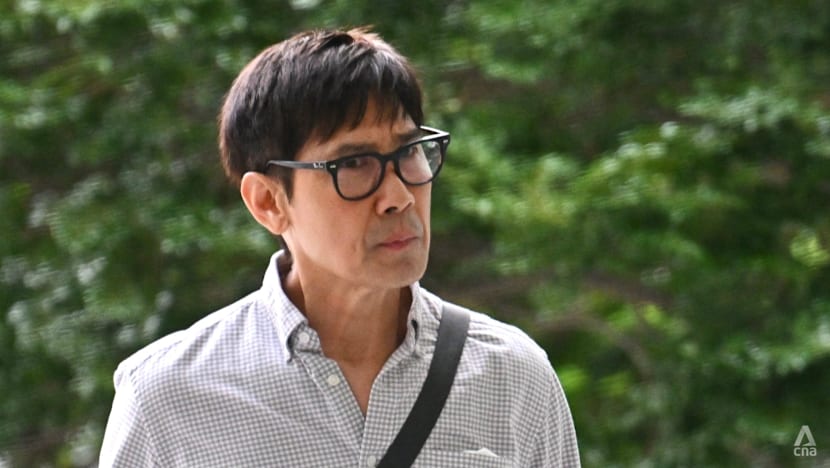
        Seah Chin Leong arriving at the State Courts on Feb 9, 2026. (Photo: CNA/Jeremy Long)

        New: You can now listen to articles.

        This audio is generated by an AI tool.

        24 Feb 2026 04:43PM (Updated: 24 Feb 2026 04:54PM)
        Read a summary of this article on FAST.
        FAST

        SINGAPORE: A man who threw rocks and glass bottles at his neighbour's car in a year-long parking dispute at a landed estate in Serangoon was sentenced to a week's jail and a fine of S$7,500 (US$5,920) on Tuesday (Feb 24).

        Seah Chin Leong, a 43-year-old Singaporean, had pleaded guilty earlier this month to four charges which include mischief, affray and the use of abusive words. Fourteen other charges were considered in sentencing.

        Seah had scuffled with his neighbour after the latter parked in a space in front of his house.

        District Judge Adam Nakhoda said on Tuesday that the parking spot was open to anyone, including Seah's neighbours, to use.

        "Had cooler minds prevailed, and the accused accepted that there was no right for him to park at one of the parking spots, he would not be in this situation today," said the judge.

        He cited the prosecution's submission that people live in close proximity with one another due to the nature of housing in Singapore and it is inevitable that neighbourly disputes arise.

        However, these cannot be resolved by committing offences against person or property, said the judge.

        THE CASE

        Seah had a dispute with his next-door neighbour since 2024 over parking issues.

        He confronted his neighbour about the latter parking his car outside Seah's house at about 3am on Aug 1, 2024, and a scuffle broke out.

        Seah also threw two glass bottles from his house towards his neighbour's car in the early hours of Nov 5, 2024. The vehicle was parked along the road outside Seah's house.

        A bottle hit the rear of the car, with repairs costing about S$894.

        Multiple police reports were filed by the neighbouring family, including over an incident past 2am on Christmas Day in 2024 where Seah threw rocks at the neighbour's family car.

        In another incident at about 3.30am on Feb 22, 2025, Seah was burning joss paper in an incense bin on the public road outside his house, near his neighbour's family car.

        A member from the neighbouring family used a garden sprayer from within their house compound to douse the burning paper, concerned that the fire could damage the car.

        A verbal dispute broke out, and Seah hit his neighbour's gate with a metal stick. The estimated cost of replacing the gate is S$1,000 to S$2,000.

        The neighbour commenced civil actions against Seah, which culminated in a settlement where Seah paid about S$3,400 for the damage caused.

        He also sold his house and moved out voluntarily to avoid further disputes and conflicts with his neighbours.

        In sentencing, Judge Nakhoda said he did not find the decision to move out to be mitigating since Seah continued to reoffend in the year between him selling the house and the time he actually moved out.

        Seah's lawyer had argued that there was an element of provocation for the incense bin incident, saying it was a very sensitive matter.

        However, the judge found that a question remains as to why Seah chose to burn joss paper in proximity to his neighbour's car.

        "It would appear that this was itself a microaggression on the part of the accused," said Judge Nakhoda, rejecting the argument that there was provocation warranting a "discount".

        He also noted the persistence of Seah's offending and multiple charges taken into consideration, with the series of conduct they represent amounting to an aggravating factor that would warrant a stiffer sentence.

        He allowed Seah to defer his sentence to March.

        For mischief, Seah could have been jailed for up to two years, fined, or both.

        For affray, he could have been jailed for up to a year, fined up to S$5,000, or both.

        For using abusive words, he could have been jailed for up to six months, fined up to S$5,000, or both.

        Source: CNA/ll

        Sign up for our newsletters

        Get our pick of top stories and thought-provoking articles in your inbox

        Subscribe here
        Inbox