The Fight

Sign In or Create an Account

By continuing, you agree to the Terms of Service and acknowledge our Privacy Policy

Spotlight

Trump Country Turns on Data Centers

The number of data centers opposed in Republican-voting areas has risen 330% over the past six months.

Trump signs and a data center.
Heatmap Illustration/Getty Images

It’s probably an exaggeration to say that there are more alligators than people in Colleton County, South Carolina, but it’s close. A rural swath of the Lowcountry that went for Trump by almost 20%, the “alligator alley” is nearly 10% coastal marshes and wetlands, and is home to one of the largest undeveloped watersheds in the nation. Only 38,600 people — about the population of New York’s Kew Gardens neighborhood — call the county home.

Colleton County could soon have a new landmark, though: South Carolina’s first gigawatt data center project, proposed by Eagle Rock Partners.

That’s if it overcomes mounting local opposition, however. Although the White House has drummed up data centers as the key to beating China in the race for AI dominance, Heatmap Pro data indicate that a backlash is growing from deep within President Donald Trump’s strongholds in rural America.

According to Heatmap Pro data, there are 129 embattled data centers located in Republican-voting areas. The vast majority of these counties are rural; just six occurred in counties with more than 1,000 people per square mile. That’s compared with 93 projects opposed in Democratic areas, which are much more evenly distributed across rural and more urban areas.

Most of this opposition is fairly recent. Six months ago, only 28 data centers proposed in low-density, Trump-friendly countries faced community opposition. In the past six months, that number has jumped by 95 projects. Heatmap’s data “shows there is a split, especially if you look at where data centers have been opposed over the past six months or so,” says Charlie Clynes, a data analyst with Heatmap Pro. “Most of the data centers facing new fights are in Republican places that are relatively sparsely populated, and so you’re seeing more conflict there than in Democratic areas, especially in Democratic areas that are sparsely populated.”

All in all, the number of data centers that have faced opposition in Republican areas has risen 330% over the past six months.

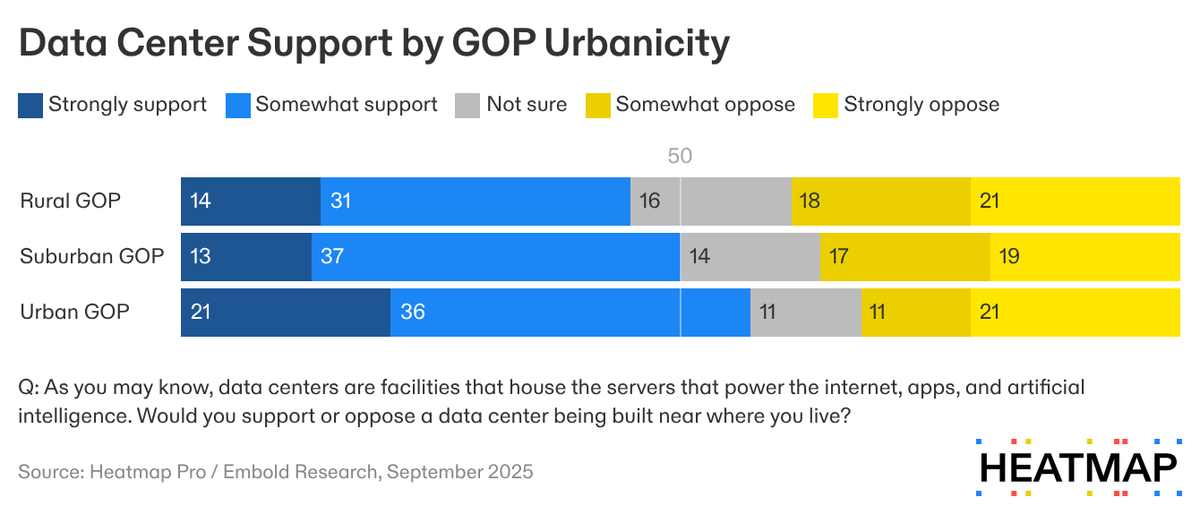
Our polling reflects the breakdown in the GOP: Rural Republicans exhibit greater resistance to hypothetical data center projects in their communities than urban Republicans: only 45% of GOP voters in rural areas support data centers being built nearby, compared with nearly 60% of urban Republicans.
Such a pattern recently played out in Livingston County, Michigan, a farming area that went 61% for President Donald Trump, and “is known for being friendly to businesses.” Like Colleton County, the Michigan county has low population density; last fall, hundreds of the residents of Howell Township attended public meetings to oppose Meta’s proposed 1,000-acre, $1 billion AI training data center in their community. Ultimately, the uprising was successful, and the developer withdrew the Livingston County project.

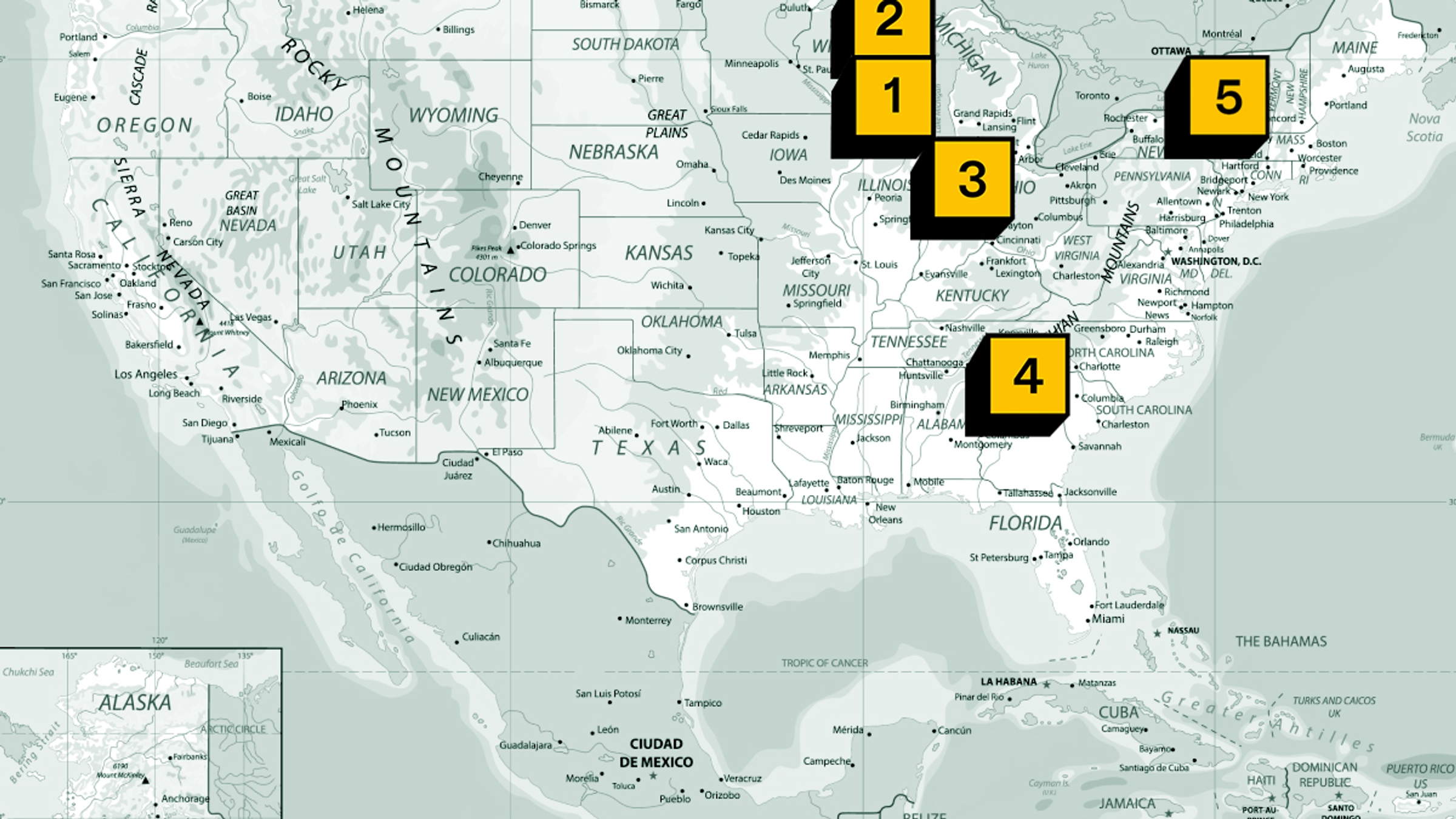
Across the five case studies I looked at today for The Fight — in addition to Colleton and Livingston Counties, Carson County, Texas; Tucker County, West Virginia; and Columbia County, Georgia, are three other red, rural examples of communities that opposed data centers, albeit without success — opposition tended to be rooted in concerns about water consumption, noise pollution, and environmental degradation. Returning to South Carolina for a moment: One of the two Colleton residents suing the county for its data center-friendly zoning ordinance wrote in a press release that he is doing so because “we cannot allow” a data center “to threaten our star-filled night skies, natural quiet, and enjoyment of landscapes with light, water, and noise pollution.” (In general, our polling has found that people who strongly oppose clean energy are also most likely to oppose data centers.)

Rural Republicans’ recent turn on data centers is significant. Of 222 data centers that have faced or are currently facing opposition, the majority — 55% —are located in red low-population-density areas. Developers take note: Contrary to their sleepy outside appearances, counties like South Carolina’s alligator alley clearly have teeth.

This article is exclusively
for Heatmap Plus subscribers.

Go deeper inside the politics, projects, and personalities
shaping the energy transition.
To continue reading
Create a free account or sign in to unlock more free articles.
or
Please enter an email address
By continuing, you agree to the Terms of Service and acknowledge our Privacy Policy
Yellow
map of renewable energy and data center conflicts
Heatmap Illustration

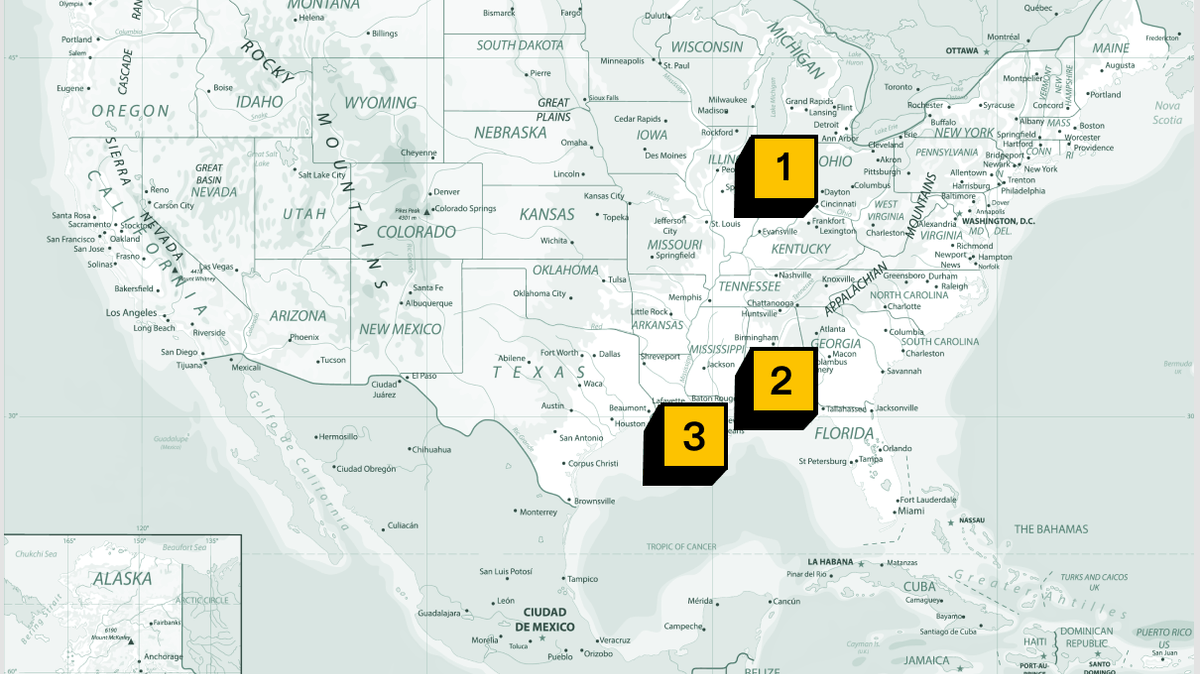
1. Marion County, Indiana — State legislators made a U-turn this week in Indiana.

  • The Indiana House passed a bill on Tuesday that would have allowed solar projects, data centers, and oil refineries on “poor soil.” Critics lambasted the bill for language they said was too vague and would wrest control from local governments, and on Thursday, local media reported that the legislation as written had effectively died.
  • Had it passed, the new rules would have brought Indiana’s solar permitting process closer to that of neighboring Illinois and Michigan, both of which limit the ability of counties and townships to restrict renewable energy projects. According to Heatmap Pro data, local governments in Indiana currently have more than 60 ordinances and moratoriums restricting renewable development on the books, making it one of the most difficult places to build renewable energy in the country.

2. Baldwin County, Alabama — Alabamians are fighting a solar project they say was dropped into their laps without adequate warning.

Keep reading...Show less
Yellow
Q&A

What Data Centers Mean for Local Jobs

A conversation with Emily Pritzkow of Wisconsin Building Trades

The Q&A subject.
Heatmap Illustration

This week’s conversation is with Emily Pritzkow, executive director for the Wisconsin Building Trades, which represents over 40,000 workers at 15 unions, including the International Brotherhood of Electrical Workers, the International Union of Operating Engineers, and the Wisconsin Pipe Trades Association. I wanted to speak with her about the kinds of jobs needed to build and maintain data centers and whether they have a big impact on how communities view a project. Our conversation was edited for length and clarity.

So first of all, how do data centers actually drive employment for your members?

Keep reading...Show less
Yellow
Spotlight

The Trump Administration Is Now Delaying Renewable Projects It Thinks Are Ugly

The Army Corps of Engineers is out to protect “the beauty of the Nation’s natural landscape.”

Donald Trump, wetlands, and renewable energy.
Heatmap Illustration/Getty Images

A new Trump administration policy is indefinitely delaying necessary water permits for solar and wind projects across the country, including those located entirely on private land.

The Army Corps of Engineers published a brief notice to its website in September stating that Adam Telle, the Assistant Secretary of the Army for Civil Works, had directed the agency to consider whether it should weigh a project’s “energy density” – as in the ratio of acres used for a project compared to its power generation capacity – when issuing permits and approvals. The notice ended on a vague note, stating that the Corps would also consider whether the projects “denigrate the aesthetics of America’s natural landscape.”

Keep reading...Show less
Yellow
Hotspots

A Data Center Dies in Wisconsin

Plus more of the week’s biggest renewable energy fights.

The United States.
Heatmap Illustration/Getty Images

Dane County, Wisconsin – The QTS data center project we’ve been tracking closely is now dead, after town staff in the host community of DeForest declared its plans “unfeasible.”

  • As I previously explained to Fight readers, this QTS project was a quintessential data center conflict. Not only was it situated in a blue county inside of a purple state, but a recent imbroglio over emails between the village mayor and QTS have made it a key example of how private conversations between tech companies and local governments can tarnish the odds of getting a data center permitted.
  • Late Tuesday, DeForest town staff issued a public statement disclosing they would recommend rejecting QTS’ petition to annex land for construction, without which the developer can’t build. A vote on whether to formally deny the petition was scheduled for February 3.
  • If the town rejects the project, the statement reads, DeForest staff expect QTS to “formally withdraw” its request for changes to land zoning plans and the annexation application. The town also cited vociferous opposition to the project, declaring: “The Village of DeForest appreciates the dedicated engagement of our community. Engagement is at the core of democracy. Reviewing public information, participating in public meetings, and discussing potential opportunities and impacts are all important civic activities.”
  • I was prepared to wait and see what happened at the public meeting before declaring this project dead in the water, but QTS itself has gone and done it : “Through our engagement, it has become clear that now is not the right time for our proposed project to move forward in DeForest.”

Marathon County, Wisconsin – Elsewhere in Wisconsin, this county just voted to lobby the state’s association of counties to fight for more local control over renewable energy development.

Keep reading... Show less
Yellow
Q&A

How Data Centers Became an Election Issue in Georgia

A conversation with Georgia Conservation Voters’ Connie Di Cicco.

The Q&A subject.
Heatmap Illustration

This week’s conversation is with Connie Di Cicco, legislative director for Georgia Conservation Voters. I reached out to Connie because I wanted to best understand last November’s Public Service Commission elections which, as I explained at the time, focused almost exclusively on data center development. I’ve been hearing from some of you that you want to hear more about how and why opposition to these projects has become so entrenched so quickly. Connie argues it’s because data centers are a multi-hit combo of issues at the top of voters’ minds right now.

The following conversation has been lightly edited for clarity.

Keep reading... Show less
Yellow
Spotlight

Secrecy Is Backfiring on Data Center Developers

The cloak-and-dagger approach is turning the business into a bogeyman.

A redacted data center.
Heatmap Illustration/Getty Images

It’s time to call it like it is: Many data center developers seem to be moving too fast to build trust in the communities where they’re siting projects.

One of the chief complaints raised by data center opponents across the country is that companies aren’t transparent about their plans, which often becomes the original sin that makes winning debates over energy or water use near-impossible. In too many cases, towns and cities neighboring a proposed data center won’t know who will wind up using the project, either because a tech giant is behind it and keeping plans secret or a real estate firm refuses to disclose to them which company it’ll be sold to.

Keep reading... Show less
Yellow
Hotspots

Missouri Could Be First State to Ban Solar Construction

Plus more of the week’s biggest renewable energy fights.

The United States.
Heatmap Illustration/Getty Images

Cole County, Missouri – The Show Me State may be on the precipice of enacting the first state-wide solar moratorium.

  • GOP legislation backed by Missouri Governor Mike Kehoe would institute a temporary ban on building any utility-scale solar projects in the state until at least the end of 2027, including those currently under construction. It threatens to derail development in a state ranked 12th in the nation for solar capacity growth.
  • The bill is quite broad, appearing to affect all solar projects – as in, going beyond the commercial and utility-scale facility bans we’ve previously covered at the local level. Any project that is under construction on the date of enactment would have to stop until the moratorium is lifted.
  • Under the legislation, the state would then issue rulemakings for specific environmental requirements on “construction, placement, and operation” of solar projects. If the environmental rules aren’t issued by the end of 2027, the ban will be extended indefinitely until such rules are in place.
  • Why might Missouri be the first state to ban solar? Heatmap Pro data indicates a proclivity towards the sort of culture war energy politics that define regions of the country like Missouri that flipped from blue to ruby red in the Trump era. Very few solar projects are being actively opposed in the state but more than 12 counties have some form of restrictive ordinance or ban on renewables or battery storage.

Clark County, Ohio – This county has now voted to oppose Invenergy’s Sloopy Solar facility, passing a resolution of disapproval that usually has at least some influence over state regulator decision-making.

Keep reading... Show less
Yellow
Q&A

Why Environmental Activists Are Shifting Focus to Data Centers

A conversation with Save Our Susquehanna’s Sandy Field.

Sandy Field.
Heatmap Illustration

This week’s conversation is with Sandy Field, leader of the rural Pennsylvania conservation organization Save Our Susquehanna. Field is a climate activist and anti-fossil fuel advocate who has been honored by former vice president Al Gore. Until recently, her primary focus was opposing fracking and plastics manufacturing in her community, which abuts the Susquehanna River. Her focus has shifted lately, however, to the boom in data center development.

I reached out to Field because I’ve been quite interested in better understanding how data centers may be seen by climate-conscious conservation advocates. Our conversation led me to a crucial conclusion: Areas with historic energy development are rife with opposition to new tech infrastructure. It will require legwork for data centers – or renewable energy projects, for that matter – to ever win support in places still reeling from legacies of petroleum pollution.

Keep reading... Show less
Yellow
word word word word word word word word word word word word word word word word word word word word word word word word word word word word word word word word word word word word word word word word word word word word word word word word word word word word word word word word word word word word word word word word word word word word word word word word word word word word word word word word word word word word word word word word word word word word word word word word word word word word word word word word word word word word word word word word word word word word word word word word word word word word word word word word word word word word word word word word word word word word word word word word word word word word word word word word word word word word word word word word word word word word word word word word word word word word word word word word word word word word word word word word word word word word word word word word word word word word word word word word

mmMwWLliI0fiflO&1
mmMwWLliI0fiflO&1
mmMwWLliI0fiflO&1
mmMwWLliI0fiflO&1
mmMwWLliI0fiflO&1
mmMwWLliI0fiflO&1
mmMwWLliI0fiflO&1