
chuddie
Greycel
★
- Joined
- Nov 17, 2025
- Posts
- 18
Feminism is based on the idea that we should try to elevate women’s status in society to the same level as men. This ideology has influenced modern society probably more than any other, with most institutions praising it as heroic and empowering.
There are four waves of feminism. The first wave was the suffragette movement, which primarily sought to give women equal voting rights. The second wave of feminism arose alongside the civil rights movement, and wanted to disestablish patriarchal institutions such as the family, as well as giving women reproductive rights. The third wave, which came about in the 1990s, is arguably the beginning of what we call “wokeness”, as it was aimed at making feminism more ethnically diverse, as well as accepting transsexuals into the feminist movement, and then finally fourth wave feminism is the feminism of today, that is largely a continuation of the third wave, only with the addition of the internet. This critique will be directed at second wave feminism onwards.
The problem with fourth wave feminism is that it is based on a faulty point, that modern women are oppressed by our society. Of course, some areas remain male-dominated, but this is much more likely a result of biological differences between males and females and not a socially constructed oppressive system being imposed on women.
If the patriarchy as described by feminists were real, there would not be certain legal and social advantages women have over men, for example:
Women have the ability to steal a man’s sperm through sperm stashing, improper use of assisted reproductive technology, or coercion, which then they can use to impregnate themselves and sue a man for child support. 10.4% of men in the United States reported ever having an intimate partner who tried to get pregnant when they did not want to or tried to stop them from using birth control. This also applies to rape, where a woman who raped a man (or underage boy) and was consequently impregnated by it, can sue that man for child support.
In some US states, if a woman applies for child support and names the father, even without evidence, that man has around 30 days to prove he isn't the father, or else he is declared so and forced to pay child support.
Men have essentially no reproductive rights. A woman can kill her fetus through abortion, and a man has no legal say in the matter, despite it being his offspring, too. Nor can a man opt out of parenthood in the same way a woman can using abortion; they are financially obligated to a child that the woman may have tricked him into having.
Merely the claim of rape is enough to convict a man, even if there is an absence of any other evidence. Examples: People v. Scott (California, 2013), U.S. v. Relford (U.S. Military Court, 2018), State v. Romero (New Mexico, 2013) 4% to 9% of rape cases were designated false according to a 2009 study of rape cases across eleven countries in Europe.
Women are favoured in court over men, even for the same crime, with women’s sentences being around 33% shorter than those of men.
Men are more likely to be homeless than women in most countries and all US states.
Non-consensual male genital mutilation is legal in all US states and most Western countries, despite female genital mutilation being illegal in those same places.
If we truly lived in a patriarchal society, this would not be the case. However, some disparities between men and women still exist, and are commonly used to prove the existence of a patriarchy. The claims being:
“What about the gender pay gap?”
“What about societal pressures put on women?”
“What about rape and domestic violence?”
First of all, on the gender pay gap, we are told that for every 1 dollar a man makes, a woman makes 77 cents, a 23% decrease in total wages. With this knowledge, we would be able to conclude that companies will choose to hire only women to save money, but this is not the case. If businesses can pay women 23% less for the same work, yet still often choose to hire men, it suggests that men must offer something to businesses that women do not.
The problem with the 23% gap in wages is that it only accounts for unadjusted wages, without accounting for other factors. When controlling for average incomes, there is little to no gender wage gap. The average income of males is higher than that of females for two reasons: women choose lower-paying jobs, and businesses prefer male workers. Because women are more obligated to family duties than men, even if they are employed, they’re more likely to choose jobs with fewer work hours, for obvious reasons, and jobs with fewer hours tend to pay less. Businesses prefer male workers because men do not require maternity leave. Another reason why businesses prefer men, and why even when working for the same job men are paid more, is because men work more on average.
This study from 2023, conducted in Germany, shows us that men are more likely to work overtime than women by at least two hours a week, and that women are more likely to work lower paying jobs for the reasons already mentioned.
When including unpaid work (e.g., household work), women work more, but in the US, men work roughly 1.6 hours more a day than women, at least in terms of paid labour, which explains why men are paid more. If a man and a woman work the exact same job, in the exact same position, working the exact same hours, it is more than likely they will be paid the same.
Secondly, I’ve seen this point mentioned a lot by feminists, that women, even today, are pressured into roles of motherhood or unrealistic beauty standards. This is only really true when regarding more rural, conservative areas, but within urban and modernised places, or within society’s views as a whole, their claims are unfounded.
Women are rarely ever pressured to become mothers; in fact, we see that the opposite is the case, most media and advertising promote women becoming “girlbosses” and rejecting patriarchal norms. If you disagree, I’d like you to find me one example of a corporation or media outlet that has claimed women should have children and become homemakers.
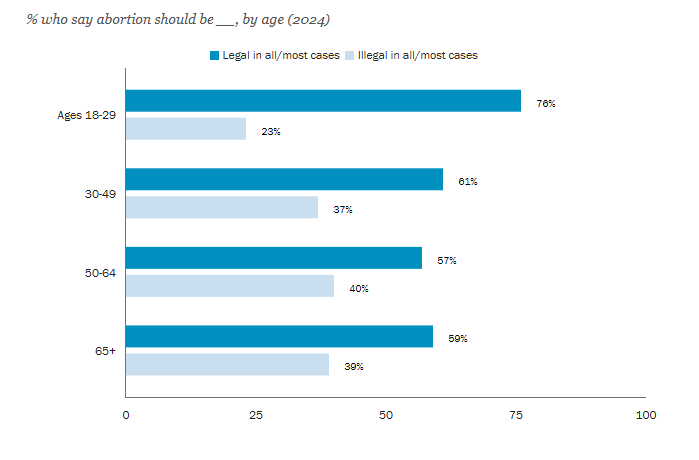
Furthermore, most people of all ages believe abortion should be legal in most, if not all, cases, which is a belief contrary to a traditional view on women and sexual ethics. Additionally, only 19% of adults think women should return to their traditional place in society, and only 29% of adults think that women not having children is a bad thing.

Beauty standards for men are more unrealistic than for women. Physical traits that males find attractive in females are generally mutable (e.g., weight), whilst traits females find attractive in males tend to be immutable (e.g., height). Both sexes are subject to unrealistic beauty standards that are unnatural and largely the result of the pornography industry (which feminism helped promote), but that is not to say that we should abolish beauty standards, as feminists seek to do, rather they should be attainable for both males and females.
Lastly, domestic violence is largely misrepresented by society. An analysis of data on young US adults aged 18 to 28 years from the 2001 National Longitudinal Study of Adolescent Health reveals that in 49.7% of abusive relationships, the violence was reciprocal, and in nonreciprocally violent relationships, women were the perpetrators in more than 70% of the cases.
As for rape, males are overwhelmingly overrepresented in perpetrators of rape, because testosterone is correlated with higher libido; on top of that, testosterone causes more risk-taking and aggressive behaviour. Men are also more physically capable than women, and have the ability to overpower them, which women do not, so even if hypothetically the intention to commit rape was higher among females, the percentage of rapes actually committed would still be dominated by males. I say this because feminism attempts to reshape society on the basis of equal rights, yet biology is not something that can be reshaped; men are always going to commit more rapes, even under a matriarchy.
The higher aggression and risk-taking of males also explains why patriarchy is the only system that arises naturally. Males dominate positions of power because assertive, aggressive behaviour is what succeeds, especially in primitive societies, where physical strength is required, but also in modern society, where the ability to take risks is rewarded. Feminism is inherently a revolt against biology, meaning it is founded on the denial of the biological differences between men and women. Patriarchy is not a cultural phenomenon; it is a biological reality, something that cannot be completely abolished through social activism or legal reforms.
The effects of the attempt to reverse human biology have been devastating. Human societies form natural connections based on our biology, one of them being the family. Feminism has advocated for taking women out of the family, into their own hands, essentially killing the family structure. But has society really improved since the family became unessential and deemed oppressive? The life satisfaction of both men and women has dropped since the 1970s, especially amongst Gen Z, despite advances in women’s rights, additionally, women’s mental health has gotten significantly worse, even worse than the oppressed housewife feminism sought to liberate. Even the left admits this. When people are part of decentralised communities in which their economic and social relations are intertwined, they are happier than when they serve bureaucrats with no personal connection to themselves.
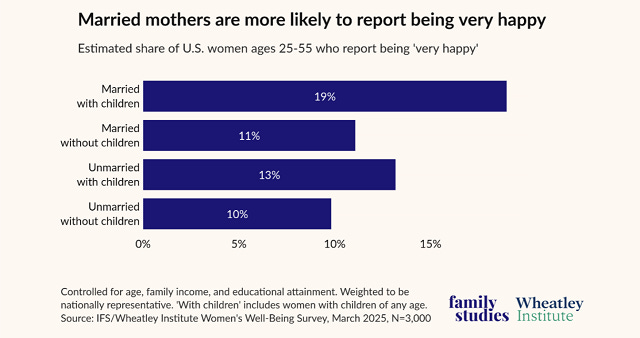
If you still don’t believe me, nearly twice as many married mothers say they are “very happy” as unmarried women without children.

(Whilst there were problems with the family institution, such as marital rape being legal, rape rates have only been increasing since the 1940s)
Despite the claims of many feminists, feminism inadvertently serves capitalism through promoting women abandoning their roles as mothers and homemakers, and placing them in the workforce, generating twice as much profit for CEOs. One of the most common reasons for divorce is financial problems, so due to feminism nearly doubling the competition for employment, wages have gotten lower, in part causing such high divorce rates.
This is also why feminism was heavily promoted by corporations, and still is today.
Not only is taking women out of the family a net negative for society in terms of happiness, but the feminist ideal is also incompatible with society in general. The average birth rate per woman for replacement level needs to be a minimum of 2.1, if women are to put their careers before their role as a mother, or if they choose not to have children at all, it is unlikely the birth rate will be able to stay above 2.1, meaning if a society is to promote or tolerate feminism, it will be an unsustainable society destined to eventually collapse.
Feminism in theory and in practice is incompatible with civilisation; it has subverted social and moral institutions that have built and defined the Western world for a millennium, and has torn down the connections that have given human life its meaning, in favour of “freedom”, which has really offered us little to nothing, with its societal effects being more than adverse.
There are four waves of feminism. The first wave was the suffragette movement, which primarily sought to give women equal voting rights. The second wave of feminism arose alongside the civil rights movement, and wanted to disestablish patriarchal institutions such as the family, as well as giving women reproductive rights. The third wave, which came about in the 1990s, is arguably the beginning of what we call “wokeness”, as it was aimed at making feminism more ethnically diverse, as well as accepting transsexuals into the feminist movement, and then finally fourth wave feminism is the feminism of today, that is largely a continuation of the third wave, only with the addition of the internet. This critique will be directed at second wave feminism onwards.
The problem with fourth wave feminism is that it is based on a faulty point, that modern women are oppressed by our society. Of course, some areas remain male-dominated, but this is much more likely a result of biological differences between males and females and not a socially constructed oppressive system being imposed on women.
If the patriarchy as described by feminists were real, there would not be certain legal and social advantages women have over men, for example:
Women have the ability to steal a man’s sperm through sperm stashing, improper use of assisted reproductive technology, or coercion, which then they can use to impregnate themselves and sue a man for child support. 10.4% of men in the United States reported ever having an intimate partner who tried to get pregnant when they did not want to or tried to stop them from using birth control. This also applies to rape, where a woman who raped a man (or underage boy) and was consequently impregnated by it, can sue that man for child support.
In some US states, if a woman applies for child support and names the father, even without evidence, that man has around 30 days to prove he isn't the father, or else he is declared so and forced to pay child support.
Men have essentially no reproductive rights. A woman can kill her fetus through abortion, and a man has no legal say in the matter, despite it being his offspring, too. Nor can a man opt out of parenthood in the same way a woman can using abortion; they are financially obligated to a child that the woman may have tricked him into having.
Merely the claim of rape is enough to convict a man, even if there is an absence of any other evidence. Examples: People v. Scott (California, 2013), U.S. v. Relford (U.S. Military Court, 2018), State v. Romero (New Mexico, 2013) 4% to 9% of rape cases were designated false according to a 2009 study of rape cases across eleven countries in Europe.
Women are favoured in court over men, even for the same crime, with women’s sentences being around 33% shorter than those of men.
Men are more likely to be homeless than women in most countries and all US states.
Non-consensual male genital mutilation is legal in all US states and most Western countries, despite female genital mutilation being illegal in those same places.
If we truly lived in a patriarchal society, this would not be the case. However, some disparities between men and women still exist, and are commonly used to prove the existence of a patriarchy. The claims being:
“What about the gender pay gap?”
“What about societal pressures put on women?”
“What about rape and domestic violence?”
First of all, on the gender pay gap, we are told that for every 1 dollar a man makes, a woman makes 77 cents, a 23% decrease in total wages. With this knowledge, we would be able to conclude that companies will choose to hire only women to save money, but this is not the case. If businesses can pay women 23% less for the same work, yet still often choose to hire men, it suggests that men must offer something to businesses that women do not.
The problem with the 23% gap in wages is that it only accounts for unadjusted wages, without accounting for other factors. When controlling for average incomes, there is little to no gender wage gap. The average income of males is higher than that of females for two reasons: women choose lower-paying jobs, and businesses prefer male workers. Because women are more obligated to family duties than men, even if they are employed, they’re more likely to choose jobs with fewer work hours, for obvious reasons, and jobs with fewer hours tend to pay less. Businesses prefer male workers because men do not require maternity leave. Another reason why businesses prefer men, and why even when working for the same job men are paid more, is because men work more on average.
This study from 2023, conducted in Germany, shows us that men are more likely to work overtime than women by at least two hours a week, and that women are more likely to work lower paying jobs for the reasons already mentioned.
When including unpaid work (e.g., household work), women work more, but in the US, men work roughly 1.6 hours more a day than women, at least in terms of paid labour, which explains why men are paid more. If a man and a woman work the exact same job, in the exact same position, working the exact same hours, it is more than likely they will be paid the same.
Secondly, I’ve seen this point mentioned a lot by feminists, that women, even today, are pressured into roles of motherhood or unrealistic beauty standards. This is only really true when regarding more rural, conservative areas, but within urban and modernised places, or within society’s views as a whole, their claims are unfounded.
Women are rarely ever pressured to become mothers; in fact, we see that the opposite is the case, most media and advertising promote women becoming “girlbosses” and rejecting patriarchal norms. If you disagree, I’d like you to find me one example of a corporation or media outlet that has claimed women should have children and become homemakers.
Furthermore, most people of all ages believe abortion should be legal in most, if not all, cases, which is a belief contrary to a traditional view on women and sexual ethics. Additionally, only 19% of adults think women should return to their traditional place in society, and only 29% of adults think that women not having children is a bad thing.
Beauty standards for men are more unrealistic than for women. Physical traits that males find attractive in females are generally mutable (e.g., weight), whilst traits females find attractive in males tend to be immutable (e.g., height). Both sexes are subject to unrealistic beauty standards that are unnatural and largely the result of the pornography industry (which feminism helped promote), but that is not to say that we should abolish beauty standards, as feminists seek to do, rather they should be attainable for both males and females.
Lastly, domestic violence is largely misrepresented by society. An analysis of data on young US adults aged 18 to 28 years from the 2001 National Longitudinal Study of Adolescent Health reveals that in 49.7% of abusive relationships, the violence was reciprocal, and in nonreciprocally violent relationships, women were the perpetrators in more than 70% of the cases.
As for rape, males are overwhelmingly overrepresented in perpetrators of rape, because testosterone is correlated with higher libido; on top of that, testosterone causes more risk-taking and aggressive behaviour. Men are also more physically capable than women, and have the ability to overpower them, which women do not, so even if hypothetically the intention to commit rape was higher among females, the percentage of rapes actually committed would still be dominated by males. I say this because feminism attempts to reshape society on the basis of equal rights, yet biology is not something that can be reshaped; men are always going to commit more rapes, even under a matriarchy.
The higher aggression and risk-taking of males also explains why patriarchy is the only system that arises naturally. Males dominate positions of power because assertive, aggressive behaviour is what succeeds, especially in primitive societies, where physical strength is required, but also in modern society, where the ability to take risks is rewarded. Feminism is inherently a revolt against biology, meaning it is founded on the denial of the biological differences between men and women. Patriarchy is not a cultural phenomenon; it is a biological reality, something that cannot be completely abolished through social activism or legal reforms.
The effects of the attempt to reverse human biology have been devastating. Human societies form natural connections based on our biology, one of them being the family. Feminism has advocated for taking women out of the family, into their own hands, essentially killing the family structure. But has society really improved since the family became unessential and deemed oppressive? The life satisfaction of both men and women has dropped since the 1970s, especially amongst Gen Z, despite advances in women’s rights, additionally, women’s mental health has gotten significantly worse, even worse than the oppressed housewife feminism sought to liberate. Even the left admits this. When people are part of decentralised communities in which their economic and social relations are intertwined, they are happier than when they serve bureaucrats with no personal connection to themselves.
If you still don’t believe me, nearly twice as many married mothers say they are “very happy” as unmarried women without children.
(Whilst there were problems with the family institution, such as marital rape being legal, rape rates have only been increasing since the 1940s)
Despite the claims of many feminists, feminism inadvertently serves capitalism through promoting women abandoning their roles as mothers and homemakers, and placing them in the workforce, generating twice as much profit for CEOs. One of the most common reasons for divorce is financial problems, so due to feminism nearly doubling the competition for employment, wages have gotten lower, in part causing such high divorce rates.
This is also why feminism was heavily promoted by corporations, and still is today.
Not only is taking women out of the family a net negative for society in terms of happiness, but the feminist ideal is also incompatible with society in general. The average birth rate per woman for replacement level needs to be a minimum of 2.1, if women are to put their careers before their role as a mother, or if they choose not to have children at all, it is unlikely the birth rate will be able to stay above 2.1, meaning if a society is to promote or tolerate feminism, it will be an unsustainable society destined to eventually collapse.
Feminism in theory and in practice is incompatible with civilisation; it has subverted social and moral institutions that have built and defined the Western world for a millennium, and has torn down the connections that have given human life its meaning, in favour of “freedom”, which has really offered us little to nothing, with its societal effects being more than adverse.
Last edited:


