Advertisement
Advertisement

Singapore

Man who allegedly posed as police officer and raped maid goes on trial

Sharveen Chetty allegedly threatened to make life difficult for the victim and her friends when she resisted him.

Man who allegedly posed as police officer and raped maid goes on trial

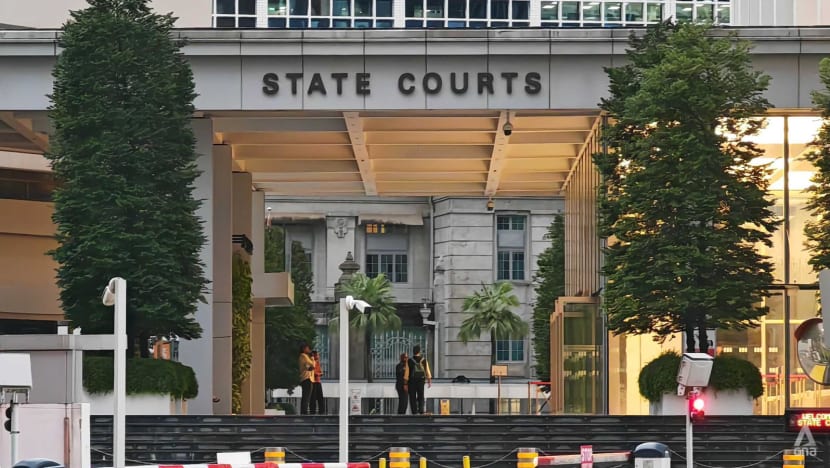
A general view of the Supreme Court from across the Singapore River on Sep 23, 2022. (File photo: CNA/Try Sutrisno Foo)

Listen
2 min
New: You can now listen to articles.

This audio is generated by an AI tool.

03 Feb 2026 05:34PM
Read a summary of this article on FAST.
FAST

SINGAPORE: A man went on trial on Tuesday (Feb 3), accused of raping a migrant domestic worker after luring her away from a group of her friends by posing as a police officer.

Sharveen Chetty, a 48-year-old Malaysian, was actually an employee of transport company SBS Transit at the time.

Chetty is contesting two charges of rape and one count of impersonating a police officer.

According to the prosecution's case, the victim, then aged 35, was with her friends and boyfriend at a grass patch near Little India MRT Station on Jul 11, 2022.

Chetty was on patrol duty at the time and noticed the group of foreign workers, said Deputy Public Prosecutors Marcus Foo, Mark Chia and Gurmesh Singh.

Chetty allegedly pretended to be a police officer, asking for identification documents and using his body-worn camera issued to him for his job with SBS Transit to act like he was scanning their work permits.

He asked for the victim's identification and took her Ministry of Manpower in-principle approval letter from her, as well as her phone, said the prosecution.

Chetty directed the group to stay while asking the victim to follow him, it said.

He allegedly took the woman to some bushes and kissed her, threatening to create difficulties for her and her friends when she resisted.

He allegedly forced her to perform a sex act on him before raping her.

When the woman went back to her friends, she told them that Chetty was a fake policeman. The real police were then called in.

The woman was examined by doctors and Chetty's DNA was found on areas of her underwear, as well as in a swab on the woman's thigh.

The trial continues. Chetty is represented by Mr Mohamed Baiross from IRB Law.

If convicted of rape, he could be jailed for up to 20 years and given a fine or caning.

For personating a public servant, he could be jailed for up to two years, fined, or both.

Source: CNA/ll

Sign up for our newsletters

Get our pick of top stories and thought-provoking articles in your inbox

Subscribe here
Inbox
FAST
Advertisement

Singapore

ST Engineering's AirFish water-skimming craft set to operate on Singapore-Batam ferry route

The AirFish is able to fly at three times the speed of existing marine craft and can carry up to 10 people, including crew.

ST Engineering's AirFish water-skimming craft set to operate on Singapore-Batam ferry route

The AirFish wing-in-ground craft harnesses the aerodynamic ground effect to glide over the water's surface. (Photo: ST Engineering)

Listen
3 min
New: You can now listen to articles.

This audio is generated by an AI tool.

03 Feb 2026 05:48PM (Updated: 03 Feb 2026 06:50PM)
Read a summary of this article on FAST.
FAST

SINGAPORE: ST Engineering on Tuesday (Feb 3) announced a deal with a regional ferry operator that will see its AirFish Voyager wing-in-ground craft, which skims across the water's surface, plying a ferry route between Singapore and Batam.

The AirFish uses aerodynamic forces and air pressure to glide a few metres above the water, and is able to fly at thrice the speed of existing marine craft, according to information on ST Engineering's site.

It can carry up to 10 people, including crew, and does not require landing or take-off infrastructure. It is currently being assembled in Singapore.

Under the agreement between ST Engineering AirX – a joint venture of ST Engineering's commercial aerospace business – and BatamFast, the regional ferry operator will lease an AirFish and operate it on a ferry route between Singapore and the Indonesian island.

Operations are expected to commence in the second half of 2026, subject to regulatory approvals, said ST Engineering.

ST Engineering AirX and BatamFast will also explore opportunities to expand operations to new destinations across Southeast Asia, it added.

Another agreement was made with Wings Over Water Ferries (WOW), which will bring four AirFish craft to India for commercial use, starting in late 2026. 

The commencement of operations is subject to route approvals by the local authorities, ST Engineering said.

"WOW's initial deployment strategy will focus on high-demand coastal states and sectors with strong tourism, commuter and regional connectivity potential," said ST Engineering.

ST Engineering AirX will also work with WOW to "explore establishing local assembly, manufacturing, training and maintenance capabilities" for the AirFish craft in India.

The new partnerships will help to accelerate the commercial introduction of the craft and "strengthen its positioning as a next-generation high-speed mobility solution for coastal and regional transport", ST Engineering said.

The AirFish wing-in-ground craft harnesses the aerodynamic ground effect to glide over the water's surface. (Photo: ST Engineering)

Mr Jeffrey Lam, the president of commercial aerospace at ST Engineering, said: "These two agreements mark a significant development in our journey to bring the AirFish platform to market.

"By partnering with leading operators in the maritime travel industry, we are laying the foundation for wing-in-ground technology to become a new, high-speed mobility solution for the region.

"Together with our partners, we look forward to accelerating the adoption of this innovative craft and transforming how coastal and regional communities connect."

The AirFish is expected to achieve classification by mid-2026, said ST Engineering. ST Engineering AirX has been partnering with Bureau Veritas on the AirFish's classification and certification since 2024.

Source: CNA/nh(kg)

Sign up for our newsletters

Get our pick of top stories and thought-provoking articles in your inbox

Subscribe here
Inbox
FAST
Advertisement

Singapore

Nipah virus: Singapore requires daily temperature checks for new migrant workers who travelled to West Bengal

Headache has also been added to the list of symptoms in a health questionnaire for newly arrived migrant workers in Singapore.

Nipah virus: Singapore requires daily temperature checks for new migrant workers who travelled to West Bengal

Construction workers helping an elderly man with his bicycle in Singapore. (Photo: CNA/Syamil Sapari)

Listen
6 min
New: You can now listen to articles.

This audio is generated by an AI tool.

03 Feb 2026 05:14PM
Read a summary of this article on FAST.
FAST

SINGAPORE: Newly arrived migrant workers who have travelled to West Bengal must undergo daily temperature checks while staying at their onboard centre in Singapore, and continue to monitor their own temperature and symptoms for 14 days from their arrival.

The Ministry of Manpower (MOM) provided these details on Tuesday (Feb 3) in response to CNA's queries after the Communicable Diseases Agency (CDA) announced its initial response to a Nipah virus outbreak in India.

Two cases of the deadly Nipah virus have been confirmed in India's West Bengal state since December.

No new cases have been reported in Singapore.

The zoonotic virus spreads from animals to humans, and is transmitted mainly through exposure to bats and consumption of date palm sap or fruits contaminated by bats. People-to-people transmission is rare but possible.

A "relatively small number" of migrant workers from West Bengal arrive in Singapore each month, said an MOM spokesperson.

Surveillance measures at the onboard centre and dormitories have been tightened as a precautionary measure, the spokesperson added.

The onboard centre is where work permit holders in the construction, marine shipyard and process sectors receive their orientation. A typical three-day stay includes a medical exam, vaccination check and settling-in programme.

Under the current process at the onboard centre, all newly arrived migrant workers must sanitise their hands, wear surgical masks and have their temperature taken upon arrival.

They are also required to respond to a health questionnaire to check for symptoms like fever, cough, rashes and a runny nose.

As part of the tightened surveillance measures, headache has been added to the health questionnaire, in line with the reported symptoms of the Nipah virus, said MOM's spokesperson.

The new arrivals are asked to declare if they have travelled to West Bengal, and those who have must undergo daily temperature checks at the onboard centre.

Those with symptoms and travel history to West Bengal will be isolated and further assessed by a medical professional for appropriate treatment.

Those who have been to West Bengal must continue to monitor their own temperature and symptoms for 14 days from their arrival in Singapore, and are advised to seek medical help if they develop symptoms, said the spokesperson.

MORE VIGILANCE BY MEDICAL PROVIDERS

For migrant workers already residing in Singapore, existing healthcare arrangements remain in place through MOM's primary care medical centres for those who are unwell, said the ministry spokesperson.

MOM has advised primary care providers to increase vigilance for migrant workers who display "Nipah-like" symptoms or have recently travelled to West Bengal.

Migrant workers would also be reminded to maintain good personal hygiene practices like hand-washing and mask-wearing when unwell, said MOM's spokesperson.

MOM-appointed primary care plan anchor operators told CNA they are taking steps to increase vigilance in light of the Nipah virus cases in India.

St Andrew's Mission Hospital is the designated anchor operator for a zone where more than 100,000 migrant workers reside.

A spokesperson for St Andrew's Migrant Worker Medical Centre said all patients are asked about recent travel to Bangladesh or West Bengal.

If patients have flu-like symptoms, they will be assessed for increased risk factors for Nipah virus infection, including close contact with confirmed cases or consumption of raw date palm sap.

St Andrew's Migrant Worker Medical Centre has not encountered any suspected cases to date, said the spokesperson.

If there are any suspected cases, there are established workflows to isolate the patients, manage and refer them to the CDA and facilitate their transfer to the designated emergency departments, added the spokesperson.

Another anchor operator, Fullerton Health, is also monitoring the situation closely and working in line with national advisories.

Dr Marcus Lee, medical director of clinical quality and governance, said the group's doctors have been briefed on the clinical features of the Nipah virus and the importance of taking relevant travel and exposure histories during consultations.

Fullerton Health is also providing relevant guidance to corporate clients and stakeholders to support workplace health monitoring and early identification where appropriate, he said.

Dr Lee said that routine clinic operations in migrant worker dormitories already include screening and segregation protocols for patients with fever or respiratory symptoms.

"As a step-up precautionary measure, additional screening questions are being incorporated to assess recent travel and relevant exposure history within the past 14 days, in accordance with national guidance," he said.

"While there are currently no reported cases of (Nipah virus) in Singapore and no indication of sustained community transmission locally, we continue to monitor the situation closely as part of Singapore's broader public health surveillance framework."

MOM's spokesperson added that advisories have been disseminated to migrant workers in their native languages through the FWMOMCare app, as well as to employers.

Dormitory operators are also guided on handling suspected cases of Nipah virus, such as with prompt reporting and isolation before the patients are conveyed to a medical facility.

Migrant worker dormitories became virus hotspots during the COVID-19 pandemic, with infections spreading among tens of thousands of workers living in reportedly cramped conditions.

Dormitory standards have been raised since then, including stricter requirements for isolation facilities.

Source: CNA/dv(zl)

Sign up for our newsletters

Get our pick of top stories and thought-provoking articles in your inbox

Subscribe here
Inbox
Advertisement

Singapore

Can private organisations still use NRIC numbers for authentication? Here's what you need to know

Can private organisations still use NRIC numbers for authentication? Here's what you need to know
A man hands over an NRIC for it to be scanned. (File photo: CNA/Zhaki Abdullah)
Listen
7 min
New: You can now listen to articles.

This audio is generated by an AI tool.

03 Feb 2026 04:04PM (Updated: 03 Feb 2026 06:41PM)
Read a summary of this article on FAST.
FAST

SINGAPORE: Private organisations have until the end of 2026 to phase out the use of NRIC numbers for authentication, the Personal Data Protection Commission (PDPC) announced on Monday (Feb 2).

Authentication refers to the process of proving that a person is who they claim to be, before granting them access to services or information intended only for them. This differs from identification, where identifiers such as names are used to distinguish people.

The latest announcement came as the authorities move to reduce the risk of unauthorised access to services and information.

Here is what you need to know about the NRIC authentication phase-out:

How did the move to phase out the use of NRIC numbers for authentication come about?

In 2024, the Accounting and Corporate Regulatory Authority (ACRA) launched the then new Bizfile portal, sparking public backlash after it was found that people's full NRIC numbers and names could be obtained via the portal for free.

Under ACRA's previous system, users could search for people who were office holders or business owners in Singapore, with their names, as well as masked NRIC numbers, turning up in search results.

Users could then pay for the complete set of information about an individual, which would have included his or her full NRIC number as well as an address.

Following the backlash, the PDPC and Cyber Security Agency (CSA) issued a joint advisory last year to private sector organisations clarifying that NRIC numbers should not be misused for authentication.

Government agencies have already moved away from using NRIC numbers for authentication, said the PDPC on Monday.

What would be considered an improper use of an NRIC number for authentication?

According to PDPC's website, organisations are generally not allowed to collect, use or disclose an individual's NRIC number, unless it is required by law or if it is necessary to identify a customer to a high degree of accuracy.

Organisations should also not use NRIC numbers, whether full or partial, as any factor of authentication.

Examples of misuse for authentication include using NRIC numbers – in full or part – as default passwords. This includes cases where the passwords are NRIC numbers on their own or together with other easily obtainable personal data, such as names and birthdates.

This is because NRICs are "issued to uniquely identify a person and must be assumed to have been disclosed to at least a few other persons, which reduces their effectiveness as a factor of authentication", said PDPC on its website.

"When passwords are used to authenticate a person, strong passwords that are not easily guessed should be used. Passwords containing information that can be obtained easily, including personal data such as names, NRIC numbers or birthdates, are not strong passwords."

What organisations are affected by the move?

Any organisation that needs to collect or use NRIC numbers to identify a customer to a high degree of fidelity will be affected by the move.

Examples include organisations that deal with transactions typically relating to healthcare, financial or real estate matters, such as medical check-ups and reports, background credit checks with a credit bureau, and property transactions.

Other organisations include insurance companies, vehicle rental companies, utility service providers and retailers, telecoms providers and veterinary clinics.

The Ministry of Digital Development and Information (MDDI) said on Tuesday that the Infocomm Media Development Authority, Monetary Authority of Singapore and the Ministry of Health have issued guidance to the telecommunications, finance and insurance, and healthcare sectors on ceasing the use of NRIC numbers for authentication within their sectors.

How can NRIC numbers be used going forward?

Private organisations will have until Dec 31, 2026, to phase out the use of NRIC numbers for authentication. 

In the public sector, the government is moving away from using partial NRIC numbers in progressive stages, as they are not reliable for identifying individuals accurately, MDDI said, as some individuals may share the same partial NRIC numbers. There were instances where two individuals shared both the same name and partial NRIC number.

"Moving away from the use of partial NRIC numbers does not mean that full NRIC numbers will automatically be used in all cases," said MDDI. 

"Where there is no need to accurately identify someone, there will not be a need for NRIC numbers to be used at all. When there is a need to identify individuals accurately, such as in licences and employment letters, public agencies will progressively move to using full NRIC numbers instead."

The ministry said it would continue to hold consultations and review public feedback before adjusting guidelines on the use of partial NRIC numbers in the private sector.

What sort of action will be taken against those who misuse NRIC numbers?

Organisations that misuse NRIC numbers may be penalised under the Personal Data Protection Act for failing to make reasonable security arrangements to protect personal data.

The PDPC warned that it will step up enforcement action against such misuse from Jan 1, 2027, including imposing directions or financial penalties for such breaches where appropriate.

What can you do if an organisation uses your NRIC number improperly?

The onus is generally on the organisation to assess whether it is required to collect your NRIC number.

If you suspect that an organisation is using your NRIC number improperly, PDPC advises that you seek clarity on its usage with the organisation's data protection officer (DPO). The DPO's contact information can be found in the organisation's privacy policy or through PDPC's DPO enquiry form.

If the DPO does not respond within 10 business days, you can report the incident to PDPC online.

Should other identifying numbers be treated the same way as NRIC numbers?

The treatment for NRIC numbers also applies to other identifying numbers such as birth certificate numbers, foreign identification numbers and work permit numbers issued by the Singapore government as those numbers are also permanent and irreplaceable identifiers, said PDP.

Passport numbers, despite being periodically replaced, are also considered important identifying numbers that can serve the same purposes as NRIC, foreign identification, work permit and birth certificate numbers, and thus should be treated similarly to such numbers.

Source: CNA/ec(kg)

Sign up for our newsletters

Get our pick of top stories and thought-provoking articles in your inbox

Subscribe here
Inbox
Advertisement

Entertainment

Viral Japanese dance group Avantgardey seen dancing at Orchard Road on Feb 2

Known for their synchronised dance numbers and eccentric facial expressions, the all-girl dance group was caught dancing while crossing the street between Design Orchard and The Heeren.

Viral Japanese dance group Avantgardey seen dancing at Orchard Road on Feb 2

The viral Japanese dance group Avantgardey was spotted dancing while crossing the street at Orchard Road on Monday (Feb 2). (Photo: Instagram/@dearfoodiepebbles, TikTok/@deniseoph)

Listen
2 min
New: You can now listen to articles.

This audio is generated by an AI tool.

03 Feb 2026 03:56PM (Updated: 03 Feb 2026 04:00PM)
Read a summary of this article on FAST.
FAST

If you caught sight of a group of somewhat identical-looking women dancing in sync, wearing identical navy blue pinafore dresses and sporting the same bob hairstyle on Monday (Feb 2) afternoon, you weren’t dreaming. You were in Orchard Road in Singapore, watching the all-female Japanese dance crew Avantgardey perform while crossing the street between Design Orchard and The Heeren.

A few videos of the flash mob have circulated on Instagram and TikTok.

In one video taken from inside a car, the group of eight could be seen dancing amid the large afternoon crowd on Orchard Road, as people crossing and standing around them displayed a range of reactions, from puzzled and amazed to unbothered and annoyed.

In another clip, the group could be seen dancing on the rooftop of Design Orchard to a highly energetic beat.

In the comments to these videos – one of which has amassed over 300,000 views in 12 hours – most people expressed surprise and admiration. Some fans were shocked that they didn’t know the dance group was in Singapore, while others who were unfamiliar with the group expressed annoyance and concern over a flash mob dancing while crossing a busy road.

Formed in 2022, the all-girl Japanese dance group currently has 17 members, eight of whom were showing off their moves at the Orchard Road crossing.

The dancers are also known for their eccentric and humorous facial expressions while dancing in sync to various beats.

The group previously visited Singapore as part of the YouTube Fanfest in 2022, and again in early 2023 when they were spotted dancing on a sampan at The Shoppes at Marina Bay Sands.

They are in Singapore a month ahead of their upcoming concert at The Theatre at Mediacorp on Mar 11 and 12 as part of their Avantgardey Asia Tour 2026. Tickets are currently on sale via Ticketmaster.

Source: CNA/iz

Sign up for our newsletters

Get our pick of top stories and thought-provoking articles in your inbox

Subscribe here
Inbox