Advertisement
Advertisement

Commentary

Commentary: Trump walking back Greenland threats offers little relief

The World Economic Forum meeting at Davos shows that the room for manoeuvre is narrowing for middle powers, says US politics observer Steven Okun.

Commentary: Trump walking back Greenland threats offers little relief
US President Donald Trump speaks during the 56th annual World Economic Forum (WEF) meeting in Davos, Switzerland, Jan 21, 2026. (Reuters/Denis Balibouse)
Listen
4 min
New: You can now listen to articles.

This audio is generated by an AI tool.

23 Jan 2026 06:00AM (Updated: 23 Jan 2026 10:30PM)
Read a summary of this article on FAST.
FAST

SINGAPORE: The end of this year’s World Economic Forum in Davos should not bring relief to anyone.

Stocks rallied when United States President Donald Trump announced he would not use force to seize Greenland. However, the global economic order governments spent decades building, which markets benefited from, no longer exists.

Since the beginning of his second term, Mr Trump has made clear that win-win trade and shared growth are not his objectives. US growth comes first, second and third. Global gains follow only if they align with US interests. 

Mr Trump’s remarks about Greenland captured this shift perfectly. Ownership, not access, matters to him. Allies do not get automatic exemptions. Those who were once called US “partners” do not get the benefit of the doubt.  

That his threats sit comfortably as mainstream US economics should alarm any global executive. Access to the US domestic market has become leverage to put America First. In advancing American power, considerations about trade, territory, security and loyalty are blurred together.

For businesses, supply chains they built for efficiency must now stand up to political stress tests. Companies must spread manufacturing and sourcing across more countries - not to improve margins, but to guard against tariffs and political shocks. That makes logistics messier, compliance heavier and planning harder. 

THE US ADOPTS CHINA’S PLAYBOOK

Using tariffs and market access as leverage is now a strategy of both Beijing and Washington. For years, China has used economic measures to retaliate against neighbours who challenge it geopolitically.

In 2017, the Chinese government directed travel agencies to stop selling tour packages to South Korea, in response to Seoul agreeing to host the US THAAD missile system. This led to a drastic drop in Chinese visitors and tourism spending for South Korea.

After Australia called for an independent COVID-19 inquiry in April 2020, Beijing slapped tariffs and informal bans on Australian barley, beef and wine. 

In January, China banned exports of goods to Japan that can be used for military purposes, including certain rare earth elements, over Japanese Prime Minister Sanae Takaichi’s statements regarding Taiwan.

In doing so, China reminds the world where supply chain power sits when it comes to its grip on rare earths. Under Mr Trump, Washington does the same with market access to the US - openly and unapologetically.

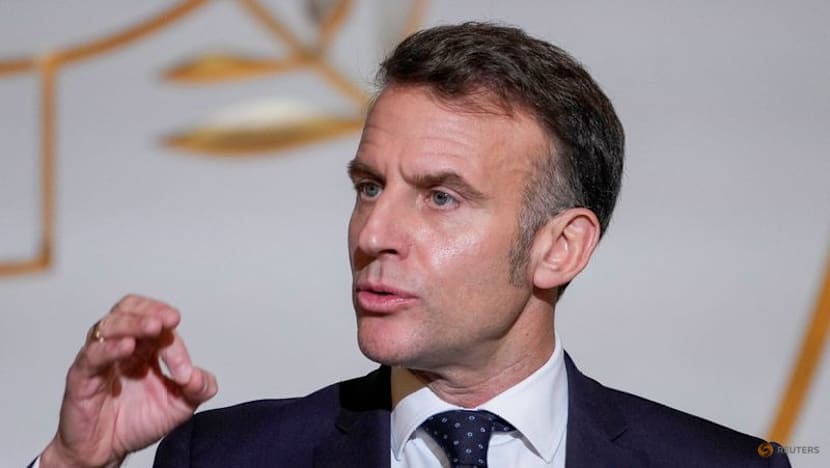
Mr Trump threatened Denmark and other EU countries that pushed back on him over Greenland with tariffs of up to 25 per cent, which he walked back on at Davos. He floated tariffs of up to 200 per cent on French wine and champagne if French President Emmanuel Macron refused to join his proposed Gaza Board of Peace. 

SOUTHEAST ASIA FEELS THE SQUEEZE

Canadian Prime Minister Mark Carney warned at Davos that the “old order is not coming back”. 

“Middle powers must act together because if you are not at the table, you are on the menu,” he said.

This edict could one day apply to the countries of Southeast Asia. While the Association of Southeast Asian Nations (ASEAN) can convene, it does not have the enforcement power needed to push back against a global trading system driven by power rather than principle.

Businesses across Southeast Asia which benefit from exposure to both the US and China must prepare for a world in which satisfying both becomes nigh impossible. Companies may soon face stark choices: Comply with one system, risk exclusion from another.

With populism growing, globalisation fracturing and trade politicised, middle powers must work harder to preserve their opportunity for continued economic growth.

Davos 2026 shows the room for manoeuvre is narrowing. As the US and China exercise power through trade, what happens on the front page now connects directly to the business section.

Steven Okun serves as CEO of APAC Advisors, a geostrategic and responsible investment consultancy based in Singapore. He served as Deputy General Counsel at the US Department of Transportation in the Administration of President Bill Clinton. Noemie Viterale of APAC Advisors contributed.

Source: CNA/el

Sign up for our newsletters

Get our pick of top stories and thought-provoking articles in your inbox

Subscribe here
Inbox
FAST
Advertisement

East Asia

Crowds flock to Tokyo zoo to see pandas before they leave for China

The departure of four-year-old twins Xiao Xiao and Lei Lei leaves Japan panda-less for the first time since 1972, prompting thousands to apply for lottery-assigned tickets to say goodbye.

Crowds flock to Tokyo zoo to see pandas before they leave for China

Visitors queue to see four-year-old female giant panda Lei Lei at Ueno Zoo during the last viewing day before the planned return of twin giant pandas Xiao Xiao and Lei Lei to China, in Tokyo, Japan, Jan 25, 2026. (Photo: Reuters/Issei Kato)

25 Jan 2026 04:11PM (Updated: 25 Jan 2026 04:14PM)
Read a summary of this article on FAST.
FAST

TOKYO: Panda fans flocked to the Ueno Zoo in Tokyo on Sunday (Jan 25) to say goodbye to its star attractions - two giant pandas, who will be sent back to China at the end of the month.

The departure of four-year-old twins Xiao Xiao and Lei Lei leaves Japan panda-less for the first time since 1972, prompting thousands to apply for lottery-assigned tickets to say goodbye.

"I've been coming since the parents of Xiao Xiao and Lei Lei were here," said 54-year-old finance-sector worker Machiko Seki. "It feels like one family's story is coming to an end."

While their move to China has been planned for some time, the pandas' upcoming absence has been viewed as a reflection of deteriorating China-Japan relations in recent months.

In November, Japanese Prime Minister Sanae Takaichi said a hypothetical Chinese attack on Taiwan could bring about a Japanese military response. That triggered a furious response from Beijing, which claims sovereignty over the self-governed island.

Four-year-old male giant panda Xiao Xiao walks at Ueno Zoo during the last viewing day before the planned return of twin giant pandas Xiao Xiao and Lei Lei to China, in Tokyo, Japan, Jan 25, 2026. (Photo: Reuters/Issei Kato)

Political tensions were not the focus of many zoo-goers on Sunday, when visitors were allowed one-minute windows to see the bears.

"The pandas have given me so much - energy, courage, healing," Seki said. "I wanted to come today to express my gratitude."

Even people who did not win tickets made the journey.

"Today, I didn't win the lottery for the panda viewing, so I can't see the pandas in person," said 49-year-old housewife Akiko Kawakami.

"I came here today because I wanted to breathe the same air as the pandas."

Source: Reuters/kl

Sign up for our newsletters

Get our pick of top stories and thought-provoking articles in your inbox

Subscribe here
Inbox
FAST
Advertisement

East Asia

American rock climber Alex Honnold free-climbs Taipei 101

Honnold is known for his legendary ropeless climb up Yosemite National Park’s El Capitan, documented in Free Solo.

American rock climber Alex Honnold free-climbs Taipei 101

US rock climber Alex Honnold raises his arms while standing at the top of the Taipei 101 building after he successfully free soloed the landmark skyscraper without ropes or safety gear on Jan 25, 2026. (Photo: AFP/I-Hwa Cheng)

25 Jan 2026 10:00AM (Updated: 25 Jan 2026 04:12PM)
Read a summary of this article on FAST.
FAST

TAIPEI: An American climber took on Taiwan's tallest building on Sunday (Jan 25), without ropes or safety gear, in a daring feat that drew hundreds of spectators to the tower's base and many more online through a live Netflix broadcast.

Alex Honnold, 40, has conquered some of the world's most intimidating rock faces and rose to global fame in 2017 after he climbed Yosemite's "El Capitan", a feat documented in Free Solo. 

On Sunday, he climbed Taipei 101, which towers at 508m.

Cheers erupted from a street-level crowd as he reached the top of the spire about 90 minutes after he started. Wearing a red T-shirt and yellow custom-made climbing shoes, he waved his arms back and forth over his head.

“It was like what a view, it’s incredible, what a beautiful day,” he said afterward. “It was very windy, so I was like, don’t fall off the spire. I was trying to balance nicely. But it was, what an incredible position, what a beautiful way to see Taipei.”

Climber Alex Honnold in action on Jan 25, 2026. (Photo: Reuters/Ann Wang)

"BAMBOO BOXES"

The weather was clear as he began by scaling the building's southeast face, utilising small L-shaped outcroppings as footholds.

The building has 101 floors, with the hardest part being the 64 floors of the middle section - the "bamboo boxes" that give the building its signature look. 

Divided into eight, each segment has eight floors of steep, overhanging climbing followed by balconies, where he took short rests as he made his way upward.

US rock climber Alex Honnold climbs the Taipei 101 building without ropes or safety gear in Taipei on Jan 25, 2026. (Photo: AFP/I-Hwa Cheng)
A man uses his phone to record US rock climber Alex Honnold climbing the Taipei 101 building without ropes or safety gear on Jan 25, 2026. (Photo: AFP/I-Hwa Cheng)

Periodically, he had to manoeuvre around and clamber up the sides of large ornamental structures that jut out from the tower, pulling himself up with his bare hands.

At one point, he stepped onto a platform midway up to wave down at fans and onlookers who were taking photos of the dramatic ascent.

People watching from inside the building could be seen gawking and tapping at the glass as Honnold scrambled past the enclosed glass observation deck on the 89th floor.

Climber Alex Honnold gestures to the crowd below during his free solo attempt on Jan 25, 2026. (Photo: Reuters/Ann Wang)
Climber Alex Honnold waves from the top of Taipei 101 after successfully free soloing the building. (Photo: Reuters/Ann Wang)

"LIFELONG DREAM"

Honnold's free solo climb was broadcast live on Netflix with a 10-second delay, titled Skyscraper Live. The ascent, originally scheduled for Saturday, was delayed for 24 hours due to rain.

The climb drew both excitement and concern over the ethical implications of attempting such a high-risk endeavour on live broadcast.

Many have also questioned Honnold’s desire to continue his free-solo climbs now that he’s a married father of two young girls.

"It's been a lifelong dream of mine to climb a skyscraper," Honnold said in a promotional video for the climb on Netflix's Facebook page on Tuesday.

"So I am going to be free-soloing Taipei 101 ... No ropes, no gear, just me and the building."

Honnold declared it would mark the "biggest urban free-solo climb" to ever be attempted. 

The climb took place with the full support and permission of Taipei 101 and the city government.

Honnold said he had once thought of climbing the structure without permission.

"But then out of respect for the building and respect for all the people on the team who'd allowed me access to look at it, I was like, well obviously I'm not going to poach this, I'm going to respect the people and just see if it ever comes together."

People watch US rock climber Alex Honnold scale the Taipei 101 building without ropes or safety gear on Jan 25, 2026. (Photo: AFP/I-Hwa Cheng)
Onlookers take pictures and record footage of US rock climber Alex Honnold climbing the Taipei 101 building without ropes or safety gear in Taipei on Jan 25, 2026. (Photo: AFP/I-Hwa Cheng)

Executive Producer James Smith said it was rare for a building to trust a climber and allow such an event to take place, calling Taipei 101 "a real icon of this country".

Taipei 101 was the tallest building in the world from 2004 to 2010, a crown currently held by the Burj Khalifa in Dubai.

Richard Bode, 34, said watching the event was a "once-in-a-lifetime experience".

Another onlooker, Benson, 24, called the climb "incredibly brave", while others, like Lin Chia-jou, 54, told AFP that she found it "terrifying" but admired Honnold for the hard work he'd put into achieving his dream.

Taipei 101 chairwoman Janet Chia said on Saturday on Threads that it was touching to hear that fans had travelled from Singapore, Hong Kong and southern Taiwan to watch the climb and apologised for the delay in the event.

"But this epic event is definitely worth the wait," Chia added.

Taiwanese politicians also took to social media to thank Honnold and Netflix for putting Taiwan - more accustomed to featuring in global headlines for its semiconductor prowess or Chinese military threats - in the international spotlight with such a different perspective.

"Congratulations to the brave, fearless Alex for completing the challenge," President Lai Ching-te wrote on his Facebook page.

"Through Netflix's live broadcast cameras, the world didn't just see Taipei 101 - it also saw the warmth and passion of the Taiwanese people, and the beautiful hills and scenery of this land," he added.

A fan of rock climber Alex Honnold holds a poster at the Taipei 101 skyscraper on Jan 25. 2026. (Photo: AP/hiang Ying-ying)

A RECORD

Having a cheering crowd was unusual and a bit unnerving at first for Honnold, whose climbs are usually in remote areas.

“When I was leaving the ground, you're like oh it’s kind of intense, there’s so many people watching,” he said. “But then honestly, they’re all wishing me well. I mean basically it just makes the whole experience feel almost more festive, all these nice people are out supporting me and having a good time.”

Honnold is the first person to free solo climb Taipei 101, without a rope, harness, or safety net, but not the first to scale the large building.

Rock climber Alain Robert, dubbed the French Spiderman, scaled the building on Christmas Day in 2004 as part of the grand opening of what was then the world’s tallest building.

He took nearly four hours to finish, almost twice as long as he anticipated, all while nursing an injured elbow and battered by wind and rain.

Climber Alex Honnold atop Taipei 101 after free soloing the skyscraper on Jan 25, 2026. (Photo: Reuters/Ann Wang)
Source: Agencies/zl

Sign up for our newsletters

Get our pick of top stories and thought-provoking articles in your inbox

Subscribe here
Inbox
FAST
Advertisement

World

Trump threatens Canada with 100% tariff over pending trade deal with China

"China will eat Canada alive, ‍completely devour it, including ⁠the ‍destruction of their businesses, social fabric, and general way of life," Trump wrote on Truth ⁠Social.

Trump threatens Canada with 100% tariff over pending trade deal with China

US President Donald Trump holds a chart next to US Secretary of Commerce Howard Lutnick as Trump delivers remarks on tariffs in the Rose Garden at the White House in Washington, DC, US, Apr 2, 2025. (File photo: REUTERS/Carlos Barria)

24 Jan 2026 10:32PM (Updated: 25 Jan 2026 07:17AM)
Read a summary of this article on FAST.
FAST

WASHINGTON: US President Donald Trump said on Saturday (Jan 24) he would impose a 100 per cent tariff on Canada if it follows through on a trade deal with China and warned Canadian Prime Minister Mark Carney that a deal would endanger his country.

"China will eat Canada alive, completely devour it, including the destruction of their businesses, social fabric, and general way of life," Trump wrote on Truth Social.

"If Canada makes a deal with China, it will immediately be hit with a 100 per cent Tariff against all Canadian goods and products coming into the USA."

In a video on Saturday, Carney urged Canadians to buy domestic products, but did not directly mention Trump's tariff threat.

“With our economy under threat from abroad, Canadians have made a choice to focus on what we can control,” Carney said. “We can’t control what other nations do, we can be our own best customer.”

The Canadian prime minister this month travelled to China to reset the countries' strained relationship and reached a trade deal with Canada's second-biggest trading partner after the US.

Immediately after Carney's China trip, Trump sounded supportive. "It's a good thing for him to sign a trade deal," Trump told reporters at the White House on Jan 16. "If you can get a deal with China, you should do that."

“There is no pursuit of a free trade deal with China. What was achieved was resolution on several important tariff issues," Dominic LeBlanc, the minister responsible for Canada-US Trade, said on Saturday in a post on X.

The Chinese embassy in Canada said in a statement to Reuters that China was ready to work with Canada to implement the important consensus reached by the leaders of the two countries.

US-Canada tensions have grown in recent days following Carney's criticism of Trump's pursuit of Greenland.

MORE PRESSURE ON CANADIAN INDUSTRIES

Trump on Saturday (Jan 24) suggested China would try to use Canada to evade US tariffs. 

"If Governor Carney thinks he is going to make Canada a 'Drop Off Port' for China to send goods and products into the United States, he is sorely mistaken," Trump said, using a title for Carney that refers to Trump's past calls for Canada to become the 51st US state.

In a second Saturday post, Trump said, "The last thing the World needs is to have China take over Canada. It’s NOT going to happen, or even come close to happening!"

If Trump makes good on Saturday's threat, the new tariff would greatly increase US duties on its northern neighbour, adding pressure to Canadian industrial sectors such as metal manufacturing, autos and machinery.

Relations between Carney and Trump seemed relatively placid until the Canadian leader this week spoke out forcefully against Trump's pursuit of Greenland.

Carney subsequently, at the World Economic Forum, called on nations to accept that a rules-based global order was over and pointed to Canada as an example of how "middle powers" might act together to avoid being victimised by American hegemony.

Carney, during his speech in Davos, Switzerland, did not directly call out Trump or the United States by name. However, the prime minister argued that "middle powers must act together because if you are not at the table, you are on the menu".

Many world leaders and industry titans present at the Switzerland confab responded with a standing ovation.

Canada Prime Minister Mark Carney delivers a speech at the World Economic Forum in Davos, Switzerland on Jan 20, 2026. (File photo: AP via The Canadian Press/Sean Kilpatrick)

Trump shot back in his own Davos speech and said Canada "lives because of the United States", a statement that Carney rejected on Thursday.

"Canada and the United States have built a remarkable partnership in the economy, in security and in rich cultural exchange," Carney said in Quebec. "Canada doesn't live because of the United States. Canada thrives because we are Canadian."

Since then, Trump has dug in, revoking Canada’s invitation to his Board of Peace that he wants to deal with international conflicts and Gaza’s future.

After Carney’s election last year, Trump and Carney shared a congenial tone. "I think the relationship is going to be very strong," Trump said at the time.

But Trump this month dismissed the mega trade deal between the United States, Canada, and Mexico - up for renegotiation in July - as "irrelevant".

Trump has issued many tariff threats since returning to the presidency, though in several cases he has paused them during negotiations or relented entirely. This week, Trump backed off his recent threat to impose stiff tariffs on European allies after the NATO chief and other leaders promised to step up security in the Arctic.

"We hope the two governments can come to a better understanding quickly that can alleviate further concerns for businesses who face the immediate consequences of torqued up uncertainty," the Canadian Chamber of Commerce's Matthew Holmes said in a statement.

Source: Reuters/gr

Sign up for our newsletters

Get our pick of top stories and thought-provoking articles in your inbox

Subscribe here
Inbox
Advertisement

East Asia

China probes deputy military chief Zhang Youxia, general Liu Zhenli over 'serious violations of discipline and law'

Zhang, 75, and Liu, 61, are the vice-chairman and member of the Central Military Commission (CMC) respectively.

China probes deputy military chief Zhang Youxia, general Liu Zhenli over 'serious violations of discipline and law'

Chinese Central Military Commission (CMC) Vice Chairman Zhang Youxia (left) and CMC member Liu Zhenli (right). (Photos: Reuters/Florence Lo)

24 Jan 2026 04:05PM (Updated: 24 Jan 2026 09:17PM)
Read a summary of this article on FAST.
FAST

BEIJING: China said on Saturday (Jan 24) that the vice-chairman of its powerful Central Military Commission (CMC) and another high-ranking official have been placed under investigation over suspected "serious violations of discipline and law", a common euphemism for corruption.

"Following a review... it has been decided to initiate an investigation into Zhang Youxia and Liu Zhenli," the defence ministry said in a statement.

Zhang, 75, is one of Chinese President Xi Jinping's longest-serving allies in the armed forces. 

A career army officer and war veteran, Zhang oversees military operations, training and weapons procurement within the People's Liberation Army (PLA). His ties with Xi reportedly run deep, with their fathers being revolutionary comrades.

Liu, 61, is a member of the CMC, and its Joint Staff Department chief, responsible for overseeing the PLA’s joint operations, training and combat readiness.

Zhang and Liu were last seen in public on Dec 22, when they attended a CMC ceremony conferring the rank of general on two senior officers.

Xi - who is also CMC chairman - was present at the event, and Zhang read out the promotion orders signed by Xi, according to state broadcaster CCTV.

Aside from the two newly promoted generals, CCTV footage showed four full generals in attendance: Zhang Youxia and Zhang Shengmin - who was named CMC vice-chair last October, replacing the disgraced He Weidong - Liu and Defence Minister Dong Jun.

In this photo released by Xinhua News Agency, CMC vice-chair Zhang Youxia (right) is seen beside Chinese President Xi Jinping (middle), also chairman of the Central Military Commission (CMC) at a military promotion ceremony on Dec 22, 2025. Liu Zhenli is out of frame on the right. (Photo: Xinhua via AP/Li Gang)

Saturday’s announcement came after about a week of speculation, largely confined to overseas Chinese-language and Taiwan-based media, that Zhang Youxia could be in trouble.

The reports highlighted Zhang Youxia’s absence on Jan 20 from a high-level study session on the fourth plenum that was attended by senior party and military leaders.

In footage of the event broadcast by CCTV, Zhang Shengmin appeared seated in the front row alongside other Politburo members. Zhang Youxia, a Politburo member, was not seen.

The reports also highlighted Liu as another notable absentee from the Jan 20 event. Others singled out included He Lifeng, who was attending the World Economic Forum in Davos, as well as Politburo members Shi Taifeng, head of the Organisation Department of the Communist Party’s Central Committee, and Ma Xingrui, former party secretary of Xinjiang.

Ma's absence has stirred talk over his fate, with reports highlighting that he has been missing from public view for the last few months. No reasons have been floated for Shi’s no-show.

ANTI-CORRUPTION CRACKDOWN

The military was one of the main targets of a broad corruption crackdown ordered by Xi in 2012. That drive reached the upper levels of the military in 2023 when the Rocket Force was targeted.

Eight top generals were expelled from the ruling Communist Party on graft charges in October 2025, including the country's number two general, He Weidong. He had served under Xi and alongside Zhang on the CMC,

He, along with ex-CMC Political Work Department chief Miao Hua, were expelled from both the military and the party, Reuters reported.

The former was succeeded by Zhang Shengmin, a general in Beijing's secretive Rocket Force and who is not related to Zhang Youxia.
 
The 67-year-old Zhang Shengmin is a veteran political officer who has been secretary of the CMC’s Discipline Inspection Commission since 2017, serving as a key enforcer of Xi’s sweeping military clean-up.

Also among the fallen top brass were He Hongjun, Wang Xiubin, Lin Xiangyang, Qin Shutong, Yuan Huazhi and Wang Chunning. 

Together, they represented the uppermost echelon of China’s armed forces, spanning the People’s Liberation Army’s (PLA) Eastern Theater Command, Rocket Force and People’s Armed Police.

China's two previous defence ministers, Li Shangfu and Wei Fenghe, were also expelled from the Communist Party in June 2024 for corruption. Li's case in particular was connected to corrupt procurement of military equipment, Reuters reported.

Source: Agencies/lk(ws)

Sign up for our newsletters

Get our pick of top stories and thought-provoking articles in your inbox

Subscribe here
Inbox
Advertisement

Commentary

Commentary: Forget DeepSeek, dying alone is China’s latest tech obsession

The bluntly named “Are You Dead” app went viral because it translated demographic and social anxiety into a push notification, says Catherine Thorbecke for Bloomberg Opinion.

Commentary: Forget DeepSeek, dying alone is China’s latest tech obsession

The main function of the Are You Dead mobile application is to ensure the safety of people living alone, especially seniors. Outside of China, it is available in the Apple App Store under the name of Demumu. (Images: Moonscape Technologies)

Listen
5 min
New: You can now listen to articles.

This audio is generated by an AI tool.

24 Jan 2026 06:00AM
Read a summary of this article on FAST.
FAST

TOKYO: This time last year, the hottest Chinese tech product was DeepSeek’s market-moving artificial intelligence (AI) model. In 2026, it’s something far simpler: an app for people worried about dying alone.

The bluntly named “Are You Dead" platform rocketed to the top of the app store charts in China before going viral globally. The interface is almost aggressively plain. Users, largely people living alone, tap to confirm they are still alive. Miss two days in a row and an emergency contact gets notified.

Besides its provocative moniker, there’s a reason the app went mega-viral without spending a dime on advertising - and didn’t even have to pretend to be a buzzy new AI product. Its surge coincided with the nation’s birth rate plunging to its lowest on record, at a time when marriage figures are falling and divorces are ticking up.

While many assumed it was developed for elderly users seeking to hold on to their independence, it was actually created by a team of Gen Z developers who said in interviews they were inspired by their own experiences of isolating urban life. One-person households are expected to swell to as many as 200 million in the country by 2030.

These demographic changes aren’t unique to modern China, but they’re definitely not the kind of publicity Beijing wants right now. The platform was quietly removed from Chinese app stores last week.

In a culture where frank mentions of dying are seen as taboo and inauspicious, the creators also said on micro-blogging site Weibo that they were planning on rebranding. The new international name, Demumu, is a Labubu-fied riff on the word “death.” It didn’t catch on as expected, and the developers are now crowdsourcing a new idea via social media.

A GREAT CONCEPT

Despite striking a nerve in Beijing and around the world, the product’s concept is annoyingly good. I’m jealous I didn’t think of it. 

As Big Tech and startups race to come up with the next hit AI application, the most common complaint I hear from actual humans is that many of these tools are solutions hunting for a problem. I don’t need a model to summarise a two-line message from a friend, and having software interpose itself in basic intimacy can feel more intrusive than helpful.

“Are You Dead” does the opposite. It’s not trying to be clever, but purely practical. It offers a small sense of security to people living solo - even as its existence makes plain a rising loneliness epidemic. 

The name, a dark twist on the popular “Are You Hungry” food delivery platform, channels the nihilistic Gen Z humour of the "lay flat" generation. Online, many Chinese youth didn’t treat it as offensive, but rather as a kind of memento mori.

Efforts to force AI into more facets of our lives have rightly commanded the spotlight. But across Asia and beyond, eldercare tech is poised to boom. 

Beijing has been touting the silver economy as a future engine of growth, pointing to seniors’ rising spending power and willingness to adopt new digital platforms. Rather than discourage these innovations and the uncomfortable questions they raise, the government should welcome these tools.

In the US, the American Association of Retired Persons forecasts that older Americans’ spending on technology will rise to US$120 billion by 2030, despite 59 per cent of adults over 50 feeling it isn’t designed with their age in mind. There’s a ballooning opportunity globally for developers to tap into this market and ameliorate that disconnect.

IS TECH MAKING US MORE OR LESS LONELY?

But the deeper debate unleashed by the app’s virality is something that will be even harder for the industry to address: Is technology making us more or less lonely? 

Globally, social media has made it much more convenient to avoid meeting in-person. In China, super-apps have optimised everything - you don’t have to say a word to a real person to hail a ride or order delivery meals and essentials. And in the pursuit of AI supremacy, people are working longer hours, driven by a grueling (and technically illegal) 996 culture that encourages more time away from home.

DeepSeek was China’s splashy tech moment; “Are You Dead” is the hangover. The no-frills check-in app didn’t top the charts because of brilliant engineering. It went viral because it translated demographic and social anxiety into a push notification. 

Beijing can scrub it from the stores and its creators can try to Labubu-fy “death”. The underlying demand it exposed for connection won’t disappear.

It's also a warning shot for the AI industry: The next hit product likely won’t be built on summarising our conversations. It will be one that confronts why we’re having fewer of them.

In the race to make machines more human, China’s first breakout app of the year just asks if you still have a pulse.

Source: Bloomberg/sk

Sign up for our newsletters

Get our pick of top stories and thought-provoking articles in your inbox

Subscribe here
Inbox
Advertisement

East Asia

Two dead, four missing after Singapore-flagged vessel capsizes near Scarborough Shoal

There were no Singaporeans on board the vessel, says the Maritime and Port Authority of Singapore.

Two dead, four missing after Singapore-flagged vessel capsizes near Scarborough Shoal

Singapore-flagged bulk carrier "Devon Bay" sank in the South China Sea en route to Yangjiang, China on Jan 23, 2026. (File photo: VesselFinder)

23 Jan 2026 01:46PM (Updated: 23 Jan 2026 05:48PM)
Read a summary of this article on FAST.
FAST

BEIJING: Two crew members of a Singapore-flagged ship, Devon Bay, died on Friday (Jan 23) after the vessel capsized in the South China Sea. 

The Maritime and Port Authority of Singapore (MPA) said it was informed on Friday that the ship had sunk. The incident occurred while the bulk carrier was en route to Yangjiang, China.

Four of the 21 crew members remain unaccounted for, and search and rescue operations are ongoing.

MPA said the crew are no longer on board, and that there were no Singaporeans on the vessel at the time of the incident.

The authority added that it is in contact with the ship owner as well as relevant search and rescue authorities, and is providing support as required.

The incident is under investigation and MPA will provide further updates when more information becomes available.

China and the Philippines said on Friday they launched rescue operations after ⁠receiving reports of a distressed cargo ship near the Scarborough Shoal. 

The Chinese ‍military said 17 crew ⁠members ‍were rescued and two of them later died, after a report at around 1.30am on Friday that ⁠a foreign cargo vessel had capsized in waters near the shoal. 

It dispatched ‍aircraft to conduct searches, and the Chinese Coast Guard sent two vessels for rescue efforts.

One person was receiving emergency medical treatment, it said, adding that China's maritime authorities were organising additional rescue forces to head to the area.

The Philippine Coast Guard said it deployed two vessels and two aircraft to rescue the Philippine crew from the cargo vessel loaded with iron ore.

"The Philippine Coast Guard Command Centre acquired information from the Hong Kong Maritime Rescue Coordination Centre ‍that 10 ‌of the 21 Filipino crew members were rescued by a passing China Coast Guard vessel," it said.

Scarborough Shoal is one of Asia's most contested maritime features and a frequent flashpoint in disputes over sovereignty and fishing rights.

On ‌Tuesday, the Chinese military said it organised naval and air force units to drive away a Philippine government aircraft that it accused of "illegally intruding" into airspace over the atoll.

China claims almost the entire South China Sea, overlapping the exclusive economic zones of Brunei, Indonesia, Malaysia, the Philippines and Vietnam.

Source: Reuters/rl

Sign up for our newsletters

Get our pick of top stories and thought-provoking articles in your inbox

Subscribe here
Inbox