Skip to content
That’s just not natural

All the ways the most common bit of climate misinformation is wrong

We’ve looked at natural cycles and causes. None of them can produce this warming.

Howard Lee | 318
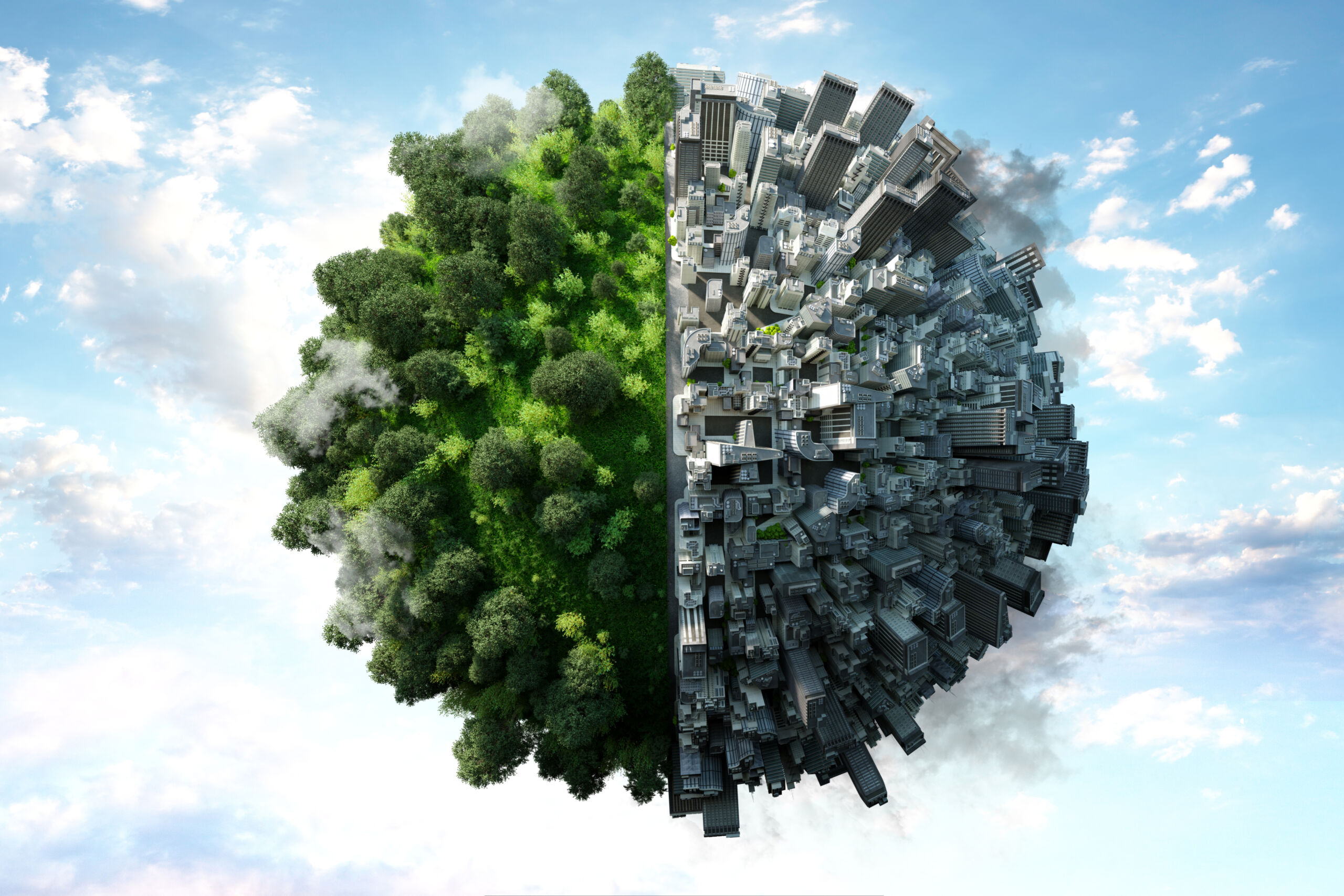
Is it natural, or is it us? (It's us.) Credit: Andriy Onufriyenko/Getty Images

It starts as a reasonable question: If the Earth’s climate changed before humans existed, how can we be so sure the current change is due to us and not something natural?

To answer that question, we need to understand what caused the natural changes of the past. Fortunately, science has a good handle on the causes of Earth’s natural climate changes going back hundreds of millions of years. Some were cyclical; others were gradual shifts or abrupt events, but none explain our changing climate today.

A zombie claim

With energy policy and elections in the news, the claim by some politicians that climate change is natural is once again bubbling up from the disinformation swamp. So I asked some scientists a very unscientific question: What would they buy if they had a dollar for every time they heard it?

“A heat pump for my house,” said professor Mathew Owens of the University of Reading. “A time machine to… convince policymakers to act on climate decades ago,” said Professor Michael Mann of the University of Pennsylvania. Professor Anja Schmidt of the German Aerospace Center and the Universities of Munich and Cambridge would make a movie to explain that “volcanoes are not to blame,” while Professor Tim Lenton of the University of Exeter would “lobby governments to teach this stuff in school.”

“I love cycling, so I’d probably buy another bike,” Professor Michel Crucifix of University of Louvain in Belgium told me. “I would probably buy some solar panels,” said Professor Jeremy Caves Rugenstein of Colorado State University.

Fortunately, these scientists also had a lot to say about the natural forces of climate change and their non-role in global warming today.

It’s not the Sun

The Sun is the source of energy on the surface of our planet, so it stands to reason that variations in solar activity might cause climate changes. But solar activity has been declining over the past few decades as our planet warmed, so there’s no link. Although solar energy is immense, its variations are tiny.

“It was called the solar ‘constant’ for a long time because you need extremely sensitive instruments to see any variation in the Sun’s energy output,” said Owens. Over an 11-year sunspot cycle, the solar energy reaching the top of the atmosphere varies by about 0.15 percent, but it rises and falls every cycle, so it can’t drive climate trends like ours.

Credit: NASA-JPL/Caltech

In addition to these 11-year cycles, the Sun also goes through “grand solar minima” and “grand solar maxima” of activity that last decades. One of those, called the “Maunder Minimum,” was once thought to be the cause of a cold period between about 1300 and 1850, called the Little Ice Age.” But “it just doesn’t add up,” Owens told me. “The temperature starts to drop long before the Maunder Minimum happened.”

The Maunder Minimum may have contributed a fraction of a degree to the cooling during the Little Ice Age, which evidence has since indicated was mostly the result of volcanic eruptions and human land use changes.

The Sun also regulates the dose of cosmic rays inflicted on our atmosphere. These are mostly protons that originate in space from things like supernovae, and there was an idea in the late 1990s that they might affect climate by seeding cloud formation. But the data shows no correlation, Owens told me, and experiments with the CERN particle accelerator show that cloud seeding by cosmic rays is weak. “The growth rate of droplets is just too small to really do anything in the atmosphere,” said Owens, so it can’t explain the Little Ice Age or modern climate change.

Owens is underwhelmed by the Sun’s current activity: “We’re ramping up into solar cycle 25. It’s looking very, very average!” he said.

It’s not natural variation

You’re probably familiar with the El Niño and La Niña cycles that influence our weather. These repeat irregularly every two to seven years, affecting rainfall and drought across America and even altering Atlantic hurricane activity. The cycles are the strongest of several oscillations that alter how ocean heat is distributed over time and place. Mann describes them as the “random sloshing back and forth of the climate.”

Credit: NOAA

Mann and others have found no discernible climate oscillation in the last thousand years that lasts as long as our climate has been warming, so the warming has outlasted all of these natural oscillations.

It turns out that some apparently natural cycles are illusions. The 40-60-year-long “Atlantic Multidecadal Oscillation” is one of several that are really just echoes of decades-long cooling caused by explosive volcanic eruptions in the preindustrial era. More recently, competition between human-caused warming and human-caused cooling resulting from sulfurous pollution has also left its imprint on the oscillation. Consequently, “key trends, such as the warming of the tropical Atlantic and the increase in hurricane activity associated with it cannot, as some researchers have claimed, be blamed on an internal oscillation,” said Mann. They are instead the result of human-caused warming.

In the more distant past, there were big, rapid climate swings during the cold “glacial” periods of the Pleistocene Ice Age. In these “Dansgaard-Oeschger events,” the global climate warmed in just a few decades and then cooled again several times. While their underlying cause is still debated, there’s evidence that links these events to surges of icebergs from the huge ice sheets of the time, which slowed ocean currents and caused heat to build up on the surface. We obviously don’t have those ice sheets today, and “there is no evidence for such an oscillation during interglacial intervals like the present,” Mann said.

Combined, all the events that are currently influencing the climate create a lot of year-to-year noise in temperatures. But a clear signal of human-caused climate change emerged back in the 1950s above the random “sloshing back and forth” variability.

It’s not volcanoes

Volcanoes have a split personality when it comes to climate—they cool it temporarily, yet they also release CO2 that keeps Earth from freezing solid. Volcanic CO2 is the main source of geological carbon emissions that kept our planet habitable for billions of years. Without its “greenhouse effect,” the planet’s average temperature would be an icy -18° C compared to about +14° C, where it is today. And yet, “the amount of CO2 emitted from volcanoes is tiny compared to human activities,” Schmidt told me.

Geological processes emit CO2 from volcanoes, mid-ocean ridges, rift valleys, geothermal systems, and from heat and pressure on rocks at depth. Combined, these release about 0.148 billion tons of CO2 per year—just 0.4 percent of the 36.3 billion tons of human emissions in 2021. To put that in perspective, it would take 1,650 eruptions as big as the huge Pinatubo eruption in 1991, every year, to match human CO2 emissions. Even geological methane from sources such as mud volcanoes is much less than methane from human activity.

Instead, our climate is more noticeably affected by volcanoes’ other climate personality: short-term cooling.

Cooling blips in average land temperature caused by explosive volcanic eruptions. Credit: Berkeley Earth

If an eruption is explosive enough to loft material into the stratosphere and if that material includes a lot of sulfur dioxide gas, the gas forms tiny droplets of sulfuric acid in the stratosphere. These “act like a shiny mirror,” Schmidt said, which reflect some sunlight back into space and cool Earth’s surface.

Eventually the droplets “sediment out of the atmosphere,” as Schmidt put it, and temperatures recover. The 1991 Pinatubo eruption cooled the climate by up to 0.5°C for nearly three years, but bigger historical eruptions had stronger impacts. The eruption of Tambora in 1815 caused 1816 to be “The Year Without a Summer,” and eruptions in 1257, 1452, and 1600 were probably the main causes of the “Little Ice Age.”

“The ocean has a long memory of any changes in temperature,” Schmidt told me, so cooling by past eruptions, like the enormous 1883 eruption of Krakatau, still slosh back and forth in climate variations today.

Ironically, human-caused warming will raise the altitude of the stratosphere, making it harder for eruption plumes to reach it, and will also speed up a stratospheric wind known as the “Brewer-Dobson Circulation,” which will enhance the cooling by those fewer eruptions that manage to reach the higher stratosphere.

It’s not Earth’s orbit

Wobbles in Earth’s orbit around the Sun are actually cyclic and can affect climate. Called “Milankovitch Cycles,” after the scientist who discovered them, they’re the reason the climate has alternated between cold “glacial” times, when ice sheets covered large parts of the northern hemisphere, and less cold “interglacial” times, when those ice sheets melted away. These cycles happened some 50 times in the last 2.6 million years, but they operate over 23,000-, 41,000-, or 100,000-year and longer timeframes, so they’re far more gradual than modern warming.

In any case, the orbital cycles are currently trending toward cooling, not warming. “They just continue the trends they had over the last thousands of years,” said Crucifix. “The obliquity, that angle decreases a little bit, so that would go in the direction of a glaciation.”

In fact, some scientists think that without human CO2 emissions, we’d already be entering the next glacial period. But “the jury’s out” for Crucifix. “In a sense, all the conditions are met to enter a glaciation, but where it hurts is that the eccentricity is very small, so the effect of being closer to the Sun or further away from the Sun is a bit less than it is usually for a glacial inception,” he said.

Eccentricity, one of three kinds of orbital wobble that have altered climate in Earth’s past. Credit: NASA/JPL-Caltech

Orbital wobbles are responsible for far more than glacial cycles. They can be traced back throughout geological time, adding a regular variation to the long-term background climate and alternating the rock types laid down in sediments. Coal formed in seams largely because orbital wobbles altered climate and sea levels, inundating swamps on a regular cycle. Orbital wobbles can even be found in the alternating layers of 2.5-billion-year-old “Banded Iron Formations,” huge iron ore deposits that formed just as oxygen was beginning to rise in Earth’s atmosphere.

As for when the next glacial age will happen, “the next window where everything is really nicely aligned and you can be sure that you would have entered glacial inception… is in 50,000 years,” said Crucifix. But current CO2 levels will prevent that: “Humans… have modified the history of glaciations,” said Crucifix. “So whatever happens, we won’t have a glacial Inception for a very long time… maybe 100,000 or 500,000 years” unless CO2 levels are reduced.

It’s not plate tectonics

It’s true that dinosaurs thrived in a warm climate, and the Arctic was fringed with palm trees 50 million years before the Pleistocene Ice Age. These multimillion-year shifts between “greenhouse” and “icehouse” climates were the result of plate tectonics, which sometimes breaks out in more volcanoes than usual, constructs huge mountain chains, or lets those mountains erode away.

These tectonic changes affect the balance between the CO2 emitted by geological processes (mainly volcanoes) and the CO2 removed by geological processes, mainly the chemical reaction of CO2 with water and silicate minerals, known as “silicate weathering.”

Carbon cycling over the last 250 million years.

“They can go a little bit out of balance on shorter timescales, but on a million-year timescale, they have to exactly balance,” explained Caves Rugenstein. If the two processes didn’t balance—say if silicate weathering didn’t exist—then the concentration of CO2 in the atmosphere would quintuple every million years, Caves Rugenstein told me, leading to runaway heating, as seen on the planet Venus.

“We think of silicate weathering as this master negative feedback,” said Caves Rugenstein. It is negative because it counteracts whatever the climate is doing. If the climate warms, the reactions speed up and remove CO2 faster, reducing warming; if the climate cools, the opposite happens. This way, silicate weathering acts like a thermostat.

But if there’s a thermostat, how do we get long-term climate shifts? The answer lies in the way climate adjusts silicate weathering to balance the supply of CO2 into the atmosphere and the demand for it by silicate weathering, Caves Rugenstein told me.

When plate tectonics was in overdrive during the Cretaceous, it led to extra volcanic CO2, which warmed the planet. That warmer climate boosted silicate weathering until it matched the extra volcanic supply of CO2. But in the last 30 million years or so, plate tectonics has been building mountain chains like the Andes and the Himalayas and easily erodible tropical islands.

“You erode, you expose more fresh minerals, you grind them up in landslides and in river transport, and you make them available in floodplains,” said Caves Rugenstein. This makes silicate weathering more efficient at removing CO2, so the balance between geological supply and demand of CO2 can be maintained by a cooler climate and lower CO2 levels.

Our eroding landscape today is about 50 percent more efficient at removing CO2 than it was 16 million years ago, and CO2 levels in the atmosphere have dropped and the climate has cooled since that time. But silicate weathering is much too slow to make a difference in our time. It’s like an ant eating an elephant: it will get there eventually, but at the slow pace of plate tectonics—in hundreds of thousands of years. In the meantime, half our emissions are absorbed by plants and ocean water, and the rest is building up in the atmosphere, warming the climate.

We’d have bigger problems if it was one of these

Artist’s rendering of the landscape during end-Permian extinction.
Artist’s rendering of the landscape during end-Permian extinction. Credit: José-Luis Olivares/MIT

There is a natural event that can alter the climate as quickly and even more dramatically than us—a major asteroid impact—but clearly we’re not in the aftermath of one of those. And we have some idea of what those aftermaths look like. The deadly effects of the impact that wiped out the dinosaurs stemmed not so much from the impact, its fires, or its tsunamis but from its dire effects on climate. It’s thought to have plunged the planet into an “impact winter” for years by filling the atmosphere with dust and sulfur, like an extreme version of an explosive volcanic eruption.

Unlike asteroid impacts, large igneous provinces are linked to most of the big extinction events in geological time. They aren’t as instantaneous as an asteroid impact, but they involve gargantuan flows of basalt lava—“flood basalts”—along with all kinds of underground invasions of magma, explosive eruptions, and climate-altering gas emissions.

“It’s the scale thing that we need to get into the heads of our readers,” remarked Schmidt. “They are on a different scale in terms of emissions, in terms of duration, and perhaps also in terms of uncertainty and our understanding,” she said.

The Siberian Traps large igneous province that triggered the end-Permian mass extinction covered an area the size of Europe in lava. The Central Atlantic Magmatic Province that triggered the end-Triassic mass extinction extended from France to Bolivia.

Nothing like that is happening today, obviously. And despite their vast scale and geologically rapid pace, the CO2 emissions from these eruptions were slower than human emissions. “Even then, the [rate] of CO2 emitted is… still only half human emissions,” said Schmidt.

They killed because they typically emitted enough carbon dioxide to warm the climate by several degrees for tens of thousands of years, punctuated by brief cold episodes caused by sulfur dioxide emissions, creating climate whiplash. They often triggered the loss of oxygen in seawater, which killed off many marine species, and they dished out a cocktail of nasties like mercury, methane, and acid rain. They may have even destroyed the ozone layer.

Humans are doing many of those same things but to a smaller extent and over a shorter time.

We’re not the first to have altered global climate

Humans are not the first species to have altered global climate. We’re just the latest organisms whose individual effects, multiplied by a huge population, have transformed the planet.

“Life evolves. Evolution is innovation. Occasionally, innovation is metabolic,” said Lenton.

Life’s innovations have triggered several step changes in Earth’s system, each with climatic consequences. When cyanobacteria evolved to create oxygen as a waste product of photosynthesis, the subsequent build-up of oxygen in the atmosphere around 2.4 billion years ago removed methane, a greenhouse gas, and buried carbon on the seafloor, plunging the planet into a series of worldwide glaciations.

Stability returned with a slightly oxygenated atmosphere for a billion years until life disrupted the world again 720 million years ago. Lenton cites evolutionary data that points to early fungi and green algae evolving at the time, which could have boosted weathering on land. “Fungi are really good at rock dissolving,” said Lenton. “Green algae and fungi together… could conceivably be part of why there are some ancient soil profiles from the time that show quite strong weathering signatures.”

At the same time, oceans that had until then been dominated by microbes began to teem with larger, multicellular life like algae, which leave behind dead bodies heavy enough to sink to the seafloor. The effect was to take carbon that had come from atmospheric CO2 and lock it away in sediments.

“The efficiency of organic carbon burial really switches on as those algae take over from the cyanobacteria,” Lenton told me.

The boost to weathering on land and the organic carbon burial at sea decimated CO2 levels. The planet froze over in a series of “Snowball Earth” episodes that lasted millions of years. Each time, the shroud of ice shut down weathering, allowing volcanic CO2 to build in the atmosphere to the colossal levels necessary to thaw the global ice sheet.

Image of small plants on otherwise bare soil at the edge of a body of water.
Artistic depiction of early land plants.
Artistic depiction of early land plants. Credit: University of Oregon

Ironically, we owe our combustion-based society to another evolutionary invention: the appearance of land plants around 460 million years ago. Initially tiny and lacking roots, these primitive plants were still capable of boosting weathering by dissolving rocks for nutrients, enough to halve CO2 levels in the atmosphere, Lenton told me. The resulting glaciation is linked to one of the biggest mass extinctions since the dawn of animals.

“It’s not just that this cools the planet,” Lenton said. “It also raises the oxygen level for the first time to kind of modern levels that support fire.”

Lenton views humans as just the latest evolutionary invention disrupting the planet. “I see it as a kind of technological metabolic innovation… to dig up the concentrated fossil fuels in the ground and then combust them to power society,” he said.

The usual suspects

We can rule out the usual natural suspects people often bring up to sow doubt about our role in climate change, and we can rule in humans because multiple lines of evidence prove our role. As the IPCC and agencies in the US, UK, Europe, Japan, China, and others have documented in exhaustive detail, global warming is unequivocally driven by emissions from human activities.

As sure as sure can be, it’s not natural—it’s us.

Listing image: Andriy Onufriyenko/Getty Images

Photo of Howard Lee
Howard Lee Contributing Editor
Howard Lee is a freelance science writer focusing on the evolution of planet Earth through deep time. He earned a B.Sc. in geology and M.Sc. in remote sensing, both from the University of London, UK.
318 Comments