
Middle-Earth's Last Remnant of Doggerland
The Lost History of Middle-Earth, Part 5

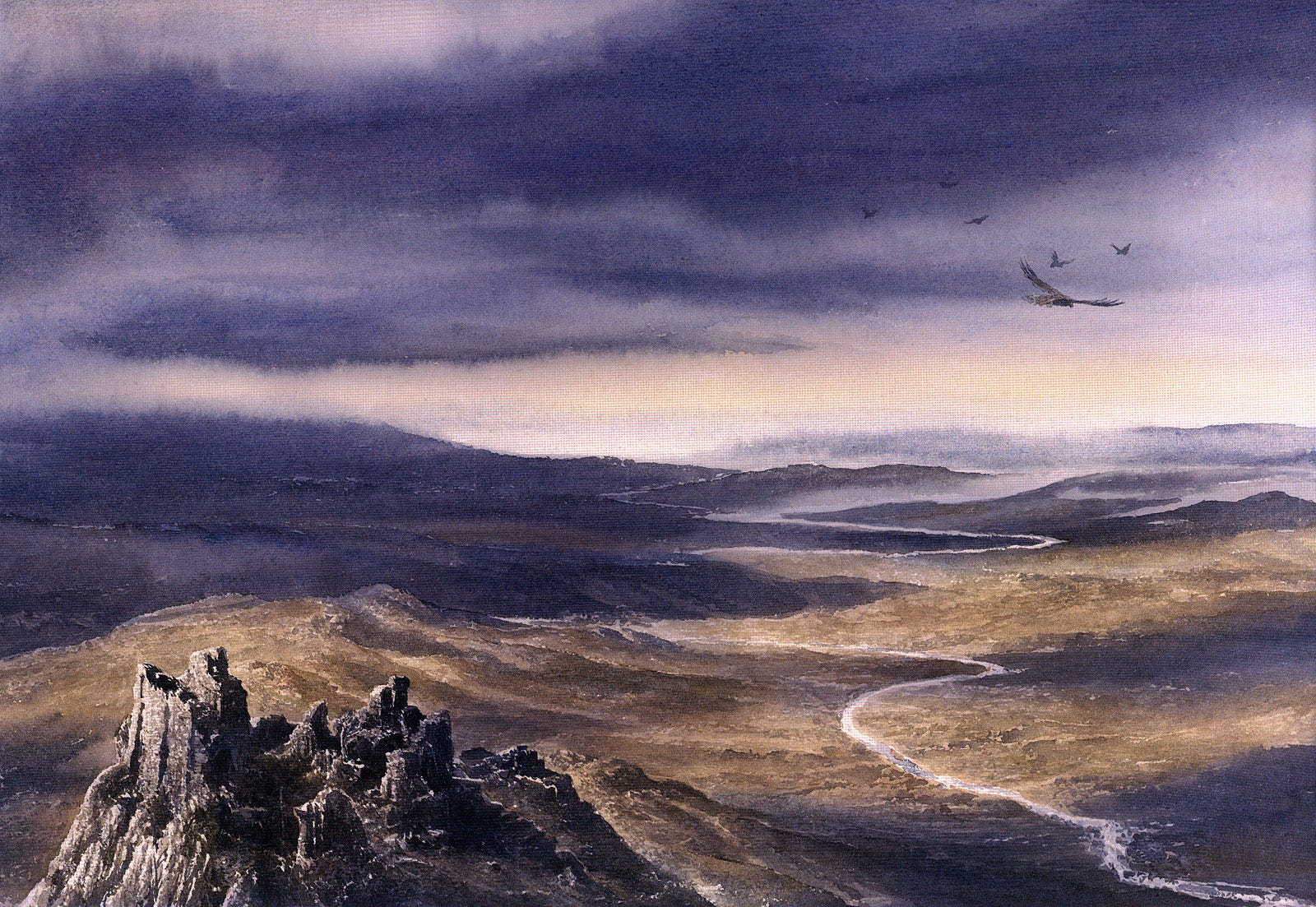
In this series of essays I have examined how J.R.R. Tolkien used the backdrop of prehistoric Europe as the setting of his lengendarium. While it is widely accepted that he intended his works to take place in the “real world” in European pre-history, I argue that this was much more serious side to his work, the full extent of which he largely kept private.
If this is the first entry in this series that you’ve come across I highly recommended you read the others first. Part 1 examines how the map of Middle-Earth aligns to a map of ancient Europe before the rising sea levels drastically changed the landscape.
How Tolkien Disguised Ice-Age Europe as Middle-Earth

Maps of Middle-Earth have been laid over maps of Europe before. They’re never very interesting, because they seem to prove that Tolkien’s world was nothing close to a one-to-one representation of an ancient Europe. They usually place the Shire (per Tolkien’s instruction) at Oxford, but make no attempt to fit in anything else in a way that makes sense.
Part 2 examines Tolkien’s incorporation of lost lands like Atlantis and the sunken landmass “Doggerland” in what is now the North Sea.
Lost Lands of Arda

My first entry in this series detailed how Tolkien’s Middle-Earth, when correctly scaled, perfectly matches the landscape of Ice-Age Europe. Tolkien’s placement of mythic locations such as Mirkwood also matches their attested locations in ancient Europe.
In Part 3 I lay out my theory that the legend of Turin Turambar and specifically the site of his grave is based around the minuscule island of Rockall.
Rockall: The Ruin of Beleriand, Hy Brasil, and the Grave of Turin Turambar

"And some things that should not have been forgotten were lost. History became legend. Legend became myth."
In Part 4 I explore the far northern reaches of Tolkien’s legends, and the connection between the Dark Lord Morgoth and the island of Jan Mayen.
Morgoth's Realms

Last time in this series we explored the ruin of Beleriand and the lonely island of Rockall in the Mid-Atlantic. Now, we’ll turn our attention further North, to the icy-wastes of the Arctic.
Now in Part 5 I am going to examine a possible connection between the lost kingdom of Arnor, Nazi Germany, and the last vestiges of Doggerland.
This story begins in the aftermath of WW2.
On the 18th of April 1947, the British Royal Navy detonated 6,700 metric tons of explosives all at once on the North Sea island of Heligoland. This was (allegedly) done to destroy what remained of German military bases that were used there during WW2. At the time it was the largest single non-nuclear explosion ever recorded. It was named “Operation Big Bang”.

If this seems strange and excessive to you, especially considering that the war had ended two years prior, that’s because it is indeed a very strange event, and little talked about.
I have a hunch that J.R.R. Tolkien may have had an interest in the island and in what the Nazis’ were really doing on it.
So far in this series we have seen how the islands of Rockall, Jan Mayen, Iceland, and Faroe all have locations connected with them in Tolkien’s legendarium. We have also examined how central the lost land of Doggerland is to the history of Middle-Earth, specifically as the location of the lost kingdom of Arnor.
It appears that Tolkien wanted to write a legend for all of the notable lost lands and islands in northwestern Europe. Because of what I have found already in this series, I have to conclude that would be very strange indeed if Tolkien ignored Heligoland, as it is a historically important island and also one of the last remnants of Doggerland. My intuition is that he must have included it somewhere.
But which of Tolkien’s legends could be connected with Heligoland?
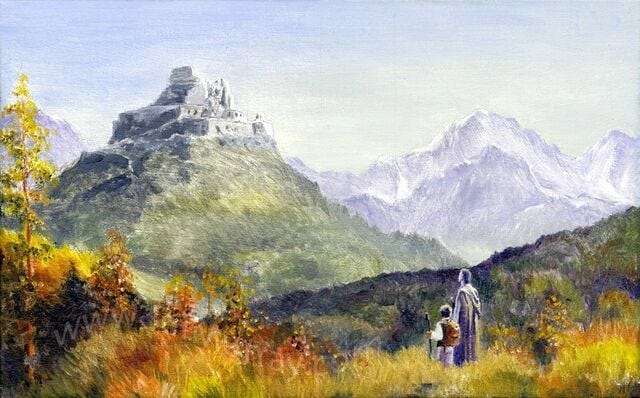
I thought about this for a while before an obvious answer jumped out at me. Heligoland, in my opinion, must be the location of the watchtower of Amon Sûl, or Weathertop. I’m not sure why this did not occur to me years ago in Part 1 or Part 2 of this series, but upon examining the evidence I think there is a very strong case for this being one of Tolkien’s most intentional connections to a real location in modern Europe, and perhaps his most direct incorporation of the events of WW2 into his legends.
Keep reading with a 7-day free trial
Subscribe to The Saxon Cross to keep reading this post and get 7 days of free access to the full post archives.
