Advertisement
Advertisement

Singapore

WP 'better off' taking up PM Wong's invitation to name new Leader of the Opposition, say analysts who cite four possible candidates

Four names have been bandied about among political analysts for the role: Aljunied GRC MP Gerald Giam, Hougang MP Dennis Tan, and Sengkang GRC MPs He Ting Ru and Jamus Lim.

WP 'better off' taking up PM Wong's invitation to name new Leader of the Opposition, say analysts who cite four possible candidates

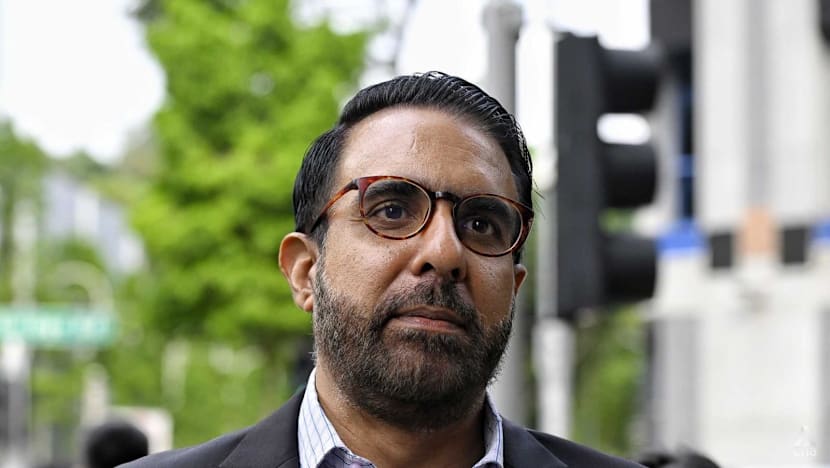
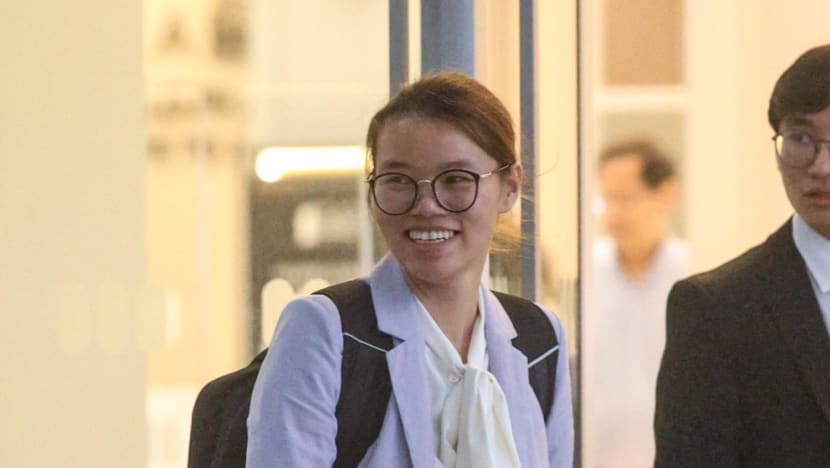
Worker's Party secretary-general Pritam Singh walks out from the Parliament building, Nov 4, 2025. (Photo: CNA/Wallace Woon)

Listen
9 min
New: You can now listen to articles.

This audio is generated by an AI tool.

Read a summary of this article on FAST.
FAST

SINGAPORE: Prime Minister Lawrence Wong’s invitation for the Workers’ Party (WP) to name a different member as the new Leader of the Opposition places the ball back in its court, and it would be in WP's best interest not to reject the offer and leave the position vacant, said political analysts.

Four names have emerged among analysts as potential successors: Aljunied GRC MP Gerald Giam, Hougang MP Dennis Tan, and Sengkang GRC MPs He Ting Ru and Jamus Lim.

In his letter to the WP Central Executive Committee on Thursday (Jan 15), Mr Wong said the party’s nominee must be an elected MP who “should not have been implicated in the earlier findings of the Committee of Privileges” regarding ex-MP Raeesah Khan’s lie to parliament and “must be able to meet the high standards expected of this office”.

While it is not mandatory for the WP to nominate someone, it would be better off taking up Mr Wong’s offer due to the resources and opportunities the Leader of the Opposition position brings in parliament, said analysts.

National University of Singapore associate professor of political science Chong Ja Ian said that parliament will still function and WP MPs will still speak up and vote in the House, even without a Leader of the Opposition.

“Remember, the Singapore parliament did not have a Leader of the Opposition until very recently and it continued to debate and pass laws,” he said.

Associate Professor Tan Ern Ser, an adjunct principal research fellow at the Institute of Policy Studies, said that if the WP does not pick a nominee, it would send a signal that the party still acknowledges Mr Pritam Singh as their leader and maintains “that he is innocent”.

Likewise, independent political analyst Dr Felix Tan said that the WP can indeed choose to leave the seat vacant, which would indicate that they believe that the WP and Pritam Singh are still valued highly and that this is “a clear demonstration of partisan politics”.

WP chair Sylvia Lim had on Wednesday called the motion a "party political exercise".

But doing so “might lead to a missed opportunity to continue the good work that the Leader of the Opposition has done prior to this entire fiasco”, added Dr Tan.

Forgoing the nomination will be “a bad move” because of the “extra resources provided, the extra speaking time, and the ability to mould the office of the Leader of the Opposition given it is still relatively novel in our parliamentary system”, said Singapore Management University associate professor of law Eugene Tan.

He added that the party would likely wait for its disciplinary inquiry into Mr Singh to conclude before deciding on its next step.

The position of Leader of the Opposition was first formally designated by then-Prime Minister Lee Hsien Loong after the 2020 general election and offered to Mr Singh, who had held the office for over five years.

The role receives certain privileges, such as confidential briefings by the government on important national issues. He or she is also given an office in parliament, additional staff support and resources, as well as double the allowance of an elected MP.

In parliament, the Leader of the Opposition is also given the right of first response and more time for speeches, equal to a minister's speech time.

On Thursday, Mr Wong said he hoped to receive the WP’s nomination soon “so that this important position does not remain vacant for too long”.

Confirming receipt of the letter, the WP said it will "deliberate on its contents carefully" through its internal processes and respond in due course.

RETAINING OFFICE OF THE LEADER OF THE OPPOSITION

As for why the prime minister decided to remove Mr Singh from the position and invite the WP to pick a new nominee, experts said this was because parliament had voted on Wednesday to deem Mr Singh unsuitable for the position.

Mr Wong technically still did not have to go along with it, as the appointment of the opposition leader is up to his discretion, said Assoc Prof Chong.

“Doing so, however, goes against the majority sentiment of parliament and can set a precedent of the executive ignoring the legislature,” he said.

Analysts said Mr Wong’s decision to remove Mr Singh but keep the role of Leader of the Opposition open to be filled by the WP shows the significance of the role in local politics.

“He recognises that the Leader of the Opposition position has become a mainstay of the political landscape in Singapore as it is in the public interest to have it and has proven to be beneficial to parliament,” said Dr Mustafa Izzuddin, senior international affairs analyst at policy and business consultancy Solaris Strategies Singapore.

Ground sentiments may hence have played a part, as getting rid of the position may not go down well with segments of the domestic populace, he added.

In asking the WP to nominate a replacement, Mr Wong is also making it clear that the office of the Leader of the Opposition “is important for Singapore’s political development”, said SMU’s Assoc Prof Tan.

“He has effectively placed the ball in WP’s court,” he said.

POSSIBLE SUCCESSORS

When asked who are the possible successors to the office, political analysts said that the list is a short one.

For a start, this would have to be a sitting WP MP and be a senior member of the party’s top decision-making body, the Central Executive Committee, and also not be linked to the events leading to Mr Singh’s removal.

The criteria stated by Mr Wong mean that WP chair Sylvia Lim is ineligible to be nominated.

Wednesday’s motion meant that the High Court’s judgment and COP findings have implications for Ms Lim and WP vice-chair Faisal Manap, which have to be considered separately.

Dr Mustafa noted that Ms Lim would have been the prime candidate, as she is the most experienced of the current WP MPs in parliament.

Of the party’s remaining nine elected MPs, three are first-term newcomers – Aljunied GRC MPs Kenneth Tiong and Fadli Fawzi, and Sengkang GRC MP Abdul Muhaimin.

Political analysts pointed to WP’s head of policy research Gerald Giam and organising secretary Dennis Tan as potential candidates for the role of Leader of the Opposition.

SMU’s Assoc Prof Tan identified them as the frontrunners as they are the most experienced MPs after Ms Lim and Mr Singh, and importantly are “trusted by the party leadership”.

Assoc Prof Tan from IPS said that Mr Giam has served as both Non-constituency MP and elected MP before last year’s general election and “is kind of a veteran by now”.

“He is visible in terms of his active participation in parliamentary speeches and debates,” he added.

Meanwhile, his fellow MP Dennis Tan holds the support of the Hougang base – the longtime stronghold held by the WP since 1991 – and also sat in the COP, said Dr Felix Tan.

Mr Malminderjit Singh, managing director of political consultancy Terra Corporate Affairs, identified party treasurer Ms He as a frontrunner, due to the "more senior role" she holds in the WP's highest decision-making body.

Dr Felix Tan also said that second-term MP Jamus Lim "has been quite vocal in parliament and active as an MP of Sengkang GRC", which makes the WP deputy head for policy research another possible candidate for the WP’s nomination.

MUST THE LEADER OF THE OPPOSITION BE THE PARTY LEADER?

While Mr Singh has been Leader of the Opposition since the designation of the office in 2020, analysts noted that the opposition leader does not necessarily have to be the party’s secretary-general.

The prime minister “is not wedded to the convention that the Leader of the Opposition must be the top leader of the WP”, said SMU’s Assoc Prof Tan.

Assoc Prof Chong noted that “the rules on the Leader of the Opposition in Singapore are unclear and not formally codified” and that “nothing spells out explicitly the criteria” of the role.

He cited the contrast with the role of the Speaker, which is stated explicitly in the Constitution, and the role of the Leader of the House, which is referred to in parliament’s standing orders.

Dr Felix Tan said that the Leader of the Opposition should be “represented at the highest level within the party”, especially if he is expected to lead all opposition voices, including in a future parliament with more than one opposition party.

IPS’ Assoc Prof Tan noted that in Westminster systems, such as in Britain, the Leader of the Opposition fills the role of prime minister in the “shadow cabinet”.

“I reckon it’s because the position and role of Leader of the Opposition is still in its infancy in Singapore, and the ruling party prefers to consider its long-term implications for Singapore democracy,” he said.

Source: CNA/fk(nj)

Sign up for our newsletters

Get our pick of top stories and thought-provoking articles in your inbox

Subscribe here
Inbox
FAST
Advertisement

Commentary

Commentary: Pritam Singh’s removal as Leader of the Opposition reflects importance of higher standards in Singapore politics

At a time of concerns about the eroding integrity of political leaders around the world, Singapore must demand more of its public institutions and officials, says SMU law professor Eugene K B Tan.

Commentary: Pritam Singh’s removal as Leader of the Opposition reflects importance of higher standards in Singapore politics
Listen
5 min
New: You can now listen to articles.

This audio is generated by an AI tool.

Read a summary of this article on FAST.
FAST

SINGAPORE: Although it is tempting, we should resist seeing the parliamentary motion on Workers’ Party chief Mr Pritam Singh through the prism of partisan politics.

That the debate took place was of utmost importance, even if the exchanges and the voting outcome unsurprising – finding Mr Singh unsuitable to continue as Leader of the Opposition given his court convictions for lying to a parliamentary committee. Mr Singh was removed from the position by Prime Minister Lawrence Wong on Thursday (Jan 15).

Wednesday’s debate on public life standards mattered as much as those over jobs, cost of living, and geopolitical concerns. For parliament to be able to engage these issues and rally Singaporeans behind relevant key policies and laws requires steadfast trust and confidence of parliament’s capability and, more importantly, its integrity to steward and to lead.

If trust and confidence in our key institutions and officeholders like parliament, the courts, and the public service are eroded, then the resultant loss in standing and legitimacy of these institutions will be our collective loss.

The motion to express regret at Mr Singh’s conduct and his unsuitability to continue as the Leader of the Opposition was thus necessary.

COMMITMENT TO RULE OF LAW

Why should we expect less of our elected officials? Parliament would, in fact, be remiss in its duty if it turned a blind eye.

The adoption of the motion signifies Singapore’s commitment to the rule of law, for elected officials to abide by the law and conduct themselves with integrity.

Some may have forgotten that there was an outstanding resolution made by parliament on Feb 15, 2022 on sanctions, following the Committee of Privileges’ findings and recommendations in relation to untruths spoken by then Workers’ Party Member of Parliament Raeesah Khan in parliament in August and October 2021.

Discussion on sanctions was deferred until after the conclusion of police investigations and criminal proceedings against Mr Singh – which was the case in December 2025.

HELD TO A HIGHER BAR

There is also the matter of Mr Singh’s assertion that while he accepted the high court’s ruling, his guilty verdict handed down by the court does not deny him the ability to claim that he is innocent.

In our criminal justice system, the presumption of innocence in a criminal trial means that an accused is legally innocent until the prosecution fulfils its obligation to prove its case beyond reasonable doubt. Thus, when a court of law finds an accused guilty of an offence with which he has been charged, this means that the court is satisfied beyond reasonable doubt that the accused had indeed committed the offence charged. A judge is bound by law and duty to acquit a person if the prosecution does not prove its case beyond a reasonable doubt.

It is, therefore, clearly illogical that a person who has committed a crime to be factually innocent at the same time. A guilty verdict signifies that the judge is certain that the accused is guilty in law and in fact. It is not correct in law and in logic, therefore, for any suggestion to be subsequently raised about the convicted person's “factual innocence” once he has been found guilty.

Such a bald assertion undermines the court’s guilty finding and may even replace it with an insidious and open-ended suspicion that the verdict is unsafe or even a travesty of justice. If the public assumes that a person isn't guilty even if the judge says so, or that a finding of guilt is not conclusive, this will throw the administration of criminal justice into disrepute.

While the courts cannot stop anyone from holding a personal view of the verdict, this takes on a different dimension when it is a member of the legislative branch casting an aspersion on the judicial process.

That the WP parliamentarians voted against the motion and that the party subsequently posted a graphic on their social media with the words, “#WeContinue”, suggests the party lends its weight to such aspersions and raises legitimate concerns over their commitment to the rule of law.

NORMS AND VALUES CANNOT BE TAKEN FOR GRANTED

At the general election in July 2020, the WP turned in its best electoral showing since independence winning 10 seats, including a second group representation constituency (GRC). In a first such appointment, then Prime Minister Lee Hsien Loong formally designated Mr Singh the Leader of the Opposition.

Mr Lee explained that “Singaporeans want the PAP (People’s Action Party) to form the government, but they – and especially the younger voters – also want to see more opposition presence in parliament”. The Leader of the Opposition office goes some way in institutionalising the opposition’s role in Singapore’s system of constitutional government and enabling the opposition to better scrutinise government laws and policies.

Wednesday’s debate indicates that much still needs to be done to sensitise Singaporeans on the norms and values of Singapore’s system of government that have been instrumental in Singapore’ success. Singaporeans must not take honesty and integrity in our system of government for granted; they are not preordained.

We must demand them of our public institutions and public officials so that the virtuous circle of good governance, good politics and good leaders will continue to define our exceptionalism and strength at a time when there are real and growing concerns about the eroding integrity of political leaders around the world.

Eugene K B Tan is associate professor of law at the Yong Pung How School of Law, Singapore Management University. He is also a former Nominated Member of Parliament.

Source: CNA/ch

Sign up for our newsletters

Get our pick of top stories and thought-provoking articles in your inbox

Subscribe here
Inbox
FAST
Advertisement

Singapore

Hwa Chong Institution working with SATS to revise recipe, presentation of bento meals after feedback

Student representatives said there were improvements to the new bento meals, a week after photos of the food went viral.

Hwa Chong Institution working with SATS to revise recipe, presentation of bento meals after feedback

Bento meals at Hwa Chong Institution on Jan 15, 2026. (Photo: CNA/Raydza Rahman)

Listen
6 min
New: You can now listen to articles.

This audio is generated by an AI tool.

Read a summary of this article on FAST.
FAST

SINGAPORE: Hwa Chong Institution is working with food caterer SATS to revise recipes and the presentation of their meals after feedback about its new hybrid canteen model, principal Lee Peck Ping said on Thursday (Jan 15).

Mr Lee added that the school would introduce preordering options at live stalls from the next semester, and is establishing a kitchen on campus to produce bento meals.

“We want to address and identify some of the issues earlier, as well as to work together collaboratively to improve our canteen,” he said, adding that the school was “refining the menu”.

Mr Lee was speaking to reporters at the school, which invited members of the media to tour the new hybrid canteen and sample the bento meals.

Controversy surrounding the school’s new canteen model sparked last week, when photos of the prepacked bento meals by SATS went viral on social media.

The photos of the meals drew criticism, with online commentators questioning whether the food met adequate nutritional and quality standards.

When CNA interviewed students outside the school on Jan 7, they confirmed the photos accurately depicted what was being served – contradicting the school's defence that the images did not reflect actual food standards.  

Photographs of meals purportedly served to students at Hwa Chong Institution were shared in a Reddit post on Jan 3, 2026. (Photo: Reddit/Taenyfan95)

DISCIPLINE RECORDS

After the initial news reports, a screenshot sent by a teacher began circulating on social media. The message warned students “not to participate in the canteen food controversy”, or face consequences.

Hwa Chong has said that the teacher sent the message in a class chat “out of concern” for students’ well-being.

Rumours also spread on social media that some students were issued demerit points for speaking out about meal quality concerns.

On Jan 8, the school issued a statement to say it did not reprimand or penalise students who spoke out about the school’s new canteen programme.

Soon after, rumours circulated that students were unable to access their discipline records on their school’s digital portal.

In a press release on Thursday, Hwa Chong Institution said it was aware of online allegations that its discipline module was taken down following claims that students received demerit points for speaking against the canteen.

“This is not true, as the discipline module was taken down in October 2025, prior to recent discussions about our canteen,” the school said.

“The temporary takedown was part of an ongoing review of the school’s demerit system, with the aim of making it more developmental in nature.

“The module was taken offline to facilitate system updates and internal review, and this was not intended to obscure information or restrict access.”

Access to the discipline records has since been restored.

The school reiterated on Thursday that no students were punished for speaking to the media and no demerit points were issued regarding canteen matters. There was also no disciplinary action.

Students queuing up for live stalls at the canteen in Hwa Chong Institution on Jan 15, 2026. (Photo: CNA/Raydza Rahman)

IMPROVEMENTS TO MEALS

When CNA visited the school on Thursday afternoon, there were long queues for three live food stalls – western grill, yong tau foo and noodles – at lunch time.

A sizeable number of students were also seen eating from the turquoise bento boxes, which can be redeemed with a tap of a fob.

A table was set up in the canteen with display meals to show students the options for the day. There were eight halal-certified bento items to choose from, including two vegetarian items. Students must pre-order the meals two days in advance.

Bento meals at Hwa Chong Institution on display on Jan 15, 2026. (Photo: CNA/Raydza Rahman)

Members of the media were invited to sample the food. CNA tried a mixed grain rice with sweet and sour chicken and bok choy. 

The meal was served warm – the chicken was tender, but the vegetables were slightly salty.

CNA tried a mixed grain rice with sweet and sour chicken and bok choy. (Photo: CNA/Raydza Rahman)

In interviews arranged by the school with five Secondary 4 students – all of whom spoke anonymously – some said they have observed improvements in the food since the rollout of the new initiative.

“There's been quite a big improvement from the first few days … both in terms of the portion size, the taste, as well as the freshness of the food,” one student said, adding that he thinks it is a “good step” towards making the SATS meals more popular.

Asked what proportion of their peers opted for the bento meals, one student said it was “half-half”. When they have a longer recess break, they opt for the live stalls.

But on days where their lunch break is 30 minutes long, they may opt for the SATS meals to get their food faster, he said.

Teacher Chan Hwee Sing said she previously did not have much choice for her meals, as there is only one Halal live stall in the canteen.

“So for me, this (the bento boxes) is a very good option. I have different varieties to choose from, and I can actually order the food one week before, and according to my timetable,” she said 

Mr Yang Kai Lun, 42, who helps his parents manage their noodle stall at the school, said they have faced operational challenges. His parents have run the stall for 13 years. 

“The price increase, the rental increase, then shortage of staff. It's hard to find people to work in schools because of the school holidays,” he said.

Since the bento meals were introduced, business has increased by about 10 to 20 per cent, he said, as some students forget to order the bento meals or prefer to eat food from the stalls. There are also four stalls left, from the previous eight to nine live food stalls.

HCI said its hybrid canteen model aims to address long-standing operational challenges. This includes persistent queues, declining sustainability of the traditional stall-only model, and difficulty retaining stallholders due to manpower and cost pressures.

When transitioning to the new canteen model, the school said it gave options to stallholders to continue as self-employed owners of live food stalls or join SATS under an employment arrangement.

Five stallholders chose to continue operating stalls, three opted to work under SATS, and others either retired or moved to other schools.

The school said it has engaged more than 2,600 students through dialogues, and conducted food tastings with groups of students, parents and staff since 2024.

They added that they are forming a canteen review committee comprising staff, students, parents and SATS representative.

Principal Mr Lee said he welcomes any parents and students to approach staff to share their views and make suggestions.

“So together, I think we want to make this work.” 

Source: CNA/er(mi)

Sign up for our newsletters

Get our pick of top stories and thought-provoking articles in your inbox

Subscribe here
Inbox
Advertisement

Singapore

PM Wong removes Pritam Singh as Leader of the Opposition, invites Workers' Party to nominate another MP to fill the role

The Workers' Party nominee for the next Leader of the Opposition should not have been "implicated" in the earlier findings of the Committee of Privileges, says Prime Minister Lawrence Wong.

PM Wong removes Pritam Singh as Leader of the Opposition, invites Workers' Party to nominate another MP to fill the role

Workers' Party chief Pritam Singh speaks to the media outside the Supreme Court after his conviction was upheld, on Dec 4, 2025. (File photo: CNA/Wallace Woon)

Listen
4 min
New: You can now listen to articles.

This audio is generated by an AI tool.

Read a summary of this article on FAST.
FAST

SINGAPORE: Workers' Party chief Pritam Singh has been removed as the Leader of the Opposition, a day after parliament voted that he was unsuitable to continue in the role following his conviction for lying to a parliamentary committee.

Prime Minister Lawrence Wong said in a statement on Thursday (Jan 15) that this decision is necessary to uphold the rule of law, as well as the dignity and integrity of parliament.

"Having considered the matter carefully, I have decided that Mr Singh’s criminal convictions, taken together with parliament’s considered view of his unsuitability, make it no longer tenable for him to continue as the Leader of the Opposition," he said.

He also noted that Mr Singh's designation as the Leader of the Opposition will cease with immediate effect.

Mr Wong added that he has invited the WP to nominate another elected Member of Parliament to serve as the next Leader of the Opposition. 

"This nominee should not have been implicated in the earlier findings of the Committee of Privileges, and must be able to meet the high standards expected of this office. I hope to receive their nomination soon, so that this important position in our parliamentary democracy will not remain vacant for too long." 

Mr Wong also noted in his statement that during the parliamentary debate on Wednesday, Mr Singh reiterated that he accepted the court’s judgment, but said that he disagreed with the findings and maintained his innocence. 

"Mr Singh is entitled to his personal views on the matter. But questions of guilt or innocence are determined through the impartial court process. Mr Singh was convicted by the District Court of two counts of lying to the Committee of Privileges, confirming the COP’s earlier findings. His appeal to the High Court was dismissed. 

"This legal outcome is final and conclusive – it must be respected, and given full effect in determining his suitability to continue as the Leader of the Opposition," said Mr Wong. 

In his letter to the WP's central executive committee, Mr Wong noted that the Leader of the Opposition plays an important role in Singapore's political system and its office carries "significant responsibilities". 

"For these reasons, the Leader of the Opposition is provided with additional resourcing and support. Whoever holds this office must therefore uphold the highest standards of honesty and integrity, and command the trust necessary to carry out these responsibilities on behalf of parliament and Singaporeans," he wrote. 

The WP confirmed that it has received a letter from Mr Wong, addressed to its central executive committee. It said the party will "deliberate on its contents carefully" through its internal processes and respond in due course.

The letter in full:

Prime Minister Lawrence Wong wrote to the WP's central executive committee on Jan 15, 2026.

On Wednesday, MPs backed a motion by Leader of the House Indranee Rajah calling for Members of Parliament to express regret at Mr Singh's conduct, which was described as "dishonourable and unbecoming" of an MP.

The motion also asked MPs to consider that such conduct rendered him unsuitable to continue as the Leader of the Opposition.

Ms Indranee said Mr Singh's actions involved multiple lies and were a failure of leadership, while the WP chief said his conscience remained clear and disagreed that his behaviour was dishonourable.

Following a debate that stretched about three hours, the majority of the MPs agreed to the motion, while all 11 WP MPs present stood up to register their dissent.

Mr Singh was designated Leader of the Opposition by then-Prime Minister Lee Hsien Loong after the 2020 General Election.

The Leader of the Opposition receives certain privileges, such as confidential briefings by the government on important national issues. 

In parliament, he or she is also given the right of first response and more time for speeches, equal to a minister's speech time.

The opposition leader is also given an office in parliament, additional staff support and resources, as well as double the allowance of an elected MP.

Shortly after the 2025 General Election in May, when the WP held on to Aljunied and Sengkang Group Representation Constituencies as well as Hougang Single Member Constituency, Prime Minister Lawrence Wong confirmed that Mr Singh would remain as the Leader of the Opposition.

That was before Mr Singh's appeal against his conviction was dismissed by the High Court.

Source: CNA/mi

Sign up for our newsletters

Get our pick of top stories and thought-provoking articles in your inbox

Subscribe here
Inbox
Advertisement

Singapore

9 in 10 polytechnic graduates found work within 6 months of completing school or NS in 2025

The median gross monthly salary rose from S$2,900 to S$3,000 for polytechnic graduates in full-time jobs.

9 in 10 polytechnic graduates found work within 6 months of completing school or NS in 2025

Students at Temasek Polytechnic in a photo taken on Jan 30, 2024. (File photo: TODAY/Lim Li Ting)

Listen
4 min
New: You can now listen to articles.

This audio is generated by an AI tool.

Read a summary of this article on FAST.
FAST

SINGAPORE: Ninety per cent of polytechnic graduates in the labour force found employment within six months of completing school or National Service in 2025, according to the Polytechnic Graduate Employment Survey results released on Thursday (Jan 15).

This was a dip from the 90.4 per cent recorded in 2024 and 95.8 per cent recorded in 2023.

In 2025, the majority of fresh polytechnic graduates and post-NS graduates in the labour force – 54.2 per cent – had secured full-time permanent jobs.

Nearly one-third – 28.2 per cent – were in part-time or temporary employment. This was voluntary for most of the respondents.

Freelancers made up 4.8 per cent. Another 2.3 per cent had accepted an offer at the time of the survey and were starting later, while 0.6 per cent were taking active steps to start their own business venture.

Out of the 10 per cent of graduates who were unemployed, 7.1 per cent had applied but not received any full-time permanent job offer.

About 1.3 per cent had received but rejected full-time permanent job offers, and 1.6 per cent did not search for any full-time permanent job.

These figures are drawn from the proportion of recent polytechnic graduates who were in the labour force, which was 43.9 per cent in 2025.

The remaining 56.1 per cent who were not in the labour force were either pursuing further studies or not looking for a job for various reasons, including taking a break.

The survey is jointly conducted by Nanyang, Ngee Ann, Republic, Singapore and Temasek polytechnics.

MEDIAN GROSS SALARIES

The median gross monthly salary among recent polytechnic graduates in full-time permanent employment rose from S$2,900 (US$2,250) in 2024 to S$3,000 in 2025.

The top-paying course cluster was humanities and social sciences, with a median gross monthly salary of S$3,200.

Health sciences came in next with S$3,011. Three clusters – built environment, engineering, as well as information and digital technologies – matched the median of S$3,000.

The median salaries of arts, design and media, business, and sciences graduates were below the overall median.

Graduate employment outcomes for the 2025 cohort are expected to improve beyond the six-month mark, the polytechnics said in a joint press release. This was similar for previous cohorts, according to figures they provided in the press release.

The employment rate for the 2024 cohort was initially 5 percentage points lower than that of the 2023 cohort.

By the 12-month mark, the difference had narrowed. The proportion of the 2024 cohort that was in further studies locally or had wage records had risen to 93 per cent, comparable with 94 per cent for the 2023 cohort.

Singapore's resident employment continued to grow in 2025, while the proportion of workers in permanent roles hit a record high.

"Fresh graduates continue to be in demand, with an increase in the number of entry-level vacancies to 39,000 in September 2025, up from 26,000 in September 2024," said the polytechnics.

Four in 10 entry-level vacancies are in growth sectors like information and communications, financial and insurance services, and professional services, they added.

Support is available for graduates looking for jobs, including at the polytechnics, from Workforce Singapore and the National Trades Union Congress, and through the Graduate Industry Traineeships, said the polytechnics.

Ngee Ann Polytechnic principal and CEO Lim Kok Kiang said polytechnic graduates have continued to demonstrate resilience, securing opportunities in growth sectors including finance, healthcare and social services amid economic uncertainty.

"We will continue to strengthen our industry-focused curriculum, expand workplace immersion opportunities and enhance career guidance, to equip our learners with the skills, confidence and agility to build meaningful and sustainable careers," he said on behalf of the survey committee.

Source: CNA/dv(mi)

Sign up for our newsletters

Get our pick of top stories and thought-provoking articles in your inbox

Subscribe here
Inbox
Advertisement

Entertainment

Actress Tasha Low opens up about how she parted on bad terms with former K-pop manager who once criticised her looks

The Emerald Hill star recalls harsh K-pop days and fallout with ex-manager, and has an emotional reunion in Korea.

Actress Tasha Low opens up about how she parted on bad terms with former K-pop manager who once criticised her looks

Tasha Low (right) and her former K-pop manager reunite in Mediacorp’s new travel documentary series Those Days, Those Places. (Photo: Mediacorp)

Listen
3 min
New: You can now listen to articles.

This audio is generated by an AI tool.

Read a summary of this article on FAST.
FAST

Emerald Hill star Tasha Low’s time as a K-pop star wasn’t exactly a walk in the park.

The 32-year-old has always been candid about how tough life was when she moved to South Korea at just 17 to debut as part of girl group SKarf.

After SKarf disbanded in 2014, Low stayed on to pursue a solo career before eventually returning to Singapore in early 2018.

She recently headed back to Seoul to make peace with that intense chapter in her life in Mediacorp’s new travel documentary series Those Days, Those Places.

The show shines the spotlight on local celebrities who once lived abroad, bringing them on a nostalgic journey back to the places that shaped their past, even reuniting them with long-lost friends.

One of the most emotional moments for Low was reuniting with her former manager, Hwang Hyun-hee, during a visit to Alpha Entertainment, SKarf’s old management agency.

According to Low, the two had fallen out badly and lost contact for two to three years. Their relationship was so strained at one point that Hwang told her: “Don’t come back to Korea. I’ll make things very hard for you.”

Ouch.

Low also revealed Hwang once commented that the right side of her face looked like a monkey’s, a remark that stuck with Low for years.

“Because of that, I still only feel confident about my left side today,” Low admitted on the show.

Upon hearing this, Hwang immediately apologised.

The episode also revisits Low's gruelling trainee days, including sneaking instant noodles in the toilet, being punished with endless reflection essays, and being banned from using mobile phones or the internet.

Aware of how she can come across, Hwang took a jab at her own strict reputation: “After this episode airs, I’m afraid no young people will dare work with me anymore.”

Tasha Low (left) and her former K-pop manager in Mediacorp’s new travel documentary series Those Days, Those Places. (Photo: Mediacorp)

Thankfully, there’s a softer ending to the story. With old wounds finally addressed, Low and Hwang are now on good terms. They went shopping and had coffee together in Seoul.

Today, Low describes her former manager as a “gentle mother”, adding that without her belief and guidance back then, she wouldn’t be where she is now.

This story was originally published in 8Days.

For more 8Days stories, visit https://www.8days.sg/ 

Source: 8 Days/ba

Sign up for our newsletters

Get our pick of top stories and thought-provoking articles in your inbox

Subscribe here
Inbox
Advertisement

Singapore

LTA awards S$326 million contract for tunnels in Downtown Line extension

Construction works to connect the Downtown Line to the North-South Line are expected to begin by the second quarter of 2026, with passenger service targeted to commence in 2035.

LTA awards S$326 million contract for tunnels in Downtown Line extension

An artist's impression of the interchange station in the Downtown Line extension. (Image: LTA)

Listen
4 min
New: You can now listen to articles.

This audio is generated by an AI tool.

Read a summary of this article on FAST.
FAST

SINGAPORE: The Land Transport Authority (LTA) said on Thursday (Jan 15) that the first civil contract for the extension of the Downtown Line (DTL) that will connect it to the North-South Line (NSL) has been awarded.

The contract, valued at S$326 million (US$253 million), was awarded to a joint venture between Woh Hup Engineering and Underground Technology Engineering Construction. 

It is for the design and construction of two mainline tunnels between the first and second stations on the extension to the west side of the DTL, which comprises three stations. 

The contract also includes the construction of a tunnel connection to Gali Batu Depot, along with associated additions and alteration works within the depot.

LTA noted that Woh Hup Engineering - a Singapore-registered company specialising in infrastructure and building projects - is currently involved in the design and construction of Punggol Interchange station and tunnels for the Cross Island Line's (CRL) Punggol extension, as well as Loyang station and tunnels for phase 1 of the CRL.

Underground Technology Engineering Construction is currently involved in the construction of tunnels between Aviation Park station and the Changi East depot for the CRL.

The DTL expansion will link the DTL from Bukit Panjang MRT station to the NSL, and is slated to open for passenger service in 2035.

The first station after Bukit Panjang will be an underground station located along Sungei Kadut Avenue. The second station will be a new terminal station for the DTL, which will be an underground interchange station. 

It will be connected to a third station, an aboveground NSL station that will be built between Yew Tee and Kranji stations.

ENGINEERING WORKS

Construction works for the DTL extension are expected to begin by the second quarter of 2026, LTA said.

Under the civil contract, three bored tunnels, each about 1km long and 21m deep, will be designed and constructed beneath Sungei Kadut Avenue, Sungei Kadut Way and Woodlands Road, LTA said. 

The tunnels will be built close to the NSL and existing infrastructure, such as Sungei Pang Sua and Pang Sua Canal. A cut-and-cover tunnel will be built at Gali Batu Depot as part of a new reception track, LTA added. 

Real-time monitoring and safety measures will be implemented during the tunnelling works, LTA said. 

“During the construction, LTA and its appointed contractor will maintain regular contact with residents and stakeholders, and provide regular updates on the progress of the works,” it added.

LTA and the contractor will implement necessary mitigation measures to ensure ground stability and safe construction, and minimise impact to nearby stakeholders and infrastructure, it said. 

It added that an environmental impact assessment has been carried out and that all necessary mitigation measures outlined in the Environmental Monitoring and Management Plan will be implemented.

“LTA and the contractor will also continue to engage the various stakeholders, including nature groups, during the construction works.”

When completed, the DTL extension will shorten travel times for commuters travelling to and from the north and north-western parts of Singapore, LTA said. 

It will also provide improved access to existing and new areas such as Yew Tee and the future Sungei Kadut Eco-District, as well as amenities such as the Rail Corridor and Pang Sua Park Connector.

Source: CNA/co(nh)

Sign up for our newsletters

Get our pick of top stories and thought-provoking articles in your inbox

Subscribe here
Inbox
Advertisement

Sport

BG Tampines Rovers penalised with 3-0 forfeit loss after fielding too few local players in Singapore Cup final

The cup final had ended with BG Tampines Rovers losing 2-0, but now has been declared a 3-0 loss by forfeit.

BG Tampines Rovers penalised with 3-0 forfeit loss after fielding too few local players in Singapore Cup final

The Singapore Cup. (Photo: Football Association of Singapore)

Listen
3 min
New: You can now listen to articles.

This audio is generated by an AI tool.

Read a summary of this article on FAST.
FAST

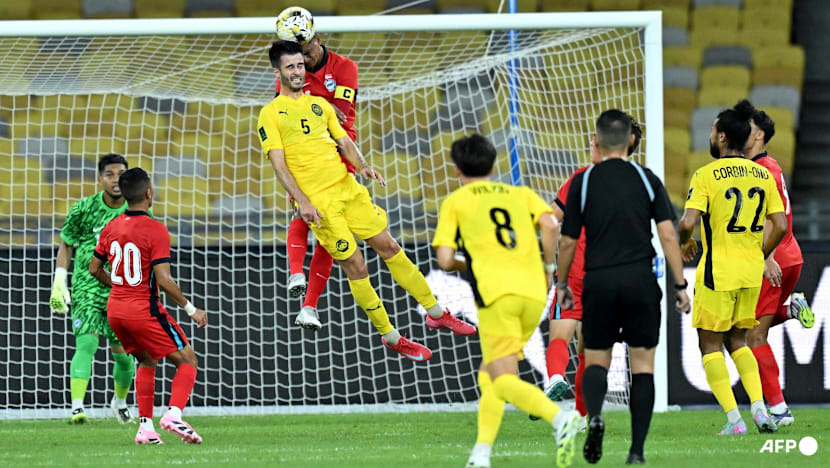
SINGAPORE: Singapore Premier League side BG Tampines Rovers have been penalised with a 3-0 forfeit loss after fielding too few local players in the Singapore Cup final against Lion City Sailors on Saturday (Jan 10).

The cup final, held at the Jalan Besar Stadium, had originally ended in a 2-0 win for the Sailors, with goals by Anderson Lopes and Hami Syahin scored in extra time.

According to the Singapore Cup regulations, “all clubs shall ensure that a minimum of four Singaporean players are on the pitch at all times, except in the case of a Singapore player who is sent off by the referee for either an indirect or direct red card”.

Football Association of Singapore (FAS) said on Thursday that the Stags had breached this rule.

The regulations also state that the penalty for fielding an ineligible player is for the win to be “awarded to the opposing non-infringing team”, with the game ending in a 3-0 score or the final score, whichever is greater.

"This decision – on an infringement of competition rules – was taken after the match had been allowed to run its natural course on the sporting front before the incident was reviewed and addressed in accordance with competition regulations," said FAS.

"The Football Association of Singapore reiterates its commitment to upholding the integrity of its competitions and ensuring strict adherence to all competition regulations."

Tampines had started the match with five locals, but fell afoul of the rules when they substituted Joel Chew for former Japanese international Yuki Kobayashi in the 81st minute.

This left them with just three Singaporeans on the pitch - Faris, defender Irfan Najeeb and goalkeeper Syazwan Buhari.

About two minutes later, the Stags took off Japanese midfielder Koya Kazama for Singaporean Ong Yu En.

The game continued after these substitutions and despite a lengthy stoppage before extra time, the additional 30 minutes were still played out.

"We sincerely apologise for the operational error that occurred," said Tampines in a club statement on Thursday.

"This was an honest mistake on our part, made while we were fully focused on chasing the game. We wholly accept the FAS’ ruling, and we will conduct a thorough review of our operational procedures and strengthen our internal verification processes to ensure that such an incident does not recur."

Source: CNA/mt(zl)

Sign up for our newsletters

Get our pick of top stories and thought-provoking articles in your inbox

Subscribe here
Inbox
Advertisement

Singapore

Van driver on trial for attempting to murder cyclist by running him over

Toh Sze Ee confronted the victim as he suspected he had implicated him after being arrested over contraband cigarettes.

Van driver on trial for attempting to murder cyclist by running him over

The Supreme Court in Singapore.

Listen
3 min
New: You can now listen to articles.

This audio is generated by an AI tool.

Read a summary of this article on FAST.
FAST

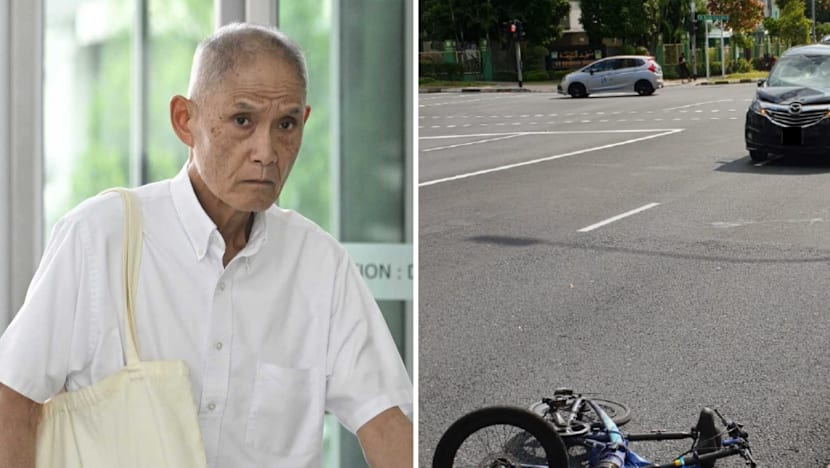
SINGAPORE: A man went on trial on Thursday (Jan 15) for attempting to murder a cyclist by running him over with a van in Kaki Bukit about three years ago.

Toh Sze Ee, a 51-year-old Singaporean, collided with the late Mr Hossen Selim, a 32-year-old Bangladeshi national before allegedly fleeing the scene.

Mr Hossen suffered serious injuries that rendered him comatose and he was taken back to Bangladesh after a period of hospitalisation, but died in February 2025.

His cause of death was not stated in open court.

In its opening statement, the prosecution said Toh knew the victim through their dealings in contraband cigarettes.

Sometime in February 2023, the victim was arrested in a raid by Singapore Customs.

Toh managed to evade arrest, but later confronted the victim as he suspected the latter had implicated him, said Deputy Public Prosecutor Hay Hung Chun.

It is undisputed that on Mar 16, 2023, Toh ran over the victim with a van.

However, he claimed trial to the charge of attempted murder.

Mr Hay said Toh drove the van along Kaki Bukit Avenue 5, towards Kaki Bukit Avenue 4 and made a U-turn, as the victim was on the other side of the road.

After this, he drove behind the victim, who was riding a bicycle, and collided with him at about 5pm on Mar 16, 2023.

The incident was captured on vehicle cameras from a tipper truck and a bus that were parked in the area.

Mr Hay said Toh did not stop immediately after impact. He alighted later to inspect the front of the van.

He later met a man in the Tampines area and told him that the victim had suddenly cycled into his path.

The pair went to an abandoned warehouse in Defu Lane to dispose of the contraband cigarettes that were in the van, and Toh abandoned the vehicle.

Toh also allegedly told a woman that the victim had been going straight like he was, but suddenly turned right and Toh could not brake in time.

After he was arrested, Toh was examined and found to have a background of substance abuse disorder and antisocial personality disorder.

However, no impairment in his capacity for self-control or restraint, awareness or understanding of his actions was found.

He also did not meet the requirement for stimulant withdrawal on the day of the incident, and an expert said it was unlikely that Toh had fallen asleep at the wheel as a withdrawal symptom from the use of methamphetamine that day.

The prosecution played videos of the collision in court and called several witnesses who testified briefly on Thursday morning.

These include the driver of the tipper truck, who did not see the accident but said he helped to control traffic, and a traffic police officer who had been dispatched to the scene.

The prosecution said it would prove that Toh had intended to cause bodily injury to the victim that was sufficient to cause death.

Toh is defended by Mr Eugene Thuraisingam and Mr Ng Yuan Siang from Mr Thuraisingam's eponymous law firm.

The trial continues.

If found guilty of attempted murder, Toh could be jailed for life, or jailed for up to 20 years and fined. He cannot be caned as he is above 50.

Source: CNA/ll(zl)

Sign up for our newsletters

Get our pick of top stories and thought-provoking articles in your inbox

Subscribe here
Inbox
Advertisement

Singapore

Woman charged with repeatedly throwing excrement onto parapet of HDB block

The 63-year-old woman is accused of throwing human waste onto the parapet of a 10th-floor unit at Block 131, Marsiling Rise a total of five times.

Woman charged with repeatedly throwing excrement onto parapet of HDB block

A view of the State Courts building in Singapore. (File photo: CNA/Ili Nadhirah Mansor)

Listen
1 min
New: You can now listen to articles.

This audio is generated by an AI tool.

Read a summary of this article on FAST.
FAST

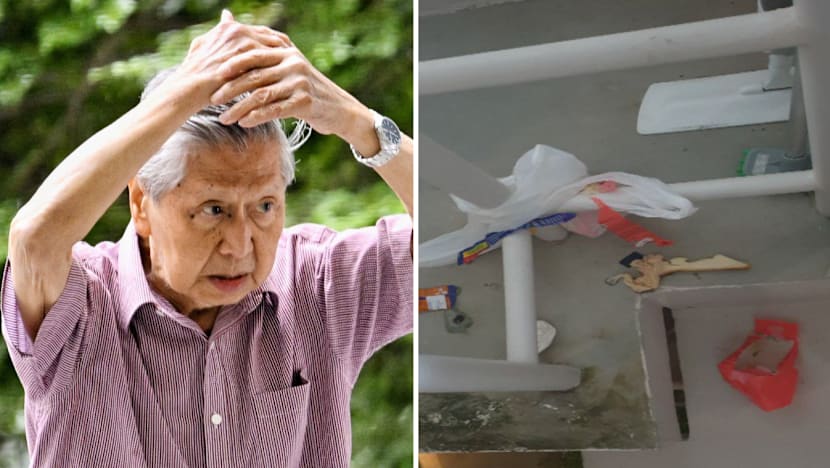
SINGAPORE: Beginning from Christmas Day last year, a 63-year-old woman allegedly began throwing human waste onto the parapet of a Housing Board block in Marsiling.

Viona Teo Kee Liok, a Singaporean, was charged on Thursday (Jan 15) with seven counts of public nuisance.

According to charge sheets, she threw human waste on the parapet of a 10th-floor unit at Block 131, Marsiling Rise a total of five times.

On the first occasion on Dec 25, 2025, she allegedly did so in the wee hours at about 4.25am, to the annoyance of a man.

On subsequent occasions, she allegedly threw human waste past 8am and 9am.

She is accused of throwing food waste on three occasions.

The last instance was on Monday, according to charge sheets.

The court ordered her to be remanded at the Institute of Mental Health for medical examination.

She will return to court on Jan 29.

If convicted of public nuisance, she faces a fine of up to S$2,000 (US$1,550) per charge. If she is a repeat offender, she can be jailed for up to three months on top of the possible fine.

Source: CNA/ll(ss)

Sign up for our newsletters

Get our pick of top stories and thought-provoking articles in your inbox

Subscribe here
Inbox
Advertisement

Singapore

Beverage container return scheme: NEA exploring how it can help small producers make smoother transition

Beverage container return scheme: NEA exploring how it can help small producers make smoother transition
NEA is exploring how it can assist small beverage producers in making a "smoother transition" as a new recycling programme starts in April. (File photo: REUTERS/Carlos Osorio)
Listen
2 min
New: You can now listen to articles.

This audio is generated by an AI tool.

Read a summary of this article on FAST.
FAST

SINGAPORE: The National Environment Agency (NEA) is exploring how it can assist small beverage producers in making a "smoother transition" to a new national recycling scheme starting in April.

Under the beverage container return scheme, consumers will pay an additional S$0.10 (US$0.07) when buying most bottled and canned beverages ranging from 150ml to three litres. That deposit can be refunded when an empty container is returned at designated collection points.

Senior Minister of State for Sustainability and the Environment, Dr Janil Puthucheary, in a Facebook post on Thursday (Jan 15), said the government recognises that the impact of the scheme varies across the industry.

It depends on how products are processed and brought to market, as well as the total volume of production or imports.

For the majority of beverages sold in Singapore, their producers are able to make the transition while minimising the cost impact nearer to producer fees of less than S$0.05, Dr Puthucheary said.

"At the same time, we are mindful of the logistical and other challenges faced by some importers and producers, with smaller volume of beverages."

To address these challenges, the scheme operator has been and is continuing to engage affected producers to explore more practical and flexible means to meet the scheme requirements, he said.

Several importers and small retailers had said that prices of bottled and canned drinks in Singapore could rise by S$0.25 to S$0.60 when the scheme kicks in

Industry players had also said the costs of complying with the scheme are far more complex, particularly for importers and smaller businesses, warning that the costs are likely to be passed on to consumers.

The scheme - that will start on Apr 1 - is part of efforts to cut waste and boost recycling rates in Singapore. 

It is managed by a consortium of major beverage producers, including Coca-Cola, F&N Foods and Pokka, and supervised by NEA.

Source: CNA/fh

Sign up for our newsletters

Get our pick of top stories and thought-provoking articles in your inbox

Subscribe here
Inbox
Advertisement

Style & Beauty

From a heartland shop to 82 stores: How Iora became one of Singapore’s most enduring fashion businesses

Built on restraint rather than noise, this 28-year-old local fashion group reveals how discipline, customer insight and the launch of a new label are shaping its next chapter.

From a heartland shop to 82 stores: How Iora became one of Singapore’s most enduring fashion businesses

(Art: Jasper Loh, photos: Iora Group)

New: You can now listen to articles.

This audio is generated by an AI tool.

Read a summary of this article on FAST.
FAST

If youve shopped in Singapore long enough, chances are youve walked past an Iora store and noticed the neat racks, neutral colours, reliable silhouettes that quietly do their job.

That sensibility didnt come from trend forecasting decks or viral marketing playbooks. It began in the late 1990s at a small boutique in White Sands, a shopping mall in Pasir Ris, where Ng Leng San was learning fashion the unglamorous way: By watching what people actually wore.

Advertisement

From the beginning, we took a more grounded approach,” said Ng, now 56 and CEO of Iora Group – the fiercely private Ng requested that no photo of himself be included in the story. We focused on understanding our customers deeply – what they actually wore, what fit their lives, and what they were willing to pay for over time.”

Through the late 1990s and early 2000s, Singapore’s fashion landscape was littered with corpses of local labels that had bet big on trends, overextended on rent, or simply misread what Singaporean women wanted from their wardrobes. Few lasted long enough to leave a mark.

An Iora store. (Photo: Iora)

Iora did more than survive. Co-founded in 1998 by Ng and his wife, Alice Loh, alongside another partner who is no longer with the company, the business has since grown into a multi-brand fashion group with 82 stores across Singapore and Malaysia, spanning womenswear, menswear and kidswear. It is one of the rare homegrown fashion companies to have sustained nearly three decades of steady growth – largely without fanfare, celebrity endorsements or splashy reinventions.

We focused on understanding our customers deeply – what they actually wore, what fit their lives, and what they were willing to pay for over time.

THE DISCIPLINE OF LONGEVITY

Survival, in Ng’s experience, came through discipline rather than daring.

We were very disciplined about fundamentals: Product quality, fit, consistency and cash flow,” he said. We didnt overextend ourselves, and we reinvested carefully.”

Advertisement

Instead of chasing trends or explosive growth, the business stayed close to its core customer, refining its offering incrementally. Most importantly, we treated fashion as a long-term business, not a quick win,” Ng said. That mindset – steady, patient and customer-led – helped us weather cycles that many others couldnt.”

(Photo: Iora)

Its an approach that runs counter to fashions usual mythology of visionary risk-takers and dramatic pivots. But it has yielded a portfolio built on pragmatism: Iora, the flagship womenswear line launched in 1998, anchored by clean silhouettes and versatile workwear; Trt, a multi-category lifestyle brand that began in 2020; Sans & Sans, introduced in 2013 for understated essentials; and Monoloq, introduced in 2023 as the group’s most design-forward expression.

A look from Sans & Sans. (Photo: Sans & Sans)

Together, the brands form what Ng calls “a cohesive ecosystem” rooted in accessibility, comfort, and thoughtful construction – values that have remained unchanged even as fashion cycles accelerated.

SURVIVING THE SHIFTS

Longevity hasn’t come without strain. Ng describes the most difficult moments not as single crises, but periods of structural upheaval.

One such moment was when retail began changing rapidly – rising costs, evolving mall dynamics, and later, the acceleration of digital and online expectations,” he said. These werent challenges you could solve with a single decision.”

Advertisement

Rather than panic or pivot dramatically, Ng doubled down on observation. We stayed close to the ground. Spending time in stores, listening to staff, watching customers, and resisting the urge to panic.”

Over time, he learned that survival came from consistency. Difficult periods are not solved by dramatic moves,” he said, but by making a series of small, disciplined decisions consistently.” Calmness, humility and persistence, he added, mattered more than confidence.

A NEW CHAPTER, A NEW AUDIENCE

For most of its history, Iora Group has remained largely under the radar.

We were never focused on being loud. We were focused on being reliable,” he said.

Advertisement

Yet as the group neared its third decade, something shifted. In 2023, Iora Group launched Monoloq, its most design-forward brand yet, and in doing so, signalled an ambition to reach beyond its traditional customer base.

We were never focused on being loud. We were focused on being reliable.
Monoloq at Wisma Atria. (Photo: Monoloq)

Monoloq feels different the moment you walk in. Where Iora stores resemble a well-organised wardrobe, Monoloq boutiques lean gallery-like. The palette remains muted, but the silhouettes are more sculptural: A simple blouse cut with exaggerated sleeves, a dress with an unexpected drape. The details – a seam placement, a neckline –are subtle but intentional.

It’s aimed at a more design-conscious audience: Professionals who appreciate architectural cuts but balk at paying S$400 for a shirt. Comparisons to brands like Cos and In Good Company are inevitable, but Monoloqs price points remain accessible, with most pieces falling between S$50 and S$200.

“Monoloq allows us to reach a new generation of customers,” Ng said. “It’s our most design-driven brand.”

Wykidd Song, creator director at Monoloq. (Photo: Monoloq)

To realise that vision, Ng made a notable hire: Wykidd Song, co-founder of cult minimalist label Song+Kelly, joined as Monoloq’s creative director in 2024.

THE RETURN OF A SINGAPORE DESIGN ICON

Song’s return to fashion followed several years away from the industry, spent on select corporate projects and researching his maternal grandfather’s journey from China to Singapore.

The deep dive into family history became an unexpected creative reset. It reminds me why heritage and storytelling matter not just in life, but in design too,” said the 60-year-old designer.

(Photo: Monoloq)

His first encounter with Monoloq was accidental. Passing its Wisma Atria store in late 2023, Song assumed it was an international brand. The space felt calm and the clothes had this clean, modern look,” he recalled. I remember thinking it must be a big brand from Taipei – and the prices were surprisingly accessible.”

That restraint appealed to him, especially in a fashion climate he describes as fatigued. "Too much noise, too little soul," he said. "When trends are driven by algorithms and celebrity culture, real design gets lost.”

For Ng, Song represented rare alignment. He understands design deeply, but he also understands real women – their lifestyles, their needs, the subtleties of how they dress.”

What surprised Ng most was Songs discipline. “People often focus on creativity, but what impressed me is how rigorous he is about cut, proportion and construction. He brings a sense of refinement that elevates every detail.”

MINIMALISM WITH A PULSE

Song is characteristically circumspect about specifics. I wont get into details at this time,” he said. But his direction is clear: Pushing what the brand has started with and adding more layers to it”.

Its like blending Euro-cool elegance with delicate Asian details and nuances,” he said. Always with an eye on whats trending.”

Crucially, sculptural does not mean unwearable. Sculptural and restrained design doesnt mean distant or impractical,” Song said. Its about balancing precision with ease, structure with softness.”

(Photo: Monoloq)

That philosophy is evident in Monoloqs upcoming Chinese New Year collection, which offers a pared-back alternative to festive maximalism. Instead of overt symbolism, the focus is on form, texture and craft: Layered viscose-crepe separates, a jacquard mandarin-collar shift in rich crimson, and a modern cheongsam-inspired silhouette rendered in side-gathered knit jersey. These are pieces designed to outlast the season.

BEYOND SINGAPORE

Monoloq at Mid Valley Southkey in Johor Bahru. (Photo: Monoloq)

While Iora Group is rooted in Singapore, Malaysia has become a crucial second market. The group now operates 37 stores there across its various labels – a presence built gradually, store by store, over years.

That scale has allowed the company to move beyond replication and toward nuance. Malaysian shoppers appreciate design-forward pieces, especially those with versatility and structure,” he said. Their feedback helps us refine fit, fabric selection and styling options across markets.”

Growth, Ng stresses, happens only when it makes sense. New stores open when opportunity aligns with brand positioning – a philosophy that mirrors the groups broader refusal to chase scale at the expense of substance.

WHAT SUCCESS LOOKS LIKE NOW

After nearly three decades, Ng’s definition of success has evolved. It’s no longer about how many stores the company can open or how fast revenue can grow.

Its about building a business that can continue without depending on any single person, including myself,” he said. Creating brands with clear identities, teams with confidence, and systems that allow for thoughtful growth.”

A look from Trt. (Photo: Trt)

What makes him proud isn't the number of stores, but their longevity. Seeing team members grow with the business over many years, watching customers return across different stages of their lives – that matters deeply to me.”

As one of the few Singaporean fashion companies to have sustained this trajectory, Ng feels a certain responsibility to prove what’s possible. I hope younger Singaporeans see Iora Group as proof that you can build something enduring from Singapore,” he said. Not everything needs to be fast, viral or global from day one.”

Longevity, in his view, comes from craft, discipline and respect – for customers, for people, and for the work itself”.

It’s a quieter form of ambition, perhaps, but one that has carried the company from a small heartland shop to a regional fashion group. Not the story fashion usually celebrates, but one that feels increasingly worth telling.

Source: CNA/yy

Sign up for our newsletters

Get our pick of top stories and thought-provoking articles in your inbox

Subscribe here
Advertisement

Also worth reading

Advertisement