Advertisement
Advertisement

Singapore

Commuters urged to plan alternative routes ahead of scheduled 3-month Circle Line disruption

The scheduled disruption is expected to last from Jan 17 to Apr 19 and will affect about 480,000 commuters daily. 

Commuters urged to plan alternative routes ahead of scheduled 3-month Circle Line disruption

Posters at Serangoon MRT station on Jan 13, 2026, ahead of a three-month disruption on the Circle Line. (Photo: CNA/Justin Ong)

Listen
5 min
New: You can now listen to articles.

This audio is generated by an AI tool.

Read a summary of this article on FAST.
FAST

SINGAPORE: Commuters on the Circle Line (CCL) should begin planning alternative routes ahead of a scheduled service disruption from Jan 17 to Apr 19, said Acting Transport Minister Jeffrey Siow on Tuesday (Jan 13).

During the three-month period, trains will run on a single platform between three CCL stations – Mountbatten, Dakota and Paya Lebar – to allow for tunnel strengthening works.

The scheduled disruption is expected to affect about 480,000 commuters daily.

"There will still be some train service, but the headways will be significantly degraded to about 10 minutes, which means that if you take this route, you will probably have an additional 30 minutes added to your schedule, plus or minus," said Mr Siow during a visit to Serangoon MRT station on Tuesday.

"If you can avoid taking this route, I would suggest you do so. If there are alternative pathways along the train network, then please try to take them."

For example, commuters travelling from the northeast of Singapore to the west can take the North East Line to Outram Park and change to the East-West Line, instead of taking the CCL.

Shuttle bus services also started on Jan 5 to help familiarise commuters with the new routes. An additional 500 people will be deployed starting Jan 17 to control crowds and guide commuters to alternative transport arrangements.

“Our hope is that some of the commuters will try this out, so that they know whether the route is suitable for them, or how long ... it will take for them to take this journey,” said Mr Siow.

In the first week of operation during the familiarisation stage, 6,000 commuters took the shuttle buses.

At Serangoon MRT station on Tuesday morning, there were signs for the shuttle bus service and ushers directing commuters. 

Posters will also be put up at affected stations about the alternative routes.

When asked why the scheduled disruption was chosen during a period that would coincide with Chinese New Year, Mr Siow said that there is “no perfect time to do the work”.

A balance had to be struck between commuters’ convenience and the time required to bring in contractors and recruit additional manpower.

“All that considered, we made the best effort,” he said. 

“The most important thing is to do the work as quickly as we can, finish them up, and also to make it as safe as we can for the workers.”

The first week of the scheduled disruption will be “slightly more disorienting for the commuters”, said Mr Yeo Teck Guan, senior group director of public transport at the Land Transport Authority (LTA).

“In the steady state, we will have about 500 people on the ground, but in the first week, we will put more,” he added.

LESSONS FROM PREVIOUS DISRUPTIONS

The recent scheduled station closures on the East-West Line between Nov 29 to Dec 8 have taught transport operator SMRT some lessons, said the president of SMRT trains, Mr Lam Sheau Kai.

“In terms of crowd management… we learnt a lot, and we’ve made quite a number of improvements,” he said. “I think one of the key ones is really running the shuttle service early to get people to acclimatise to it.”

Mr Siow said that past scheduled disruptions have allowed transport staff to "gain some experience" in how to move, direct and explain to commuters why the disruption is taking place.

Mr Siow said in November that there would be more planned MRT line closures as the train network ages and requires more maintenance.

He said on Tuesday that in metro lines all over the world, there are "quite often" scheduled closures, so there is an "extended period of time" to do major works.

"You can expect that as our MRT network gets older and you need to do more replacement and renewal works, you have to do some of these scheduled closures," he added.  

Posters outside Serangoon MRT station on Jan 13, 2026, ahead of a three-month disruption on the Circle Line. (Photo: CNA/Justin Ong)

PREPARATION WORKS

Tunnel strengthening works are being carried out along sections of the Circle Line due to a phenomenon called “tunnel squatting”.

Tunnel squatting is the deformation of the tunnel lining as a result of compression of the soft clay the tunnel is within, beyond the expected tolerances.

Severe tunnel squatting can lead to consequences such as concrete cracking or spalling, which might fall onto the train moving past the tunnel and pose risks to public safety.

The strengthening process involves installing steel plates along the walls of the tunnel, and this requires heavy machinery, specialised lifting equipment and multiple engineering teams.

LTA said in a statement on Tuesday that underground preparation works are "intensifying".

Equipment and machinery such as customised robotic arms, mini gantry and jib cranes, have been specially modified onto the engineering wagons, and have been tested and commissioned to ensure that they are operationally ready to commence works.

Affected utility cables and cable brackets along the tunnel walls have also been relocated to make way for the steel plates, among other preparation works.

There is also a full-scale tunnel boundary replica featuring actual cable layouts that has been set up in Kim Chuan Depot for contractors to train on.

“Despite carrying out similar strengthening works in Shanghai, the contractors continue to undergo rigorous practice to familiarise themselves with Singapore’s tunnel constraints,” said LTA. 

Source: CNA/jx(mi)

Sign up for our newsletters

Get our pick of top stories and thought-provoking articles in your inbox

Subscribe here
Inbox
FAST
Advertisement

Singapore

Drink prices could rise by up to 60 cents under Singapore's new beverage return scheme, importers warn

Importers and small retailers say new fees under the scheme could be passed on to consumers when it starts in April.

Drink prices could rise by up to 60 cents under Singapore's new beverage return scheme, importers warn

Discount retailers such as Tian Ma, which rely heavily on imported beverages, say they will be hardest hit by the beverage container return scheme.

Listen
9 min
New: You can now listen to articles.

This audio is generated by an AI tool.

Read a summary of this article on FAST.
FAST

SINGAPORE: Prices of bottled and canned drinks in Singapore could rise by S$0.25 (US$0.20) to S$0.60 when a new national recycling programme kicks in from April, according to several importers and small retailers who say they will struggle with multiple fees.

The Beverage Container Return Scheme (BCRS) is designed to cut waste and boost recycling rates by introducing a refundable deposit for drink containers.

It is managed by a consortium of major beverage producers, including Coca-Cola, F&N Foods and Pokka, and supervised by the National Environment Agency (NEA).

Under the scheme, consumers will pay an additional 10 cents when buying most bottled and canned beverages ranging from 150ml to 3 litres.

That deposit can be refunded when an empty container is returned at designated collection points.

While the concept appears straightforward, industry players say the costs of complying with the scheme are far more complex, particularly for importers and smaller businesses.

These costs, they warn, are likely to be passed on to consumers.

NARROWER PRICE GAP BETWEEN LOCAL AND IMPORTED DRINKS

At some heartland provision shops, a canned drink imported from Thailand or Indonesia can cost as little as S$0.70 today.

Locally produced alternatives are often priced closer to S$1. 

That price gap, however, may soon narrow because of the scheme’s fees. These include charges to register products, replace overseas barcodes and ensure that every can and bottle is traceable.

Discount retailers that rely heavily on imported beverages say they will be hardest hit.

For Tian Ma Group Holdings, which imports and sells drinks from across the region, the additional costs are unavoidable.

Close to a million bottles and cans pass through Tian Ma’s warehouse each month.

“I'll have no choice but to impose that cost onto the consumers and in the end, it's just going to increase the price overall,” said the company’s director Devang Bafna.

At Tian Ma’s warehouse, close to a million bottles and cans across about 200 products pass through each month.

Under the new rules, international barcodes currently used on imported drinks will no longer be accepted. Instead, importers must affix new BCRS-approved labels on each container.

This process adds significantly to costs, and Mr Bafna said he is concerned that the company will not be able to compete with major local producers on price.

“We have no cards to play. It's a domino effect. If one does it, the other has to do it, and it falls all on the consumer.”

UNCERTAINTY FOR CRAFT BEER SELLERS

Smaller importers face a different set of challenges.

Craft beer businesses, for example, often bring in seasonal brews from countries such as Australia and the United Kingdom.

Each batch typically comes with its own unique design.

Under the BCRS, every new design must be registered separately, and importers must wait for approval before the product can be sold.

Craft beer products typically have unique packaging designs, and each must be registered separately under the BCRS.

“We need to go through this whole process of product registration, waiting for 12 to 16 weeks before we can sell it,” said Ms Corrine Chia, co-founder of craft beer distributor The Drinking Partners.

For craft beer products with a typical shelf life of around 12 months, this leaves a much shorter window to sell stock. Sticking labels onto cans and bottles also adds to manpower costs, she added.

Ms Chia said she has met representatives from the BCRS but hopes smaller businesses will be better included in discussions.

The scheme was originally meant to start in April 2025, but authorities pushed it back by a year as major beverage producers had requested more time to operationalise the scheme.

“I think trying to get information has been a struggle. We don't know what's happening,” added Ms Chia.

“There's a lot of fear that we are undergoing … but what we know for sure is that there's going to be higher costs coming in.”

In response, the BCRS said it organised online workshops to educate producers about the scheme between late October and January.

An average of about 70 participants attended each of the first three sessions, with three more scheduled for February.

BREAKING DOWN THE COSTS

According to BCRS, all beverage producers must first pay a mandatory one-time registration fee of S$500.

Each individual product registered carries another S$5 fee.

There is also a producer fee charged per unit, based on the type of packaging.

Aluminium cans attract a fee of about 3 cents each, while plastic containers cost around 4 cents per unit.

These fees go towards funding the collection, sorting and recycling of returned containers.

Overseas importers must buy special barcode stickers with deposit marks so that reverse-vending machines can recognise them.

These stickers cost between 4 and 18 cents each, depending on volume, and must be bought from appointed vendors.

Some drinks also require separate Nutri-Grade labels, adding to the complexity.

A further security fee is imposed on imports to prevent fraud, such as counterfeit stickers.

According to the BCRS website, bringing in 100,000 units could require an upfront security fee of up to S$28,000 – or about 30 cents per unit.

There are also potential penalties for under-declaration, late payments and investigations into breaches of the scheme’s rules.

Expand

HOW BIG PLAYERS ARE COPING

Major beverage producers did not say how their prices would change, but unlike importers, their production lines can print BCRS barcodes directly onto packaging, avoiding stickering costs.

At a Coca-Cola manufacturing plant in Malaysia’s Negeri Sembilan that supplies both the Singapore and Malaysian markets, up to 1,000 bottles are produced every minute.

Mr Tolga Cebe, chief executive officer for Singapore, Malaysia and Brunei at Bottling Investments Group, The Coca-Cola Company, said the transition requires changes across multiple parts of the business.

“We will have to update and revise each and every packaging artwork in Singapore to be BCRS compliant,” he said.

“This will entail some one-off transition costs, some changes in our production line and adjustments to manage the complexity, along with some systems and processes that will be required on the logistics side.”

A recently announced extension to the transition period will allow companies like Coca-Cola more time to sell non-BCRS-compliant stock produced for the festive season.

The European Chamber of Commerce in Singapore (EuroCham), which represents brewers such as Carlsberg and Heineken, said its members generally accept the sustainability goals behind the scheme.

“I think companies are aware that there is additional cost involved in potentially manpower as well to adjust,” said EuroCham president Jens Ruebbert.

“But I guess the greater good and the sustainability part of it is well accepted. I think public engagement is something which is very needed, and companies are aware, and we have gone through the same processes in other parts of the world.”

An existing reverse-vending machine in Singapore.

WHAT CONSUMERS CAN EXPECT

The reverse-vending machines under the BCRS will be similar to those piloted in Singapore in recent years, but with a different user interface.

These machines are where consumers will return their empty containers. Three vendors – SG Recycle, Sweden-based RVM Systems and Norway’s TOMRA – have been approved to operate them.

More than 1,000 machines are expected to be rolled out across the island by April.

The initial rollout is slated to begin at major supermarkets before expanding to HDB estates and hawker centres.

The method of refund is still being finalised, with options such as PayNow being considered.

An official announcement on the rollout is expected by the end of the month.

PUBLIC AWARENESS KEY

Singapore’s household recycling rate fell to a record low of 11 per cent in 2024 despite initiatives such as bins for recyclables made available across the island.

Months before the BCRS launch, some residents are also still unfamiliar with how it works, though many say the deposit could encourage better recycling habits if machines are conveniently located.

Environmental groups stress that accessibility will be key, particularly for lower-income households.

“First, there's an increase in cost, and a lot of times, the education may not reach them as well,” said Mr Lionel Dorai, executive director of Zero Waste Singapore.

“I think what's important is that we ensure that the education comes from a whole-of-society approach.”

Zero Waste Singapore has been working with NEA to install reverse-vending machines at its recycling hubs in areas such as Pioneer and Queenstown.

The organisation said clustering multiple recycling options in one location has led to higher participation and lower contamination rates than the national average.

A recycling hub by Zero Waste Singapore.

LESSONS FROM ABROAD

Singapore’s plastic recycling rate currently stands at about 5 per cent.

In Taiwan, an incentive system has helped push PET bottle recycling rates to around 95 per cent. European countries such as Germany and Norway see rates above 90 per cent.

Economists who study consumer behaviour say a deposit will move the needle and that the BCRS system, which has retailers and producers on board, works better than direct monetary handouts.

“Getting everyone in this entire ecosystem will make everybody on the same page,” said Associate Professor Chua Yeow Hwee from Nanyang Technological University’s School of Social Sciences.

“I think the goal here is to deliver lasting impact for Singapore, and to do so it takes a community effort to do that, and not just a single stakeholder.”

Even so, industry players acknowledge there may be loopholes, such as importing drinks under 150ml, or in paper packets or glass bottles not covered under the scheme.

NEA has said it will take action against the sale of non-BCRS-compliant cans and bottles from Oct 1, 2026.

Source: CNA/mp(lt)

Sign up for our newsletters

Get our pick of top stories and thought-provoking articles in your inbox

Subscribe here
Inbox
FAST
Advertisement

Dining

Pizza Hut Singapore introducing Sichuan roasted chicken pizza in new 'season of spice' menu

Spice fans, rejoice! 

Pizza Hut Singapore introducing Sichuan roasted chicken pizza in new 'season of spice' menu

Pizza Hut Singapore's Sichuan Roasted Chicken Pizza. (Photo: Pizza Hut Singapore)

Listen
2 min
New: You can now listen to articles.

This audio is generated by an AI tool.

Read a summary of this article on FAST.
FAST

Singapore's love affair with mala is now taking pizza form. Pizza Hut Singapore has unveiled its new Season of Spice menu, which includes the Sichuan Roasted Chicken Pizza, inspired by the smoky, spice-packed flavours of Sichuan BBQ skewers. 

This menu will be available from Thursday (Jan 15) to Mar 1.

Sichuan Roasted Chicken Pizza. (Photo: Pizza Hut Singapore)

The star of the menu is the Sichuan Roasted Chicken Pizza, rooted in the vibrant street food culture of Chuan Chuan. In this seasonal innovation, fragrant cumin-spiced chicken, cheese, and veggies sit on a zingy red peppercorn base. It’s complete with Pizza Hut’s iconic cheese-stuffed Blossom Crust, so every bite carries a bold punch of spice. 

Beyond the pizza, Pizza Hut is also bringing Sichuan flavours to some of its classic dishes.

There are Flamin’ Mala Melts, golden pockets of melty cheese and tender chicken, complete with a smoky mala sauce. Or dive into the Mala Fire Drumlets for that hot mala kick in snack form.

Flamin' Mala Melts. (Photo: Pizza Hut Singapore)
Mala Fire Drumlets. (Photo: Pizza Hut Singapore)

For something heartier, Pizza Hut brings the Sichuan twist to the Cumin Chicken Baked Rice – fluffy pillaf rice layered in cumin-marinated chicken, with mala sauce and cheese – and the Cumin Chicken Mac ‘N’ Cheese, which blends cheesy comfort with flavourful spices.

The spice may be hot, but the deals are hotter. To mark the launch, Pizza Hut is running limited-time promotions on its Season of Spice menu.

As a launch promotion, from Jan 15 to 28, a regular Sichuan Roasted Chicken Pizza will be priced at S$14.90 for dine-in, takeaway, and delivery.

For those dining in, enjoy set menus starting at S$14.90 per person, with delivery and takeaway bundles starting from S$9.60 per person. 

From Jan 15 to Mar 1, Hut Rewards members can also redeem Flamin’ Mala Melts for just 80 Hut Reward Slices.

The Season of Spice menu will be available at all Pizza Hut Singapore outlets and via self-collect, dine-in, or delivery when it launches on Jan 15.

Source: CNA/ba/sr

Sign up for our newsletters

Get our pick of top stories and thought-provoking articles in your inbox

Subscribe here
Inbox
Advertisement

Dining

KFC Singapore launching Sichuan mala chicken and fortune cat blind boxes for Chinese New Year

The limited-time menu will be available from Jan 14 to Feb 25 for dine-in and takeaway at all KFC outlets except Singapore Zoo and Sentosa, as well as for delivery.

KFC Singapore launching Sichuan mala chicken and fortune cat blind boxes for Chinese New Year

KFC Singapore's La Zi Ji Crunch chicken. (Photo: KFC Singapore)

Listen
2 min
New: You can now listen to articles.

This audio is generated by an AI tool.

Read a summary of this article on FAST.
FAST

KFC Singapore is turning up the heat this Chinese New Year! A limited-time menu will be available from Wednesday (Jan 14) to Feb 25 as KFC taps into the fiery energy of the Year of the Fire Horse with never-done-before, bold mala flavours.

KFC's Huat Your Mouth festive specials include their first-ever La Zi Ji, or Sichuan mala chicken, along with collectible fortune cat blind boxes. 

The La Zi Ji Crunch is KFC’s take on the classic Sichuan dish, known for its intense chilli heat and numbing peppercorns. The freshly breaded and fried chicken will be coated in dried chillies, chilli oil, and peppercorns for that slow-building tingle.

Also on the menu are La Zi Ji Bites, which are bite-sized crispy chicken pieces tossed in the same tantalising sauce, Mala Lotus Root Chips and Mango Pomelo Sago Pie, where the zesty pomelo meets the sweetness of mango in a golden pastry.

Mala lotus root chips. (Photo: KFC Singapore)
Mango pomelo sago pie. (Photo: KFC Singapore)

More than just food, KFC is also launching Huat Paws – a series of fortune cat blind boxes inspired by the traditional fortune cats whose waving arms are said to welcome good luck, wealth, and prosperity. Each Huat Paw comes with a jigsaw base, allowing fans to collect and connect the cats together as a display.

From Jan 14, the blind boxes will be available at $8.80 each with any dine-in or takeaway purchase over the counter or self-ordering kiosk. The collection includes Abundance Chicken Bites, Lucky Drumsticks, Fortune Egg Tarts, Abundance Bucket, as well as a Secret Gold Fortune Cat that could win you S$888.

Huat socks. (Photo: KFC Singapore)

You can also get your hands on Huat Paws red packets with every purchase of the La Zi Ji Crunch Box or La Zi Ji Chicken Bites Box from Jan 21 to Feb 24. There's also the Huat socks, available at $5.80 with any breakfast purchase or via KFC delivery from Jan 14 onwards, while stocks last.

All promotions are available at all KFC Singapore outlets except Singapore Zoo and Sentosa, as well as for delivery. 

Source: CNA/ba

Sign up for our newsletters

Get our pick of top stories and thought-provoking articles in your inbox

Subscribe here
Inbox
Advertisement

Singapore

Revised food production targets balance 'ambition and pragmatism', says Zaqy Mohamad

The new targets, which replace Singapore's "30 by 30" food sustainability goal, take into account what Singapore can produce and scale locally, said Senior Minister of State for Sustainability and the Environment Zaqy Mohamad.

Revised food production targets balance 'ambition and pragmatism', says Zaqy Mohamad
A hydroponics farm at Sungei Tengah in Singapore.
Listen
5 min
New: You can now listen to articles.

This audio is generated by an AI tool.

Read a summary of this article on FAST.
FAST

SINGAPORE: Singapore's revised targets for local food production strike a balance between ambition and realism, Senior Minister of State for Sustainability and the Environment Zaqy Mohamad said on Tuesday (Jan 13).

They take into account what Singapore can produce and scale locally, as well as challenges that a nascent sector like alternative protein faces, he added.

Mr Zaqy was responding to two parliamentary questions about fibre and protein production targets for Singapore, which were announced in November last year.

The new targets replace Singapore's "30 by 30" food sustainability goal, under which the country aimed to produce 30 per cent of its nutritional needs by 2030.

The government's updated strategy – called Singapore Food Story 2 – sets targets for specific food categories. The aim is to boost overall food resilience through four pillars, including local production, import diversification, stockpiling and global partnerships.

For local production, the goal now is for farms to supply 20 per cent of the local consumption of fresh leafy and fruited vegetables, beansprouts and mushrooms, and 30 per cent of the local consumption of eggs and seafood by 2035. 

The targets take into account the important role of local production as a "regenerative and assured source of fresh food", the strengths of the local ecosystem and the potential for growth, said Mr Zaqy on Tuesday.

"We will focus on food types that are feasible to be produced at scale efficiently," he said, adding that this is "consistently applied in our grants and land tenders".

Meats are not part of the revised targets because of resource efficiency, land intensity and climate conditions, while alternative protein is excluded "given the nascency of this sector".

Singapore also does not intend to produce some food locally, such as rice and poultry. Instead, these will be considered under import diversification and stockpiling.

"The revised targets balance ambition and pragmatism, by considering what we can produce and scale locally as well as the challenges that our nascent sector faces, including higher production costs and the need for substitute demand," said Mr Zaqy.

He added that Singapore will continue to find new ways to support new and existing farms in lowering production costs, building capability, strengthening the supply resilience of inputs and securing buyers for the produce.

"We also need strong support from local consumers and businesses ... (which is) essential for our farms to achieve scale and commercial viability," he said, adding that more information will be provided after this year's Budget announcement.

INCREASING PRODUCTION THROUGH TECHNOLOGY

Mr Yip Hon Weng (PAP-Yio Chu Kang) asked whether the government has job creation or retention targets, given that some small farms and food producers are affected by high production costs and workforce shortages.

In response, Mr Zaqy said the Ministry of Sustainability and the Environment (MSE) supports farms by helping them build capability in new areas such as agri-tech. 

Some farms have made use of technology to increase their yields and have become more competitive as a result. There are also facilities that do not need as much energy, and automation helps to reduce manpower needs, he said.

Ms He Ting Ru (WP-Sengkang) noted that the "30 by 30" goal was called "aspirational", and asked for clarity on whether the 2035 goal is a target or an aspiration.

Singapore launched its "30 by 30" campaign in 2019, but the local agri-food sector struggled with supply chain disruptions, inflationary pressures on energy and manpower costs, as well as a tougher financing environment. That led to delays in farm development, and some farms closed down.

Mr Zaqy said the "several rounds of challenges and disruption" since 2019 have helped Singapore to learn and grow. 

For example, when borders were closed during the COVID-19 pandemic, Singapore had to think about supply diversification for eggs and chickens, and about the need to strengthen stockpiling. Singapore now imports chickens from Brazil and eggs from Ukraine, besides buying these from closer neighbours.

In terms of local production, Mr Zaqy said some yields have improved, and Singapore is only around 4 percentage points away from reaching the goal for protein.

"That gives very good promise in terms of whether we're able to meet a 2035 target ... more than just aspirations, we are tracking quite carefully," he said. "We are putting in programmes, schemes to ensure and help our farms transform to achieve those goals as well."

The other pillars of the strategy also give Singapore more options. 

"Are we changing the goal posts? That's one question some people ask me all the time," he said. "I think maybe it's not so much thinking in terms of goal posts, but maybe perhaps I'm giving you a better goalkeeper."

Source: CNA/an(gs)

Sign up for our newsletters

Get our pick of top stories and thought-provoking articles in your inbox

Subscribe here
Inbox
Advertisement

Singapore

Hyflux trial: DBS representative says Hyflux did not disclose its entry into power business

Mr Lum Moe Tchun, who was senior vice-president at DBS at the time, testified on the first day of the resumption of the trial against former Hyflux chief executive officer Olivia Lum Ooi Lin and other Hyflux ex-leaders.

Hyflux trial: DBS representative says Hyflux did not disclose its entry into power business

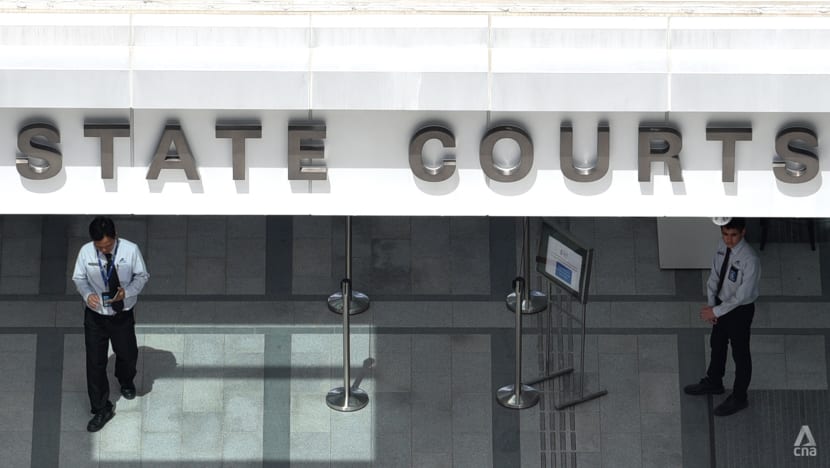
Mr Lum Moe Tchun and Ms Olivia Lum Ooi Lin at the State Courts on Jan 13, 2026. (Photos: CNA/Justin Tan, Jeremy Long)

Listen
6 min
New: You can now listen to articles.

This audio is generated by an AI tool.

Read a summary of this article on FAST.
FAST

SINGAPORE: A representative for DBS on Tuesday (Jan 13) testified that Hyflux did not disclose to him or his team members that the water treatment firm was entering the power business.

Mr Lum Moe Tchun, now managing director in investment banking at DBS, shared this on the first day of the resumption of the long-running trial against former Hyflux chief executive officer Olivia Lum Ooi Lin, 65, and other Hyflux ex-leaders.

Along with then-chief financial officer Cho Wee Peng and four former independent directors of Hyflux, Lum is on trial for allegedly omitting details about electricity sales in its Tuaspring project.

Hyflux had pitched the project to the market as its second and largest seawater desalination plant in Tuas, but allegedly omitted that it would fund the sale of water at a very low price to national water agency PUB with its new business of selling electricity from a power plant it would build.

The unsuccessful foray into Singapore's power market contributed to the company's collapse and affected about 34,000 investors who held perpetual securities and preference shares, and were owed a total of S$900 million, according to the prosecution.

Hyflux's management decided to issue preference shares to raise funds and engaged DBS as the lead manager and bookrunner for the issuance of these shares.

The company lodged the April 2011 offer information statement with the Monetary Authority of Singapore for the issuance of up to S$200 million in 6 per cent cumulative non-convertible, non-voting, perpetual Class A preference shares.

These shares were oversubscribed, and the offer amount was increased, with Hyflux ultimately raising S$400 million from the issuance.

MR LUM'S TESTIMONY

Mr Lum told the court on Tuesday that he was senior vice-president at DBS at the time - between 2010 and 2012 - and that he led the campaign for DBS in the raising of preference shares for Hyflux.

He agreed with the prosecution that this was probably the first such issuance of preference shares by a listed company that was not a bank.

Mr Lum explained that the offer information statement, which is central to some of the charges in the trial, contains important information for investors to consider in taking up the preference shares.

He said the document was "a company document" drafted by Hyflux's legal counsel, with input from DBS and its own legal counsel.

He explained that both sides ran through a series of questions to ensure that there was no further disclosure required for the offer information statement, and that it was accurate and contained no misleading information.

Asked how DBS ensured or checked that a company has made full disclosure, Mr Lum said: "Well, we can only work with information that's available to us, which is - as I mentioned - the announcements, the press releases, information that's made public by the company."

He said DBS would review this against the offer information statement for consistency, along with more recent developments or updates.

"If the offer information statement is not correct, or there's some statement that's not correct, then we would not want to continue with the offering," said Mr Lum.

Deputy Public Prosecutor Kevin Yong pointed Mr Lum to a line in the eventual offer information statement, where it said that the net proceeds from the issue of shares will be used to fund the group's water and infrastructure projects, and for general working capital in the estimated proportions of 80 per cent and 20 per cent, respectively.

Mr Lum said he took the "infrastructure projects" to mean projects related to water projects. Explaining, he said he had seen information on Hyflux's water projects in available documentation. He added that no one in the company had explained to him what these projects referred to.

Asked if Hyflux had told him that it meant power projects when it referred to "infrastructure projects", Mr Lum said: "I don't recall they mentioned that, no."

Mr Yong then showed him a news release from March 2011 on the Tuaspring project, and said there was nothing in there about the power business or the risks of entering into a power business, and asked if he knew why.

Mr Lum said he did not know.

Asked if Hyflux had told him that it was entering the power business, Mr Lum said: "I do not recall specific discussions, but no, I was not aware as far as I recall."

Mr Yong then asked him what he understood of a line in the news release that said excess power would be sold to the grid.

"My understanding is that the power plant's main purpose was to supply power to the desalination plant and any excess would be then sold to the grid," answered Mr Lum.

He added that Hyflux did not disclose to him, or his team, that it was entering the power business.

Mr Yong then asked what Mr Lum would have done if he had known.

"Well, typically again we do not advise the company on disclosure, but we would have brought it up for discussion, probably asked for more information on this, and we would have discussed this with a legal advisor," he said.

He added that there "could have been some consideration" to change or add to the disclosure depending on the outcome.

"At any point in time, did Hyflux seek DBS' advice on disclosure about the power plant?" asked Mr Yong.

"No, they did not," responded Mr Lum.

The trial continues with Mr Lum expected to be cross-examined for the next few days. He is one of the last few prosecution witnesses expected to take the stand.

This tranche of the trial is slated to run for several weeks in January and into early February.

If convicted of consenting to Hyflux's intentional failure to disclose the electricity sale information to the securities exchange, Lum could be jailed for up to seven years, fined up to S$250,000, or both.

For making an offer of securities to the public with omissions about the electricity sales, she could be jailed for up to two years, fined up to S$150,000, or both.

Source: CNA/ll(ss)

Sign up for our newsletters

Get our pick of top stories and thought-provoking articles in your inbox

Subscribe here
Inbox
Advertisement

Singapore

NParks mulls sterilisation to control otter population after they enter homes, eat koi

Some residents in the Lentor and Mayflower neighbourhoods have reported an otter breaking into homes and eating fish in private ponds.

NParks mulls sterilisation to control otter population after they enter homes, eat koi

Otters are found in Singapore's waterways and reservoirs. (Photo: Facebook/Tan Kiat How/NParks)

Listen
5 min
New: You can now listen to articles.

This audio is generated by an AI tool.

Read a summary of this article on FAST.
FAST

SINGAPORE: Lentor resident Fiona Leung was home with her family watching television when she saw something dash past at a rapid pace.

Thinking it was a neighbour’s cat, she continued watching TV until she heard a splashing sound coming from the pond in her backyard.

The unwelcome visitor was an otter – and it was the second time that week it had visited.

“It heard me approach. It popped its head out from the water with a fish in its mouth … and then I shouted. My helper went to get the broom and that’s when it jumped out and it started dashing out,” Ms Leung recounted.

While all nine of her koi fish survived, some escaped with battle scars like missing fins and wounds. The fish have become more skittish since the incident, she added.

The lone otter had broken through a gap in Ms Leung’s landed home gate that was not covered by wire mesh, which the family installed after the animal’s first visit on Dec 29 last year.

As a nomadic animal, it was likely exploring new territory and foraging while passing through the area, said Ms Cyrena Lin, director of wildlife management and outreach at the National Parks Board (NParks).

MEASURES TO MITIGATE CONFLICT

There were almost 80 otters across Singapore in 2017, doubling to about 170 in 2021 due to families having multiple litters.

NParks said it is exploring measures to reduce conflict, including translocation and longer-term population control measures such as sterilisation.

CNA understands such wildlife birth control methods could include surgery and contraceptives.

“When it comes to wildlife, there's no one-size-fits-all solution. There's also no silver bullet. So we do need to look at every single case on a case-by-case basis and adjust our mitigation measures accordingly,” noted Ms Lin.

For now, NParks has started conducting daily patrols at the affected estates since the start of January to look for signs of otter activity, including dung droppings.

If patrol teams spot otters, they will guide the animals away from residential zones and work with the community on keeping them out of certain areas, said Ms Lin.

A sign advising visitors on what to do should they encounter otters is seen at the Singapore Botanic Gardens on Dec 7, 2021.

“Despite all of these measures, if the otters are still persisting, then this is when we look at translocation as a last resort for the purpose of public safety as well as the welfare of the animals,” she added.

“If an otter family with pups has established a holt within a residential area, there is concern for public safety, because otters tend to be a little bit more protective when they have pups, and that is when we will come in to relocate the family to a more natural habitat.”

Holts are burrows in which otters rest and sleep. 

For example, in late 2022, a family of six smooth-coated otters were relocated from Seletar to an undisclosed area as a last resort due to the location of their burrow and the presence of pups.

This was after they had entered a private home and killed more than 50 fish in a pond.

Prevention measures would have sufficed if not for the pups, said experts then, as the otters would have left to find new food sources.

The Seletar otters at their new holt after being moved. (Photo: Otter Working Group)

Reports of otters eating residents’ fish have surfaced over the past few years. 

Last May, they entered a semi-detached home in Bright Hill and ate all eight of the homeowner’s koi in his pond.

CONCERN FOR OTHER RESIDENTS

Residents in Mayflower and nearby Lentor neighbourhoods said that while otters have been seen around the estates before, it was the first time they have seen the furry mammals entering their homes and feasting on their pet fish.

Lentor homeowner Shirley Tan told CNA her neighbour’s six koi fish were eaten by an otter that squeezed past their gate and made its way to their pond.

As she also rears koi fishes at home, she has taken steps to prevent any break-ins. Her family has blocked openings in the gate wall with planter boxes, and also set up a mesh net around the pond.

"Our entry point for otters can be from the front as well as from the back gate, so we have a huge area to do netting, and also around the fish pond itself, in case the first entry point is breached,” she noted. 

“So that will cost us at least a couple thousand dollars, I estimate … and it also impedes the whole aesthetic of the place. It doesn't look nice.”

A composite image of wire mesh installed at a Lentor resident's gate, and an otter spotted in a Lentor neighbourhood. (Screenshots: CNA, Shirley Tan)

Residents, however, expressed concern for not just their pets but their fellow residents.

“We are very concerned that the otter may strike anytime to enter a house, and since the otter is not even worried about or afraid of humans. We are in this area; there's a lot of dogs walking, kids walking around,” said Mrs Tan.

“As long as the otter is freely roaming, any of us walking along the street will be concerned that we may be attacked,” she added.

Experts have said that while otters rarely attack unless threatened, families with young pups tend to be more protective of their babies.

Mrs Tan said she hopes the authorities will take “firm action” and engage residents on how the otter population will be controlled.

Members of Parliament for the affected areas say they intend to raise the matter in parliament.

Yio Chu Kang MP Yip Hon Weng said he will seek greater clarity on the longer-term approach to otter population management, while Kebun Baru MP Henry Kwek said he is working with NParks to guide residents on better securing their homes.

Source: CNA/lt(dn)

Sign up for our newsletters

Get our pick of top stories and thought-provoking articles in your inbox

Subscribe here
Inbox
Advertisement

Singapore

EV charger usage at HDB car parks nearly doubles to 18% in three months

Electric vehicles have been growing in popularity in Singapore, making up 43 per cent of new car registrations in the first nine months of 2025.

EV charger usage at HDB car parks nearly doubles to 18% in three months

An electric vehicle charger at a Housing and Development Board carpark.

Listen
4 min
New: You can now listen to articles.

This audio is generated by an AI tool.

Read a summary of this article on FAST.
FAST

SINGAPORE: The use of electric vehicle (EV) chargers at Housing and Development Board (HDB) car parks has nearly doubled in just the past three months, according to the Land Transport Authority (LTA).

About 18 per cent of EV chargers at HDB car parks are now in use at any given time, up from around 10 per cent in September last year. 

Despite the rise, operators say the current demand does not yet justify a rapid expansion of charging infrastructure.

As of the end of 2025, EV charging points have been deployed in 1,820 HDB car parks, covering more than 90 per cent of all such car parks nationwide, said an LTA spokesperson in a statement. 

The remaining car parks without chargers are largely affected by technical constraints such as insufficient power supply or space limitations, or because residents prefer to install chargers at a later stage, noted the spokesperson.

He added that EV drivers continue to have convenient access to nearby charging points. 

Plans are also in place to deploy more chargers, including fast chargers, this year.

OVER 25,000 CHARGING STATIONS

With nine in 10 HDB car parks now equipped with EV chargers – on top of those in condominiums and commercial buildings – Singapore has more than 25,000 charging stations in total. 

About half of these are open to the public.

EVs have been growing in popularity in Singapore, making up 43 per cent of new car registrations in the first nine months of last year.

Mr Freddie Chew, general manager of ComfortDelGro Engie, said Singapore’s charging capacity remains sufficient for now.

“At this moment, capacity is definitely enough, because Singapore is running at every one charger supporting only three EVs,” he pointed out.

“But … we are aware that there are some countries running at one charger for every 11 EVs.”

However, he noted that scaling up too quickly may not be sustainable for operators even as utilisation rates rise.

Some EV drivers may continue facing difficulties in certain locations as well, particularly in older buildings that were not designed to support EV charging due to limited power capacity.

To address this, operators like Charge+ are exploring new solutions aimed at tackling the lack of power supply.

Charge+ CEO Goh Chee Kiong said the company is focusing on software-driven load management systems that can handle a building’s changing power needs.

(This is) so that we can adjust to the varying power supply and demand in the building, and to be able to install even more EV chargers in the same building,” he added.

CROSS-ORDER OPTIONS

Beyond Singapore, some major operators have also rolled out cross-border charging options. 

Charge+, ComfortDelGro Engie and SP Mobility allow EV drivers to access charging networks in Malaysia.

SP Mobility’s managing director Dean Cher said the feature helps address range anxiety for drivers.

“They can locate where the chargers are on their journey. They can plan and they can charge using the SP app, so I think this gives a lot of confidence to Singaporeans because we love going to Malaysia,” he added.

“This… allows users to adopt without worrying (whether this would) impact their current lifestyle.”

Operators said they expect the EV charging network to become more sustainable in the coming years as Certificate of Entitlement (COE) quotas increase, leading to more EVs on the road.

Source: CNA/lt(mp)

Sign up for our newsletters

Get our pick of top stories and thought-provoking articles in your inbox

Subscribe here
Inbox
Advertisement

Singapore

Singapore government expects all media outlets to uphold responsible journalism standards: Josephine Teo

Minister for Digital Development and Information Josephine Teo was responding to a parliamentary question about whether the government is concerned about the potential impact SPH Media-run online platform Stomp might have on public trust.

Singapore government expects all media outlets to uphold responsible journalism standards: Josephine Teo
Minister for Digital Development and Information Josephine Teo was responding to a parliamentary question by Ms Valerie Lee’s (PAP-Pasir Ris-Changi) about whether the government is concerned about the potential impact SPH Media-run online platform Stomp might have on public trust.
New: You can now listen to articles.

This audio is generated by an AI tool.

Read a summary of this article on FAST.
FAST

SINGAPORE: The government does not intervene in the editorial positioning of media outlets but expects them to uphold responsible journalism standards, Minister for Digital Development and Information Josephine Teo said on Monday (Jan 12). 

Mrs Teo was responding to Ms Valerie Lee’s (Pasir Ris-Changi GRC) parliamentary question about whether the government is concerned about the potential impact SPH Media-run online platform Stomp might have on public trust. 

Ms Lee also questioned the standards expected of state-supported platforms, noting that Stomp’s content "often resembles tabloid-style coverage".

In a written reply, Mrs Teo said: “The government does not intervene in the editorial positioning of individual newspapers or media outlets.”

“Nevertheless, we expect all media outlets to uphold responsible journalism standards by ensuring their news reporting is accurate, fair and complies with the law.”

Mrs Teo also noted that Stomp is individually licensed under the Online News Licensing Scheme.

“Licensees have to comply with content standards to safeguard racial and religious harmony, public order, as well as good taste and decency,” she said.

Ms Lee's question comes after a Stomp article in December that criticised the pricing, ingredients and portion sizes of food from a yong tau foo stall in Toa Payoh that is shutting in January. 

The review prompted backlash online. The family who runs the stall wrote in a post on Facebook a few days later that they were “deeply hurt” by the article published on Stomp. 

Referring to Ms Lee's comments, a Stomp spokesperson told CNA: "While we recognise that opinion pieces are subjective by nature, we acknowledge the feedback we have received over this article."

The feedback received "has been taken seriously, and will inform how we approach and review opinion-led content moving forward", the spokesperson added.

"We remain committed to a reporting stance that is rooted in encouraging thoughtful discussion around everyday issues, while upholding accuracy."

Source: CNA/co(ss)

Sign up for our newsletters

Get our pick of top stories and thought-provoking articles in your inbox

Subscribe here
Inbox