Advertisement
Advertisement

Singapore

Bill tabled to tackle personal mobility aid misuse, mandate ERP 2.0 unit; active mobility rules to start from mid-2026

It was initially announced that the new active mobility rules would take effect from the first quarter this year.

Bill tabled to tackle personal mobility aid misuse, mandate ERP 2.0 unit; active mobility rules to start from mid-2026

Two men riding across a junction on a Personal Mobility Aid in Yishun, Dec 16, 2024. (Photo: CNA/Wallace Woon)

Listen
5 min
New: You can now listen to articles.

This audio is generated by an AI tool.

Read a summary of this article on FAST.
FAST

SINGAPORE: An omnibus Bill to require individuals to hold a valid certificate of medical need in order to ride a mobility scooter on public paths was tabled in parliament on Monday (Jan 12), with its active mobility provisions set to be implemented in mid-2026 by the Land Transport Authority (LTA).

Introduced by Acting Minister for Transport Jeffrey Siow, the Land Transport and Related Matters Bill, if passed, will also mandate the installation of the ERP 2.0 system’s on-board unit (OBU) in all Singapore-registered motor vehicles for use on public roads.

The Ministry of Transport (MOT) said the mid-2026 implementation timeline for the mobility scooter rules would give affected parties “time to comply”. The rules were previously slated to take effect in the first quarter of this year.

The Bill seeks to amend various transport-related legislation, such as the Active Mobility Act, the Land Transport Authority of Singapore Act, the Small Motorised Vehicles (Safety) Act, the Road Traffic Act and the Road Vehicles (Special Powers) Act, and other laws.

Among other things, the proposed amendments aim to address concerns over the misuse of mobility scooters by seemingly able-bodied individuals, as well as speeding and the use of oversized devices, which could compromise the safety of other path users, said the ministry.

Under the changes, users will need a valid certificate of medical need to ride or drive a mobility scooter, which is a type of personal mobility aid (PMA). The speed limit for PMAs will also be reduced from 10kmh to 6kmh.

In addition, mobility scooters will be required to be registered to strengthen enforcement. The LTA proposes to first impose the requirement on new devices sold, before giving existing users time to comply ahead of full implementation.

The bill also proposes to make it an offence to keep non-UL2272 e-scooters, as these non-compliant e-scooters pose severe fire risks. Currently, it is an offence to use e-scooters that do not meet the UL2272 fire safety standard on public paths or roads, but not to keep such a device.

UL2272 is the fire safety standard for electric personal mobility devices in Singapore.

Separately, the Bill proposes to mandate that Singapore-registered motor vehicles be installed with ERP 2.0 system’s OBU to travel on public roads in Singapore.

MOT said in a statement that the installation of the OBUs is “progressing well”, with more than 90 per cent of all vehicles in Singapore already fitted.

The collection of missed ERP charges will also be streamlined by decriminalising missed ERP payments and treating it as an administrative matter.

Motorists with outstanding charges will no longer face a traffic offence, but will be unable to transact with LTA for services such as road tax renewal or vehicle transfers until payments are settled.

The ministry did not say when it intends to mandate the installation of the ERP 2.0 unit, but has previously stated the OBU installation exercise is expected to be completed by end-2026.

OTHER AMENDMENTS

From Jul 1 next year, all lorries with a maximum laden weight of 3,501 kg to 12,000 kg must be fitted with speed limiters capped at 60km/h to reduce speeding-related accidents.

The Bill proposes to tighten accountability by requiring authorised agents to report suspected tampering, holding owners and drivers liable for permitting or using non-compliant vehicles, and banning unauthorised speed limiter services, said the Ministry of Home Affairs (MHA) in a separate statement.

Currently, lorry owners who fail to comply with speed limiter requirements may be fined up to S$1,000 (US$740) for a first conviction, and up to S$2,000 for a second or subsequent conviction.

Penalties will also be significantly increased, with maximum fines raised to S$10,000 for a first offence and S$20,000 for repeat offences, to better reflect the road safety risks involved.

The Bill also strengthens deterrence by raising penalties for serious vehicle-related offences.

If the Bill is passed, penalties for illegal vehicle alterations will be increased and expanded to cover those who permit such activities on their premises, with individuals facing fines of up to S$20,000 and/or up to 2 years’ jail, and higher fines of up to S$40,000 for non-individual offenders, doubled for repeat cases.

Penalties will likewise be increased for keeping or using unregistered or deregistered vehicles, with offenders facing fines of up to S$20,000 and/or up to two years’ imprisonment, and with penalties doubled for repeat offences.
 

Source: CNA/jx(nj)

Sign up for our newsletters

Get our pick of top stories and thought-provoking articles in your inbox

Subscribe here
Inbox
FAST
Advertisement

Singapore

Salaries of political office holders to be reviewed: Chan Chun Sing

Salaries of political office holders to be reviewed: Chan Chun Sing

A view of Parliament House in Singapore. (File photo: CNA/Syamil Sapari)

Listen
5 min
New: You can now listen to articles.

This audio is generated by an AI tool.

Read a summary of this article on FAST.
FAST

SINGAPORE: The salaries of political office holders will be reviewed soon, Minister-in-charge of the Public Service Chan Chun Sing said on Monday (Jan 12), following the deferral of the last scheduled review.

Mr Chan, who is Coordinating Minister for Public Services, was responding to Mr Alex Yam (PAP-Marsiling-Yew Tee) parliamentary question on whether the salaries of political office holders will be reviewed soon, since the last scheduled review in 2023 was deferred.

“The salary structure and benchmark have not been updated since they were introduced in 2012,” said Mr Chan in a written reply.

“It is therefore timely to undertake a review.”

He noted the current salary framework was established by a review committee in 2012, with the government agreeing with its recommendation that the framework would be reviewed by an independent committee every five years.

The framework covers the salaries of all political appointment holders, including MPs and NMPs.

The salary framework and political salaries have not been adjusted since they took effect in May 2011.

A subsequent committee formed in 2017 to review the 2012 framework concluded that it remained sound, and that political salaries should be adjusted annually in line with the movement of the benchmark salaries. Nevertheless, the government decided not to make any changes to political salaries then.

In 2023, the government decided to defer the scheduled review, given the uncertain external environment, and the downside risks in the global economy at that time.

Mr Chan said on Monday that the government has convened an independent committee, chaired by Mr Gan Seow Kee, chairman of Singapore LNG Corporation and alternate member of the Council of Presidential Advisers, to conduct this review.

“The committee has been asked to recommend the appropriate salary levels based on the current salary framework, and where necessary, to propose refinements so that the implementation of the framework will remain relevant and able to meet its intended purpose,” said Mr Chan.

“The committee has just been formed, and will submit its report to the government when ready, after which the government will consider its findings and provide an update to Parliament.”

Source: CNA/ec(ac)

Sign up for our newsletters

Get our pick of top stories and thought-provoking articles in your inbox

Subscribe here
Inbox
FAST
Advertisement

Singapore

Growing buzz around EVs draws 25% more visitors to Singapore Motorshow

More players are expected to enter the luxury EV market to meet growing demand in Singapore, said carmakers.

Growing buzz around EVs draws 25% more visitors to Singapore Motorshow

This year's Singapore Motorshow at the Suntec Singapore Convention & Exhibition Centre featured 37 automotive brands and over 200 vehicle models, with the bulk of exhibitors showcasing electric or hybrid models.

Listen
6 min
New: You can now listen to articles.

This audio is generated by an AI tool.

Read a summary of this article on FAST.
FAST

SINGAPORE: Growing interest in electric vehicles (EVs) drew larger crowds to this year’s Singapore Motorshow.

Attendance at the four-day event, which ended on Sunday (Jan 11), rose by about 25 per cent compared to last year. The increase was driven by increasing consumer interest in EVs, including those from Chinese brands, the organiser said.

“People are now more open to the idea of EVs. They are more open to the idea of Chinese brands as well,” said Mr Glenn Tan, president of the Motor Traders Association of Singapore.

“But I think now, with a lot of Chinese brands (coming) in, people are really open to the idea of Chinese EVs, and it's something that has become very mainstream in Singapore.”

The event at the Suntec Singapore Convention & Exhibition Centre featured 37 automotive brands and over 200 vehicle models, with the bulk of exhibitors showcasing electric or hybrid models. 

GROWING BUZZ AROUND EVs

As with last year, Chinese manufacturers dominated the show floor, underscoring their growing presence in Singapore’s automotive market.

EVs and new model launches took centre stage at the motorshow, which spanned 21,000 sqm across four levels.

Riding the growing buzz around EVs, car dealership Vincar Group expanded its lineup to include more electric models. The event also marked the firm’s debut of Chinese brand Guangzhou Automobile Group and Malaysia’s Proton eMAS.

Mr Ernest Tan, deputy CEO of Vincar Group, said public response to EVs has been encouraging.

“Last year alone, the uptake for EVs grew quite a lot and we are expected to grow again this year,” he said.

“It is a good thing for the industry. A lot of new brands are coming with new models.”

EVs made up 43 per cent of new Singapore car registrations in the first nine months of last year. In comparison, EVs accounted for 33.8 per cent of new car sales in the whole of 2024, and 18.2 per cent in 2023.

Chinese brand BYD, which showcased its new plug-in hybrid Seal 6 DM-i, also saw strong interest at the motorshow.

“EV definitely has been more popular and it's widely accepted,” said Ms Wang Hsiao Yen, head of marketing at BYD Singapore.

“We have seen a lot of people just come directly with full knowledge about EVs – I think that's great. That's why I think we (filled) up a lot of crowds this year compared to last year.”

She added that the recent drop in Certificate of Entitlement (COE) premiums for Category A cars also helped draw more visitors.

Prices for Category A cars – those 1,600cc and below with horsepower not exceeding 130bhp – closed at S$102,009 last week, down 6.8 per cent in the previous bidding exercise.

LUXURY EV MARKET

Carmakers told CNA that more players are expected to enter the luxury EV market to meet growing demand in Singapore.

To prepare for this, some are already raising the bar by offering customisable entertainment systems and more spacious seating.

China’s oldest passenger carmaker Hongqi, for instance, made its Singapore debut by unveiling a preview of its electric luxury sport utility vehicle, which is set to hit the market from the middle of 2026.

Eurokars Group, Hongqi's Singapore distributor, said the model will offer more legroom.

But even as it jazzes up its rides, the company expects competition in the luxury EV segment to intensify in the near future.

“We don't really see aggressive players within the luxury EV space,” said Ms Charmain Kwee, group executive director of Eurokars.

“But (in) the next few years, I'm not surprised that more and more car players will move into the direction,” she added.

“Similar to what combustion engines were years back, different carmakers will want to launch into different segments and different categories to cater to their broad customer pool.”

As more buyers turn to luxury EVs, brands will need to innovate to stand out in an increasingly competitive market.

Audi, already active in the luxury EV segment, is focusing on features such as premium interiors and customisable high-end sound systems.

The automaker expects to continue expanding its offerings in Singapore and the region.

“I think Singapore is the most progressive market for luxury EVs compared to other markets in the (Southeast Asia) region, mainly due to the perfect ecosystem here, (including) the charging system,” said Mr Martin Bayer, managing director of Audi Singapore

“Singapore (also) has a very clear plan of how it evolves for the next few years, and this gives confidence to the manufacturers and also to the customers.”

FUTURE OF DRIVING

Retailers said young families remain the largest group of potential buyers, many of whom are drawn to features and technology designed for everyday use.

Leading carmakers believe the race is no longer just about price and driving range, but also about chips, software and artificial intelligence aimed at creating smarter vehicles.

Among the brands shaping the future of car mobility is Chinese EV maker Xpeng, which is relatively new to the Singapore market. Its use of technology is heavily centred on AI.

“We have been here for about just under two years,” said Mr Dominic Tan, sales manager at Xpeng Singapore.

“That is the number one hurdle that we do face, but I think putting more cars on the roads gives customers a lot of confidence in the brand.”

Even as car brands experiment with new technologies, they stressed that safety remains a top priority.

BYD has developed an in-house system that combines sensors, software and AI to create a 360-degree view of a vehicle’s surroundings.

The technology is already in use in China, and the company is working to get it approved in Singapore.

“Over (the) years, people's expectations for EV products have changed. It has accelerated. People are looking beyond just having a more sustainable energy (car),” BYD’s Ms Wang.

“It (also) has to be smart, it has to be practical.”

Source: CNA/ca(lt)

Sign up for our newsletters

Get our pick of top stories and thought-provoking articles in your inbox

Subscribe here
Inbox
FAST
Advertisement

Singapore

GIC’s decision to de-risk pre-emptively was a ‘matter of judgment’: Jeffrey Siow

The Senior Minister of State for Finance said that the state investor’s prudent decision at the time led to foregone returns, but it performed within expectations. 

 GIC’s decision to de-risk pre-emptively was a ‘matter of judgment’: Jeffrey Siow
Senior Minister of State for Finance Jeffrey Siow speaking in parliament on Jan 12, 2026.
Listen
5 min
New: You can now listen to articles.

This audio is generated by an AI tool.

Read a summary of this article on FAST.
FAST

SINGAPORE: In trying to lower risks, Singapore’s sovereign wealth fund GIC ended up missing out on some investment returns in recent years, Senior Minister of State for Finance Jeffrey Siow said in parliament on Monday (Jan 12).

But he said the decision to de-risk was a “matter of judgment”, and that the fund has met the government’s expectations.

Addressing several parliamentary and supplementary questions on GIC’s investment performance, Mr Siow said the fund expected increased market volatility and saw that valuations were heightened, so it took pre-emptive measures to moderate its risk exposure.

The measures, which were taken in recent years, were intended to keep the portfolio risks within acceptable limits, and to guard against the possibility of “significant asset impairment” if markets fell sharply.

“But as equity markets have continued to remain elevated, these prudent de-risking measures resulted in some foregone returns,” said Mr Siow.

GIC’s annual return has lagged behind its reference portfolio by 0.5 and 1.3 percentage points over 20 and 10 years, respectively, the Financial Times reported in December.

The fund’s reference portfolio comprises 65 per cent global equities and 35 per cent global bonds.

Over five years, FT said the GIC portfolio lags its reference by 3.1 percentage points.

In response to a question from Associate Professor Jamus Lim (WP-Sengkang) about whether the Ministry of Finance plans to address the lower returns generated by GIC compared with its reference portfolio, Mr Siow said the reference portfolio is not a performance benchmark.

Instead it is an expression of the overall risk that the government would like GIC to take, and there will be periods where GIC takes less risk than the reference portfolio, he said.

“Should GIC not have de-risked and ridden through the drawdowns? I think that is a matter of judgment,” said Mr Siow, noting that GIC has to balance its mandate with the need to preserve Singapore’s capital assets.

“(In) hindsight, we can always make all sorts of assertions, but they have taken that decision to de-risk and preserve our capital and still be able to make the returns that we expect of them.”

Mr Siow said GIC’s team has demonstrated over the years that it is able to make active decisions to manage assets and generate high returns.

“I think we have to leave the professionals to do the work that they do,” he said.

The government works with GIC’s board to make sure it fulfils its mandate, and is focused on the fund’s long-term investment performance rather than year-to-year fluctuations, he added.

“We think they have met the expectations in this regard,” said Mr Siow.

Video Player is loading.
Current Time 0:00
Duration 31:09
Loaded: 0.53%
Stream Type LIVE
Remaining Time 31:09
 
1x
    • Chapters
    • descriptions off, selected
    • captions off, selected
    • en (Main), selected
    Current Time 0:00
    Duration 0:00
    Loaded: 0%
    Stream Type LIVE
    Remaining Time 0:00
     
    1x
      31:09 Min

      The government’s assessment is that the returns generated by GIC and Temasek are reasonable and within expectations, given their mandates and risk profiles. The government will continue to review their mandates and performance regularly, in line with changes in the global economic investment landscape. Senior Minister of State for Finance Jeffrey Siow said this in reply to MPs’ questions in parliament on Monday (Jan 12). He pointed out that the government assesses their performance primarily against their respective mandates and risk profiles - not with other funds. GIC has achieved a real return of 3.8 per cent per annum over the past 20 years. Temasek has over the last 20-year period reported a total shareholder return of 8 per cent per annum in US dollar terms. 

      TEMASEK’S PERFORMANCE

      Several Members of Parliament also raised questions about the performance of Temasek and its recent restructuring.

      In July last year, the state investor said its net portfolio value increased by 11.6 per cent from a year before to hit a record high of S$434 billion, which was equivalent to US$324 billion as of Mar 31.

      Amid geopolitical uncertainty, Temasek said it had been “actively rebalancing” its portfolio and strengthening resilience.

      Mr Siow said that Temasek operates as an active, bottom-up investor that invests directly in companies where it sees long-term growth potential. Compared with GIC, Temasek operates at the higher end of the risk spectrum, he said.

      “In recent years, Temasek’s performance was affected by the performance of the Chinese market, although this was mitigated by higher returns from its growing investments in Europe and in the (United States),” he said.

      Nonetheless, over the last 20-year period, Temasek has reported a total shareholder return of 8 per cent per annum in US dollar terms, he added.

      Taken as a whole, the government has assessed that the returns generated by GIC and Temasek are “reasonable and within expectations”, given their mandates and risk profiles, Mr Siow said.

      Video Player is loading.
      Current Time 0:00
      Duration 12:49
      Loaded: 1.29%
      Stream Type LIVE
      Remaining Time 12:49
       
      1x
        • Chapters
        • descriptions off, selected
        • captions off, selected
        • en (Main), selected
        Current Time 0:00
        Duration 0:00
        Loaded: 0%
        Stream Type LIVE
        Remaining Time 0:00
         
        1x
          12:49 Min

          As Temasek expands its investment activities across new geographies and sectors, it may need to adjust its organisational structure to sharpen its focus and better achieve its objectives. Temasek has publicly explained the rationale for its latest restructuring. These are matters for its board to determine and the government does not intervene in such decisions. Ultimately, the government holds the board of Temasek accountable for delivering good long-term returns on its overall portfolio - on the basis of net portfolio performance after deducting all investment fees and expenses. Senior Minister of State for Finance Jeffrey Siow said this in reply to MPs’ questions in parliament on Monday (Jan 12).

          Mr Ng Shi Xuan (PAP-Sembawang) asked a supplementary question on what levers the government has in the event that the long-term performance of Temasek is deemed unsatisfactory.

          In response, Mr Siow said that as an active investor, volatility in the markets is expected. Over a long period, these volatilities and fluctuations should even out, he said.

          “As long as they make what we require of them – which is something that is sustainable, that’s something that is in line with their risk profile… I think we should be able to accept that these are within our expectations and that they are delivering what they have been set out to do,” he said.

          Assoc Prof Lim pointed out that Temasek’s long-term investment returns are comparable to those of global benchmarks, despite Temasek’s holdings in private assets, which are expected to generate higher returns.

          He asked whether directing dividends from privately held assets toward public assets might be a possible strategy to maximise returns.

          Mr Siow said that the government will continue to engage Temasek to develop and build a diversified portfolio that reduces volatility and outperforms a broad-based market index.

          The government will not go into exactly how the dividends are spent and the proportion of listed or unlisted assets they should manage, he added.

          “That’s something for the Temasek management to decide, and we will not interfere in those decisions,” he said.

          Source: CNA/er(kg)

          Sign up for our newsletters

          Get our pick of top stories and thought-provoking articles in your inbox

          Subscribe here
          Inbox
          Advertisement

          Singapore

          Singapore reviewing early findings from Hong Kong's investigations into Wang Fuk Court fire

          The Singapore government is studying whether it needs to strengthen regulations for works during the construction and maintenance of residential buildings.

          Singapore reviewing early findings from Hong Kong's investigations into Wang Fuk Court fire

          An aerial view of the burnt buildings after a deadly fire at Wang Fuk Court, a residential estate in the Tai Po district of Hong Kong's New Territories, on Nov 28, 2025. (File photo: AP/Ng Han Guan)

          Listen
          6 min
          New: You can now listen to articles.

          This audio is generated by an AI tool.

          Read a summary of this article on FAST.
          FAST

          SINGAPORE: The Singapore government has started reviewing the early observations from Hong Kong's ongoing investigation into the Wang Fuk Court fire, which killed 161 people.

          Minister of State for Home Affairs Goh Pei Ming said in parliament on Monday (Jan 12) that the government is also studying whether there is a need to strengthen regulations for works during the construction and maintenance of residential buildings.

          “This will allow us to better manage fire risks, and the outcome of this ongoing review will be announced in due course,” said Mr Goh, who was responding to questions from Members of Parliament about Singapore's fire and safety regulations in light of the Hong Kong fire.

          Senior Minister of State for National Development Sun Xueling said that where relevant, the Ministry of National Development will incorporate findings from the review into its legislative and policy framework, including the Building (Strata Management) Act.

          There were 1,051 residential building fires in Singapore in 2025, an increase from 968 in 2024.

          "This is a slight increase amid a stable trend of residential building fires over the past five years," said Mr Goh.

          He added that the statistics should be "viewed in the context of Singapore's housing stock", and that the percentage of fires has decreased from 0.067 per cent in 2021 to 0.065 per cent in 2025.

          “However, recent tragic events remind us that we cannot afford to be complacent about fire safety. The Wang Fuk Court fire in Hong Kong last November is a grim example,” he said.

          MP Alex Yam (PAP-Marsiling-Yew Tee) asked for reassurance about inspection enforcement regimes during construction and renovation works, given the "confluence of hot works, emergency wiring and flammable materials".

          Mr Goh said the use of bamboo as scaffolding is not allowed in Singapore.

          "Any construction and maintenance works done in Singapore must adhere to the safety requirements set out in the fire code and the Workplace Safety and Health regulation," he added. 

          "For example, any hoarding used during construction must be made of non-combustible materials, and all fire safety systems must remain functional. It is also a requirement to ensure ... hot works are separated from flammable materials."

          The Wang Fuk Court buildings were clad in bamboo scaffolding draped with nylon netting for external investigations. Hong Kong officials said in December that the netting did not meet codes for fire resistance. 

          Smoke rises while flames burn bamboo scaffolding on a building at Wang Fuk Court housing complex in Tai Po, Hong Kong, Nov 26, 2025. (Photo: Reuters/Tyrone Siu)

          All buildings in Singapore are designed and built in accordance with the prevailing fire code, which stipulates the fire safety requirements, said Mr Goh. 

          This includes the compartmentalisation of residential units to limit fire spread prior to the arrival of the Singapore Civil Defence Force (SCDF).

          Other fire safety provisions include adequate staircases to support swift evacuation, fire engine access roads and rising mains to support firefighting operations.

          The SCDF is also constantly reviewing its firefighting tactics and equipment and the fire safety requirements for high-rise buildings, he said.

          This includes exploring new technologies and studying international best practices to effectively conduct firefighting and rescue operations in high-rise settings.

          For instance, the SCDF has “aerial appliances” that can reach up to 90m, as well as surveillance drones.

          In addition, high-rise residential buildings that exceed 40 storeys are required to have at least one refuge floor per 20 storeys.

          “The refuge floor is designed to provide evacuees with quick access to a safe holding space in the event of a fire,” said Mr Goh.

          FIRE DRILLS, SUPPORT FOR SENIORS

          MP Ng Chee Meng (PAP-Jalan Kayu) noted that there were three serious fires that resulted in deaths in 2025. 

          He suggested conducting fire drills at public housing estates so residents get "more hands-on education besides head knowledge".

          Mr Goh said that a prepared and ready public is the “best line of defence against fires.”

          “Every fire, every death is one too many, and we deeply regret that,” he said. “That’s the reason why, all the more, we do need to step up.”

          To that end, the SCDF holds campaigns to educate residents, such as teaching them how to use fire extinguishers and automated external defibrillators.

          He said that a sense of "individual responsibility" among residents is also crucial, given that the primary cause of fires is unattended cooking.

          “If you are able to get everyone aware that these can cause fires, I think that solves a big part of the problem,” he said.

          MP Lee Hong Chuang (PAP-Jurong East-Bukit Batok) asked if there were any operational limits faced by SCDF when battling fires on high floors, as well as how to better evacuate the elderly.

          Mr Goh said that all high-rise structures above 24m, or about eight storeys, are required to have fire lifts that can be switched to manual operations so that firefighters can have prompt access to the higher floors.

          Additional fire lifts are also required for high-rise residential buildings 40 stories and above.

          To keep seniors safe, they are encouraged to install home fire alarm devices. These are subsidised under the Enhancement for Active Seniors programme.

          Community support is also essential. Mr Goh gave the example of a network of residents in Jalan Besar GRC that assists with the evacuation of elderly neighbours in the event of a fire.

          “This is a very good example of how the community can work very closely with the SCDF to especially reach out to those in need,” he said. 

          Source: CNA/jx(mi)

          Sign up for our newsletters

          Get our pick of top stories and thought-provoking articles in your inbox

          Subscribe here
          Inbox
          Advertisement

          Dining

          Popular Muslim-owned Fluff Bakery reopens in Geylang under new name

          Why didn’t the bakery, which closed last year, reuse its beloved brand and instead rename itself Big Mouth?

          Popular Muslim-owned Fluff Bakery reopens in Geylang under new name

          Big Mouth Bakehouse was recently launched within the premises of Penny University’s Wisma Geylang Serai store. (Photos: Big Mouth Bakehouse)

          Listen
          4 min
          New: You can now listen to articles.

          This audio is generated by an AI tool.

          Read a summary of this article on FAST.
          FAST

          Over the past half a year, Mouss Kamal, the owner of coffee and brunch spot Penny University, has overseen a five-month renovation of the cafe’s Wisma Geylang Serai outlet. As a partner in the wildly popular but now defunct Fluff Bakery at North Bridge Road – which used to supply Penny University with baked goods – the 49-year-old also had to deal with the closure of Fluff last September

          “It has been tough for a couple of years now and we just can’t keep afloat anymore,” the bakery posted on social media at the time.

          Out of that closure, something new is rising out of the metaphorical oven, though. Together with Fluff’s founder and baker, Nursyazanna Syaira Mohammad Suhimi, 39, and her husband Ashraf Alami, 45, Mouss has launched Big Mouth Bakehouse within the premises of Penny University’s Wisma Geylang Serai store.

          Some of the items sold at Big Mouth Bakehouse. (Photo: Big Mouth Bakehouse)

          The homey 20-seater cafe soft-opened in late December for two days to test its menu – a combination of focaccia sandwiches and sweet and savoury bakes like flatbreads, scones and waffles, alongside Penny University’s signature coffee – and officially debuted earlier this week.

          “Now it’s really a true collab between Penny and the Fluff founders, in the sense that we coexist in the same space and run the menu and service together. Previously, we were simply supplying [goods] to each other,” shared Mouss.

          He called the decision to close Fluff and reopen it as Big Mouth Bakehouse the result of a “combination of rising unsustainable business costs and the need to reinvent ourselves”.

          When we asked him to clarify industry rumours that Fluff closed to escape its debts, Mouss explained: “We closed down and opened as Big Mouth because, yeah, of course there were some issues with the business before. And we felt the need to reinvent. But Fluff is not running away or writing off bad debts. Most of the suppliers we’re working with for Big Mouth are the people we’ve been working with for more than 10 years. They’re still supportive of us, and we’re clearing the outstanding with them; still servicing the payment arrangements.

          “Sometimes when other businesses close down, they go through liquidation and that doesn’t work out the best for all parties because there isn’t enough money to pay everyone. We didn’t want to go down that route, so we thought about how best to turn it around. And we felt the best way was to come up with a new concept that’s more current. Hopefully, when things pick up, we can clear what was outstanding in the past.”

          Ashraf Alami (left) and Nursyazanna Syaira outside the now-closed Fluff Bakery store at North Bridge Road. (Photo: Fluff Bakery)

          Not reusing the Fluff name was intentional, he added, because “it’s an entirely different concept”. 

          “The menu has evolved in so many ways. And we have dine-in now. It’s a new beginning, new ideas, with a new partner set-up too.”

          At Big Mouth, everything is made fresh daily and served as part of a rotating menu. Mouss said Syaira came up with the name because “all the bakers, including herself, are very chatty and there's always a lively energy while they work in the kitchen. So it's more like a name that describes the team”.

          Fresh bakes at Big Mouth. (Photo: Big Mouth Bakehouse)

          While it’s early days yet and customer patterns are still under study, he noted that some of the star items include the focaccia sandwiches (like a Thai Beef Salad version for S$12.50), the Honey Butter Brioche Toast (S$5.50), and the Matilda chocolate cake (S$8).

          For drinks, he recommended the Muddy Espresso (S$6.50) and the Espresso with Milk made “using really good Colombia coffee” (S$4). Non-coffee drinkers can partake of specialty drinks too, like the Lychee Oolong Tea with Sea Salt Foam (S$8) and the Jamu Cooler (S$7.50), starring homemade jamu sorbet and perendjak tea from Indonesia.

          Still, Fluff fans craving a taste of their favourite treats shouldn’t get their hopes up just yet. Said Mouss: “For now, no cupcakes.”

          Big Mouth Bakehouse is at #01-06 Wisma Geylang Serai, 1 Engku Aman Turn, S408528. Open Tue to Sun from 9am to 6pm. More info via Instagram

          This story was originally published in 8Days.

          For more 8Days stories, visit https://www.8days.sg/

          Source: 8 Days/hq

          Sign up for our newsletters

          Get our pick of top stories and thought-provoking articles in your inbox

          Subscribe here
          Inbox
          Advertisement

          Singapore

          Teen given 21 months' probation after deceiving peer into performing degrading acts

          The 18-year-old manipulated the victim into performing degrading acts such as drinking his own urine, then recorded the acts and extorted money from the victim. 

          Teen given 21 months' probation after deceiving peer into performing degrading acts

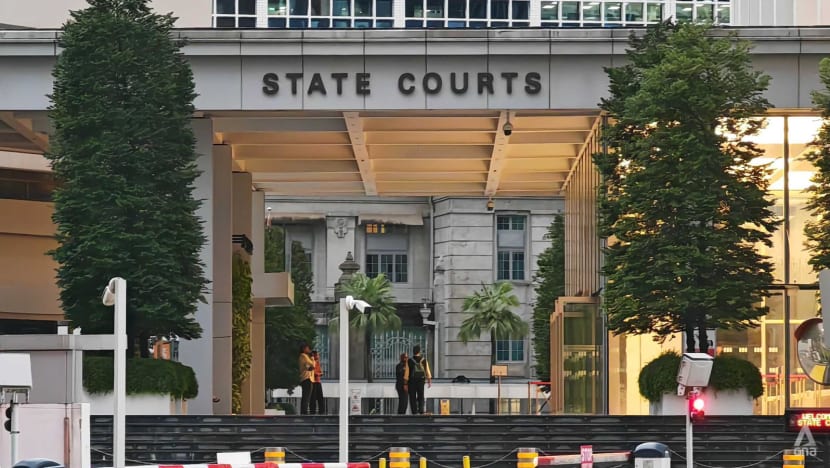
          A view of the State Courts building in Singapore. (File photo: CNA TODAY)

          Listen
          6 min
          New: You can now listen to articles.

          This audio is generated by an AI tool.

          Read a summary of this article on FAST.
          FAST

          SINGAPORE: A teenager who made another teenager perform degrading acts, such as soaking his genitals in chilli oil and drinking his own urine, was given 21 months' probation on Monday (Jan 12).

          The 18-year-old male pretended to be a female to deceive the male victim, also 18, into believing that they were in a romantic relationship.

          Both the accused and the victim, who were around 16 at the time of the offences, cannot be named due to a gag order protecting their identities. The gag order also covers the nature of their relationship.

          The teenager earlier pleaded guilty to a charge each of cheating and extortion, with two counts of a similar nature considered. 

          Intending to pull a prank at first, he created an Instagram account in February 2023 that seemingly belonged to a female and used it to contact the victim. He downloaded inappropriate photos of girls from the internet to make the fake profile more convincing.

          He also engaged the victim in conversations about sexual fantasies, misleading him into believing that he was in a romantic relationship with the female. The two had video calls, during which the accused kept his camera turned off, while the victim showed his face.

          Between February and December 2023, the accused deceived the victim into performing degrading acts. These included soaking his genitals in chilli oil for two minutes and rubbing salt on them.

          The accused also made the victim drink his own urine, perform sexual acts in front of a camera, play football unclothed, and cut and burn his hair with a lighter.

          He further manipulated the victim into sending gift cards and cash amounting to S$390 (US$300), and coerced him into eating butter and cheese even when he was unable to swallow any more.

          The prosecution, saying earlier that some of the acts were likely to cause bodily harm to the victim, added: "The victim performed the acts as he believed that he was in a relationship with (the woman in the profile) and did so in order to make (her) happy. These were acts that the victim would not have done if he were not so deceived."

          Having recorded video calls with the victim, the accused sent the screen recordings to another person.

          Using the same hoax profile, the accused then extorted money from the victim by threatening to circulate the compromising recordings.

          Fearing exposure, the victim complied with instructions to hide cash inside a book at a bookstore in Tampines Mall. The accused and the person with whom he had shared the recordings would then collect the money, splitting the proceeds. On one occasion, they collected S$100, of which S$20 was given to the other person.

          Using the same method, the pair continued to collect money from the victim between July and December 2023. Across five occasions, S$2,450 was collected.

          The victim lodged a police report on Jun 8, 2024, and the accused was arrested two days later. Court documents did not state how the victim discovered that he had been deceived.

          ACCUSED HAS POTENTIAL FOR REFORM

          After the accused pleaded guilty, he was assessed for probation and reformative training.

          Both are rehabilitative sentencing options. Under probation, a young offender is placed under the supervision of a probation officer for a period and must comply with conditions such as curfews. Probation does not result in a permanent criminal record.

          A step up from probation is reformative training, which includes offenders being placed in a controlled environment with a structured schedule of activities for a period of time. This results in a criminal record.

          On Monday, the court heard that the accused was found suitable for both probation and reformative training.

          Deputy Public Prosecutor Stephen Yeo called for reformative training, stating that the need for deterrence in this case was "very clear". The acts of cheating were "very depraved" and "unprovoked", he said.

          The accused was represented by lawyer Rohit Kumar Singh from Regal Law, who urged the court to grant his client probation. 

          "The accused is truly remorseful for his actions and regrets the offences he has committed ... he is dedicated to improving himself following these incidents, by furthering his studies ... and subsequently focusing on his National Service," Mr Singh said.

          "It's been a while since I saw a probation report this positive. I urge your honour to give him a chance, and I assure you he will not waste this chance," Mr Singh added, stressing the teenager's potential for reform. 

          Despite having earlier expressed her reluctance to consider probation, District Judge Carol Ling decided to grant probation to the accused. 

          As part of his probation, he must remain indoors from 10pm to 6am, perform 110 hours of community service and undergo counselling programmes as necessary.

          His parents were also required to post a bond of S$5,000 to ensure their son’s good behaviour.

          "Make no mistake, the offences are serious," Judge Ling said in court.

          She described the teenager's conduct as "highly reprehensible" and said that it showed a "complete lack of empathy" and total disregard for the victim. 

          Noting the accused's youth at the time of the offences, Judge Ling said that young age alone could not always excuse one's actions, but found that there was room for rehabilitation in this case.

          She noted that both the probation and reformative training reports were consistent in finding his risk of reoffending to be low, and that he had insight into his harmful behaviour and its effects. 

          However, she warned the accused that if he reoffended or failed to comply with his probation conditions, the court could revoke probation and impose reformative training.

          "Probation is not a get-out-of-jail card," the judge said.

          For cheating, an offender can be jailed for up to three years or fined, or both.

          For extortion, an offender can be jailed between two and seven years, and caned. 

          Source: CNA/wt(ss)

          Sign up for our newsletters

          Get our pick of top stories and thought-provoking articles in your inbox

          Subscribe here
          Advertisement

          Singapore

          Legal practice must guard against risks of AI degrading lawyers' skills: Chief Justice

          The Chief Justice, the Attorney-General and the president of the Law Society of Singapore spoke about the risks and opportunities that AI can provide to the legal practice.

          Legal practice must guard against risks of AI degrading lawyers' skills: Chief Justice

          Chief Justice Sundaresh Menon speaking at the opening of the legal year on Jan 12, 2026. (Photo: CNA/Wallace Woon)

          Listen
          4 min
          New: You can now listen to articles.

          This audio is generated by an AI tool.

          Read a summary of this article on FAST.
          FAST

          SINGAPORE: As artificial intelligence (AI) increasingly displaces the opportunities for young lawyers to develop foundational skills such as legal research and analysis, these skills are expected to degrade, perhaps even to the point of affecting a lawyer's ability to check if an AI-generated product is correct.

          Chief Justice Sundaresh Menon said this in his speech at the opening of the legal year at the Supreme Court on Monday (Jan 12).

          He said the core function of a lawyer and the nature of legal work would be affected by the emerging ubiquity of generative AI, and that it would "upend the practice of the law and the way we train and develop lawyers".

          "At the same time, ensuring that our profession is ready to harness new technology responsibly will improve the public's access to justice," he added.

          Attorney-General Lucien Wong said in his speech that there is still a place for lawyers in an AI world: "As lawyers, we place our client's interests above our own and advocate for him or her, but this does not always mean saying 'yes'.

          "Sometimes, it may mean saying 'no'. This is why lawyers are given 'instructions' and not 'prompts'."

          AI may be able to answer your questions, but it cannot tell you when you are asking the wrong question.

          He also said that the lawyer is not there to be a "frictionless instrument of the client's will", or a mere mirror of his or her desires, but is a "trusted and loyal adviser and champion".

          "The very best lawyers know their clients' needs better than the clients themselves. They make their clients feel seen, known and understood; they discern the true concerns lying behind their clients' queries; and they explore the underlying interests behind hardened positions to identify potential trade-offs and win-win outcomes across issues," the Attorney-General added.

          "AI may be able to answer your questions, but it cannot tell you when you are asking the wrong question."

          Attorney-General Lucien Wong delivering his address during a ceremony for the opening of the legal year at the Supreme Court on Jan 12, 2026. (Photo: CNA/Wallace Woon)

          STEPS TO TACKLE THE ISSUE

          The Chief Justice said he had proposed a public-private partnership to tackle the issue of AI, and stressed that the approach to the education and training of new lawyers must be transformed.

          Steps that the Singapore Academy of Law (SAL) has taken towards this include launching a career coaching programme with legally trained coaches, supplemented with an AI-powered career coach.

          SAL will also partner with the Infocomm Media Development Authority to equip practitioners to use AI effectively and responsibly, with more details to come by the first half of this year.

          Chief Justice Menon said the industry must also recognise the potential implications of AI.

          "While AI will power a widening range of tools capable of assisting practitioners, we must recognise and guard against the potential accompanying risks, including the real possibility that AI will affect or even compromise the development of foundational skills such as legal research, analysis, drafting and reasoning." 

          Professor Tan Cheng Han, Law Society of Singapore's president, touched on the concern that technology is likely to shrink the need for the type of work that many lawyers, particularly junior lawyers, do today.

          "Another concern is the ability of the profession as a whole to access, utilise and apply technology effectively, including the ability to understand their ethical obligations when doing so."

          Professor Tan Cheng Han, president of the Law Society of Singapore, delivering his address during the ceremony for the opening of the legal year at the Supreme Court on Jan 12, 2026. (Photo: CNA/Wallace Woon)

          He also said that if many lawyers do not understand or are unable to have reasonable access to technological tools, this affects their clients' access to justice.

          "The inaugural annual Legal Tech-Guide issued by the Information Technology Committee is a good start towards fostering greater understanding."

          He has also asked for solutions from relevant committees on how to enhance access to relevant tech tools, and for the development of programmes that can better educate lawyers on how the tools can be used, while making these programmes accessible and affordable.

          Source: CNA/ll(sf)

          Sign up for our newsletters

          Get our pick of top stories and thought-provoking articles in your inbox

          Subscribe here