

Hong Kong has imported more than 54,000 non-local workers over the past 18 months under the city’s “enhanced” labour scheme, according to the government.

Chris Sun, the Hong Kong labour and welfare chief, told the Legislative Council (LegCo) on Wednesday that the government approved a total of 54,278 non-local workers between early September 2023, when the Enhanced Supplementary Labour Scheme (ESLS) was launched, and the end of March this year.
He also said that the number of applicants seeking to import workers under the scheme had exceeded 100,000.
The ESLS, which is set to end in September, allows Hong Kong employers to import workers for 26 types of jobs that were previously only open to local residents, such as cashiers, hair stylists, sales assistants, and waiters.
In addition, the scheme also allows employers to hire non-local workers for jobs categorised as “unskilled or low-skilled posts,” such as cleaners, dishwashers and security guards. These posts were not previously open to non-local workers either.
Of the approved workers, a total of 36,555 took up jobs in the two categories.
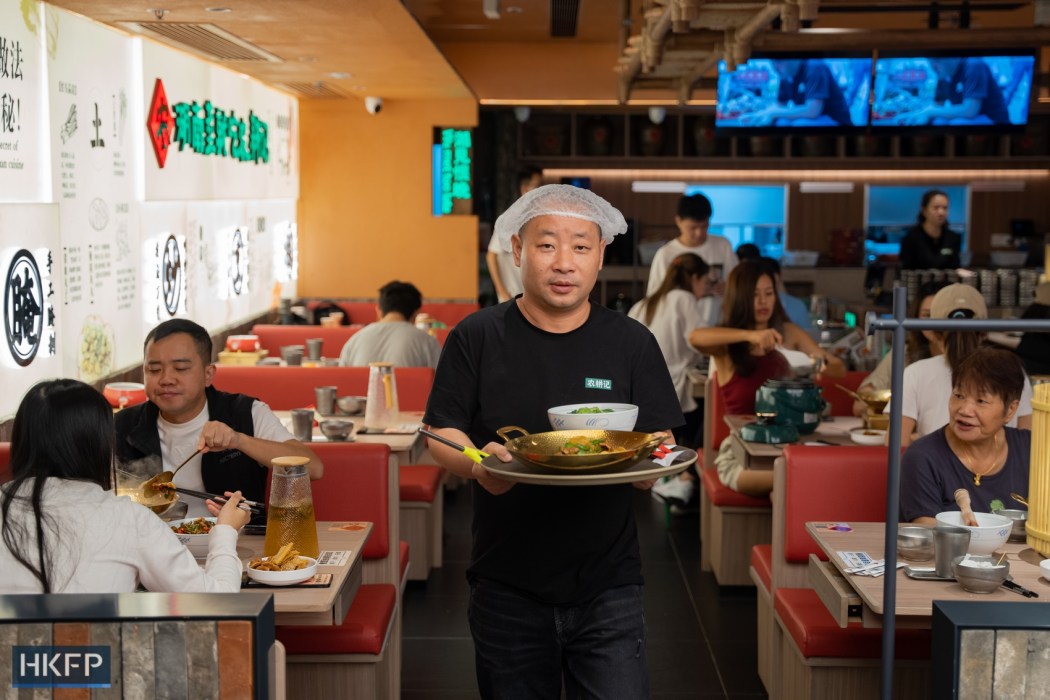
More than 8,900 non-local workers worked as waiters – the most popular job taken up by imported workers – followed by junior cooks, according to the Labour and Welfare Bureau.
Sun said that the Labour Department had been “closely monitoring” the employment market situation after the implementation of the scheme.
Authorities are now reviewing the ESLS, including its coverage, operational arrangements, and measures to promote and ensure employment priority for local workers, as well as to protect the rights of imported workers, he said.

In June 2023, the government increased the quota for non-local workers in the construction and transport industries and in residential care homes, citing labour shortages.
The expansion of labour importation schemes has sparked controversy, with labour groups and political parties raising concerns that they have led to higher unemployment rates and lower salaries among local residents.
The Hong Kong Federation of Trade Unions (FTU), a pro-Beijing labour and political group, said in March that many local workers complained that the imported labour schemes had reduced their salaries and made it more difficult for them to find a job, Ming Pao reported.
In December, six members of the Labour Advisory Board, a non-statutory body that advises the authorities on labour issues, urged Sun to introduce a mechanism that would allow for the suspension of non-local labour schemes.


