

Hong Kong plans to expand tax allowances for parents with newborns to encourage more couples to have children amid the city’s low birth rate.

Parents currently receive a HK$130,000 tax allowance for every child, with the amount doubled in the year of the child’s birth, meaning they receive an allowance of HK$260,000 in the child’s first year.
The Hong Kong government will extend the double allowance from the first year to the first two years, local media reported, citing anonymous sources.
The reports come as Chief Executive John Lee is expected to unveil the Policy Address on Wednesday, a yearly speech in which the city announces key measures for the coming year.
Hong Kong, like many developed societies, has been struggling with a low fertility rate in recent years.
In 2023, the fertility rate was 0.751. The figure looks at the average number of babies born alive to 1,000 women during their lifetime. In 2014, the figure was 1.235. It increased last year to 0.841, but is still below the 2.1 replacement level.
defined as the average number of babies born alive to 1 000 women, excluding foreign domestic helpers, during their lifetime

During the Policy Address two years ago, Lee announced new measures to boost the city’s birth rate.
One of the initiatives – called the Newborn Baby Bonus scheme – offers a one-off HK$20,000 allowance for each child to families in which at least one parent is a Hong Kong permanent resident and whose babies are born between October 2024 and October 2026.
Some Hongkongers, however, said the handout was not enough to encourage couples to have children. Critics pointed to insufficient childcare options as well as the high cost of raising a child in the city.
Lawmakers have called for the government to extend the scheme past its expiry.
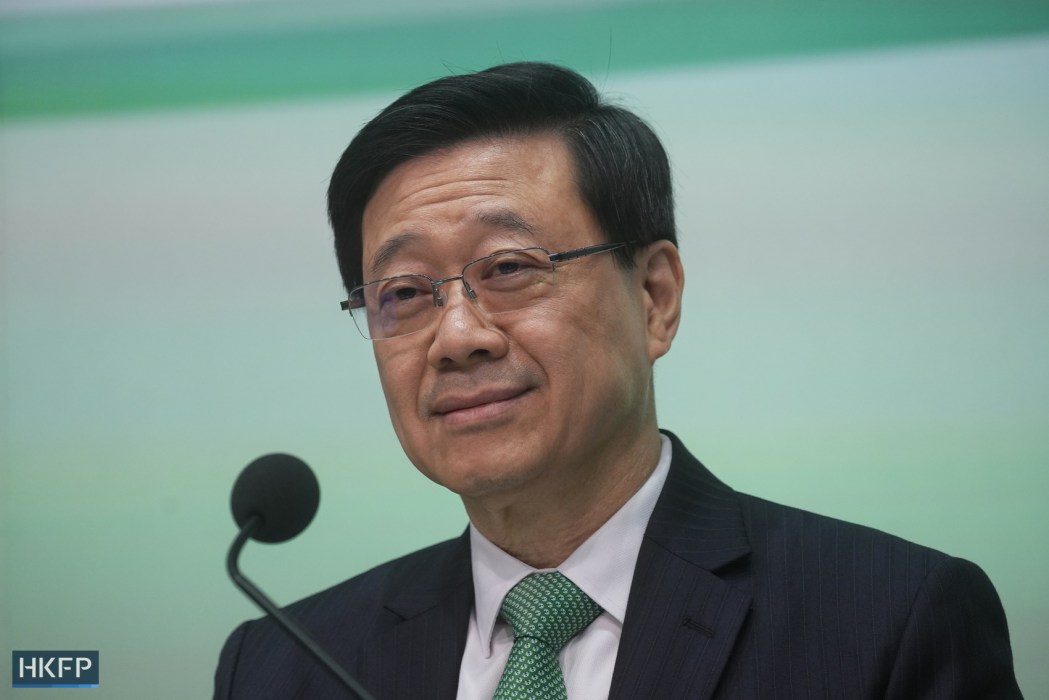
Lee’s Policy Address on Wednesday will be his fourth as the city’s leader. He was elected in an uncontested small-circle election in 2022.
Local media have reported labour and higher education as among the focuses of this year’s Policy Address. Lee is expected to modify imported labour policies to protect local employment and to increase the quota for non-local students at universities.
The government may also allow pet dogs to enter restaurants under a new licensing regime.
Authorities hinted in February that they were considering a relaxation of a decades-old rule that bans dogs in eateries. At the time, Secretary for Environment and Ecology Tse Chin-wan said the government would need to “strike a balance on the need to safeguard public health and hygiene.”


