

After running for more than 150 days, the closely watched national security trial of jailed Hong Kong media tycoon Jimmy Lai wrapped up closing arguments. No date for the verdict has been set yet. A press freedom watchdog faced a state-backed media attack after raising concerns about Lai’s health.

Other key updates from the court included the Tiananmen vigil group’s trial scheduled for November and Joshua Wong’s second national security case, which will be tried by the High Court.
In a separate development, the city’s authorities cancelled the passports of 12 wanted activists linked to the Hong Kong Parliament political group. Two other people – one of whom was linked to the aforementioned group – were arrested for sedition offences. The father of wanted activist Anna Kwok pleaded not guilty to an Article 23 offence and will go to trial in October.
Wanted solicitor-activist Kevin Yam was stripped of his licence to practise in the city, while the Democratic Party confirmed it would hold a disbandment vote and sell its office in December.
Final arguments conclude in Jimmy Lai’s trial
The prosecution and defence of media mogul Jimmy Lai concluded their closing arguments on August 28, the 156th day of the high-profile national security trial.
A verdict will be handed down “in good time,” according to Justice Esther Toh, who sat on the three-judge panel alongside Justices Alex Lee and Susana Maria D’Almada Remedios.
The media tycoon is facing one count of publishing seditious materials under a colonial-era law and two counts of conspiring to collude with foreign forces under the Beijing-imposed national security legislation. Lai, who has pleaded not guilty, faces life imprisonment if convicted.

The closing hearings began on August 18, after being postponed due to bad weather and a medical issue with Lai’s heart. Before that, the 77-year-old tycoon had not been seen in public for roughly five months, as the trial had been adjourned since March.
During closing arguments, the prosecution told the court that Lai’s international connections were testament to his “unwavering intent” to attract foreign sanctions on China and Hong Kong.
Prosecutors also argued that Apple Daily, a pro-democracy newspaper Lai founded in 1995, amounted to “seditious publications” because they lacked “rational criticism.” The defence challenged this, with Lai’s lawyer Robert Pang saying the newspaper was part of public debate. The judges questioned whether the newspaper had to suggest solutions to political issues to be considered not seditious.
The prosecution also noted that Lai did not ask activists and foreign politicians to stop calling for sanctions after the security law was passed in 2020. The defence rebutted that Lai had no “moral responsibility” to tell anyone not to break the law.
Defence lawyers argued that Lai, as a newspaper publisher, should enjoy a “greater latitude” of freedom of expression as guaranteed by the constitutional right of press freedom.

But they were grilled by the bench about the tycoon’s pledge to “not back down.” The judges also challenged the notion of absolute free speech, citing the arrests of pro-Palestine protesters in the US and the UK.
Press freedom watchdog labelled ‘anti-China’
Press freedom NGO Reporters Without Borders (RSF) hit back at accusations of being “anti-China” by Beijing-backed media outlets and a pro-establishment press union after raising concerns over the health of Lai, the jailed Apple Daily founder.
The Hong Kong Federation of Journalists (HKFJ) called RSF an “anti-China” force, accusing the free expression NGO of undermining the rule of law.
State-backed Wen Wei Po and Ta Kung Pao quoted the pro-establishment press union as claiming that RSF had “trampled on the rule of law” and “grossly interfered” in Hong Kong’s internal affairs.
RSF dismissed the claims as being made “brazenly,” saying that its mission is to “defend journalism — especially against authoritarian regimes like China that seek to crush it.” It also defended its stance that Lai’s trial exemplified what it calls a crackdown on press freedom.
High Court to try Joshua Wong’s 2nd national security case
Hong Kong activist Joshua Wong’s second national security case will be transferred to the High Court, where he may face life imprisonment if convicted.
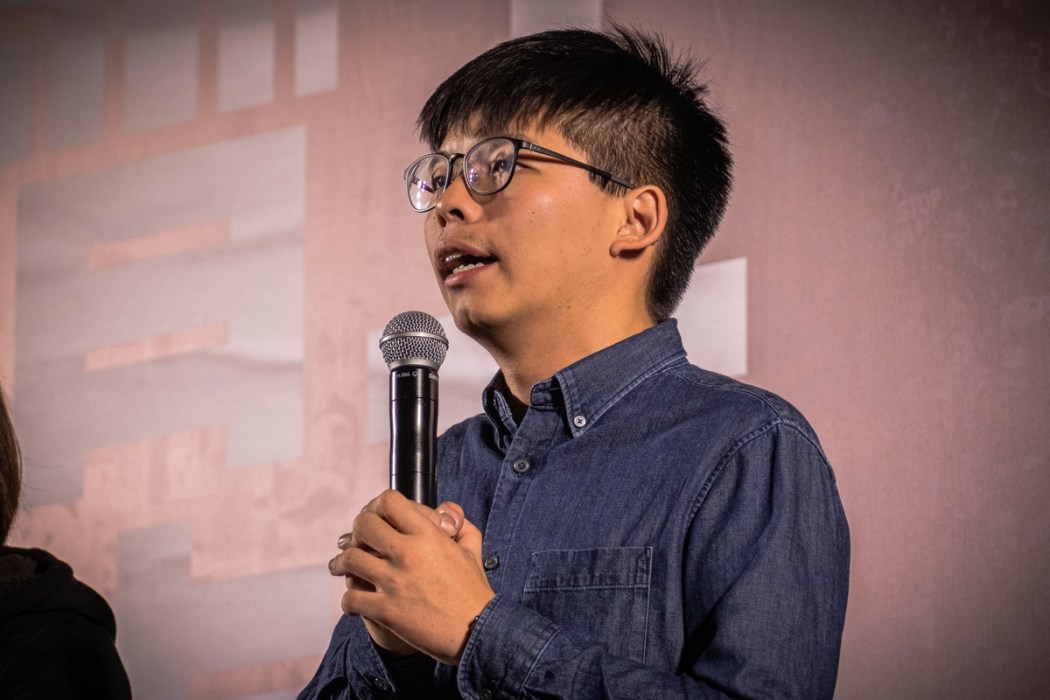
The former student activist is currently serving an almost five-year jail sentence under the Beijing-imposed national security law in a case linked to unofficial primaries.
While still in prison, Wong was arrested in June and charged with a second national security offence. The 28-year-old was accused of conspiring with self-exiled activist Nathan Law and “other persons unknown” between July 1 and November 23, 2020, to request foreign countries or individuals to engage in hostile activities against Hong Kong or China.
Tiananmen vigil group’s national security trial to begin in November
The national security trial of the now-disbanded Hong Kong Alliance in Support of Patriotic Democratic Movements of China, organiser of Tiananmen crackdown vigils in the city, will begin in November.
The court has set aside 75 days for the trial, with hearings to be held at the West Kowloon Law Courts.
The closely watched trial was originally scheduled to begin in May, but Judge Alex Lee, one of the three judges presiding over the case, was still occupied by Lai’s national security trial.
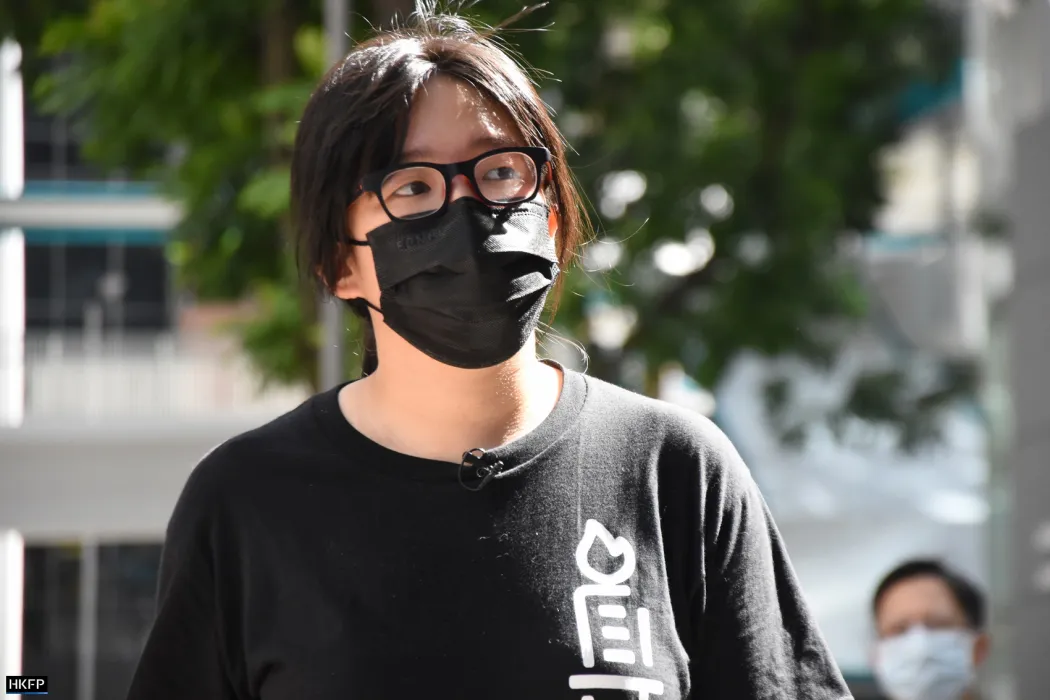
The alliance was charged with inciting subversion of state power under the Beijing-imposed national security law. Three of its leaders, Chow Hang-tung, Albert Ho, and Lee Cheuk-yan, also face the same charge. They face a maximum penalty of life imprisonment if convicted.
Ho’s lawyer indicated during last month’s hearing that the ex-lawmaker would plead guilty.
The court will hear Chow’s application to quash her charge on November 3 and proceed with the trial on November 11 if her application fails.
Beijing’s office opposes US human rights report
The Commissioner’s Office of China’s Foreign Ministry in Hong Kong expressed its “firm opposition” to the US State Department’s 2024 Country Reports on Human Rights Practices, which found “significant human rights issues” in the city last year.
The US report, released on August 12, highlighted the passage of the homegrown Safeguarding National Security Ordinance – better known as Article 23 – in March last year.
The US Department of State said it had broadened the scope and definition of sedition offences, and granted Hong Kong authorities “much wider scope to detain and arrest individuals for political purposes.”

In response, the Beijing office said on August 13 that the crackdown on activities endangering national security was a “legitimate measure” and trials in the city were “impartial.”
The US was “rehashing” cases involving “anti-China, destabilising forces in Hong Kong” and openly supporting them, it said. It urged the US to stop interfering in Hong Kong’s affairs and to respect China’s sovereignty and the city’s rule of law.
Passports of 12 wanted activists cancelled
The Hong Kong government cancelled the passports of a dozen “absconders” under the national security law, just over a week after the authorities issued arrest warrants and bounties for their capture.
The 12 were among 19 people for whom national security police issued arrest warrants in July for organising or participating in the Hong Kong Parliament, an overseas group that held unofficial polls overseas to form a shadow legislature.

According to a government statement released on August 4, the 12 individuals are: Victor Ho, Chan Lai-chun, Tsang Wai-fan, Chin Po-fun, Paul Ha, Hau Chung-yu, Ho Wing-yau, Keung Ka-wai, Tony Lam, Agnes Ng, Wong Chun-wah, and Wong Sau-wo.
Those 12 activists, along with four others – Feng Chongyi, Sasha Gong, Ng Man-yan, and Zhang Xinyan – have been charged with subversion for their involvement in the unofficial shadow legislature.
The national security authorities also issued orders prohibiting the 16 individuals from dealing with funds in Hong Kong. They also banned activities connected to immovable property, joint ventures, or partnerships linked to the activists.
Keung and Victor Ho were ordered to be temporarily removed as company directors.
Sedition arrests
The national security police announced last month that a 43-year-old man and a 19-year-old woman had been arrested for sedition offences.
The man, surnamed Tse, was arrested on July 31, after he allegedly threatened multiple media outlets to publish a report promoting a website that claimed to sell products to raise money for overseas activists wanted by Hong Kong authorities, the police said on August 1.
The website also claimed that proceeds would be used to support activities calling for foreign sanctions on Hong Kong officials and judges.
He has not been formally charged.

Meanwhile, the woman, identified as Lan Fei, appeared at West Kowloon Magistrates’ Courts for mention on August 25, hours after police announced that she was charged under the Safeguarding National Security Ordinance – also known as Article 23 – for doing an act with a seditious intention.
She allegedly produced promotional videos for the Hong Kong Parliament and encouraged people on social media to vote in an unofficial poll organised by the group.
She was remanded in custody after Chief Magistrate Victor So rejected her bail application. Her case was adjourned until October 31.
Citing anonymous sources, local media reported that Lan was in a romantic relationship with Lam, one of the 19 overseas-based activists allegedly linked to the Hong Kong Parliament and wanted by the national security police for subversion. He also has a HK$200,000 bounty on his head.
Lan and Lam joined the Hong Kong Democratic Independence Union, which was established in Taiwan in November, and travelled to the island last year.
The pair later went to Canada after Lam was deported by Taiwanese authorities.
Lan reportedly assisted with making promotional videos for the Hong Kong Parliament in Canada before returning to Hong Kong in June.
Wanted solicitor-activist Kevin Yam disbarred
Australia-based lawyer-activist Kevin Yam was barred from practising as a solicitor in Hong Kong following a ruling by a disciplinary committee that cited his calls for US sanctions.
The government announced on August 15 that a complaint against Yam’s alleged misconduct was “duly proved” and that his misconduct was “grave and serious.”
It ordered that he be struck off the solicitors’ roll, a record of individuals qualified to practise as solicitors in Hong Kong.

Yam is one of 34 overseas activists wanted under the national security law.
He is accused of urging foreign countries to impose sanctions on judges and prosecutors in Hong Kong in May 2023, during a hearing by a “foreign official organisation,” believed to be the US Congressional-Executive Commission on China (CECC), a bipartisan group of lawmakers that monitors human rights in China.
Wanted activist’s father pleads not guilty to Article 23 offence
Kwok Yin-sang, whose daughter, Anna Kwok, is a US-based activist wanted under the national security law, pleaded not guilty on August 3 to attempting to handle her funds. A two-day trial has been set for October 8 and 9.

He stands accused of violating Article 23 by attempting to obtain funds from an AIA International life and personal accident insurance policy that belonged to his daughter, who lives in the US.
Anna Kwok is wanted by Hong Kong’s national security police for suspected foreign collusion. The authorities are offering a HK$1 million bounty for information that could lead to her arrest.
She was declared an absconder by Secretary for Security Chris Tang in December last year, who also issued an order barring anyone from dealing with her assets in the city.
Incitement to subversion case transferred to District Court
A Hong Kong man charged with inciting subversion under the Beijing-imposed national security law had his case transferred to the District Court, where he faces up to seven years’ imprisonment if convicted.
The case of Chan Ho-hin, a former waiter, is linked to social media posts on X and Instagram he published between June 2024 and April this year.
Chan was originally charged with the lesser offence of publishing articles with seditious intent under the city’s homegrown security law, the Safeguarding National Security Ordinance, also known as Article 23.
But prosecutors later upgraded his charge to the more serious offence of subversion under the national security law.
Activist Tiffany Yuen released from prison
Former district councillor Tiffany Yuen was released on August 19 after serving more than four years in prison for her role in an unofficial primary election in 2020.
She is the 12th democrat to be freed after being convicted of conspiracy to commit subversion in Hong Kong’s largest national security case, which involved 47 pro-democracy figures.

A day after her release, Yuen and her co-defendant Frankie Fung, who was freed in July, confirmed that they were married. It was revealed during Yuen’s mitigation last year that she had tied the knot behind bars, but the identity of her partner was not disclosed.
Security chief defends tightened prison rules
Secretary for Security Chris Tang defended tightened prison rules that came into effect in July, saying the amendments were necessary to safeguard national security.
Tang told lawmakers on August 6 that the former prison rules were established over 70 years ago, and therefore, it was “reasonable and necessary” for the government to review and revise them.

Under the new rules, which came into effect on July 18, detainees awaiting trial no longer have the right to order meals from outside the prison. In contrast, they were previously allowed to have meals prepared and delivered from restaurants.
The new rules also empower the Correctional Services Department (CSD) to bar anyone, including lawyers and religious leaders, from visiting certain inmates, citing the purpose of safeguarding national security or facilitating the rehabilitation of inmates.
Democratic Party to hold disbandment vote, sell office in December
Hong Kong’s Democratic Party will hold a vote on its dissolution and sell its office in December, Lo Kin-hei, chairperson of the 30-year-old opposition party, told HKFP on August 28.
A general vote to dissolve the party, which has roughly 400 members, will be arranged for mid-December, Lo said, adding that “a few dates are being considered.” The vote is expected to be held after the “patriots-only” legislative elections on December 7.

If the plan proceeds, Hong Kong will be left with no active opposition groups. The League of Social Democrats were disbanded in June.
The Democratic Party was once the largest opposition party in the city’s legislature, commanding as many as 13 seats in the then 60-member legislature in 1998.
In the wake of the huge pro-democracy protests in 2019, which the Democratic Party supported, Beijing imposed a national security law in 2020 to quell dissent. An electoral overhaul in 2021 effectively barred the Democratic Party from entering elections.
The party currently holds no seats in the legislature. At least five Democratic Party members are currently behind bars, including two former chairpersons, Albert Ho and Wu Chi-wai.
100 candidates vetted for ‘patriots-only’ Election Committee polls, 72 seats uncontested
A total of 100 candidates passed a national security screening to join the Election Committee by-elections in Hong Kong on September 7, the government announced on August 7.
The Election Committee, a powerful body that has a total of 1,500 seats, elects the city’s leader.
Ninety-three seats are to be filled by the by-elections. The Registration and Electoral Office confirmed on August 12 that 72 candidates would face no competition – they are expected to be automatically elected. The remaining 28 candidates will compete for 21 seats in six subsectors.

Hong Kong authorities introduced a candidate vetting mechanism in 2021 as part of a sweeping overhaul to ensure only “patriots” hold power in the city.
The process begins with a police assessment of the candidate, followed by a decision from the Committee for Safeguarding National Security – which comprises top officials and a Beijing adviser – on whether the candidate upholds the Basic Law and bears allegiance to Hong Kong.
The Candidate Eligibility Review Committee, led by Chief Secretary Eric Chan, then follows this opinion to determine whether the candidate’s nomination is valid.
Prosecution and arrest figures
As of September 1, a total of 341 people had been arrested for “cases involving suspected acts or activities that endanger national security” since Beijing’s national security law came into effect, according to the Security Bureau. The number includes those arrested under Article 23.
Of the 199 people and five companies that have so far been charged, 167 people and one company have been convicted or are awaiting sentencing.
Among them, 96 people and four companies have been charged under the national security law, with 76 convicted. Nine people have been charged under Article 23, six of whom have been convicted.
The Security Bureau did not state which legislation the remaining 27 individuals were charged under. It said specific arrest figures and related information could not be disclosed because they were part of the government’s work on safeguarding national security.


