

Hong Kong lawmakers have unanimously approved a new code of conduct that specifies requirements for meeting attendance, voting, and other duties while introducing tougher penalties for misconduct.

Eighty-eight lawmakers on Thursday voted for two motions by legislator Paul Tse aimed at enhancing the Legislative Council (LegCo)’s operations. It came a day after they also unanimously passed the Legislative Council (Powers and Privileges) (Amendment) Bill, which outlines the implementation of the code at the core of the two motions.
LegCo President Andrew Leung hailed the passages, saying they marked a “new milestone” for the opposition-free legislature, as he led a group of veteran lawmakers to meet reporters after the vote.
“[The new code of conduct] stipulates the requirement for the behaviour and performance of lawmakers, so that there will be rules to follow for lawmakers in the new term,” Leung said in Cantonese. The code will take effect when the new LegCo term begins on January 1 next year.
Leung did not cast a vote on Thursday in keeping with the tradition of the LegCo president maintaining neutrality.
The new Code for Members of the Legislative Council states that legislators should attend meetings and “actively and conscientiously” participate in voting.

Absence without a valid reason that causes disruption to LegCo meetings could result in a financial penalty for lawmakers, according to the new rules.
The LegCo’s existing Rules of Procedure do not explicitly set out attendance requirements for lawmakers, except for mandating quorum for its general and committee meetings, in which a minimum number of lawmakers must be present for the meeting to begin.
The new code also requires lawmakers to “sincerely support” the chief executive and the government. It says they should not “deliberately undermine or weaken the effectiveness of executive-led governance.”
Lawmakers must adhere to strict rules when declaring their interests, including those related to employment, election donations, sponsorships and gifts, the code stipulates.
As part of the changes, the Committee on Members’ Interests will be empowered to investigate complaints against lawmakers and recommend sanctions. The committee will be renamed the “Legislative Council Supervisory Committee.”
Misconduct under the new code could be met with sanctions ranging from a written warning to suspension of duties.
A suspended lawmaker will not receive pay and allowance, including end-of-service gratuity, during the period of suspension.
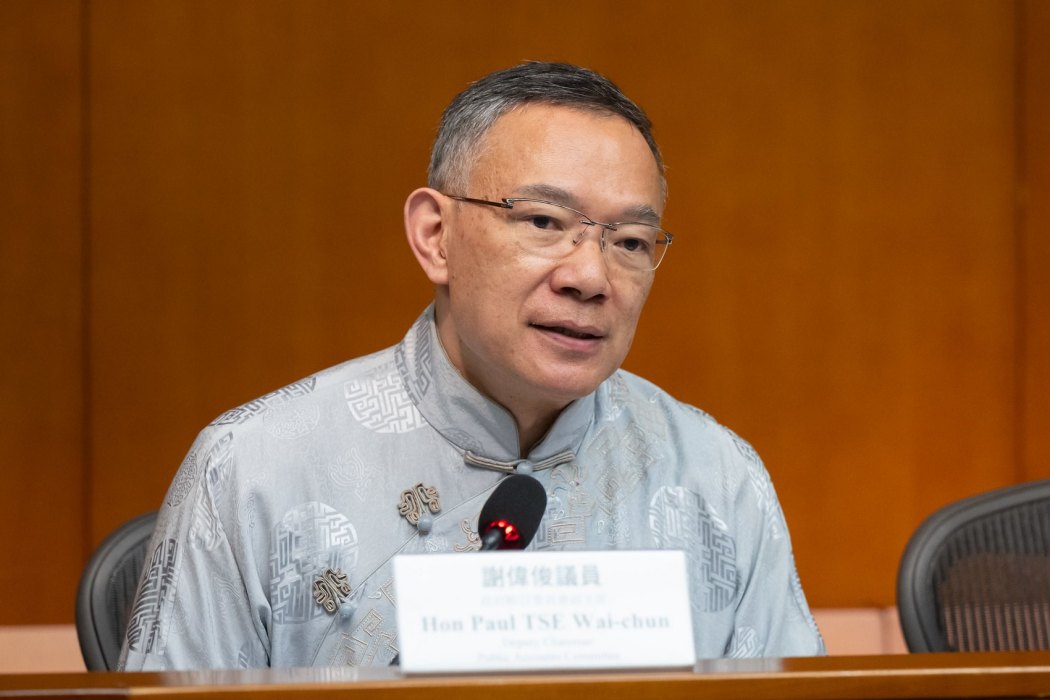
During the meeting on Thursday, lawmaker Tse, who also chairs LegCo’s Committee on Rules of Procedure, described enacting the new code of conduct as a means of “mending the fold after a sheep is lost,” using a common Chinese idiom.
“Although the current [LegCo] term has been more efficient than previous terms… we still hope to further regulate the work of lawmakers,” Tse said in Cantonese.
Beijing overhauled Hong Kong’s LegCo elections in 2021 to ensure only “patriots” hold office. The move reduced democratic representation in the legislature, tightened control of elections and introduced a pro-Beijing panel to vet candidates.
Most of the city’s opposition politicians have either been jailed, left Hong Kong, or quit politics after Beijing imposed a national security law in 2020 following large-scale pro-democracy protests and unrest.
See also: Explainer: Hong Kong’s first election since Beijing’s overhaul
The current Legislative Council term began in 2022 and will finish at the end of the year. Elections are scheduled for December.
Leung said the new rules would not deter potential candidates from running in the LegCo elections.
Martin Liao, a veteran lawmaker, said it would be “fair” for the candidates to understand society’s expectations for a lawmaker before running for a seat.
“I think the legislators in the next term are expected to comply with the [new] rules of procedures just inasmuch as we are expected to comply with our current rules of procedures,” Liao added.


