

Air conditioning has become (excuse me) a hot topic. Is it necessary, is it nice, is it the solution to global warming?

A French politician suggested that, in light of increasingly frequent heatwaves, the government should try to ensure that all citizens had access to air conditioning.
The government rejected this, deeming it inappropriate and bad for the environment. No doubt, the fact that the proposer was from a far-right party did not help.
A writer in The Economist (who must remain anonymous because The Economist does not do bylines) criticised the British government for having a deluded notion of what their nation’s climate is now like.
Summers in the UK are now tropical, not the grey and wet affairs that people my age remember. Accordingly, the official lack of encouragement for air conditioning is asking for future trouble.
Many serious environmentalists have doubts about air conditioning. After all the heat extracted from the air-conditioned space has to go somewhere. Also, there is a considerable cost in materials and power. “Passive” methods using shade and natural ventilation can do the job.
Less often mentioned is the question of addiction. Long ago, I had a colleague at the South China Morning Post called Ian, who had dabbled extensively in the wars of independence that afflicted southern parts of Africa in the 1970s… mostly, I fear, on the wrong side.
Ian was fiercely opposed to using an air conditioner at night. He maintained that if you spent eight hours a day in an air-conditioned office and eight hours a day in an air-conditioned bedroom, your body would never adapt to the local climate.
This is a relevant topic for military purposes because military activities are conducted mostly outdoors. Some disappointing performances in Malaya and Hong Kong during World War II are attributed to the difficulty in adaptation experienced by troops landed in a strange climate only weeks before they were expected to perform.
Anyway, there may be something in this addiction fear. The more air-conditioning you get, the more you want; what starts as an occasional luxury ends as a necessity. At this point, it becomes quite expensive.
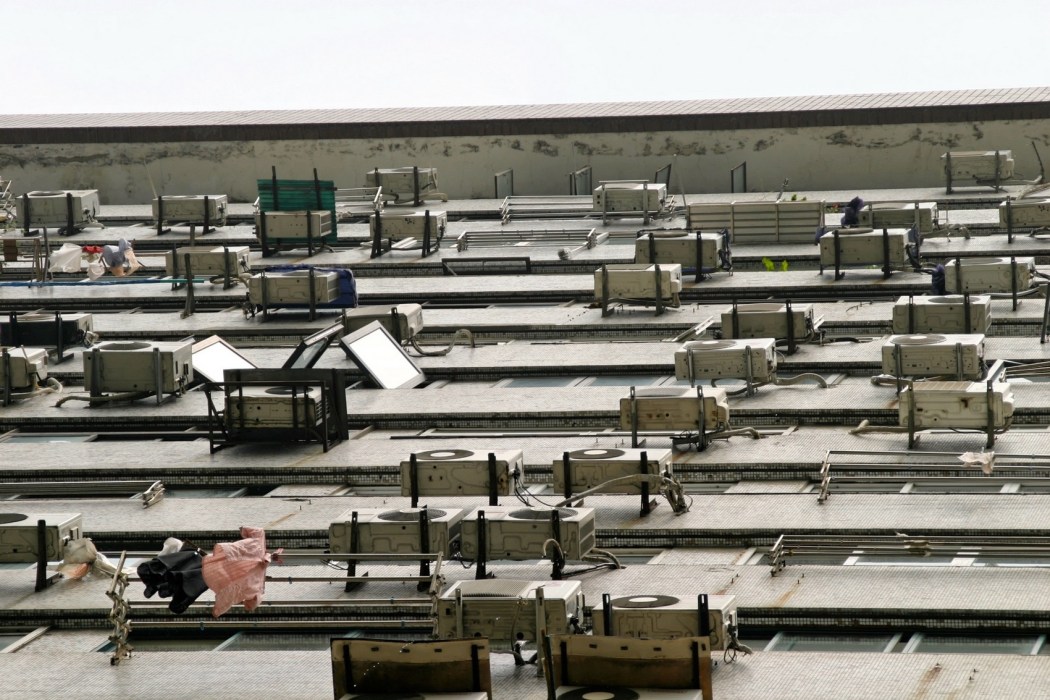
I have been conducting an experiment with all this in recent months, since it became necessary in the normal course of events to replace the aircon in my bedroom. While this was in progress, I had to sleep with the window wide open, but no aircon.
This was surprisingly (to me) successful. As the weather got warmer, I added a fan, which sits at the end of the bed and wafts a gentle breeze over my hopefully sleeping form.
It is now July, and I am reasonably hopeful that I shall get through the summer without resorting to overnight aircon use.
As I do not use an aircon routinely during the day, this should mean I am acclimatising in a manner which Ian would approve of. The aircon is still deployed for visitors (downstairs), exercise sessions (in the bedroom), and in the car.
See also: Hong Kong’s 14th ‘No Air-con Night’ launches amid hottest summer on record
This is not for everyone, I concede. Our bedroom has a balcony, so the windows are big. It also has a bug screen, which you may need if the local mosquitoes can reach your altitude.
On the other hand, if you live on a high floor, you will benefit from peace and quiet denied to residents in houses. In the early days, I was often disturbed in the morning by noisy traffic and even, on occasion, particularly raucous birdcalls. I seem to have got used to this.
Still, I am left feeling a little guilty about my copious use of air-conditioning in the past. It seems I can get by with about 20 or 30 minutes a day, depending on visitors and car use.
If you work in an office, the architect has probably already made cooling a necessity, but it is still perhaps worthwhile for environment-conscious consumers to consider whether they may be using more air conditioning than they really need.
This is unlikely to save the planet, which seems doomed. As the temperature climbs, we will all fry together, but owners of air-conditioners will fry later than most. In the meantime, think of the savings on your electricity bills.
| HKFP is an impartial platform & does not necessarily share the views of opinion writers or advertisers. HKFP presents a diversity of views & regularly invites figures across the political spectrum to write for us. Press freedom is guaranteed under the Basic Law, security law, Bill of Rights and Chinese constitution. Opinion pieces aim to constructively point out errors or defects in the government, law or policies, or aim to suggest ideas or alterations via legal means without an intention of hatred, discontent or hostility against the authorities or other communities. |


