

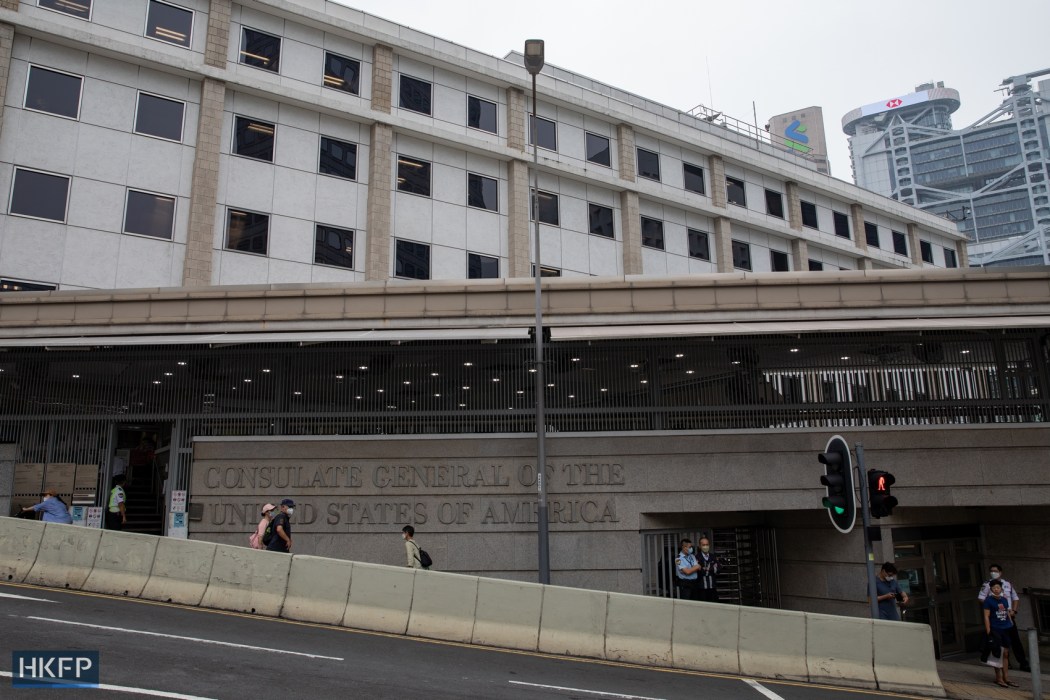
A Hong Kong school principal has warned teachers not to take part in Independence Day activities hosted by the US consulate after the city’s authorities reportedly warned that participation may violate national security legislation.

The unnamed school principal’s remarks were quoted in a Wednesday post by Edu Lancet – a social media page run by former Hong Kong Examinations and Assessment Authority (HKEAA) subject manager Hans Yeung.
A screenshot of the principal’s message attached to the post reads: “Per a reminder received from the Education Bureau’s regional education office, teachers are reminded to be careful about Independence Day activities held by the US consulate in Hong Kong.”
See also: Hong Kong schools on ‘frontline’ of preventing ‘soft resistance,’ education minister says
The principal advised against taking part in the celebrations “to avoid violating the national security law and Hong Kong laws.”
The message said, “If you learn that there are students participating, please put the protection of students first and discourage them from doing so.”
‘Clear guidelines’
In a reply to Ming Pao, the Education Bureau (EDB) said: “Schools have the responsibility to properly carry out their role as gatekeepers and enhance teachers’ and students’ sensitivity to national security.”
However, the EDB did not confirm whether it had issued such a directive, nor did it clarify whether participating in US Independence Day events would amount to a violation of Hong Kong’s national security laws.
The bureau pointed out that Hong Kong would soon mark the fifth anniversary of the enactment of Beijing’s national security law and said its multi-pronged approach included activities inside and outside the classroom to enhance students’ understanding of the law.
Meanwhile, in an interview with the Beijing-backed newspaper Wen Wei Po, published on Wednesday, Secretary for Education Christine Choi said that Hong Kong should be the first line of defence against what she called “soft resistance” – a term used by government officials since 2021 without a clear definition.
Choi said that the EDB had issued “clear guidelines” to schools, including ordering them to conduct background checks on external organisations to ensure there were no “anti-China disruptors” and to review their own off-campus activities and books to prevent the proliferation of “illegal and harmful information”.

Choi did not spell out those vetting guidelines or provide examples of partner organisations that were off-limits to schools for national security reasons.
HKFP has reached out to the EDB and the US consulate for comment.
The education chief also appeared to take aim at Edu Lancet. Without naming the page, she accused it of exaggerating safety concerns about Hong Kong schools’ study tours in mainland China.
Beijing inserted national security legislation directly into Hong Kong’s mini-constitution in June 2020 following a year of pro-democracy protests and unrest. It criminalised subversion, secession, collusion with foreign forces and terrorist acts – broadly defined to include disruption to transport and other infrastructure. The move gave police sweeping new powers and led to hundreds of arrests amid new legal precedents, while dozens of civil society groups disappeared. The authorities say it restored stability and peace to the city, rejecting criticism from trade partners, the UN and NGOs.


