

Chief Executive John Lee has urged Hong Kong universities to handle student misconduct “seriously,” after a male student allegedly created AI-generated indecent images of more than 20 women.

Universities shoulder the responsibility of developing students’ moral character, and any misconduct that infringes on individual rights and privacy should be dealt with seriously, Lee said at a weekly press conference on Tuesday.
“While some misconduct may be dealt with under internal university rules, any act that may contravene the law should be reported to law enforcement agencies for action,” the chief executive said.
Lee’s remarks come after a male law student at the University of Hong Kong (HKU) was accused of creating pornographic images of around 20 to 30 women, including his classmates and teachers, without their consent.
The student allegedly used photos he found on the women’s social media accounts to generate pornographic images using free online artificial intelligence (AI) tools.
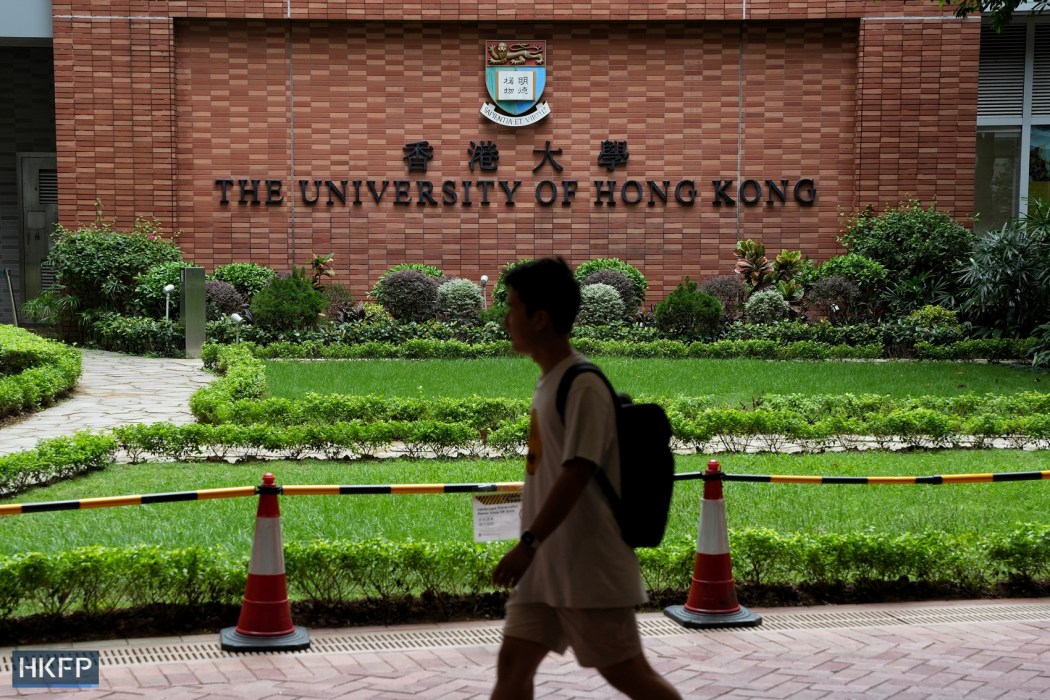
HKU said in a statement on Saturday that the university had issued a warning letter to the male student and demanded that he make a formal apology to the women affected.
But it was revealed that some women had requested that HKU involve the university’s Disciplinary Committee to handle the matter, according to three anonymous victims who posted a summary of the accusations on Instagram.
The victims said their request did not go through as HKU cited legal opinions in telling them that the male student likely did not commit an offence that could be addressed by the Disciplinary Committee.


Lee on Tuesday said most of Hong Kong’s laws apply to online behaviours, drawing attention to offences under the Crimes Ordinance and the Personal Data (Privacy) Ordinance.
For example, both “publication or threatened publication of intimate images without consent” and “access to a computer with dishonest intent” are offences under the Crimes Ordinance, each carrying a maximum punishment of five years in jail.
Lee also said that in April, the government’s Digital Policy Office published a guideline for generative AI use, promoting the “safe and responsible development” of the technology and its related activities.
The chief executive did not mention any proposal for legislation regarding AI.
“AI is an emergent technology that evolves very rapidly, with new capabilities and developments changing in a very short period of time,” he said.
He added that the government would monitor the development of AI and study overseas regulations of the technology.


