

National security guidelines for Hong Kong schools do not target specific events, education minister Christine Choi said, following reports that school principals had been warned against joining US Independence Day celebrations. The US consulate in the city has slammed what it called “repression” by local authorities

In an interview with select media outlets, Choi addressed allegations that schools were warned not to take part in Independence Day activities hosted by Washington’s diplomatic mission, saying that the authorities were only addressing “doubts” from the schools.
An unnamed school principal’s remarks were quoted last month in a post by Edu Lancet, a social media page which describes itself as a platform for “voicing concerns” about Hong Kong’s education sector. The message cited a reminder from the Education Bureau reminding teachers to be “careful” about the consulate’s Independence Day celebrations.
The principal advised against taking part in the celebrations “to avoid violating the national security law and Hong Kong laws.” The message said: “If you learn that there are students participating, please put the protection of students first and discourage them from doing so.”
Earlier, the Education Bureau only said that “schools have the responsibility to properly carry out their role as gatekeepers and enhance teachers’ and students’ sensitivity to national security.”
A US Consulate spokesperson responded: “We condemn the Hong Kong government’s repression of U.S. Independence Day celebrations and interference in U.S. Consulate General-hosted events. Its attempts to characterize these activities as ‘unlawful’ only further reveals its insecurity and fear of freedom.”
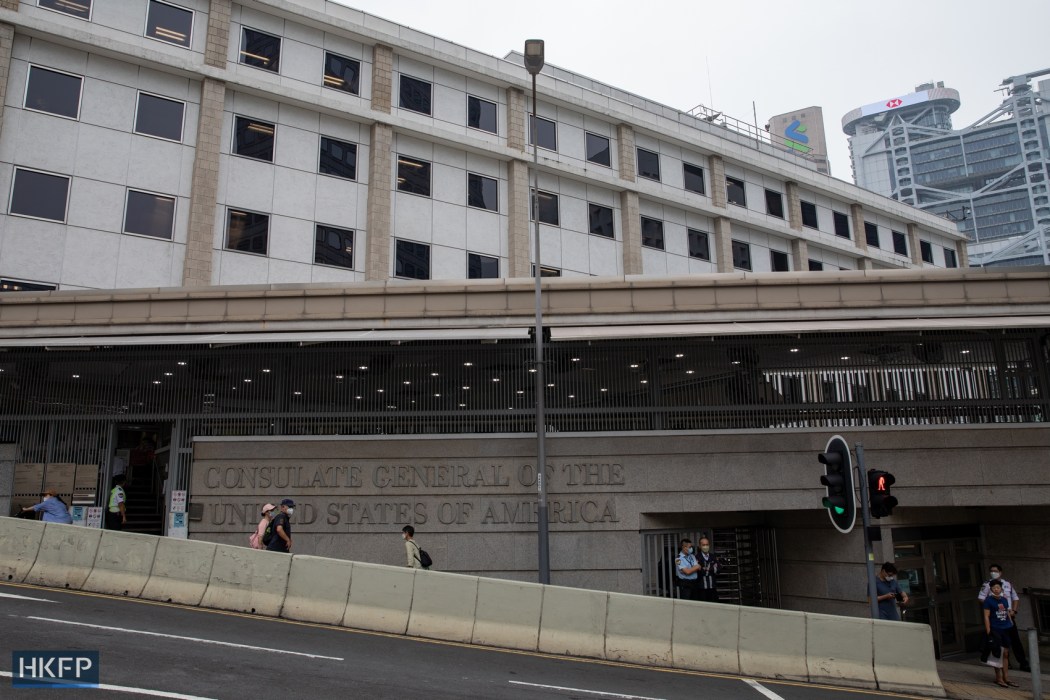
The spokesperson said that US embassies and consulates worldwide celebrate the occasion every year. “Other foreign missions do the same. This year is no different,” the statement read.
‘Self-evaluation checklist’
Education chief Choi said that the authorities had “never” issued notices targeting specific persons or events, but would regularly address schools’ queries.
Choi said that a self-evaluation checklist on national security affairs issued to schools was updated in April, with updated terms on procurement, manpower, and school outings, though it did not target specific organisations or individuals.
According to an April announcement, the evaluation checklist sets out suggestions “covering national security work planning, monitoring mechanisms, learning and teaching and related resources, school activities, personnel management and training, and home-school co-operation.”
She also questioned whether the incident amounted to a “diplomatic crisis,” as described by The Chaser, without naming the diaspora media outlet.

“I don’t see how this could become a crisis. For this to become a political crisis because an online media outlet said so, wouldn’t that be an exaggeration?” she said.
In an earlier interview with Beijing-backed newspaper Wen Wei Po, Choi said that the EDB had issued “clear guidelines” to schools, including ordering them to conduct background checks on external organisations to ensure there were no “anti-China disruptors” and to review their own off-campus activities and books to prevent the proliferation of “illegal and harmful information”.


