

This feature is the first in HKFP’s Partners in Pride series, which looks at how same-sex couples navigate life, death and everything in between ahead of the government’s October deadline to enact a framework to recognise same-sex partnerships.
Jennifer has always wanted kids. As a primary school teacher in Hong Kong, she is surrounded by children five days a week. They excite her most days and wear her out on others – but still, she dreams of having her own to come home to.

“I love their energy. I love being around them, and I love their honesty and the challenge,” she said.
But being a lesbian, Jennifer didn’t think too much about when – and how – to have children.
| 💡HKFP grants anonymity to known sources under tightly controlled, limited circumstances defined in our Ethics Code. Among the reasons senior editors may approve the use of anonymity for sources are threats to safety, job security or fears of reprisals. |
In Hong Kong, where marriage equality is not recognised, Jennifer and her wife, Anna, have limited options for parenthood. The pair, along with other same-sex couples interviewed by HKFP, asked to use pseudonyms due to privacy concerns.
Whether pursuing assisted reproduction treatments like In-Vitro Fertilisation (IVF), surrogacy or adoption, all of the couples said they had to jump through hoops due to Hong Kong’s strict reproductive laws.
Assisted reproduction treatments in Hong Kong are restricted to people who are heterosexual and married.

Commercial surrogacy – often the only option for gay couples – and reproductive treatments involving buying a gamete or embryo are illegal, even if done abroad.
The regulations are a rare case of Hong Kong laws governing acts committed overseas.
Authorities say the laws safeguard children and the status of families. The ban on commercial dealings is “in line with the universal principle” of prohibiting human organ and tissue trading, as well as protecting vulnerable women from exploitation, they say.
But some voices say the lack of accessible, legal options discourages same-sex couples from pursuing parenthood.
“Hong Kong’s reproductive laws create a challenging environment for same-sex couples seeking to build families, particularly male couples,” Mark Daly, a human rights lawyer, told HKFP.
Elsewhere in Asia, reproductive laws are similarly restrictive. While Taiwan legalised same-sex marriage in 2019, same-sex couples still cannot do IVF. It is also illegal in other countries such as Singapore and Malaysia.

Jennifer and Anna – who are in their mid- to late-30s – did IVF in the UK, where it is legal for same-sex couples. After three failed embryo transfers, Anna finally became pregnant in October.
Sitting in their home in March, Jennifer and Anna told HKFP they were privileged to afford the procedures, which they estimated cost around HK$600,000 to HK$800,000.
Still, the constant travel took an emotional toll on them. They wish they could have done IVF in Hong Kong, just like heterosexual couples.
“We’ve got this dropping birth rate. The government is trying super hard for people to have kids,” she said. “Why don’t they allow gay people to have kids?” she said.
Legal grey areas
Same-sex couples in Hong Kong have limited legal rights. Some they enjoy – such as housing and inheritance rights – are a result of court challenges by LGBTQ activists.
In September 2023, the Court of Final Appeal delivered a landmark ruling that Hong Kong must enact a framework for recognising same-sex relationships. The government is expected to deliver the framework by October.
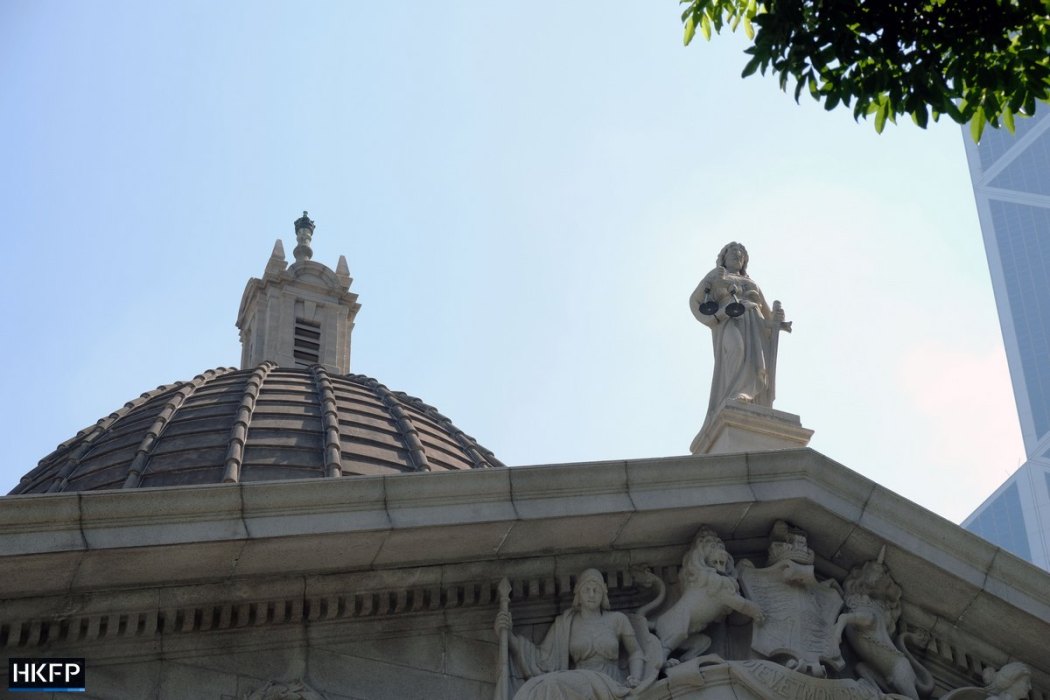
Despite the legal victories, conservative voices remain. Lawmakers have argued that a husband and wife provide “more adequate support” to families and can reduce “incidences of psychological problems and behavioural deviations.”
Still, some same-sex couples in Hong Kong are pursuing their parenthood dreams.
HKFP spoke with half a dozen same-sex couples expecting a child or raising children in the city. The lesbian couples did IVF overseas, with one partner carrying the baby and giving birth – or planning to give birth – here.
Two of the gay couples’ children were carried by a partner’s female relative in an altruistic surrogacy arrangement. The other children were born through commercial surrogacy outside Hong Kong, including in the US and mainland China.
Surrogacy routes
For Daniel and John, the topic of children came up shortly after meeting on a dating app in 2018.

Today, they are fathers to two kids born out of very different surrogacy arrangements. Their son, Liam, was delivered via commercial surrogacy in mainland China – where it is illegal – last year. All the children’s names in this story are pseudonyms.
Three women were involved in the surrogacy, carried out in China’s Guangdong province: the woman whose egg they bought, the surrogate, and the woman whose name appeared on their child’s birth certificate.
The legal and administrative nightmare came after Liam was born, with endless paperwork and appointments to secure identity documents so he could come to Hong Kong.
“It was very stressful, the uncertainty of ‘What if I can’t get him out, and how long is this going to take?'” Daniel, who is Canadian, told HKFP.
Daniel finally brought Liam to Hong Kong when he was around a month old.

Liam was joined by Mia, their daughter born through altruistic surrogacy last year in Canada, where the procedure is legal. Daniel’s sister bore the baby, conceived with her egg and John’s sperm.
“My sister offered [to carry the baby]. It was her gift to us,” Daniel said.
Both Daniel and John are listed as fathers on Mia’s birth certificate. The couple also obtained a court order in Canada certifying that they are her parents.
Family lawyer Azan Marwah said that, given Hong Kong’s complicated reproductive laws, same-sex couples should seek legal advice to avoid consequences.
After a baby is born abroad via surrogacy, the couple may encounter scrutiny at the Hong Kong airport when bringing them back, Marwah told HKFP. They could also face questions from the Immigration Department when applying for permanent residency or visas for their child.

But Marwah added that there had been no known prosecutions under the Human Reproductive Technology Ordinance, largely because of a limited prosecution window.
As the ordinance’s offences are summary offences, authorities have only six months to prosecute, he said. For surrogacies, that window might start from the last payment that the couple made to an agency.
In response to HKFP, police said they “do not maintain the requested figures” when asked how many prosecutions there had been under the ordinance.
Adoption success story
Some couples have sought another route: adoption.
After years of waiting and uncertainty, Mark and Peter adopted four-year-old Lucas in February. The boy joins their five-year-old daughter, Emma, who was born out of an altruistic surrogacy arrangement, with Mark’s sister carrying their baby in the UK.

They are a rare case of same-sex couples adopting in Hong Kong.
In Hong Kong, same-sex married couples cannot apply for adoption as a joint applicant because their marriage is not recognised. They can only apply as a solo applicant, and their partners would be interviewed by social workers per the standard procedures which review everybody that would be involved in childcare.
Mark, who is from the United Kingdom, applied as a solo applicant in 2020.


During a social worker’s interviews with Mark and his husband Peter, who is from mainland China, the fact that they were a same-sex couple came up “extensively.”
“Obviously, Lucas is different from most of his friends because he’s got two dads,” Mark said. “They were probing us a lot on how we would deal with that and the impact it may have on him.”
Mark passed the application and was added to the prospective parents pool in 2021. Three years later, in 2024, they received a call that he was matched with a boy at a foster home.
After a six-month placement during which Lucas lived in Mark and Peter’s home, the couple was granted an adoption order by the Family Court. When delivering the order, the judge acknowledged Peter by name and “recognised verbally that he was a parent,” Mark said.

“That was a nice gesture that the judge made. Obviously, his name is not physically on the piece of paper… but it’s quite important he was recognised,” Mark added.
‘Traditional family values’
According to the Social Welfare Department (SWD), there were 102 applicants in the adoptive parents pool waiting to be matched with a child as of late February. Among them, 13 were solo applicants and 89 were joint applicants.
Data from the past 10 years showed that joint applicants outnumbered solo applicants by almost five times. The percentage of joint applicants matched yearly was also higher than that of solo applicants.
But it cannot be said that solo applicants face discrimination, said Diana Kwok, an associate professor at the Education University of Hong Kong’s Department of Special Education and Counselling.

The wait time depends on the criteria that prospective parents select, she said.
“Some applicants may specify wanting a newborn, or not having health complications, or a certain sex,” she told HKFP in Cantonese.
Many same-sex couples are not aware they can adopt as solo applicants because adoption programmes tend to focus on traditional families, Kwok said. “Most of the time, the Social Welfare Department and the NGOs [that handle adoption] hold talks only targeting [married heterosexual] couples.”
This reflects society’s view that families should consist of a husband and a wife, the professor added.

A 2019 Chinese University of Hong Kong (CUHK) survey – the latest publicly available poll – found that almost 40 per cent of respondents thought same-sex married couples should not be allowed to adopt children, while over 53 per cent supported the idea.
Independent lawmaker Doreen Kong said she could understand the opposition. The idea of same-sex parents raising children contradicts “traditional family values” in Chinese society, she said.
“There might be less controversy about whether they should have financial or inheritance rights. But for raising a child, I think the views are much more divided,” she said in Cantonese.
Preparing for motherhood
Jennifer and Anna said they had not been treated differently from straight couples at doctor’s appointments. Jennifer said she had been able to accompany Anna for check-ups at their private clinics ahead of the July due date.
“We’ve been very accepted throughout the process,” Anna, now in her last trimester, said. “I’ve never felt out of place, except sometimes in the waiting room where [there are] 10 straight couples… and then there’s us.”

The couple is aware that Hong Kong, by default, acknowledges a child’s biological mother and father as the legal parents, meaning only Anna would be recognised. They said they would apply for Jennifer to be a guardian.
It is rare for same-sex couples to seek parental rights through the court because of the time and money needed, Marwah said. There is also uncertainty about what options are available to them.
Under the Parent and Child Ordinance, parental orders commonly sought after surrogacies are for “the husband and the wife” only.
Guardianship orders could be possible, Marwah said. They do not exclude same-sex couples since guardians are regarded as anybody involved in caring for a child.
In a widely reported 2021 ruling, a separated lesbian couple successfully asked the High Court to give guardianship to the non-birth mother and award them joint custody of their two children, who were conceived via artificial insemination.

The verdict marked an important step for same-sex parents’ rights, but it is unclear if there have been other same-sex couples applying for guardianship orders.
“It’s a relatively new area of law. Lawyers don’t really know or understand it,” Marwah said.
For now, Jennifer and Anna are focused on the present. The couple have been up to their ears in research, attempting to understand everything from cribs to confinement nannies to wills and insurance plans.
During a recent check-up, a doctor told the to-be parents that they were in for a “lifetime of stress.” Between the arduous IVF journey and navigating the law, they have already had a preview of what’s to come.
“Just generally, there’s a lot to think about. I don’t feel like I’m ever going to feel prepared,” Jennifer said.


