

In the third month of 2025, Hong Kong’s apex court handed down landmark rulings: quashing the convictions of three Tiananmen vigil activists and upholding jailed activist Tam Tak-chi’s conviction and prison term. Jailed media mogul Jimmy Lai ended his testimony; his trial has been adjourned until August, when the court will hear closing arguments from the defence and prosecution. Hong Kong’s security minister penned letters to hit out at a local and an international newspaper that published articles that were critical of rulings by the city’s courts.

Tiananmen vigil activists win nat. sec. appeal
The Court of Final Appeal (CFA) ruled in favour of three Tiananmen vigil activists on March 6, quashing their convictions over failing to comply with a national security police data demand.
The landmark victory was handed to Chow Hang-tung, Tang Ngok-kwan, and Tsui Hon-kwong, all from the now-disbanded Hong Kong Alliance in Support of Patriotic Democratic Movements of China, which organised three decades of vigils commemorating the 1989 Tiananmen crackdown before the event was banned.
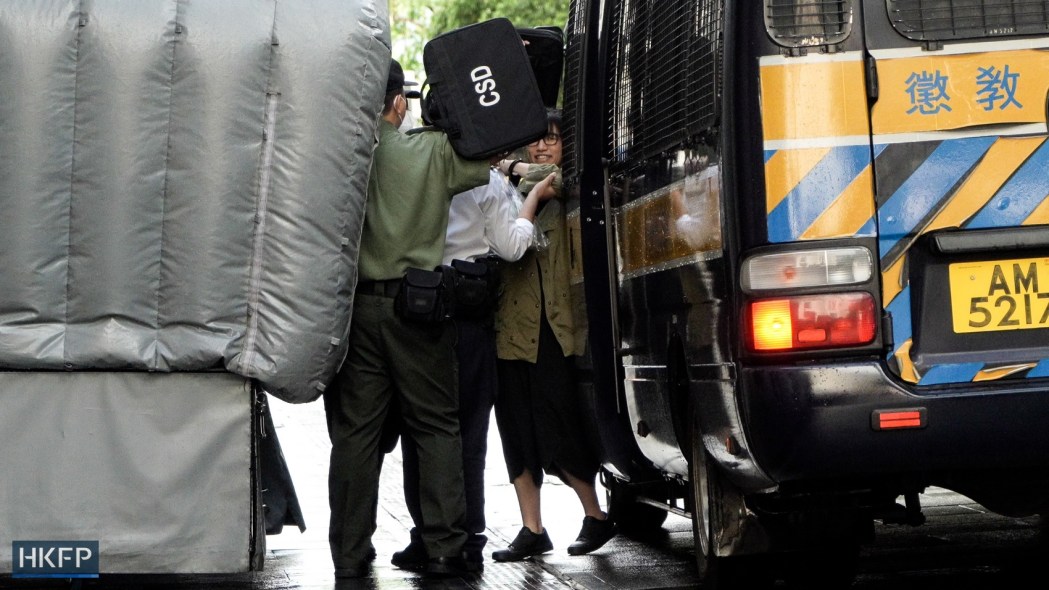
The trio were convicted and sentenced to four and a half months in jail in 2023 for failing to comply with a police demand for data under the Beijing-imposed national security law, after authorities alleged that the alliance was a “foreign agent.” They denied the allegation.
Tang told reporters after the ruling that the decision could clear the alliance of the allegation and that “justice is in the hearts of the people.”
During the trial and appeals at lower courts, heavily redacted information was presented as evidence, alleging that the Alliance had acted as a foreign agent.
The trio rejected the categorisation and argued that the withholding of such information had denied them a fair trial, as they could not even see the unredacted evidence.
The CFA sided with the trio in its judgement, saying that the redactions were “self-defeating” and produced “pages often completely covered in black ink.”

Following the top court’s ruling, the Hong Kong government said it would study how to “improve” national security legislation in order to be “more effective in preventing, suppressing and punishing acts endangering national security.”
Activist loses appeal over ‘seditious words’
The CFA on March 6 upheld the conviction and sentence of jailed activist Tam Tak-chi in a landmark challenge of a since-repealed sedition law.
The former radio host was jailed for 40 months by the District Court in 2022 for 11 charges, including uttering seditious words. Tam was said to have chanted the controversial slogan “liberate Hong Kong, revolution of our times,” a phrase ruled as capable of inciting others to commit secession in the city’s first national security trial.

He was also accused of insulting the police by describing them as “damned black cops.”
The five-judge panel led by Chief Justice Andrew Cheung ruled that the transfer of Tam’s case to the District Court was valid, and the prosecution was not required to prove the intention to incite as an element of the sedition offence.
Tam’s appeal has far-reaching implications for sedition cases brought to the court under Article 23. Several ongoing cases had adjourned awaiting the appeal result, with lawyers saying that it could affect how the defendants may plead.
Closing arguments in Jimmy Lai trial this Aug
The national security trial of jailed Hong Kong media tycoon Jimmy Lai is set to hear closing arguments on August 14, with proceedings now adjourned for both parties to prepare for their submissions.
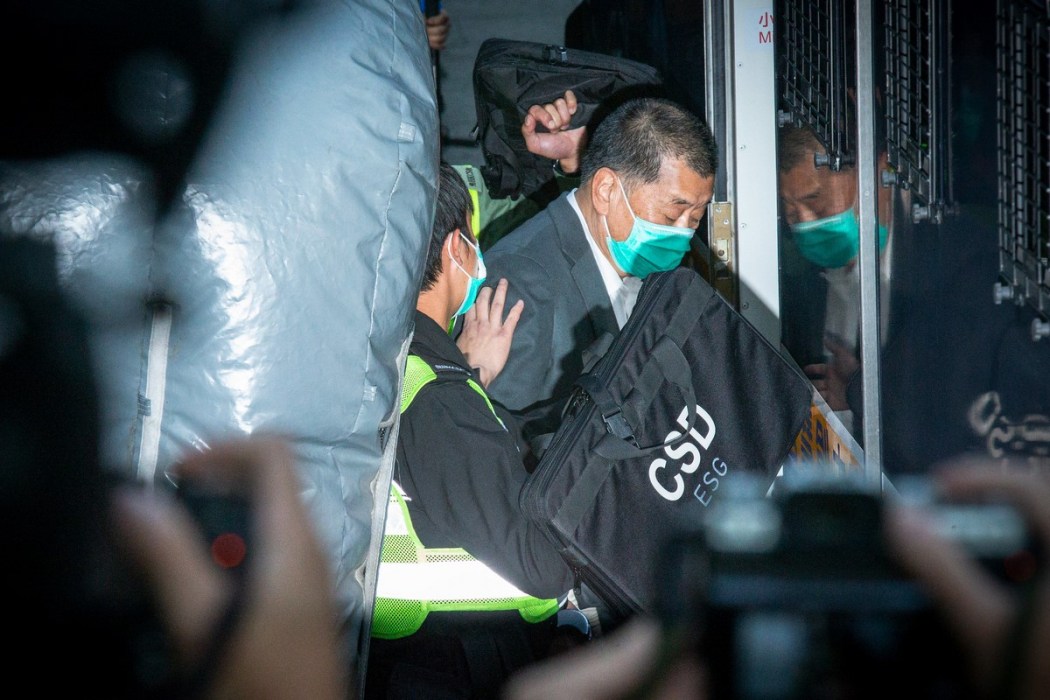
On March 11, the 146th day of the high-profile trial, three hand-picked national security judges estimated that it would take eight days for the prosecution and defence to finish making their concluding remarks.
The court initially scheduled the closing arguments to be heard in late July, but the date was changed to avoid clashing with another case.
Lai, 77, has pleaded not guilty to two counts of conspiring to collude with foreign forces under the Beijing-imposed national security law, and a third count of conspiring to publish seditious materials under colonial-era legislation. He faces life behind bars if convicted.
Lai wrapped up his testimony on March 6 after taking the witness stand for 52 days. His testimony began in November with his lawyer questioning him, followed by the prosecution’s cross-examination in January. After the prosecution finished their questioning earlier this week, his lawyer Steven Kwan began his re-examination.
The tycoon has been behind bars for over 1,500 days and is currently serving a five-year-and-nine-month prison term over a separate fraud case.
Security minister slams Guardian article
Secretary for Security Chris Tang lashed out at British newspaper The Guardian on March 23 over an article citing experts criticising a top court ruling on media mogul Jimmy Lai’s appeal as “another cut on the city’s once revered legal system.”
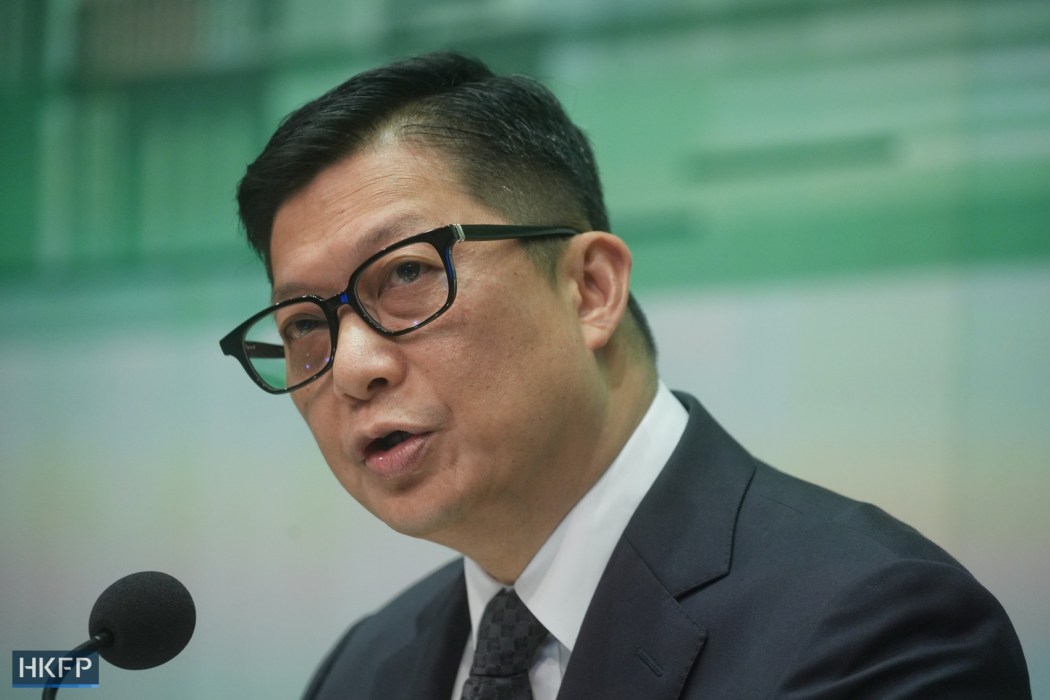
The Guardian article contained “smearing remarks” against the city’s handling of national security cases, Tang said in a letter published on the Security Bureau’s website on Sunday, adding he wished to “set the record straight.”
On March 17, the CFA denied Lai’s application to appeal against a lower court ruling that effectively barred him from hiring British lawyer Tim Owen for his national security trial.
The Guardian called the top court’s ruling an “obscure legal development.” The newspaper cited British Judge Jonathan Sumption, who stepped down from Hong Kong’s top court last year. Sumption was quoted as saying that the ruling “tells us quite a lot about the view of the rule of law taken by the executive.”
The security minister defended the verdict, saying there was “nothing obscure” about it. Lai’s “application for leave to appeal was dismissed through a summary procedure because it was wholly devoid of merits,” Tang wrote.
Security chief condemns legal scholar’s op-ed
Tang wrote a letter to local newspaper Ming Pao to condemn Johannes Chan, the former dean of the University of Hong Kong’s law faculty, after the latter penned an opinion piece criticising a court ruling.
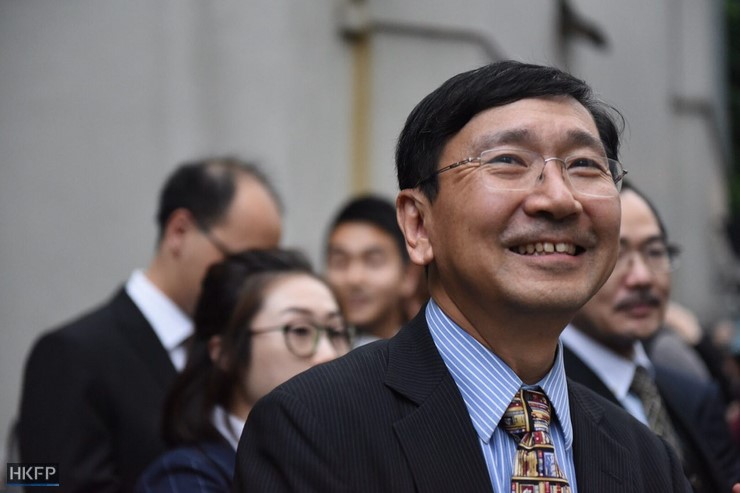
In his letter, published on March 5, the security chief said Chan had “undermined the rule of law,” “misled” the public, and “shaken the public’s confidence in the court system,” after the legal scholar criticised a judgment that sent seven men, including an ex-lawmaker, to jail for “rioting” in the Yuen Long attack in 2019.
In his Ming Pao op-ed, Chan said the court had downplayed the actions of the armed, white-clad attackers in Yuen Long.
On July 21, 2019, over 100 rod-wielding men dressed in white stormed the Yuen Long MTR station and attacked commuters and protesters coming home from a pro-democracy demonstration. Dozens – including Lam Cheuk-ting, then a Democratic Party lawmaker – were beaten and injured during the assault.
Lam was sentenced to 37 months behind bars by District Judge Stanley Chan last month. He and his six co-defendants have filed an appeal against their convictions and sentences.
Ex-Meta exec. claims censorship tool developed
Former Meta executive Sarah Wynn-Williams accused the social media giant of developing a censorship tool to monitor viral content in Hong Kong and Taiwan when Facebook attempted to gain access to the Chinese market.

In an interview with National Public Radio (NPR) that aired on March 14, Wynn-Williams discussed her criticism of the company which owns Facebook, WhatsApp and Instagram. Meta has neither confirmed nor denied the allegation to HKFP.
The former director of public policy claimed that the data of Hong Kong users “appeared to be one of the possible negotiating chips that Meta thought it was holding” when it tried to operate in China.
A censorship tool was developed, which included monitoring viral content in Hong Kong and Taiwan by installing “virality counters,” the former executive said.
“Any content that got more than 10,000 views would automatically be sent to the censorship editorial body that would review that content,” she said.
The NPR interview was recorded before Meta obtained a court order barring the former employee from promoting her memoir, Careless People: A Cautionary Tale of Power, Greed, and Lost Idealism, which alleged misconduct and harassment at the tech giant.
Police question stepfather of fugitive Tony Chung
Local media reported on March 18 that the stepfather of fugitive activist Tony Chung was taken in by Hong Kong national security police for questioning.

He was reportedly “taken away” to “assist in the investigation” of Chung’s suspected offences of inciting secession and colluding with external forces to endanger national security.
In response to HKFP’s enquiries, the police confirmed that the national security police brought in a person to assist with their investigation.
Chung, the ex-convener of the pro-independence group Studentlocalism, was arrested in late July 2020, shortly after the national security law was enacted.
He was jailed for three years and seven months in 2021 for inciting secession and money laundering, completing his term in June 2023. He fled Hong Kong in December 2023 to seek political asylum in the UK after the Correctional Services Department (CSD) allowed him to travel to Japan for Christmas.
CFA will not livestream national security hearings
The top court is set to start livestreaming appeal hearings from April 1, but national security and high-profile political cases will not be included in the two-year pilot programme.
Some hearings will be excluded from the scheme, however, such as “proceedings related to national security, high-profile public order cases, or highly politically charged cases,” the Judiciary said on March 11.

In addition, the Judiciary will not broadcast hearings that concern the protection of interests of children or adults with learning disabilities, as well as those that involve trade secrets or commercial confidentiality.
Arrests and prosecution figures
As of March 1, a total of 320 people had been arrested for “cases involving suspected acts or activities that endanger national security” since Beijing’s national security law came into effect, according to the Security Bureau. The number includes those arrested under Article 23, known officially as the Safeguarding National Security Ordinance.
Of the 186 people and five companies that have so far been charged, 161 people and one company have been convicted or are awaiting sentencing.
Among them, 91 people and four companies have been charged under the national security law, with 76 convicted. Five people have been charged under Article 23, three of whom have been convicted.
The Security Bureau refused to provide a breakdown of the arrests, saying that specific arrest figures and relevant information about the government’s work on safeguarding national security could not be disclosed.
Type of Story: Explainer
Provides context or background, definition and detail on a specific topic.
Support HKFP | Policies & Ethics | Error/typo? | Contact Us | Newsletter | Transparency & Annual Report | Apps
Help safeguard press freedom & keep HKFP free for all readers by supporting our team


















latest national security stories


