

The saga of the deleted reports on the Ombudsman’s website continues.
So far, he has apparently refused to restore digital copies of pre-2023 investigation reports, annual reports, and other data for easy public access. The reasons provided for removing them (data overload, they’re dated, government departments have accepted their recommendations, etc.) are generally unconvincing.

In many cases, the problems that necessitated the investigations continue.
Chief Executive John Lee pointed out that the Ombudsman is independent of the government. He “expressed confidence that the Office of the Ombudsman will do its work effectively and address public concerns,” RTHK reported.
The deleted reports saga raises significant issues about Hong Kong’s constitutional system of dual accountability. According to Basic Law Article 43, the chief executive, who is the head of the government, is accountable both to the central government and the Hong Kong Special Administrative Region (HKSAR).
In their book, The Constitutional System of the Hong Kong SAR, law scholars Albert Chen and Yap Po Jen call this “the most important and distinctive feature of the HKSAR’s political system.”
They go on to say: “Insofar as the central authorities’ interest in and views on Hong Kong’s development converge with those of the general public in Hong Kong, there should be no conflict in the discharge of these dual roles.
“On the other hand, when there is a divergence in the interests of the central authorities in the HKSAR and the interests of Hong Kong as perceived by a majority of Hong Kong’s population, the CE would be placed in an unenviable position” (emphasis mine).

Chen and Yap write that it is not easy for the chief executive to retain the trust and confidence of both Beijing and the people of Hong Kong.
This formulation recognises that there could be multiple understandings of the interests of Hong Kong: the central government’s understandings, the local government’s understandings, and understandings as perceived by most of the people of Hong Kong.
These understandings might converge, or not. In the Ombudsman saga, likely only the local government’s and the people of Hong Kong’s understandings are involved.
Chen and Yap point out that in Hong Kong’s system, the executive and legislative authorities are expected to both “coordinate with and check each other.”
Both the Basic Law and the Sino-British Joint Declaration provide that “the executive shall be accountable to the legislature.” That is, the Legislative Council (LegCo) should play a key role in holding the government to account.
The chief executive acknowledged “public concerns” and “public debate” on the deleted Ombudsman reports.
A handful of legislators have spoken up. One report identified six LegCo members who spoke out or raised questions: Michael Tien, Doreen Kong, Tik Chi-yuen, Tang Ka-piu, Eunice Yung, and Tommy Cheung. These are mainly pro-establishment patriots.
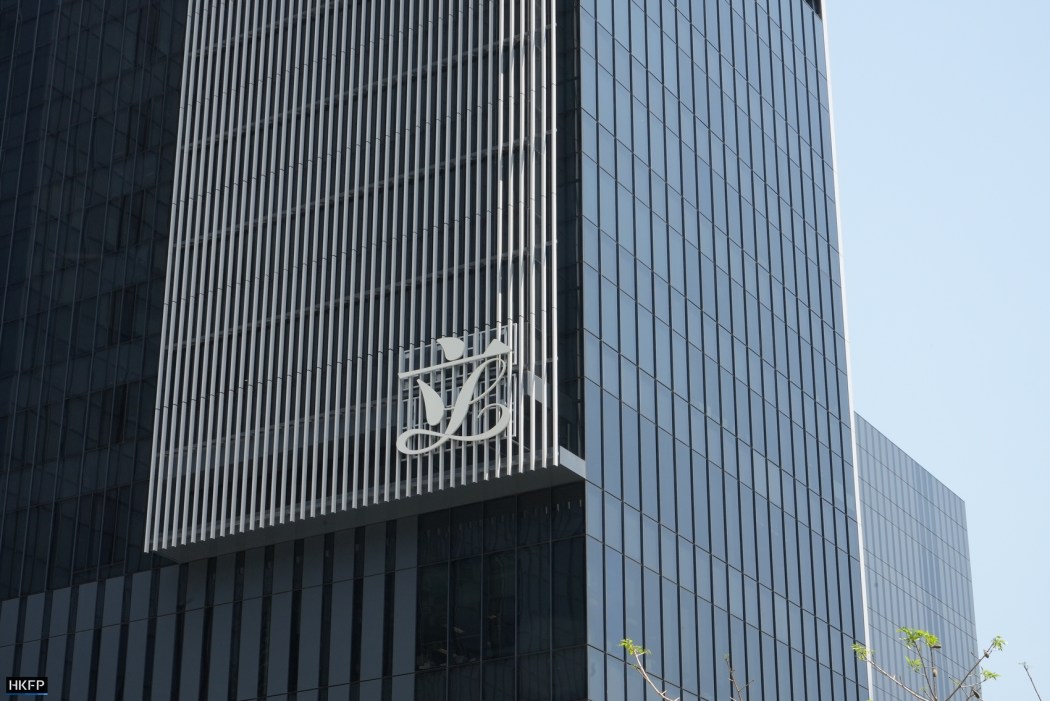
Subsequently, the local media reported that authorities silenced LegCo on this issue. Authorities sent out “warm reminders” that LegCo members should not “follow up” or “comment” on the Ombudsman saga.
This gives the impression that LegCo is simply an extension of the government, speaking for the government only. What of its checking role?
If, as Chen and Yap write, accountability to the HKSAR means accountability to the interests of Hong Kong as perceived by a majority of Hong Kong’s population, why did the authorities silence LegCo?
Perhaps they believe that silencing criticism is in the interests of the Hong Kong people, or authorities perceive that LegCo is insufficiently representative of the Hong Kong people and therefore should have no right to speak.
This seems unlikely given the efforts the government made during the 2021 legislative elections to convince us that LegCo was representative.
When authorities silence LegCo, who speaks for the interests of Hong Kong as perceived by a majority of the people?
In the past, Hong Kongers have valued accountability, openness and transparency. Indeed, that is one reason why 55 to 60 per cent of voters consistently supported pan-democrats in elections when they had the opportunity.
As late as 2018, the HKSAR government also declared that it supported these values. The Ombudsman’s action seems to undermine them, arguably not in the interests of Hong Kong.
An unanticipated consequence of the saga may be to boost the role and credibility of civil society in Hong Kong. The deleted reports are of considerable value to all those interested in public policy.
Digital copies of all the Ombudsman’s pre-2022 reports are available on the Wayback Machine. Non-government organisations may download them, provide searchable catalogues and make them publicly available.

Would an alternative Ombudsman’s website be in the interests of Hong Kong? Is this really what the authorities want?
The Ombudsman’s deleted reports saga tells us that Legco has lost some capacity to hold authorities to account. It tells us that officials expect Legco to speak for the government and not for the people of Hong Kong.
Yet, LegCo members should be able to speak out on issues such as this. Authorities should understand that speaking out is not “attacking” the government but trying to improve local governance. LegCo members’ constitutional role includes checking the government.
Authorities should relax the gag order on LegCo members so that they can better serve the people. This will build trust in our institutions, which is in everyone’s interest.
| HKFP is an impartial platform & does not necessarily share the views of opinion writers or advertisers. HKFP presents a diversity of views & regularly invites figures across the political spectrum to write for us. Press freedom is guaranteed under the Basic Law, security law, Bill of Rights and Chinese constitution. Opinion pieces aim to constructively point out errors or defects in the government, law or policies, or aim to suggest ideas or alterations via legal means without an intention of hatred, discontent or hostility against the authorities or other communities. |


