

Chief Executive John Lee revealed in an interview on June 13 that he was studying the possibility of a “senior civil servant accountability system” for Hong Kong.
The purpose would be to “strengthen leadership” of government departments to solve long-standing problems.

The first priority, he said, was to establish responsibility for the problems. These are the sorts of problems highlighted in Ombudsman and Audit reports, often involving weak coordination across departments and failure to implement policy.
Lee is saying to department heads, If you see a problem, take the initiative and fix it. This is a welcome development.
We have seen too often that department heads fail to address cross-department problems. For example, the initial lack of coordination during the Covid-19 pandemic between the Social Welfare Department and the Department of Health to vaccinate the elderly in care homes. This failure had lethal consequences.
The chief executive is considering laying an additional bureaucratic accountability system on top of existing systems.
We have many systems. First, authorities carry out annual reviews of all civil servants’ performance, including those at the top. The reviews consider civil servants’ leadership potential. Officials place those with potential in “acting” positions to assess their performance on the job.
In theory, good performers (problem solvers) would receive more permanent appointments. The chief executive is telling us that these systems are inadequate for the job. I agree.
Second, annual budget estimates include targets for specific departments, the extent to which they were achieved and targets going forward. Many of the targets appear to be easily reached.
For example, the Buildings Department’s target of “responding to emergencies during office hours within 1.5 hours in urban areas” was set at 100 per cent. The target was fully achieved in 2022, while in 2023, it was 99.8 per cent.
Moreover, the targets appear to be for items that are entirely within the control of a single department.
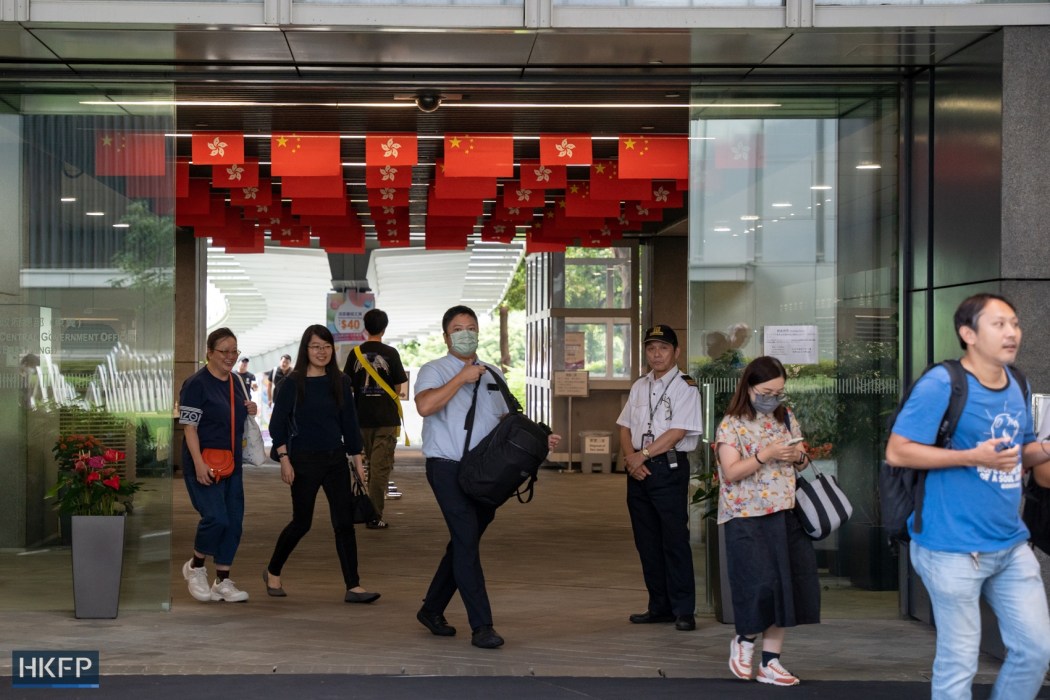
Yet the issues the chief executive has identified as persistent, serious problems are mostly cross-departmental problems. Authorities need a new way of setting targets that focus on these problems.
Third, annual policy addresses now also include Key Performance Indicators (KPIs). The government’s KPIs are often written in general language, for example, to start such and such an activity within the X quarter of year Y. Or, explore such and such an activity within year Y.
Generally, authorities assign KPIs to bureaus, not to departments. Officials leave it to bureau secretaries to sort out which department or departments are responsible.
The chief executive is now telling us that bureau secretaries have difficulty encouraging those responsible to take the initiative to fix “persistent, serious problems.” Indeed, those responsible may be beyond the bureau secretary’s reach.
Do department heads or team leaders in departments have the authority to replace team members? Can they reach down into their own department, or into other departments to find those motivated with the necessary expertise?
These issues run up against the siloed nature of the civil service, divided by departments and grades. They also confront the permanent nature of civil service employment. Once passed probation, civil servants are employed until retirement unless they commit some egregious error. Very few do and are dismissed.
A bold reform, then, would be to abolish permanent positions in the government, making civil service employment more like employment in the private sector. Many countries have done this. Alternatively, the government could employ senior civil servants only on say three- to five-year contracts.
This would align with the contract employment system for political appointees, who serve for the duration of a chief executive’s tenure. It could allow the chief executive to achieve his objective of integrating the political appointee and civil service responsibility systems.

A further reform would allow political appointees to select senior civil servants. Currently, bureau heads have little say in the selection of permanent secretaries in their bureaus or the selection of department heads. Giving politically appointed principal officials this selection authority could help align the goals of the chief executive and the government.
In his remarks, the chief executive suggested he was studying many ways to punish civil servants. He suggested pay freezes, denying them an annual increase in their salary.
Focusing only on punishment fosters a culture of risk aversion. Yet, it is a culture of caution that is fearful of making mistakes that the CE is trying to change.
The chief executive may also examine the reward end of the compensation system. Why not a specific chief executive’s award for solving long-standing cross-departmental problems? This could be material – say a one-off but substantial boost to relevant departmental budgets – or non-material recognition, also a powerful motivator.
Unless the chief executive replaces permanent employment with contracts for at least senior civil servants, any change is likely to be mostly symbolic. By suggesting a new senior civil service accountability system, the chief executive is telling the public, civil servants, and the central government that authorities care about performance.
More is required to change the culture and behaviour. The government needs to consider bold action.
| HKFP is an impartial platform & does not necessarily share the views of opinion writers or advertisers. HKFP presents a diversity of views & regularly invites figures across the political spectrum to write for us. Press freedom is guaranteed under the Basic Law, security law, Bill of Rights and Chinese constitution. Opinion pieces aim to constructively point out errors or defects in the government, law or policies, or aim to suggest ideas or alterations via legal means without an intention of hatred, discontent or hostility against the authorities or other communities. |


