

The case of wanted Hong Kong activist Anna Kwok’s father, who stands accused of attempting to handle his daughter’s funds, has been adjourned until August, pending the submission of insurance documents to the police.

Kwok Yin-sang, 68, appeared before Chief Magistrate Victor So at the West Kowloon Magistrates’ Courts on Friday afternoon for a mention of his case under the Safeguarding National Security Ordinance.
He is the first person charged with “attempting to deal with, directly or indirectly, any funds or other financial assets or economic resources belonging to, or owned or controlled by, a relevant absconder,” under the city’s homegrown security law, also known as Article 23.
He is also the first family member of a wanted activist to be prosecuted by Hong Kong authorities.
The prosecution applied for an adjournment on Friday, citing that the insurance company involved in the case would need more time to prepare and submit relevant documents to the police.
The defence also informed the court that they had requested witness statements from the police but had yet to receive them.
The magistrate adjourned the case to August 6 and instructed both parties to keep the court informed of any updates relating to the case.
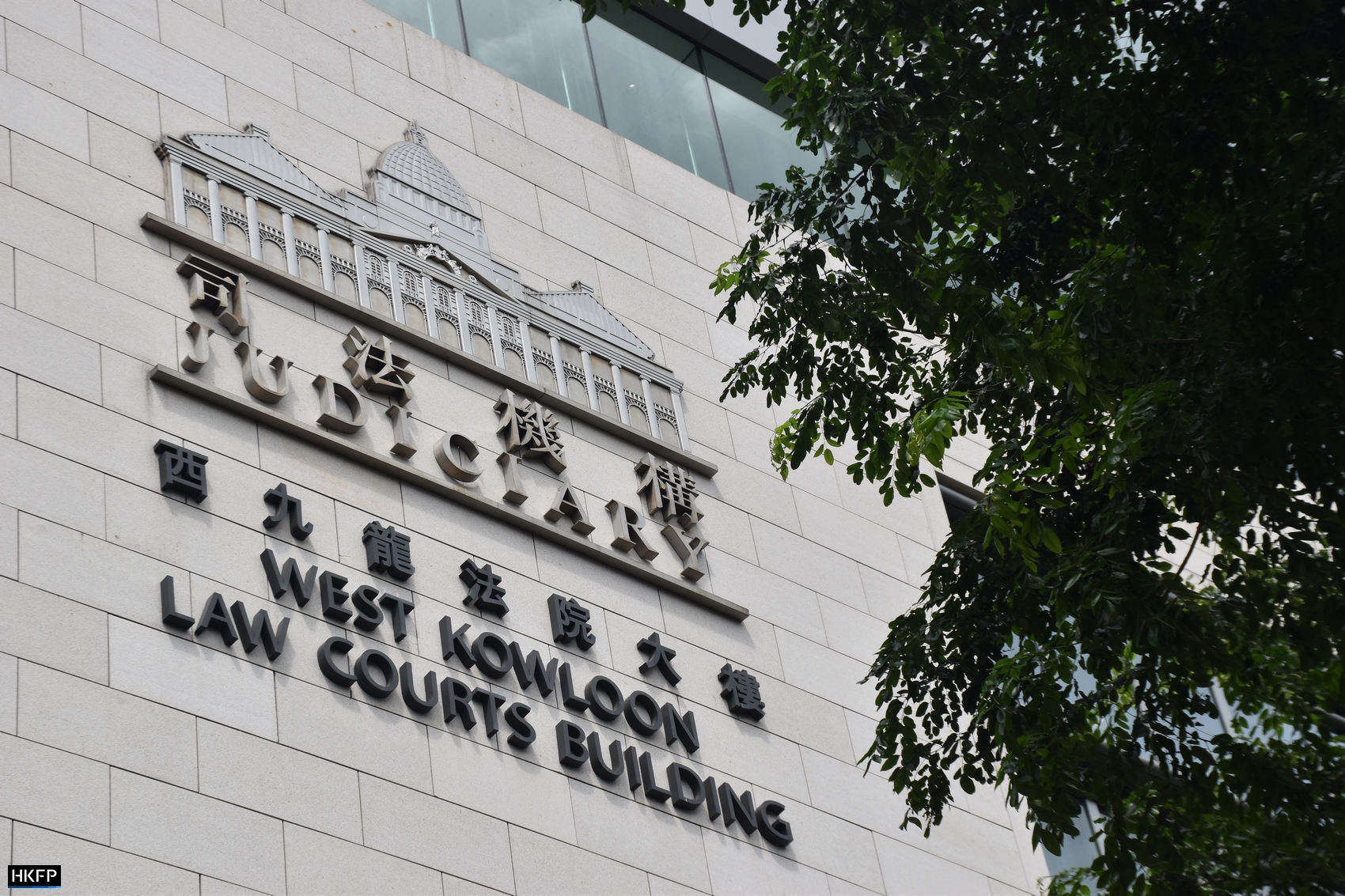
Kwok Yin-sang was allowed to remain on bail under the same conditions granted by the High Court last month.
Prosecutors alleged that Kwok Yin-sang had attempted earlier this year to obtain funds from an AIA International life and personal accident insurance policy, with Anna Kwok, based in the US, listed as the insured person.
The Hong Kong government barred anyone from dealing with Anna Kwok’s assets in the city after Secretary for Security Chris Tang declared her an “absconder,” along with six other exiled activists, in December.
The 28-year-old is among the first group of eight overseas Hong Kong activists wanted by the city’s national security police. She is accused of colluding with foreign forces and requesting foreign countries to impose sanctions on Hong Kong and China.
Separate from the 2020 Beijing-enacted security law, the homegrown Safeguarding National Security Ordinance targets treason, insurrection, sabotage, external interference, sedition, theft of state secrets and espionage. It allows for pre-charge detention of up to 16 days, and suspects’ access to lawyers may be restricted, with penalties involving up to life in prison. Article 23 was shelved in 2003 amid mass protests, remaining taboo for years. But, on March 23, 2024, it was enacted having been fast-tracked and unanimously approved at the city’s opposition-free legislature.
The law has been criticised by rights NGOs, Western states and the UN as vague, broad and “regressive.” Authorities, however, cited perceived foreign interference and a constitutional duty to “close loopholes” after the 2019 protests and unrest.


