

Hong Kong has declared six locations of Beijing’s national security office as “prohibited places,” including four hotels and the office’s future permanent sites in Kowloon.

The government announced on Tuesday that six sites occupied by Beijing’s Office for Safeguarding National Security (OSNS) in Hong Kong are designated as prohibited places under the city’s Safeguarding National Security Ordinance, known locally as Article 23.
According to the government’s gazette, the six places are: the Metropark Hotel Causeway Bay, the City Garden Hotel in North Point, the Island Pacific Hotel in Sai Wan, a China Travel Service (CTS) hotel in Hung Hom, and two locations along Hoi Fan Road in Tai Kok Tsui.
The two Hoi Fan Road locations are still under construction and will serve as the permanent sites for the OSNS.
The government’s declaration, introduced during a special Legislative Council meeting on Monday, is part of the fast-tracked subsidiary law changes made to Article 23.
The OSNS is an apparatus of the central government in Beijing and is independent from the Hong Kong government. It was established in July 2020, shortly after Beijing imposed a national security law following the 2019 pro-democracy protests and unrest.
| Six prohibited places* | Premises | District |
| 148 Tung Lo Wan Road, Hong Kong, occupied by the OSNS | Metropark Hotel Causeway Bay | Causeway Bay |
| 9 City Garden Road, Hong Kong, occupied by the OSNS | City Garden Hotel | North Point |
| 152 Connaught Road West, Hong Kong, occupied by the OSNS | Island Pacific Hotel | Sai Wan |
| 1 Cheong Tung Road, Kowloon, occupied by the OSNS | CTS (China Travel Service) (HK) Hotel Development | Hung Hom |
| The junction of Hoi Fai Road and Sham Mong Road, Kowloon, occupied by the OSNS | OSNS’ future permanent site | Tai Kok Tsui |
| Hoi Fan Road, Kowloon, occupied by the OSNS | OSNS’ future permanent site | Tai Kok Tsui |
The OSNS opened its first office in the Metropark Hotel and later expanded its premises to the City Garden Hotel and the Island Pacific Hotel.
The Hoi Fan Road sites – which span around 11,500 square metres – were granted to the OSNS in April 2021. The government said at that time that the OSNS would bear the construction costs.
According to a document submitted to the legislature on Monday, the Security Bureau said the OSNS premises should be protected against “unauthorised acts to approach or enter such premises” to minimise national security risks, particularly those related to espionage.
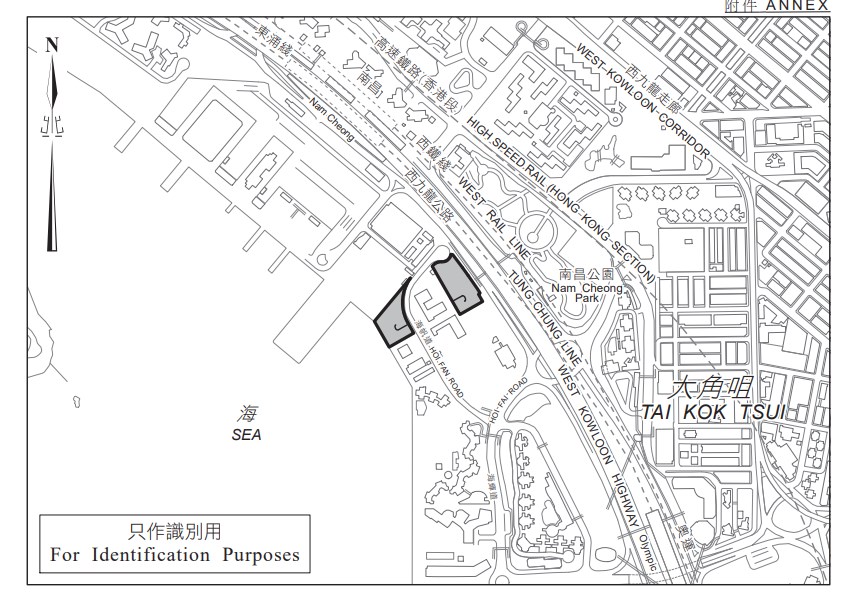
The move would “not cause any unreasonable impact on the surrounding community,” the bureau added.
Answering lawmakers’ questions on Monday, security chief Chris Tang said the prohibited places would display clearly visible signs and that the risk of residents entering them unwittingly would be minimal.
Article 23, which came into force in March last year, stipulates that espionage activities involving prohibited places, including inspections in person or via electronic devices, carry a maximum jail sentence of 20 years.
Meanwhile, entering prohibited places without lawful authority, disobeying orders made by police or guards of the prohibited places, and obstructing their duties are punishable by up to two years behind bars.
Separate from the 2020 Beijing-enacted security law, the homegrown Safeguarding National Security Ordinance targets treason, insurrection, sabotage, external interference, sedition, theft of state secrets and espionage. It allows for pre-charge detention of up to 16 days, and suspects’ access to lawyers may be restricted, with penalties involving up to life in prison. Article 23 was shelved in 2003 amid mass protests, remaining taboo for years. But, on March 23, 2024, it was enacted having been fast-tracked and unanimously approved at the city’s opposition-free legislature.
The law has been criticised by rights NGOs, Western states and the UN as vague, broad and “regressive.” Authorities, however, cited perceived foreign interference and a constitutional duty to “close loopholes” after the 2019 protests and unrest.


