

Hong Kong has tumbled five places in the annual Reporters Without Borders (RSF) Press Freedom Index, entering the “red zone” – meaning a “very serious” situation – for the first time, alongside China.

The city fell five places to 140th place, sandwiched between Sri Lanka and Kazakhstan. China fell six places to 178th place – only North Korea and Eritrea ranked lower.
“At RSF, we have never seen such a sharp and rapid deterioration in the press freedom record of any country or territory,” the watchdog’s Asia-Pacific Bureau Advocacy Manager Aleksandra Bielakowska told HKFP. “Today, Hong Kong increasingly resembles neighbouring China, the world’s largest prison for journalists.”
Hong Kong saw sharp dips in all five of the watchdog’s indicators: political context, legal framework, economic context, socio-cultural context, and safety – adding up to a historic low score of 39.86.

The free expression NGO said: “The main factor behind this decline is the deterioration of the political indicator (-7.28 pts), notably due to the September 2024 conviction for ‘sedition’ of Chung Pui-kuen and Patrick Lam, former editors of Stand News. This is the first sedition case against the media since the UK handed over the territory in 1997.”
Ahead of Saturday’s Press Freedom Day, Bielakowska told HKFP on Friday: “Imprisonment, harassment, doxxing, administrative pressure, surveillance and lack of financial sustainability all define a grim daily reality for the valiant few journalists who decided to stay in the territory. This often leads Hongkongers towards another path: reporting from exile.”
See also: Explainer: The decline of Hong Kong’s press freedom under the national security law
She cited the protracted national security case against Apple Daily founder Jimmy Lai, the enactment of a local security law in 2024 and the fact that hundreds of journalists have fled, with foreign reporters facing “visa weaponization” akin to China.

“As the situation keeps deteriorating in Hong Kong, we cannot forget about those who, despite the pressure, continue the almost-impossible work of covering stories from within the city. Not only do these intrepid professionals face government pressure, but they also experience a hard time making ends meet,” Bielakowska said. “They are also often barred from covering official events and entering press conferences. It is clear that authorities are trying everything in their power to dissuade all critical voices from reporting on the ground.”
In April last year, Taiwan-based Bielakowska was barred from entering Hong Kong. She was detained, searched and questioned for six hours at the airport. The Immigration Department said it would not comment on individual cases.
The government has said that press freedom remains guaranteed. In 2022, Chief Executive John Lee said press freedom was “in the pocket” of Hongkongers but “nobody is above the law.” Although he has told the press to “tell a good Hong Kong story,” government departments have been reluctant to respond to story pitches.

Norway topped the 2025 index, followed by the Netherlands and Estonia.
Gov’t: Press freedom ‘not absolute’
In response to HKFP’s enquiries, a government spokesperson on Friday “strongly condemned the unfounded and biased remarks” by RSF, saying that Hongkongers enjoy press freedom and free speech as defined by the mini-constitution, Bill of Rights and security laws.
“Nonetheless, freedom of the press and freedom of speech are not absolute. The exercise of them may be subject to restrictions that are provided by law and are necessary for pursuing legitimate aims such as protection of national security or public order,” they said.

“Journalists, like everyone else, have an obligation to abide by all the laws. The most crucial point is that journalists must act in good faith and on accurate factual basis and provide reliable and precise information in accordance with the tenets of ‘responsible journalism’ in order to enjoy the protection of their rights to freedom of speech and press freedom.”
They said that prosecutions were “based on evidence and strictly in accordance with the law,” adding that there were 206 media organisations registered with the government: “The media continue to enjoy the freedom to comment on and criticise government policies without any restriction, as long as this is not in violation of the law.”
A ‘new low point’
In 42 countries – home to 56.7 per cent of the world’s population the press freedom situation was classified as “very serious” by RSF this year, with fewer than 1 per cent of the world’s population living in territories were press freedom is fully guaranteed.
“For over ten years, the Index’s results have warned of a worldwide decline in press freedom. In 2025, a new low point emerged: the average score of all assessed countries fell below 55 points, falling into the category of a “difficult” situation,” a press release said. “For the first time in the history of the Index, the conditions for practising journalism are poor in half of the world’s countries and satisfactory in fewer than one in four.”
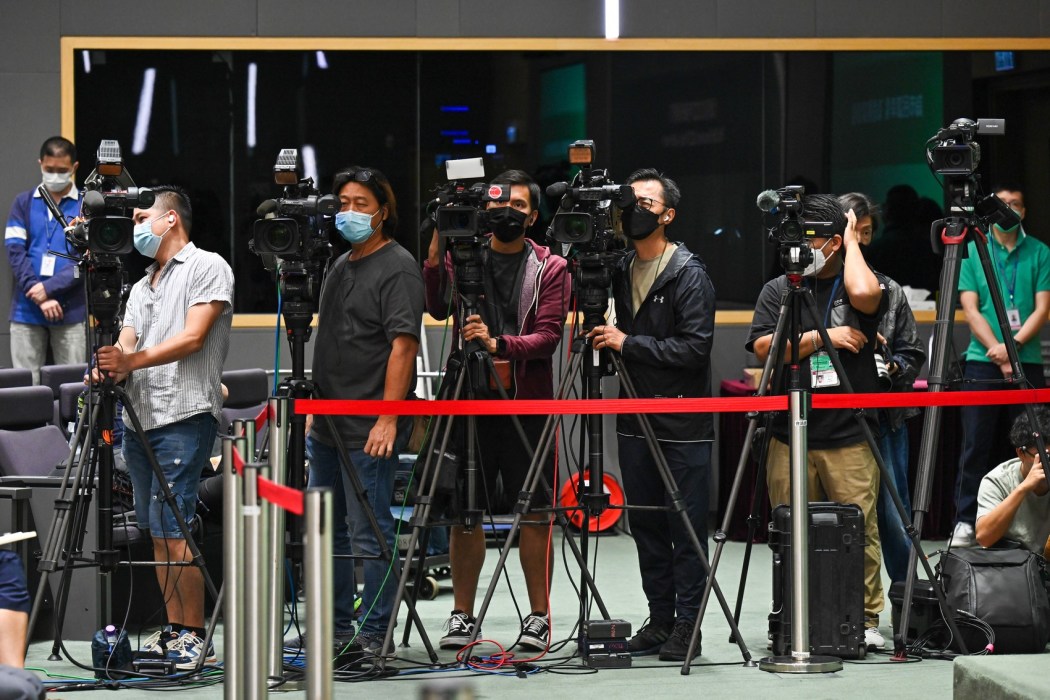
This year’s report also warned of economic threats to press freedom, with tech giants having dominance over the dissemination of information and ad revenue. “These online platforms further hamper the information space by contributing to the spread of manipulated and misleading content, amplifying disinformation,” it said, naming companies such as Google, Apple, Facebook, Amazon and Microsoft.
Editorial interference and media ownership concentration had also been a factor in the deterioration of press freedom, with serious threats to media plurality in 46 countries.
The index said that “funding is now directed toward pro-government media” in Hong Kong, Peru and Tunisia.
The index also referenced the case of Palestine, where the Israeli army has killed nearly 200 media professionals and imposed a media blackout.
RSF uses a scoring system based on a quantitative tally of abuses against media and journalists in connection with their work, and a qualitative analysis of the situation in each country or territory based on the responses of press freedom specialists.
Press freedom in Hong Kong
Aside from the arrest of journalists in recent years, Hong Kong has seen raids on newsrooms and the closure of around 10 media outlets including Apple Daily, Stand News and Citizen News.
Last week, Channel C was the latest independent media outlet to cease operations following financial strife and the arrest of one of its parent company’s directors for alleged government loan fraud.
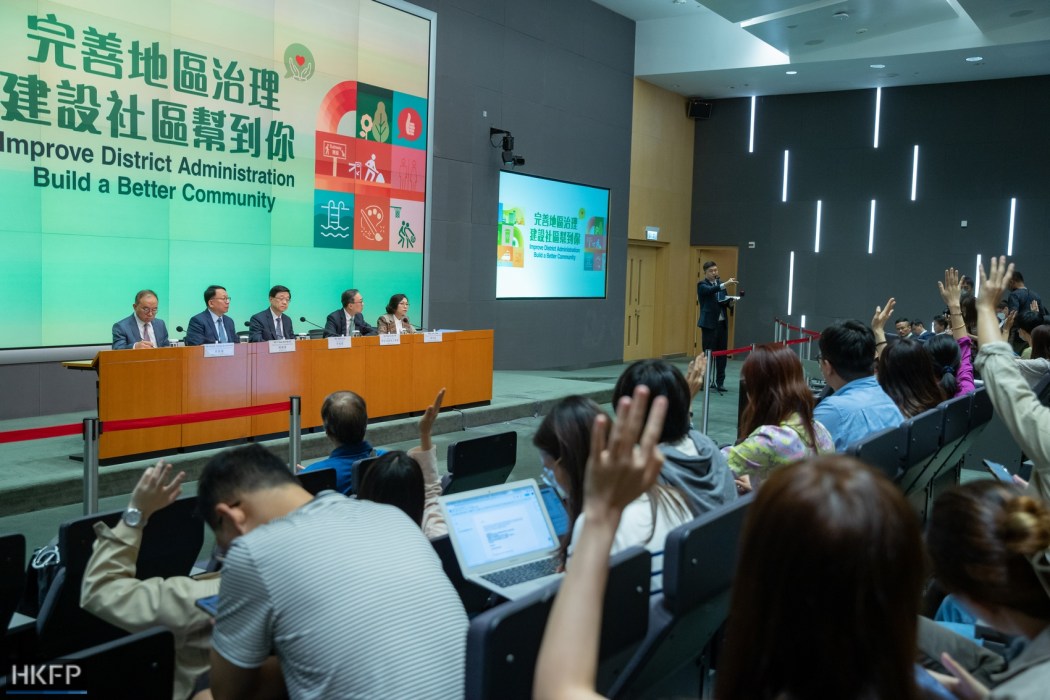
Over 1,000 journalists have lost their jobs in Hong Kong, whilst many have emigrated. Meanwhile, the city’s government-funded broadcaster RTHK has adopted new editorial guidelines, purged its archives and axed news and satirical shows.


