

A top government adviser has suggested adjusting the HK$2 elderly transport subsidy scheme by limiting access for those aged 60 to 65 amid the soaring subsidy costs and the city’s budget deficit.

Lam Ching-choi, a member of the Executive Council, said in a Commercial Radio interview on Sunday that the government’s lowering of the eligibility age for the “HK$2 scheme” to 60, down from 65, in 2022 had benefited the elderly.
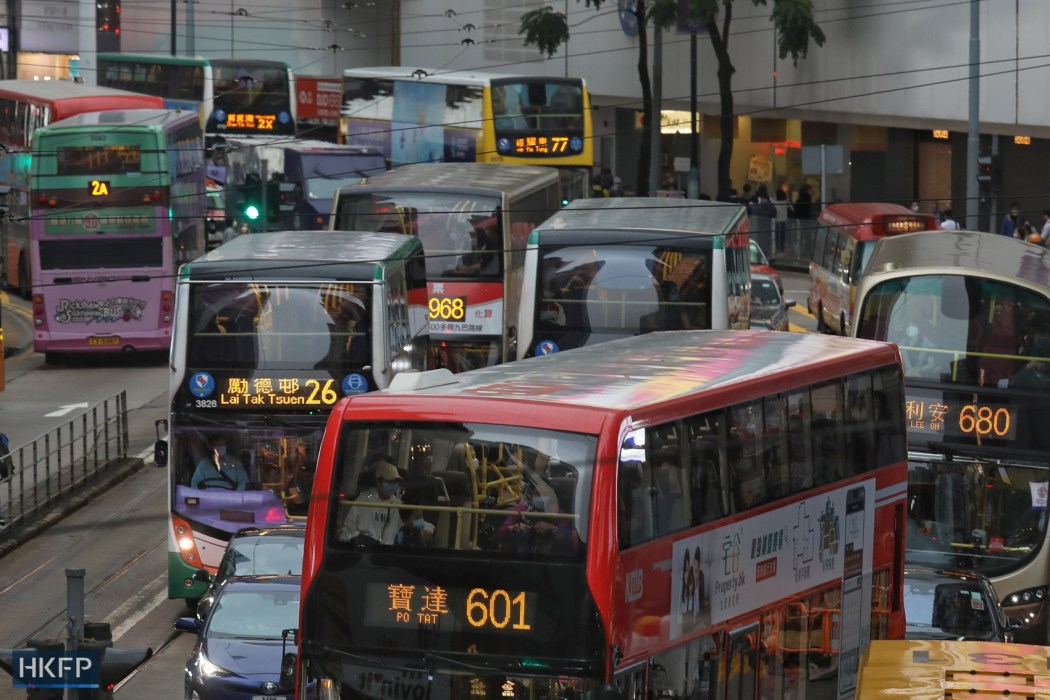
Under the current scheme, those aged 60 and above pay a HK$2 flat fare for a single ride on buses, the MTR and other transport modes.
While it allows the elderly to save on commuting costs, it has become an increasing burden on the government’s finances, the government adviser said.
“It has its positive purposes… but when the economy is facing challenges, especially amid an ageing population, [the spending] will continue rising,” Lam said in Cantonese.
Last year, authorities said the HK$2 scheme was forecast to cost HK$4 billion that fiscal year, more than double the expenditure in the 2019-2020 fiscal year, when it cost HK$1.3 billion.

Since those aged 60 and 65 are now healthier than before, “the definition of ‘elderly’ should be 65 and above,” Lam said.
“How should we design the fare concession scheme for those aged 60 to 65 so that it’s different from the fare concession scheme for the truly elderly? I think there’s room for this,” he said.
Speaking to reporters after the radio interview, Lam suggested that authorities could consider narrowing the use of the scheme for those under 65.
“Should the scheme be of unlimited use, or should there be a limit?” he said.
The Hong Kong government is expected to announce changes to the HK$2 scheme during the budget address, which is held annually in February.
Speaking on the same radio program, Financial Secretary Paul Chan said the HK$2 scheme would be “financially unfeasible in the long run” if it were left unchanged.

“There are a lot of different opinions on how it can be changed. We are collecting these opinions, and the government needs to evaluate and discuss it internally,” he said in Cantonese. “We are all carefully studying different proposals.”
He said last month that the budget deficit would be under HK$100 billion, more than double the HK$48 billion forecast in his budget speech in February last year.
‘Effective investment in society’
Meanwhile, the Society for Community Organisation (SOCO) – an NGO that supports low-income residents in Hong Kong – said it hoped the government could maintain the HK$2 scheme. Transport subsidy schemes are an “effective investment in society,” the NGO said in a press release on Sunday.
“It is crucial for [helping] the elderly live active lifestyles, continue working, care for children and maintain their social connections,” SOCO said.
Appearing at a press conference organised by SOCO on Sunday, lawmaker Lam Chun-sing said many elderly below the age of 65 worked far away from their homes, such as at the airport. Without the HK$2 scheme, they would be restricted in their employment choices, he said.
The HK$2 scheme was implemented in phases in 2012. The government said the purpose of the scheme was to “help build a caring and inclusive society by encouraging these groups to participate more in community activities.”
There have been reports of abuse of the scheme by “ineligible persons,” according to the authorities. Last November, the government said seven suspected abuse cases were referred to the police for investigation, with two passengers among them prosecuted. Both were required to repay the underpaid fares as well as being fined up to HK$14,000.


