

The US Postal Service (USPS) has temporarily halted acceptance of international packages from Hong Kong and China until further notice.

The move comes amid a tit-for-tat trade dispute between Washington and Beijing.
A sweeping 10 per cent levy on Chinese products was imposed by US President Donald Trump, effective Tuesday. A “de minimis” allowance – which exempts small packages worth under US$800 (HK$6,230) from US duties – was also revoked. The exception was considered a long-held “loophole” used by China-linked e-commerce firms such as Shein, Temu and AliExpress.
Meanwhile, China – on Tuesday – responded with a 15 per cent tariff on American coal and liquefied natural gas products from next Monday, alongside a 10 per cent levy on crude oil, agricultural machinery and large-engine cars from the US.
Hong Kong mail included
Hong Kong could be drawn into the wider dispute, with US-backed Radio Free Asia reporting that the tariffs will apply to the Special Administrative Region, as well as mainland China.
Not all mail will be affected by the USPS suspension. “Note the flow of letters and flats from China and Hong Kong will not be impacted,” it said in a Tuesday statement. “Flats” refer to large envelopes, newsletters, and magazines.
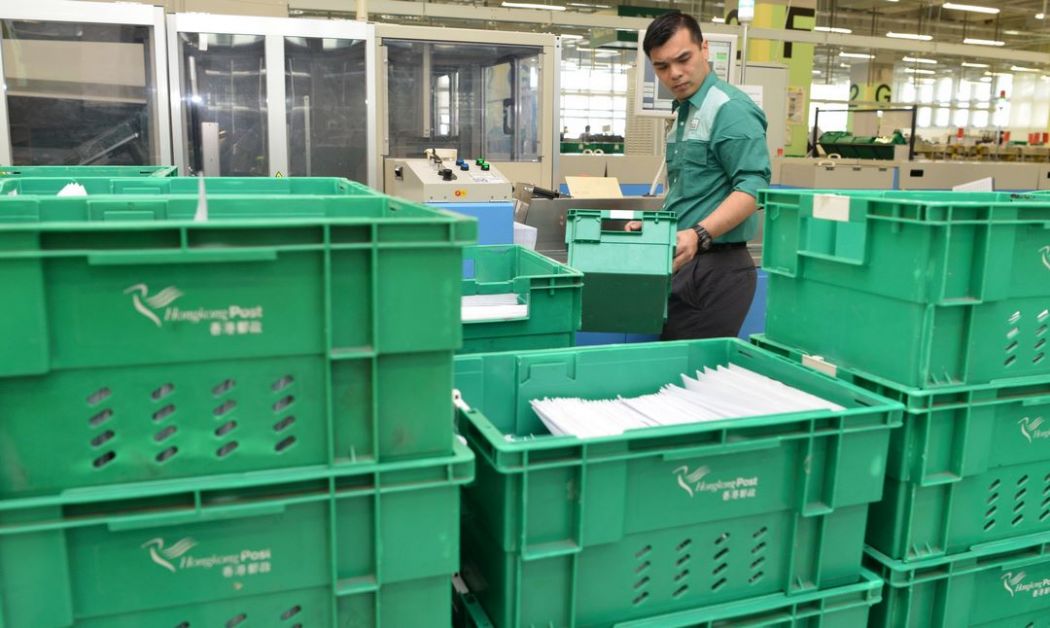
An online notice on Monday from US Customs and Border Protection (CBP) said that mailed packages from China will undergo formal customs entry under the new tariffs. “As we transition to execution of the Executive Order, it is extremely important that the trade maintain awareness of the shipments they are responsible for and are aware of the messaging that they are receiving from CBP,” it said, according to Reuters.
Trump has said the tariffs are necessary to incentivise Beijing to halt the flow of ingredients used to make fentanyl – a potent synthetic opioid drug. “China hopefully is going to stop sending us fentanyl, and if they’re not, the tariffs are going to go substantially higher… China will be dealt with,” he said on Tuesday.
In July 2020, during his first term in the White House, Trump signed an executive order shortly after Beijing imposed a national security law in Hong Kong that June. The US had treated Hong Kong separately from mainland China in matters of trade and economy since 1992, but Trump’s order suspended Hong Kong’s special status.

In December, the Senate Foreign Relations Committee chairperson introduced a bill that would end Hong Kong’s special status under US law. Previously, the US House of Representatives passed a bill in September which could see the closure of Hong Kong’s trade missions in the country.


