

At least two Taiwanese military websites appear to be blocked when accessed via major telecommunications providers in Hong Kong, according to tests carried out by HKFP.

The main website for the island’s military, as well as the online home of Taiwan’s navy, appear inaccessible, with browsers returning a message reading “The request is blocked.”
HKFP conducted tests over the past two weeks on the Smartone network, as well as on CSL, Sun Mobile, and 3 Hong Kong. The two websites were not accessible on any of the networks. Other Taiwan military websites, however, remain accessible, such as the domains for the air force and military police.
See also: Explainer: Websites blocked in Hong Kong – when, how, and why the list is growing
Previously, political websites, Taiwanese organisations, the US military, or doxxing platforms have been blocked by local telecoms firms and Internet Service Providers (ISPs), with some citing police demands. Though some services, such as Chat GPT and TikTok, have voluntarily chosen to withdraw access to their sites in Hong Kong
A spokesperson for Taiwan’s Department of International Information Services denied that the sites had been geo-blocked by Taiwan, when approached by HKFP on Tuesday: “[W]e asked our Ministry of National Defense, and they said that they have not blocked website visitors from Hong Kong. It appears that the blockage is on the Hong Kong side.”
When HKFP asked the Security Bureau whether it had ordered a block, if it had done so before, and whether it was legal for Hongkongers to visit such websites, there was no direct response.
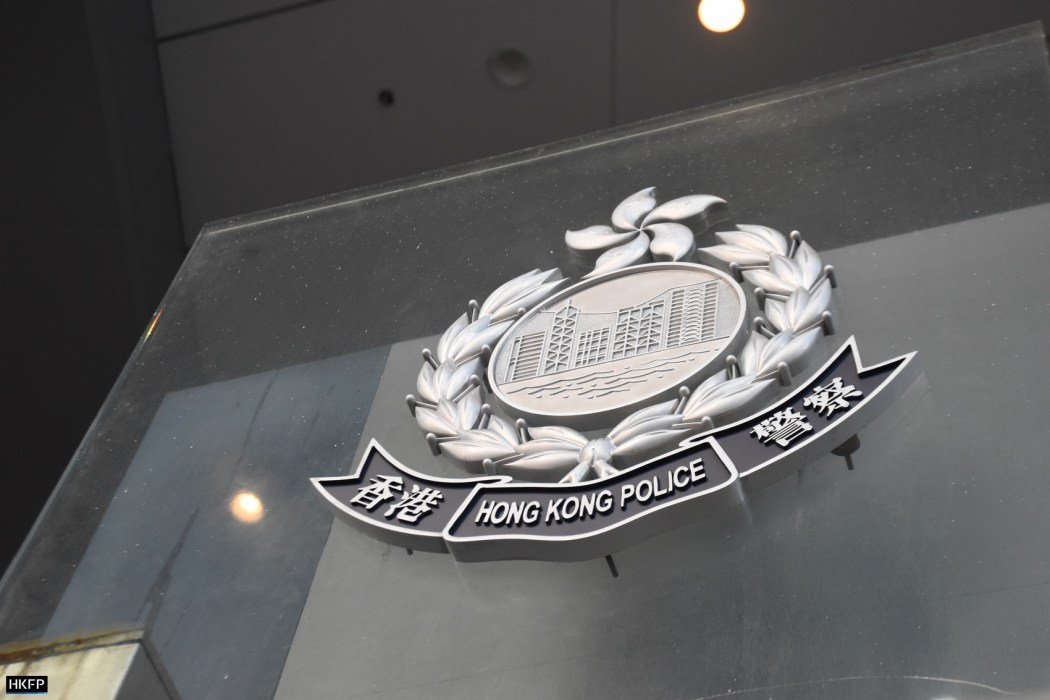
However, a police spokesperson said by email last Friday: “Police do not comment on individual cases. Police will take appropriate actions where necessary according to actual circumstances and in accordance with the law.”
HKFP reached out to telecom providers but received no responses.
New legislation
Though it is unclear how the Taiwanese websites were blocked, and who may have ordered the blocks, Hong Kong has enacted legislation in recent years to empower the authorities to demand content takedowns.
In 2022, a new clause in Hong Kong’s Unified Carrier Licence guidelines gave authorities broad powers to order phone networks, ISPs and other telecommunications companies to block websites, calls and messages. Meanwhile, Article 43 of the 2020 national security law provides the police with powers to order a person or service provider to delete, or assist in the removal of, information published online in the interests of protecting national security.

Research by the Internet Monitoring Action Project (IMAP) last year suggested internet censorship in Hong Kong had mostly been achieved with DNS (Domain Name System) tampering. When a web browser requests to access a website and connect to an Internet Protocol (IP) address, the web address can be intercepted and checked against a predefined blocklist by the service provider, an IMAP study said. The user can then be blocked from arriving at the website.
The IMAP tested 3,397 websites in Hong Kong over the course of a year using an Open Observatory Network Interference detection and reporting system. Their study involved over 2.3 million measures and concluded that several other websites had been blocked by ISPs, including over a dozen relating to the US military, such as navy.com.
Compared to China’s “Great Firewall,” the blocking methods are rudimentary and there is no public list of websites that the authorities deem problematic, the study added.
Microsoft Azure
Developer Nick Chan told HKFP that a “middleman” intervention by cloud computing service Microsoft Azure may be involved in the block, as the block message still appears when DNS adjustments are made. HKFP did not receive a response after it reached out to Microsoft.
Another developer – who did not wish to be named – told HKFP that a geographical block appears to be have been enacted on the Taiwan side, after all, because the site’s security certificate was loading correctly: “You can tell it is a geoip block because the SSL certificate is valid and content is served from that domain,” he said.

Tests by HKFP have found that some websites appeared to be blocked could still be accessed via university campus networks and commercial internet providers.
The Republic of China (ROC) government has ruled Taiwan since 1945 after Japan was defeated in World War II, ending 50 years of occupation. The ROC authorities fully retreated to the island in 1949 after being defeated by the Chinese Communist Party in the Civil War. Beijing has since claimed democratic Taiwan as one of its provinces, threatening to unify it by force if necessary.
See also: Explainer – Is Taiwan a country? The self-ruled island’s disputed status


