

China said it test-launched an intercontinental ballistic missile on Wednesday, firing it into the Pacific Ocean in its first such exercise in decades.
The launch sparked protests from other countries in the region, with China’s neighbour Japan saying it had not been given advance notice and expressing “serious concern” about Beijing’s military build-up.

Beijing has stepped up its nuclear development and boosted defence spending in recent years, with the Pentagon last October warning China was developing its arsenal more quickly than the United States had anticipated.
China held more than 500 operational nuclear warheads as of May 2023 and is likely to have more than 1,000 by 2030, it said.
On Wednesday, the Chinese military’s Rocket Force “launched an ICBM… carrying a dummy warhead to the high seas in the Pacific Ocean at 08:44 on September 25, and the missile fell into expected sea areas”, the defence ministry said in a statement.
An analyst told AFP such tests were very rare.
“This is extremely unusual and likely the first time in decades that we’ve seen a test like this,” said Ankit Panda, Stanton Senior Fellow at the Carnegie Endowment for International Peace.
“(The test) likely speaks to China’s ongoing nuclear modernisation manifesting in new requirements for testing,” he added.
‘Serious concern’
China’s defence ministry, however, called the firing a “routine arrangement in our annual training plan”.
“It is in line with international law and international practice and is not directed against any country or target,” it said.
Japan, however, said it was given “no notice from the Chinese side in advance”, with a government spokesman adding that Beijing’s military build-up was a “serious concern”.

New Zealand also said the launch of the missile, which landed in the South Pacific, was “an unwelcome and concerning development”.
A spokesman for Wellington’s foreign minister vowed to consult with Pacific allies further as details become clear.
Beijing first test-fired an ICBM into the South Pacific in the 1980s.
But since then, Panda told AFP, it has typically conducted such tests in its own airspace.
In 2021, the United States said it was “very concerned” about reported hypersonic missile testing by China.
Third-largest stockpile
The United States and China in November held rare talks on nuclear arms control, part of a bid to ease mistrust ahead of a summit between leaders Joe Biden and Xi Jinping.
But in July, Beijing said it had suspended negotiations with the United States on nuclear non-proliferation and arms control in response to Washington’s weapons sales to Taiwan.
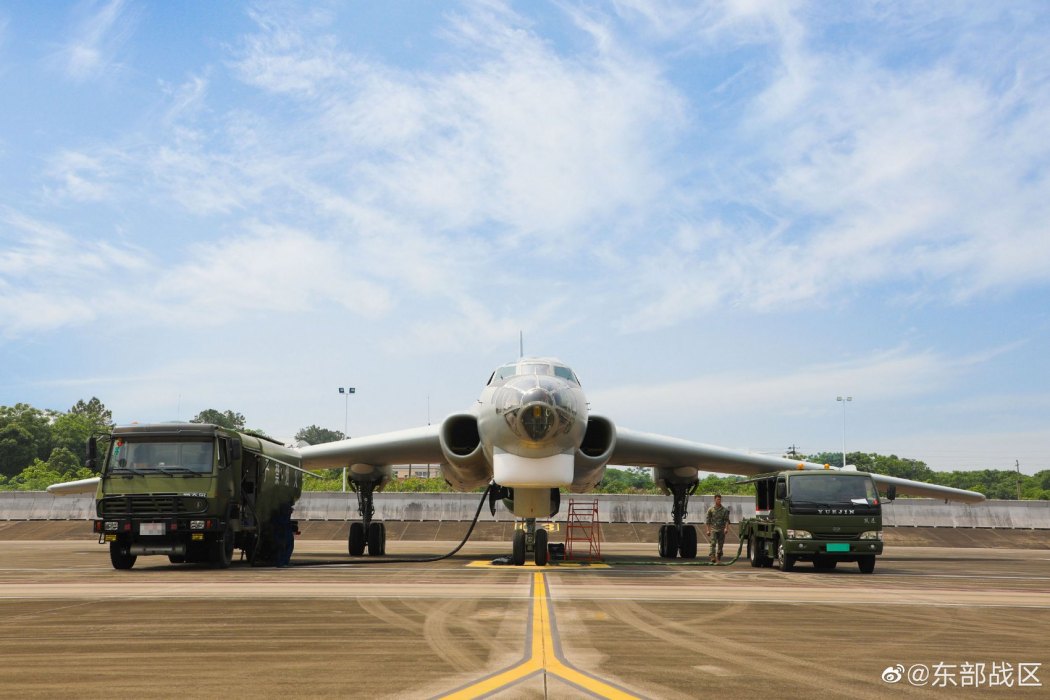
In an annual report, the Stockholm International Peace Research Institute (SIPRI) listed China as having the world’s third-largest stockpile of nuclear warheads, after Russia and the United States.
This year, Beijing announced it would increase its defence budget — the world’s second-largest — by 7.2 percent.
The boost comes as China increasingly squares off with the United States and its regional partners from the South China Sea to Taiwan.
This month, senior military officials from China and the United States held “in-depth” talks as part of a bid by the powers to avoid wider tensions escalating into conflict.
Since its first atomic test in 1964, China has been content to maintain a comparatively modest arsenal and has maintained that it would never be the first to use nuclear weapons in a conflict.

In recent years, under President Xi, it has begun a massive military modernisation drive that includes upgrading its nuclear weapons to not only deter foes but also be able to counter-attack.
But Beijing’s secretive Rocket Force, which carried out Wednesday’s test and oversees the country’s nuclear arsenal, has also been the target of an aggressive, wide-ranging anti-graft campaign.
In July, Beijing announced that Sun Jinming, the former chief of staff of the force, had been placed under investigation for corruption.
Its head, Li Yuchao, was replaced last July.
And Li Shangfu was ousted last year after only seven months as defence minister following a lengthy absence from public view.
Other disgraced generals include Wei Fenghe, who once headed the Rocket Force and who later became China’s defence minister from 2018 to 2023.


