

Canadian Prime Minister Justin Trudeau announced Monday 100 percent tariffs on Chinese electric vehicle imports, matching US measures seeking to fend off a flood of Chinese state-subsidized cars into North America.

Accusing China — one of the world’s largest exporters of electric vehicles (EVs) — of “not playing by the same rules as other countries” in areas such as environmental and labor standards, he also unveiled a 25 percent surtax on imports of steel and aluminum products from China.
The United States and the European Union have in recent months imposed tariffs on Chinese EVs of 100 percent and 38 percent, respectively.
Canada’s auto manufacturing industry employs more than 125,000 people, and Ottawa has poured billions of dollars into supporting its transition to electric vehicles, and firming up a domestic electric battery supply chain.
Its strategy — which has enticed Goodyear Tire, Honda, Stellantis, Volkswagen and others with subsidies — follows that of the United States, whose Inflation Reduction Act has provided a host of incentives for the green industry.
Ottawa has also blocked new Chinese investment in its critical minerals mining sector.
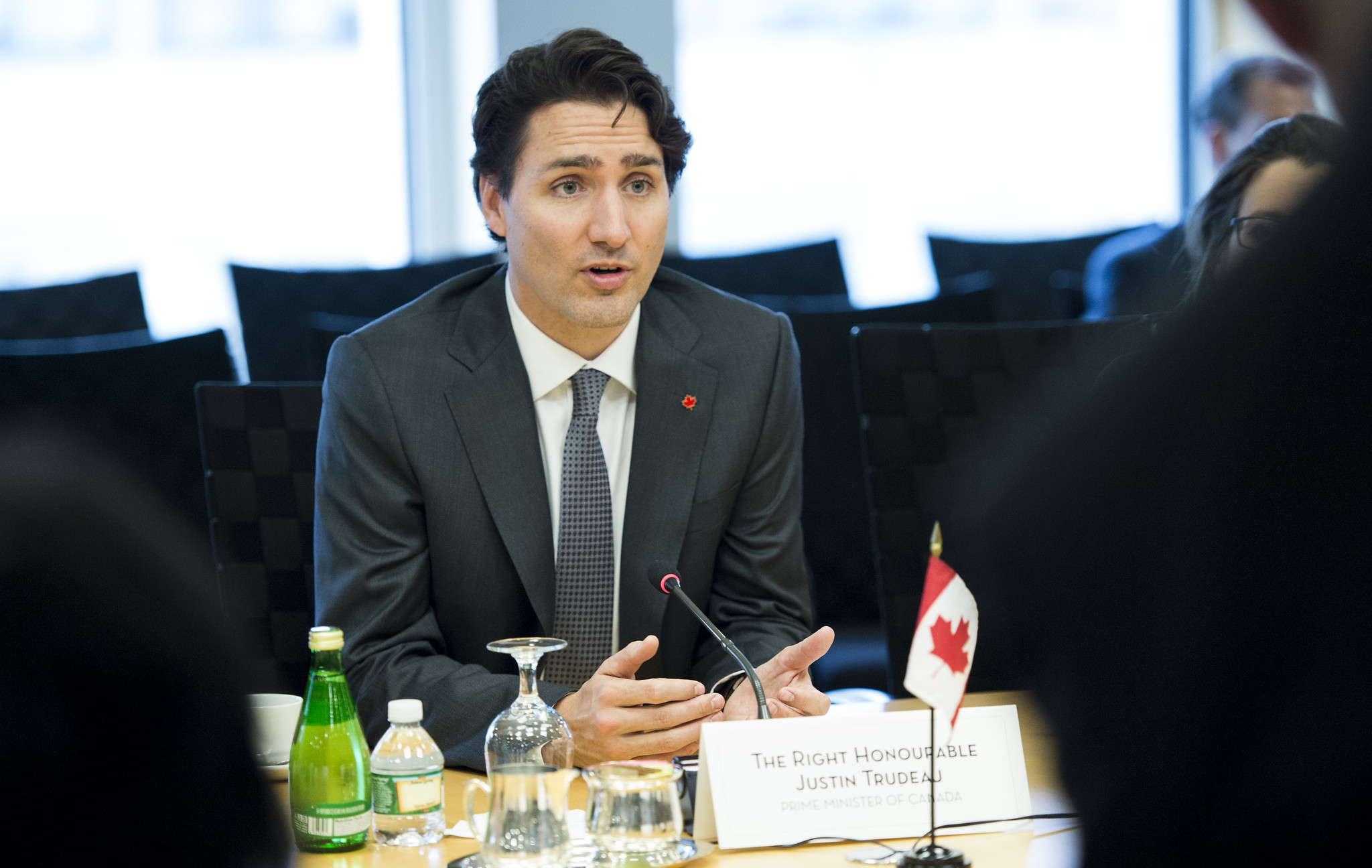
At a news conference in Halifax on Canada’s Atlantic coast, Trudeau said Chinese EV overproduction and hefty state subsidies for its auto sector “requires us to take action.”
“Unless we want to get in a race to the bottom, we have to stand up, and that’s what we’re doing,” he said. In a statement, the government called the tariffs a response to “this extraordinary threat.”
The EV surtax, on top of existing import duties of 6.1 percent, will be imposed from October 1 and target Chinese electric and certain hybrid passenger automobiles, trucks, buses and delivery vans.
Ottawa will also limit eligibility for EV incentives to those made in countries with which Canada has free trade deals, which would exclude China.

Its surtax on imports of steel and aluminum products from China will be effective from October 15.
Beijing’s embassy, in response, raised its “strong dissatisfaction” over the new tariffs.
“This move is typical trade protectionism and a politically motivated decision,” a spokesperson said in a statement on the embassy’s website.
“It will damage trade and economic cooperation between China and Canada, hurt the interests of Canadian consumers and enterprises (and) slow down the green transition process of Canada,” they said.


