

Hong Kong police have arrested two people under the new national security law over alleged “seditious intentions.”

According to local media, police apprehended a 41-year-old man and a 28-year-old woman on Friday. Officers reportedly searched their residences and confiscated their electronic devices.
The case was reportedly related to the apparent suicide of a City University professor last Sunday, local media said. After the apparent suicide, a screenshot of a suicide note linking his death to Hong Kong’s political developments since 2019 was shared widely online.
The post, which appeared to be made on WeChat, was reshared by numerous media outlets, although many reported that the note could not be verified.
The writer of the note said they had not had a “truly happy day” since the 2019 protests and unrest began. The note cited the passing of Article 23 – the city’s homegrown security law, passed in March – and included a lyric referencing freedom from Under the Vast Sky, a song by Hong Kong rock band Beyond that has been adopted as a pro-democracy anthem.
Local media reported that the woman who was arrested was accused of forging a suicide note, while the man was suspected of placing mourning lamps.

On Saturday afternoon, police brought the man to an alley in Tai Wai and searched a motorbike in his presence, inviting reporters to the scene. Officers seized two helmets and other items from the motorbike’s trunk, Ming Pao reported.
The man was handcuffed, but his head was not covered, as is typical of individuals after their initial arrest.
In a statement on Saturday, City University urged the public not to believe online rumours: “The University is deeply saddened by the recent passing of Professor Li Hin Wa and calls for respect for the privacy of Professor Li’s family as they handle their affairs. CityUHK upholds the principles of compliance with the law. The matter has now been handled by the police, and the University will fully cooperate with law enforcement authorities.”
Homegrown security law
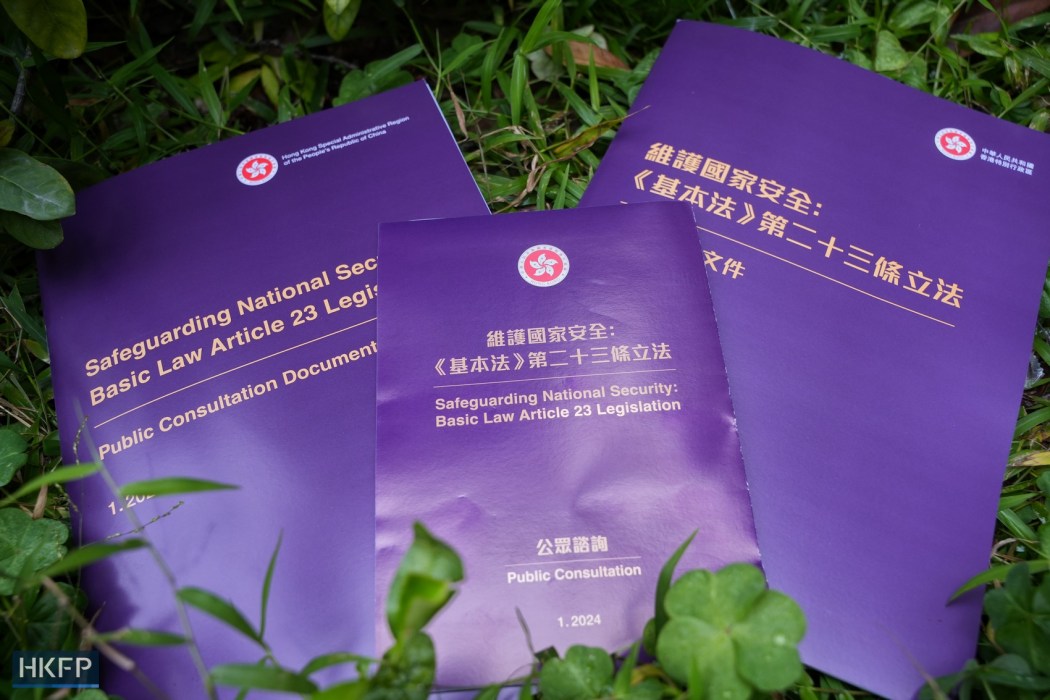
Hong Kong passed Article 23 in March, sparking further concern from NGOs and rights groups about what they described as a decline in the city’s freedoms. It is separate from the national security legislation that Beijing imposed in Hong Kong in 2020.
At least around a dozen arrests have been made under Article 23, and among them, police have charged three people. All of them were accused of carrying out acts with “seditious intention.”
They include a man accused of writing “seditious graffiti” on a bus, and another who allegedly wore a t-shirt with a banned protest slogan.
The Security Bureau has not released arrest figures under Article 23, saying that revealing such information could impact operational deployment.

The maximum imprisonment term for sedition offences is seven years, or 10 if the offence involved colluding with foreign forces. This is up from two years from before Article 23 was passed, when sedition was punishable by up to two years in jail under a colonial-era sedition law.


