

Hong Kong will set up a task force to step up monitoring of subdivided flats with the aim of setting minimum standards for living conditions and eradicating “substandard” subdivided units.

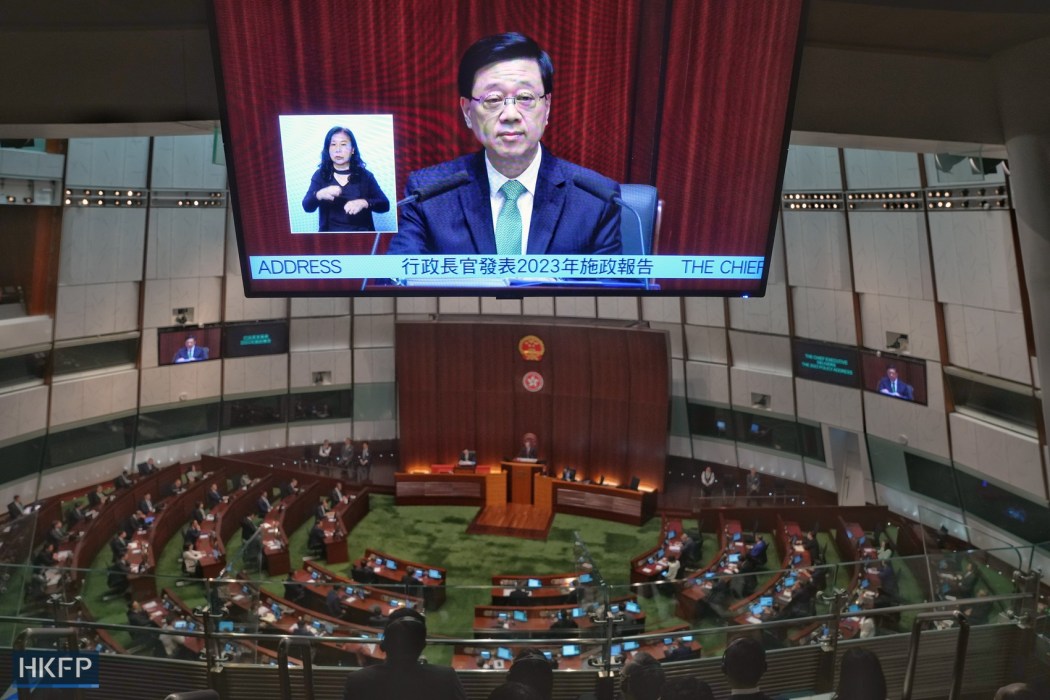
Delivering his annual Policy Address at the Legislative Council on Wednesday, Chief Executive John Lee said the city’s subdivided flat issue was “very complicated and requires meticulous planning to resolve.”
Lee said there were currently around 220,000 people living in subdivided flats, many of which offered undesirable living conditions: “I will establish a Task Force on Tackling the Issue of Subdivided Units, led by the Deputy Financial Secretary, with the Secretary for Housing as deputy.”


He added that the task force would present recommendations in 10 months’ time. They will include setting minimum standards for living conditions – connected to building safety, fire safety, hygiene requirements and living space.
The task force will also come up with measures to “eradicate substandard [subdivided flats], as well as “prevent [a] resurgence.”
Hong Kong is currently seeing its widest income gap in decades, a study by NGO Oxfam found in September. In the first four months of 2023, the median income of the poorest 10 per cent of households in Hong Kong was HK$2,300, almost 60 times less than the wealthiest 10 per cent which earned HK$132,000 found.

Earlier this year, a government report showed that the number of subdivided flats in the city had increased in recent years.
Lee announced during his maiden Policy Address last year would launch a transitional housing programme called the Light Public Housing (LPH) scheme, targeting those queueing for public rental housing.
The average wait time for public rental housing is 5.3 years, according to government data released in May. Subdivided flat residents, however, have reported waiting much longer than that.

The government aims to construct around 30,000 units by 2028. Lee said on Wednesday that the first batch of about 2,100 units would be completed by 2025.


