

The chief executive is reportedly going to propose doubling the proportion of non-local students which Hong Kong universities are allowed to admit to undergraduate courses.
This is intended, according to “sources”, to turn Hong Kong into a higher education hub. Another hub? Are we getting a bit hub-happy?

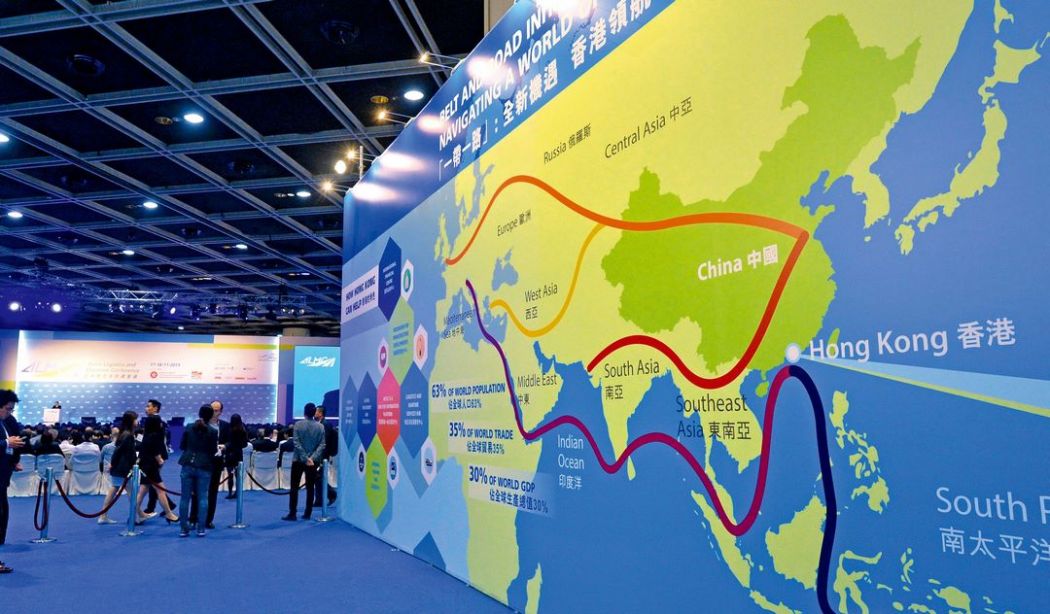
Universities, said “sources” would be encouraged to recruit students from Southeast Asian countries and “regions participating in the Belt and Road initiative to avoid the non-local quota being monopolised by mainland students”.
At the moment three quarters of the “non-locals” admitted are from the mainland.
This is likely to continue to be the case. Local universities now have lots of experience of recruiting students for “self-funded” (or as they say in the outside world, profit-making) post-graduate courses. The mainland market has many advantages.
The main one is that it is big. Advertise in a few publications, put up a decent web page, turn up at three or four “higher education fairs” in big cities, and you are contacting a very large number of potential customers.
Other markets are small, further away, have few people rich enough to contemplate sending their children to Hong Kong for four years – even if we are covering tuition – and need to be addressed in different local languages.
So mainlanders it will be. This is not a complaint. During my teaching years I encountered three waves of mainlanders and they were all generally nice kids in different ways.

We started with a few carefully picked individuals on lavish scholarships. They were selected with great care and although some mainland academics said rather snootily that, of course, they wouldn’t send their very best students to Hong Kong, detecting academic promise in 17-year-olds is not an exact science and these students were excellent.
They were often the most successful student in their classes and went on to win prizes and scholarships.
The next wave was not selected. They were the offspring of parents who could afford it. They were a pleasant enough bunch but a lot of them seemed to have come to Hong Kong primarily for the shopping. The result was unexpected. My local students had been quite happy to see mainlanders hogging the academic limelight and seemed to regard them respectfully as interesting, but with a deficient sense of work-life balance.
The third wave was the intake to our local version of the taught master’s degree. They were an educated bunch obviously. A degree was a requirement. Many of them seemed to have been very lucky in their English examinations though.

One year, I was lucky enough to have a Norwegian student who spoke fluent Putonghua and reported to me after the first class that the mainlanders had been horrified at how difficult my accent was. There is nothing wrong with my accent. I was a paid broadcaster for many years. I can only conclude that this is what happens if you ban the BBC.
Two legislative members offered comforting thoughts. Chow Man-kong (education) who works at the Education University, thought the quota should go up to 50 per cent, adding that many lecture halls were big enough to accommodate a few more students. Prof Chow had not been reading the small print. If the quota goes up but the student population does not there is no need for larger lecture halls.
Lingnan University professor Lau Chi-pong said the influx would not hinder local students’ search for dormitories as “[t]hese non-locals would have to settle their accommodation before coming here and Hong Kong’s public transport system is well developed.” But he added, incoherently: “no matter how far the students live, the universities will have to take care of their accommodation.”
Above all is there a market for this? Prof Chow suggested that the government should set up a centralised student recruiting agency, which suggests a certain lack of confidence. This would “target top students and those from the middle class”. An interesting notion. Does Prof Chow’s university, one wonders, prefer students from the middle class? And is that even legal?
The problem which nobody dares to mention, of course, is that the attractions of Hong Kong as a high education destination for mainlanders have wilted somewhat of late. Our universities used to able to offer subjects like history, politics and journalism in ways which simply could not be found in mainland universities. Nowadays, not so much. We still have business, I suppose. This will perhaps in due course be revised to make it palatable for patriots. Capitalism with Chinese characteristics?
Correction 24/10/23: A previous version of this article misstated the increase in the student population. The number of local students will not – in fact – change, and courses taken by non-local students will not be locally subsidised.
| HKFP is an impartial platform & does not necessarily share the views of opinion writers or advertisers. HKFP presents a diversity of views & regularly invites figures across the political spectrum to write for us. Press freedom is guaranteed under the Basic Law, security law, Bill of Rights and Chinese constitution. Opinion pieces aim to constructively point out errors or defects in the government, law or policies, or aim to suggest ideas or alterations via legal means without an intention of hatred, discontent or hostility against the authorities or other communities. |


