

China on Sunday touted its new Silk Road as “a project of the century” at a summit highlighting its growing leadership on globalisation, but a North Korean missile test competed for attention.
President Xi Jinping hosted leaders from 29 nations for the two-day summit in Beijing ending Monday after US and South Korean military officials confirmed that Pyongyang had launched a ballistic missile.

Delegations from North Korea and the United States attended the forum, though not their leaders. Few Western heads of government made the trip.
The summit is showcasing Xi’s cherished One Belt, One Road initiative, a revival of the ancient Silk Road trading routes that could further expand China’s growing global influence on trade and geopolitics.
“This is indeed a gathering of great minds,” Xi said, addressing leaders from Russian President Vladimir Putin to Turkish counterpart Recep Tayyip Erdogan and Philippine President Rodrigo Duterte.

Xi pledged to pump an extra $124 billion in funds into the initiative, calling it “a project of the century” in a “world fraught with challenges”.
The Chinese-bankrolled project seeks to link the country with Africa, Asia and Europe through an enormous network of ports, railways, roads and industrial parks.
The initiative spans some 65 countries representing 60 percent of the world population and around a third of global gross domestic product. The China Development Bank has earmarked $890 billion for some 900 projects.
The project could also serve Beijing’s geopolitical ambitions as Washington retreats into “America First” policies.
While Xi did not mention North Korea during his speech, it was discussed at his bilateral meeting with Putin.
“Both parties expressed their concern over the escalation of tensions” on the Korean peninsula, Kremlin spokesman Dmitry Peskov told reporters.
The Chinese foreign ministry said in a statement it opposed such missile tests and called for restraint from all parties.
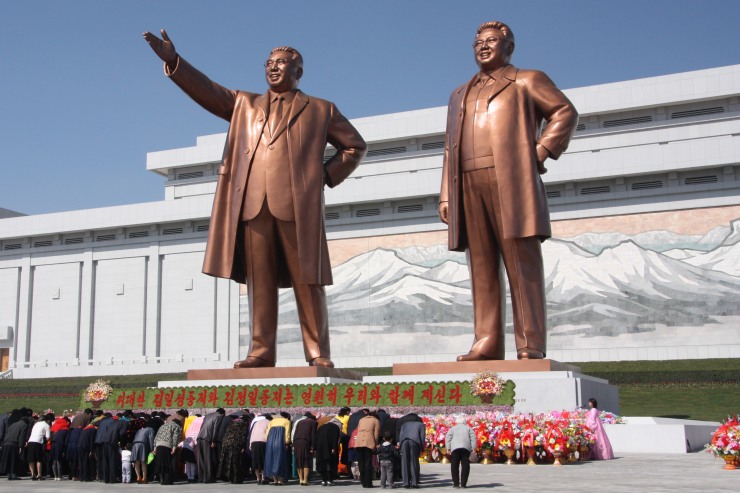
The delegates from both Koreas held a brief meeting at the summit, according to South Korea’s Yonhap news agency.
”A chronology of North Korean missile development: click to view“
North Korea on Sunday test-fired a ballistic missile, the latest in a series of rocket and nuclear tests that have sent regional tensions soaring.
Here are key dates in its missile programme:
Late 1970s: Starts working on a version of the Soviet Scud-B (range 300 kilometres or 186 miles). Test-fired in 1984
1987-92: Begins developing variant of Scud-C (500 km), Rodong-1 (1,300 km), Taepodong-1 (2,500 km), Musudan-1 (3,000 km) and Taepodong-2 (6,700 km)
Aug 1998: Test-fires Taepodong-1 over Japan as part of failed satellite launch
Sept 1999: Declares moratorium on long-range missile tests amid improving ties with US
July 12, 2000: Fifth round of US-North Korean missile talks ends without agreement after North demands $1 billion a year in return for halting missile exports
March 3, 2005: North ends moratorium on long-range missile testing, blames Bush administration’s “hostile” policy
July 5, 2006: North test-fires seven missiles, including a long-range Taepodong-2 which explodes after 40 seconds
Oct 9, 2006: North conducts underground nuclear test, its first
April 5, 2009: North Korea launches long-range rocket which flies over Japan and lands in the Pacific, in what it says is an attempt to put a satellite into orbit. The United States, Japan and South Korea see it as a disguised test of a Taepodong-2
May 25, 2009: North conducts its second underground nuclear test, several times more powerful than the first
April 13, 2012: North launches what it has said is a long-range rocket to put a satellite into orbit, but it disintegrates soon after blast-off and falls into the ocean
December 12, 2012: North launches a multi-stage rocket and successfully places an Earth observational satellite in orbit
February 12, 2013: Conducts its third underground nuclear test
January 6, 2016: North conducts its fourth underground nuclear test, which it says was of a hydrogen bomb — a claim doubted by most experts
February 7, 2016: North Korea launches a satellite-bearing rocket, an operation widely seen as a covert ballistic missile test
March 9, 2016: Kim Jong-Un claims the North has successfully miniaturised a thermo-nuclear warhead
April 15, 2016: North Korea tries but fails to test-fire what appears to be a medium-range missile on the birthday of founding leader Kim Il-Sung
April 23, 2016: North test-fires a submarine-launched ballistic missile
July 8, 2016: US and South Korea announce plans to deploy an advanced missile defence system — the US THAAD (Terminal High Altitude Area Defense)
August 3, 2016: North Korea fires a ballistic missile directly into Japanese-controlled waters for the first time
August 24, 2016: Successfully test-fires a submarine–launched ballistic missile, in what it says is retaliation for large-scale South Korea-US military exercises
September 5, 2016: North Korea fires three ballistic missiles off its east coast as top world leaders meet at the G20 summit in China
September 9, 2016: Fifth nuclear test
October 15, 2016: An intermediate-range Musudan missile, theoretically capable of reaching US bases on Guam, is tested but explodes shortly after launch
February 12, 2017: North conducts test of ballistic missile which flies about 500 kilometres (310 miles) before falling into the Sea of Japan
March 6, 2017: North fires four ballistic missiles in what is says is an exercise to hit US bases in Japan. Three come down in waters that are part of Japan’s exclusive economic zone
March 7, 2017: US begins deploying THAAD missile defence system in South Korea
March 19, 2017: North Korea says it has tested a new rocket engine
April 5, 2017: North Korea fires a ballistic missile into the Sea of Japan (East Sea), which the US says was an extended-range Scud missile
April 16, 2017: North Korea stages a failed missile test
April 29, 2017: North test-fires a ballistic missile which fails after a brief flight
May 2, 2017: THAAD anti-missile system goes operational in South Korea
May 14, 2017: North fires a ballistic missile which flies 700 kilometres before landing in the Sea of Japan.
“We strongly condemned North Korea’s launch of the missile,” said Park Byeong-Seug, who leads Seoul’s delegation, according to Yonhap.
The US representative, White House adviser Matt Pottinger, was pictured near North Korea’s minister of external economic relations, Kim Yong Jae, as they arrived.
But US embassy spokeswoman Mary Beth Polley told AFP that the two officials did not hold a meeting. “No small talk, nothing,” she said.
North Korea relies heavily on trade with China for its economic survival, and US President Donald Trump has urged Xi to use that leverage to put pressure on Pyongyang.
The White House called on all nations to impose “far stronger sanctions” following the latest test, which came days after South Korea elected a new president.
Sunday’s missile launch “is absolutely an embarrassment to Beijing but it also shouldn’t be overstated”, Christopher Balding, economics professor at Peking University, told AFP.
Respecting sovereignty
Xi focused on his initiative, boasting that it represented a “road for peace”, but he cautioned that “all countries should respect each others’ sovereignty… and territorial integrity”.
He warned that “isolation results in backwardness”.

The new financing that he promised on Sunday includes 100 billion yuan ($14.5 billion) for the Silk Road Fund and lending schemes worth 380 billion yuan. He also urged financial institutions to contribute 100 billion yuan.
Praising Xi’s initiative, Putin warned that “protectionism is becoming the norm”.
“The ideas of openness, trade freedom are rejected more and more, very often by those who were their supporters not so long ago,” Putin said.
Raising concern
While Trump railed against China’s trade policies during the US election, he has nurtured friendly ties with Xi and his envoy to the summit said US companies were ready to get involved in the Silk Road.
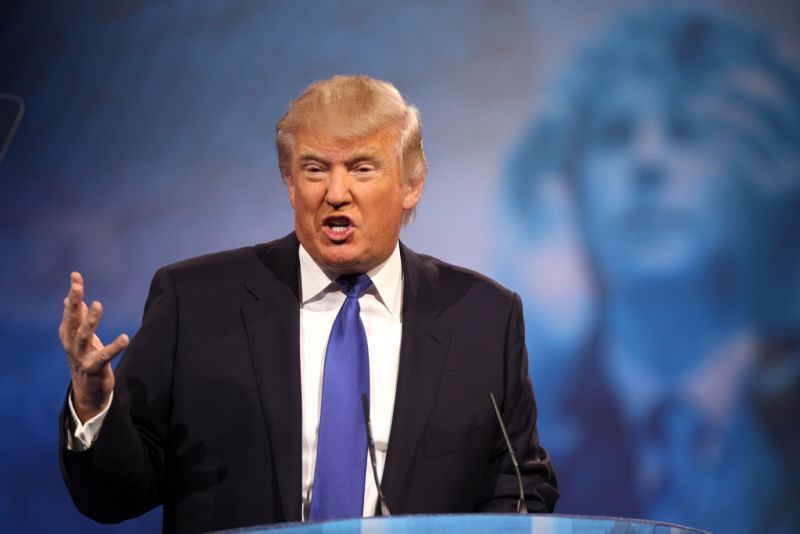
“US firms can offer the best-value goods and services required over the life of a project,” Pottinger told the forum, though he warned that success would depend on transparent government procurement, among other things.
German Economy Minister Brigitte Zypries echoed calls for transparency to ensure that the calls for bids are “non-discriminatory”.
Some Belt and Road projects are raising concerns in certain countries.
India has voiced displeasure at the China-Pakistan Economic Corridor, a Belt and Road project aimed at linking northwestern China to the Arabian Sea.
The route cuts through Gilgit and Baltistan in Pakistan-administered Kashmir, disputed territory that India claims is illegally occupied.


