

Holding metal buckets of dal, rice and paneer masala, volunteers offered generous top-ups to the stainless steel trays of diners seated cross-legged on the floor.

Friends, families with children, and construction workers who had just finished a shift nearby were among those tucking into a hearty meal on a November day.

The langar, with its bright interior and gilded accents, is the heart of Hong Kong’s newly redeveloped Khalsa Diwan Sikh Temple. Offering free vegetarian food to worshippers throughout day, the dining hall is also a place of unexpected reunions and overdue catch-ups for the city’s 15,000-strong Sikh community.
Khalsa Diwan – located in Wan Chai – officially reopened on Tuesday after a five-year renovation. Spanning 76,000 square feet, the new four-storey temple features a large prayer hall, an upgraded library, classrooms and conference rooms. A medical centre, run by volunteers, is in the works.
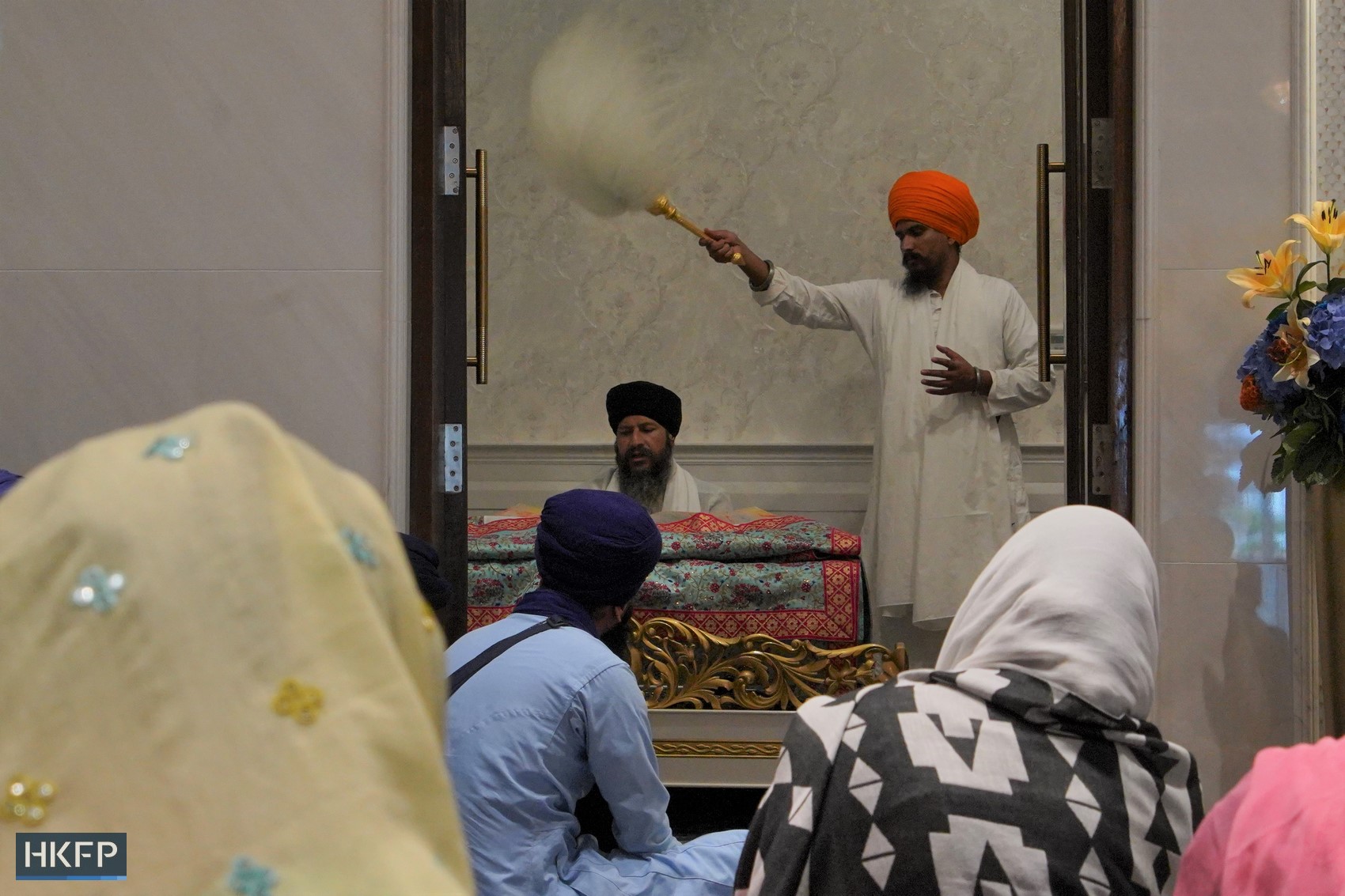
“The new temple is much bigger and more organised,” Johnny Johal, who was eating at the food hall with his wife and 12-year-old daughter, told HKFP. “Before the renovation, we used to come here for prayers, but also celebrations like birthdays and weddings.”

He added that he imagined he would be a regular at the temple again now that it has reopened, visiting perhaps once a week.
Muskkan Samtani and Gulshan Dua told HKFP there was no place in Hong Kong that was quite like the Sikh temple.
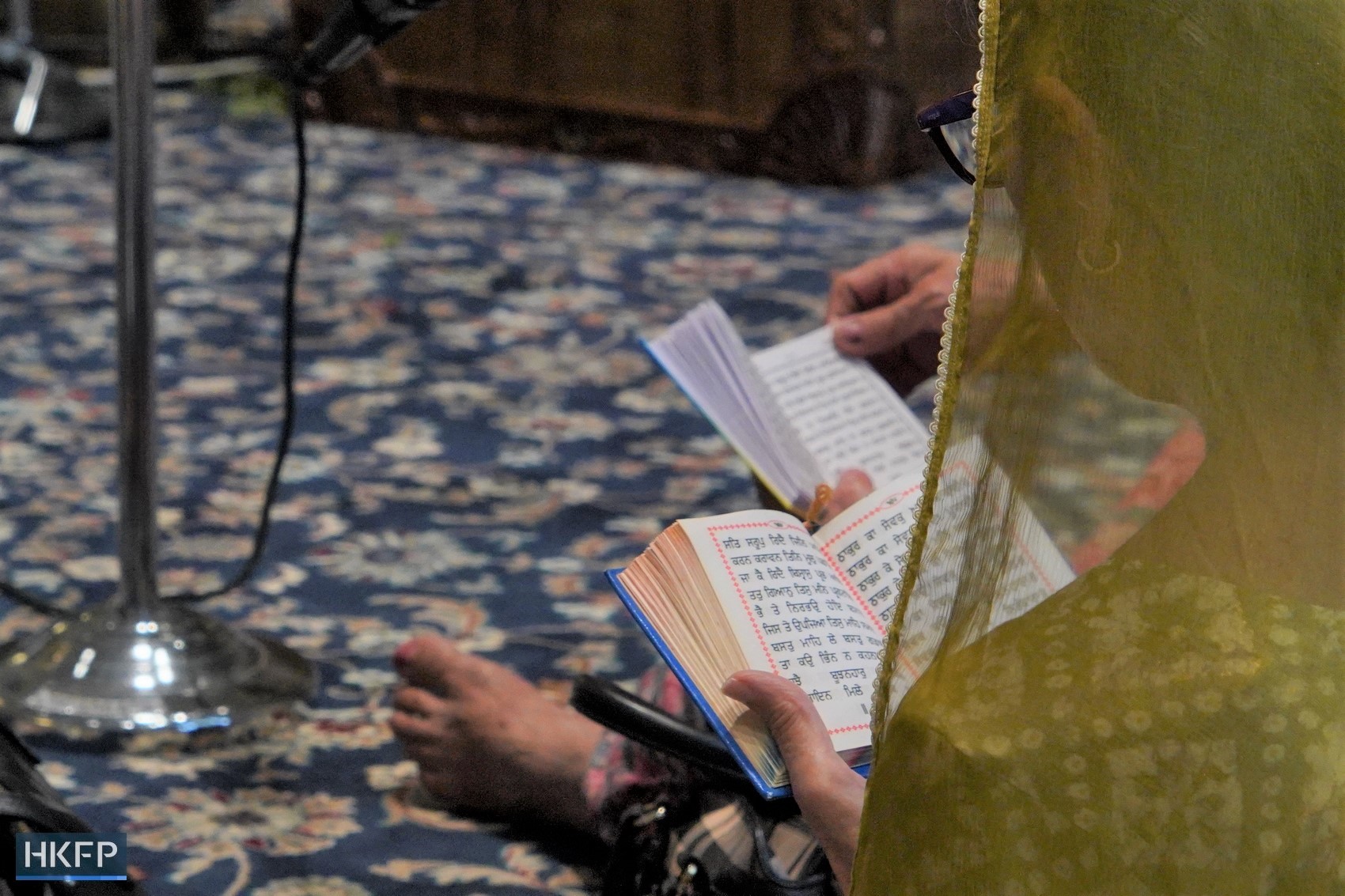
“During Diwali,” Dua said, referring to one of India’s biggest annual festivals, “there’s the food, the prayers, the candles, the huge tables – it’s exactly the way we do it back home.”
The pair are volunteers with the temple’s digital library committee, helping to source books in English and Punjabi – the predominant language spoken by Sikhs – that aim to teach young children about their religion.

“Many children growing up in Hong Kong do not have much exposure to their culture,” Samtani said. “They may not understand things like why they need to cover their hair when going to a temple.”
‘A focal point’
According to the temple’s website, it is believed that Sikhs first came to Hong Kong around 1840, many of them brought by British colonisers to Hong Kong from India, also part of the British empire, to serve in the police force.

The temple was founded in 1901 by the Sikh members of the British Army Regiment in Hong Kong, and was rebuilt after it was bombed by Japanese soldiers in World War II.

It holds prayers every morning and evening, with an extra afternoon session on Wednesdays and Saturdays. The temple also offers Punjabi and Sikh literature classes, and there are plans to start Cantonese lessons.
Gurdev Singh Ghalib has devoted his days to the temple since retiring six years ago from his chief officer post at the Correctional Services Department. The 61-year-old oversaw the temple’s redevelopment as convenor of the Building Committee of the Sikh temple.
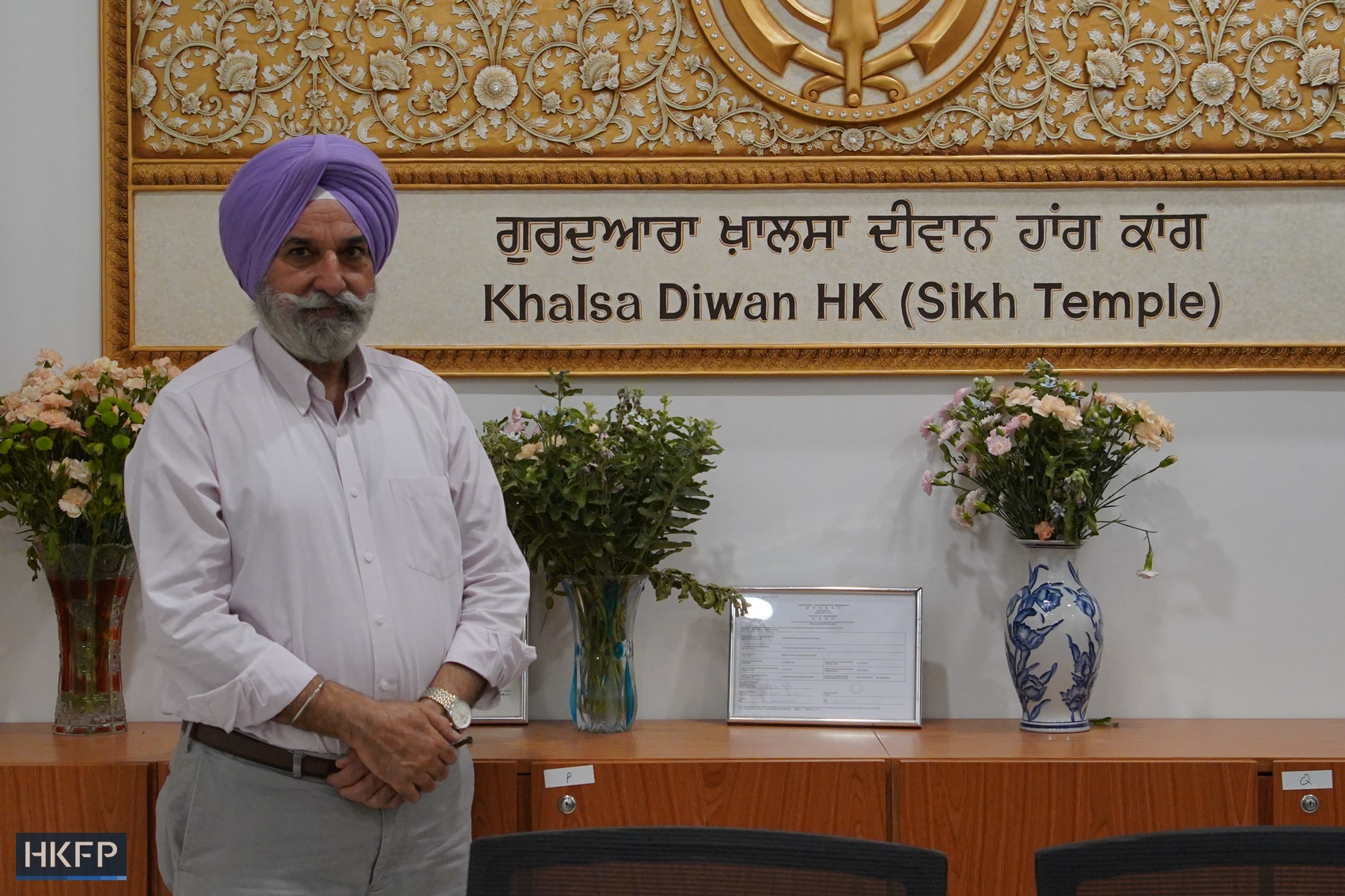
“This is a focal point for everything,” Ghalib told HKFP, adding that it was a place for “all ages” from babies to the elderly.
In Indian culture, mothers who have just given birth observe a confinement period of 40 days, he said. The custom is similar to the Chinese post-partum practice of “sitting moon.”

“Then they bring the baby to the temple and give them holy water to drink,” Ghalib said. “And for those who are retired, they can relax here. They can have a cup of tea and sit in the yard, just to kill time.”
Giving back to the community
Back in the dining hall, Rajbir Singh – who had just attended a morning prayer session upstairs – was finishing up the last of his chapati and masala tea.

“After that, I will go do sewa,” he told HKFP as he gestured towards the kitchen, where dozens of volunteers were preparing food, mopping and washing the dishes.
Sewa refers to the Sikh concept of providing “selfless service” at the temple. It comes in the form of volunteering wherever help is needed, whether it is cleaning, fixing appliances or maintenance. The temple employs just 10 staff members, according to Ghalib.

In the kitchen, volunteers stirred giant vats of kheer – a type of Indian rice pudding – and cracked open bags of sugar to make masala tea. Others on dishwashing duty dunked trays and utensils into basins of soapy water, their arms lathered in suds.
Bally Gill, a volunteer, pointed to a group holding mops and wiping down gas stoves. “We are the executive cleaning team,” she joked. “Three times a week, we try to do a deep clean.”

“The cooking is important, but we have to make sure that everything is tidy and hygienic too,” she said, adding that there could be as many as 20 to 30 cleaners volunteering in the kitchen at any given time.
The temple, she added, is more than a place of religious worship. “It gives us a place for us to get together, to do something of purpose.”


