

A Hong Kong court has remanded four men into custody pending sentencing next month, after the group was convicted over wounding a lawyer at an illegal protest against the national security law in May 2020.
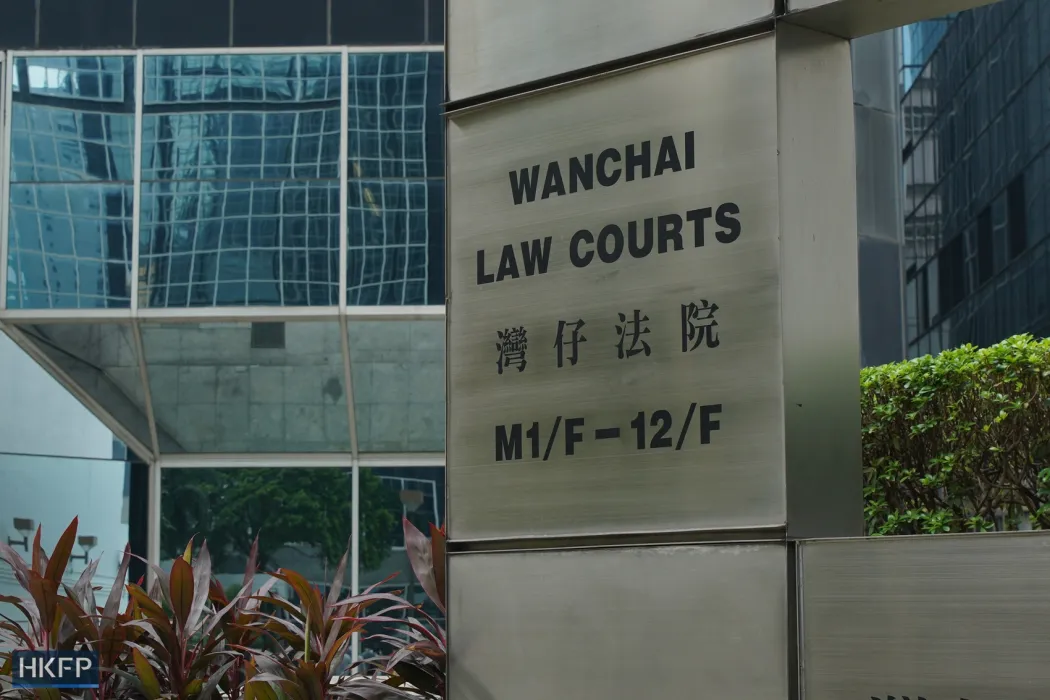
Deputy District Judge Daniel Tang on Tuesday heard mitigation pleas from defendants Tong Kin-pong, Yue Wai-lun, Cheng Hok-ming and Owen Wong, who were found guilty of wounding solicitor Chan Tze-chin with intent on May 24, 2020. That day, several thousands of Hongkongers gathered in Causeway Bay to rally against Beijing’s announcement that it would enact the security legislation in the city.

According to the prosecution’s case, protesters lit multiple fires around the commercial district and vandalised the clothing store I.T Shop and the entrance of China Taiping Tower. Chan was attacked after he condemned the demonstrators’ acts and said they would be arrested by the police.
As Chan was leaving the scene, some protesters hit him from behind with umbrellas and other hard objects, and warned that they would “beat him to death” if he called the police. The lawyer tried to run away but was pursued by some protesters. Chan’s T-shirt was torn, while he suffered “severe attacks” on his head and neck, prosecutors said.
Someone also threw a large metal road sign at Chan, which landed behind the lawyer. He eventually ran to the South China Athletic Association, where staff members called the police. Chan was hospitalised and his chin, right neck, left palm and left leg required stitches.
The four defendants were originally prosecuted for rioting and wounding, but Yue, Cheng and Wong reached a plea deal before the case was set to move to trial earlier this month. They pleaded guilty to one count of unlawful assembly and one count of wounding with intent, while Yue’s possession of offensive weapon charge was kept on court file.
Truck driver Tong, on the other hand, denied his charges and was put on trial. But the 33-year-old changed his plea to guilty last week, after the court ruled that the prosecution presented sufficient evidence to establish a prima facie case against him.
Under police caution, Tong admitted that he had attended the protest alone. He said he kicked and punched Chan three times because he was “angry” at the solicitor’s criticism, adding that he had acted “impulsively.”
During mitigation on Tuesday, the defence said Chan did not sustain any permanent injury from the attack. Cheng’s lawyer said his 25-year-old client engaged in the attack for less than two seconds and was remorseful, while the counsel representing 17-year-old Wong said the defendant was very young and did not play a leading role in the attack.

Judge Tang adjourned the case to November 4 for sentencing, pending background reports and psychological reports for Tong, Yue and Cheng. The court also ordered a series of reports to evaluate whether Wong, a minor, was suitable for sentencing to other types of correctional facilities.
The demonstration took place a little over a month before the Beijing-imposed legislation came into force on June 30, 2020. At least 180 people were arrested on the day, mostly on suspicion of allegedly participating in an illegal assembly.
Enacted in the aftermath of the 2019 extradition bill unrest, the national security law criminalised subversion, secession, collusion with foreign forces and terrorist acts, which were broadly defined to include disruption to transport and other infrastructure.
The move gave police sweeping new powers, alarming democrats, civil society groups and trade partners, as such laws have been used broadly to silence and punish dissidents in China. However, the authorities say it has restored stability and peace to the city.
Support HKFP | Policies & Ethics | Error/typo? | Contact Us | Newsletter | Transparency & Annual Report | Apps
Help safeguard press freedom & keep HKFP free for all readers by supporting our team


















latest national security stories


