

China’s Communist Party will on Sunday open its 20th Party Congress, the country’s most important political meeting, which is held once every five years.

Here are five questions and answers about the opaque process that will see major leadership changes expected to bolster President Xi Jinping’s authority and grant him a landmark third term.
What’s the meeting for?
The CCP, which has ruled China since 1949, has held 19 congresses to fill its leadership ranks since it was founded in 1921.
This year, about 2,300 delegates from across the country will descend on Beijing in a highly choreographed event to pick members of the Central Committee, which is made up of around 200 people.

It will “provide important clues about which leaders may be in line for top posts, and the amount of turnover within the Central Committee — generally around 60 percent — may signal how aggressively Xi intends to reshuffle”, wrote Christopher K. Johnson, senior fellow at the Asia Society Policy Institute.
The committee will select members for the 25-person Politburo and its all-powerful Standing Committee — the country’s highest leadership body and apex of power, currently comprising just seven people.
Xi is all but certain to begin an unprecedented third five-year term as party general secretary.
In 2018, he abolished the presidential two-term limit, set by former leader Deng Xiaoping in the 1980s to avoid another Mao Zedong-style dictatorship.
Who’s on the Standing Committee?
The current Standing Committee consists of Xi, Premier Li Keqiang, Li Zhanshu, Wang Yang, Wang Huning, Zhao Leji and Han Zheng.
These career bureaucrats who rose through the party ranks over decades call the shots in the world’s most populous country, each getting one vote on key policy decisions.

But Xi reigns supreme, setting the agenda for their frequent secret meetings.
A sweeping anti-corruption campaign since Xi came to power has brought down former ministers and Politburo members, weakening party factions and eliminating rivals.
“Xi has made important tweaks to selecting the delegates and the pool of senior leaders. These changes overturn earlier conventions designed to foster greater transparency and open competition,” wrote Johnson.
Who’s leaving?
Since 2002, Standing Committee members aged 68 or above have stepped down, abiding by the unwritten retirement age first employed by former president Jiang Zemin to dump an ageing rival.
If the informal rule is upheld, but as expected does not apply to Xi, two out of seven members will step down — leaving Xi, 69, Li Keqiang, 67, Zhao, 65, Wang Yang, 67, and Wang Huning, also 67.
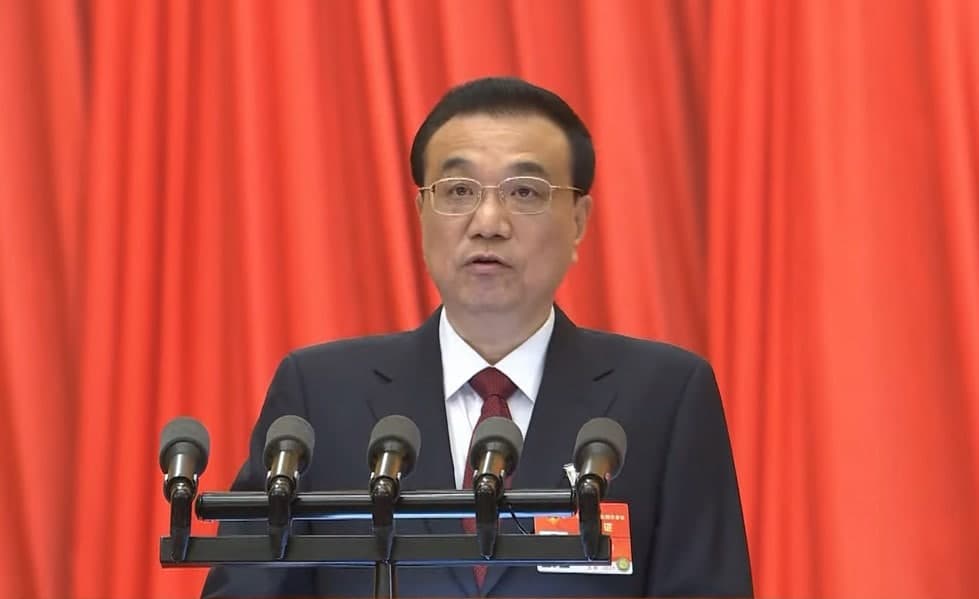
Li announced in March that he will retire as premier, but it is unclear whether he — or some of the others below 68 — will stay on the Standing Committee.
Another nine of the Politburo’s 25 members are also due to retire, leaving a number of Xi’s close allies likely to be promoted to top posts.
Will a successor to Xi emerge?
Xi has scrapped China’s two-term presidential limit and discarded several other party norms, such as indicating a successor by his second term.
This further consolidates his personal power and raises uncertainties about how long he plans to rule, making potential successors vie for his approval.
He has already installed close allies in top positions this year, such as the new minister for public security Wang Xiaohong, 65.
Shanghai party chief and Xi ally Li Qiang has retained his post despite a controversial two-month Covid lockdown in the key city.
Will Xi reign supreme?
Analysts expect Xi to reinforce his stature as China’s most powerful ruler since Mao.
Party propaganda has gone into overdrive since last autumn to bolster Xi’s legacy, diminish the achievements of his predecessors and further enshrine him in the highest echelons of Communist Party mythology.

Each Chinese leader since Mao has had one of his personal political philosophies or ideas codified in the state constitution.
Xi’s political ideology was included in 2018 and analysts say he will be looking to shorten the clunky “Xi Jinping Thought on Socialism with Chinese Characteristics for a New Era” to the pithier “Xi Jinping Thought” — putting him on a par with Mao.


