

Hong Kong’s equality watchdog has said it is seeking to mediate between a male secondary school student and their school, after the teenager complained that they were pressured into cutting their long hair.

In an Instagram post on Tuesday, 17-year-old Nathan Lam Chak-chun said he had lodged an official complaint with the Equal Opportunities Commission against Tung Wah Group of Hospitals Wong Fut Nam College, after the school allegedly told them to cut their long hair or face being barred from school activities or possible suspension.
Such a move amounted to breaching the Sex Discrimination Ordinance, the Form Five student alleged, saying the watchdog accepted their complaint and was set to act as a mediator or launch an investigation into the matter. The teenager said they wanted to let the public know that banning male students from having long hair was “unreasonable.”
“Around half a month ago… I was forced to cut my hair under pressure. I was depressed for a while, but I realised staying depressed was not the way to go. I must make some changes,” Lam said, pointing to having “a bit of gender dysphoria” as a reason why they did not want to wear their hair short.
As of 3 p.m. on Thursday, Lam’s accompanying video in their post had over 646,000 views on Instagram with more than 2,700 comments. Many expressed support and praised the pupil for “speaking out.”

Ferrick Chu, the Equal Opportunities Commission’s executive director (operations), told RTHK on Thursday that the watchdog’s role was not to “determine right from wrong” but to resolve conflicts. He refused to comment on individual cases when asked if male and female students were subject to different requirements on hair length.
“In every case, we have to consider many factors, [such as] social values, conventions… legal requirement is a consideration as well. These have to be considered together,” he said, adding 80 to 90 per cent of the cases over the past year were resolved through mediation.
Case of lawmaker ‘Long Hair’
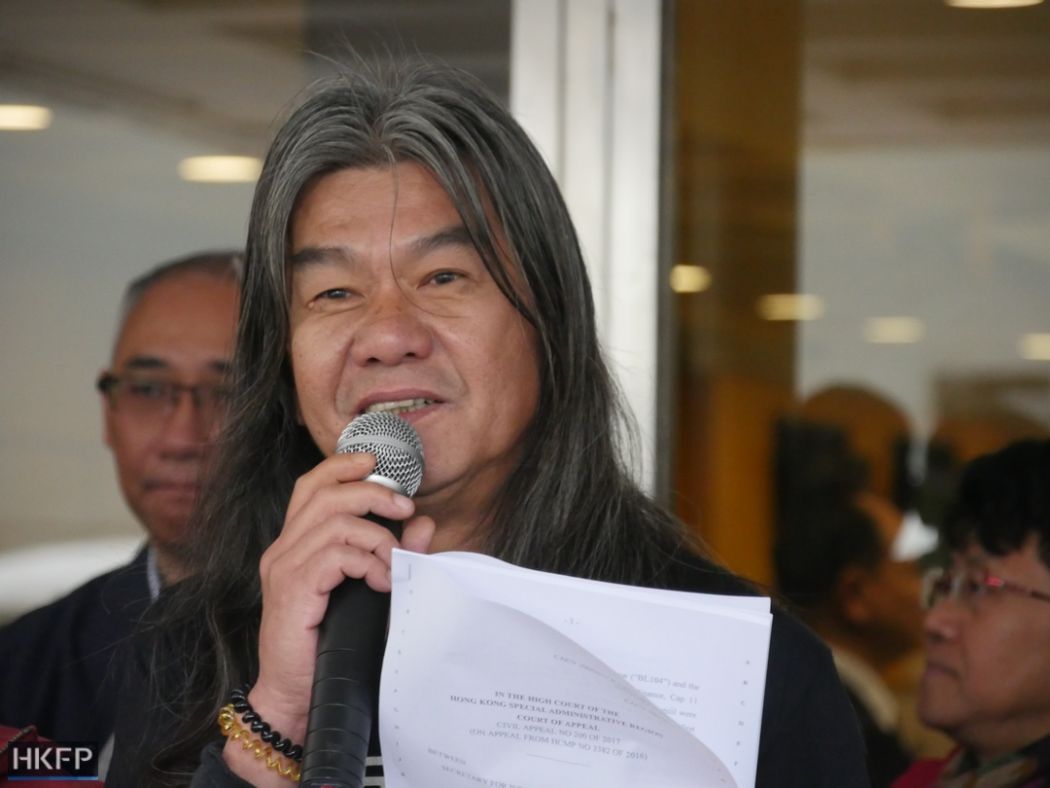
The Wong Fut Nam College student said on Tuesday that they began to think about the legality of the school regulations against long hair after the case of former lawmaker Leung Kwok-hung.
The pro-democracy activist, better known as “Long Hair,” won a lengthy legal battle against the Correctional Services Department in November 2020, with the top court ruling that compulsory haircuts only for male prisoners amount to sexual discrimination. His trademark locks were shorn in 2014 while serving a jail sentence over a protest.
Lam argued that it would be “biased” to think that having long hair was equivalent to being unkempt, saying female students “looked fine” with long hair. The teenager said regulating a students’ hairstyle was different from requiring them to put on a school uniform, as banning long hair may also “override” a student’s right of self-expression outside school.
The pupil said schools should not be worried that their reputation would be affected by allowing male students to wear their hair long. People would judge a school on its teaching standards, not on hairstyles.
HKFP has reached out to the school for comment.
‘Avoid gender stereotype’
Education minister Christine Choi said on Wednesday that the School Administration Guide had clear guidelines on rules, saying she believed the school would handle the issue professionally.
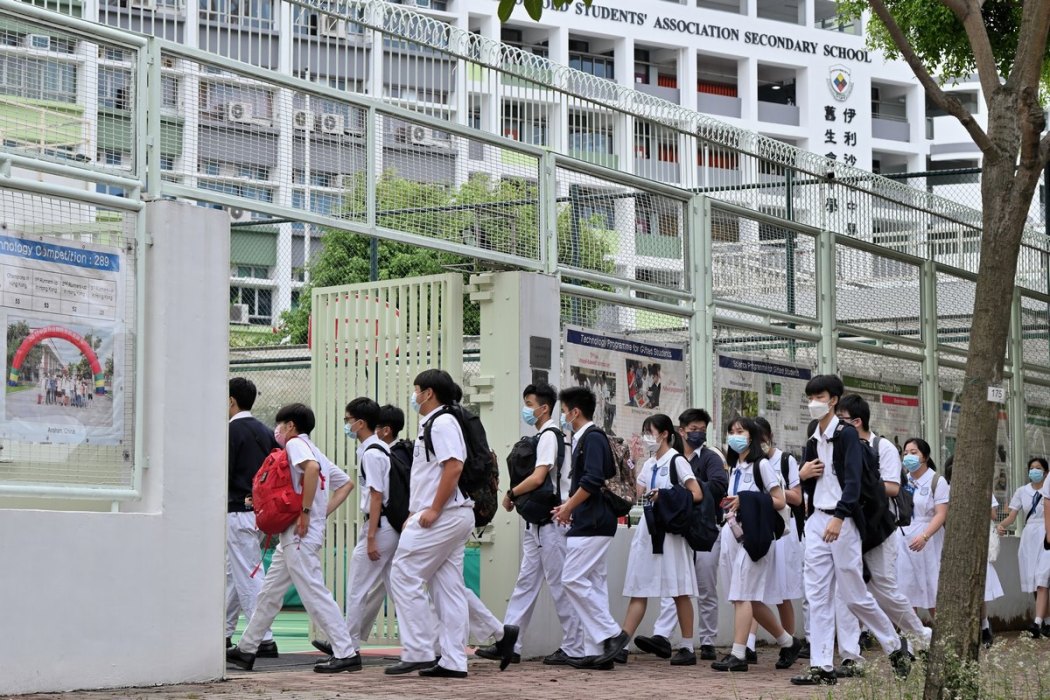
The Education Bureau’s directory states that schools should refer to the Racial Equality and School Uniform guide written by the Equal Opportunities Commission when designing regulations related to school uniform. The document states that schools should pay attention to other aspects of equality including disability and gender, and apply uniform standards between boys and girls “even-handedly.”
“Schools are encouraged to be inclusive and to avoid gender stereotype in making school uniform rules,” the EOC guidelines read.
Last October, a group of students in the US sued a Texas school district for sex discrimination after they were punished for having long hair, the BBC reported. A federal judge later ordered the students to return to school without facing consequences for violating the gender-based dress code, according to The Texas Tribune.


