


When people talk about why AI agents haven’t taken off yet, they usually point to intelligence. The models aren’t smart enough, or they hallucinate too much, or the context windows are too small. I don’t think that’s it.
I think the real reason is simpler: delegation has never been worth the overhead. Not for the forty-minute tasks that fill most of my week, and probably not for yours either. By the time you’ve specified what you want, checked on progress, reviewed the output, and fixed what’s wrong, you’ve spent more time coordinating than you would have spent just doing the thing. So you do the thing. That’s not laziness. It’s arithmetic.
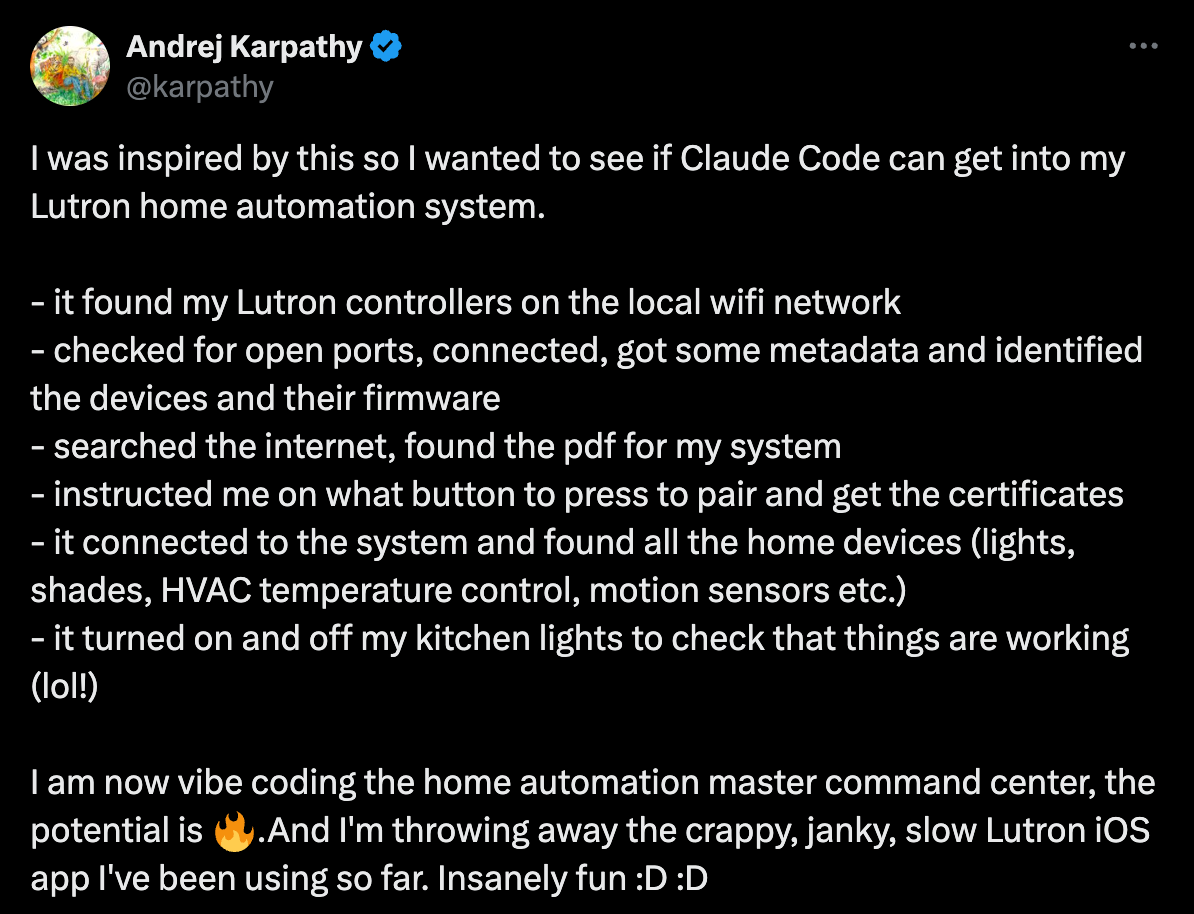
Here’s what makes this moment interesting: we’re entering a fuzzy window—call it now through May or June of 2026—where the infrastructure for personal agents is arriving faster than most people realize. Not the magical inbox where you drop a task and pick up a finished result. That’s still coming. But something more immediately useful: tools you can configure today, that persist between sessions, that connect to your calendar and email and files, that have real permission systems and audit trails.
The question is whether you’re ready to use them.
That’s where it gets uncomfortable. Because if delegation overhead actually drops—if specifying work becomes cheap enough that the math flips—then the bottleneck moves somewhere most of us haven’t prepared for. It moves to our ability to say what we want in a way that something else can execute.
That sounds simple until you try it. Most knowledge workers, myself included for most of my career, operate on improvisation. Wake up, react to whatever’s loudest, hold everything in your head, figure it out as you go. Your inbox is your task list. Your calendar is a series of interruptions you work around. You say yes to things and work out how to deliver later. That’s not a system. It’s coping. And the thing about coping mechanisms is that they work fine when you’re the only one executing your intentions—you can make a thousand implicit decisions without noticing you’re making them. Coping mechanisms don’t transfer. They certainly don’t delegate.
This piece is about two things most guides skip entirely:
How to configure a chief of staff right now. Not in some imagined future—this week, with Claude Code or Codex, using the infrastructure that shipped last month.
What to delegate to it (and what not to). The art of delegation is a skill, and it’s one most of us have never needed to develop. Until now.
Here’s what’s inside:
The delegation math. Why you do everything yourself, and what would have to change for that to stop being rational.
What’s actually blocking personal agents. Permissions, memory, auditability—and why those problems are closer to solved than you might think.
From Air Canada to Replit. How the failure modes have evolved from “it said the wrong thing” to “it did the wrong thing”—and what that tells us about the infrastructure gap.
Building your chief of staff today. Concrete setup for Claude Code and Codex, with a Quick Start to get operational in 15 minutes.
The delegation workbook. A framework for learning what to hand off and what to keep.
The specification skill. A weekly drill and prompt suite to start building it now, before you need it.
The prompts included are the tactical payoff. But they won’t work unless you understand what’s actually changing—and what skill you need to build before the infrastructure fully arrives.
Let’s start with why you’re probably doing everything yourself—and why that’s been the rational choice until now.
Listen to this episode with a 7-day free trial
Subscribe to Nate’s Substack to listen to this post and get 7 days of free access to the full post archives.


