

A Hong Kong civil servants union formed during the 2019 pro-democracy protests was disbanded on Saturday night. The decision came a day after the government set a four-week deadline for its workers to declare allegiance to the city and vow to uphold the Basic Law.
The Union for New Civil Servants announced on Facebook that the group decided to dissolve in light of the impending loyalty pledge, which may lead to the ousting of some of its members from the civil service.

“[B]ased on the government’s account, [we] predict that union officers may not be able to remain in the government, which means [they] will lose the eligibility to be a member of the union,” the group wrote.
The union chairman Michael Ngan described the disbandment as a “reluctant yet necessary” move, saying he was most concerned about the personal safety of the union officials, as well as information about its members. He said the union had voiced concerns to the authorities when the allegiance pledge was first proposed, adding he would not comment further as it may “bear great risks.”
“Sometimes, being unable to comment is a kind of comment,” Ngan said in the same Facebook post.
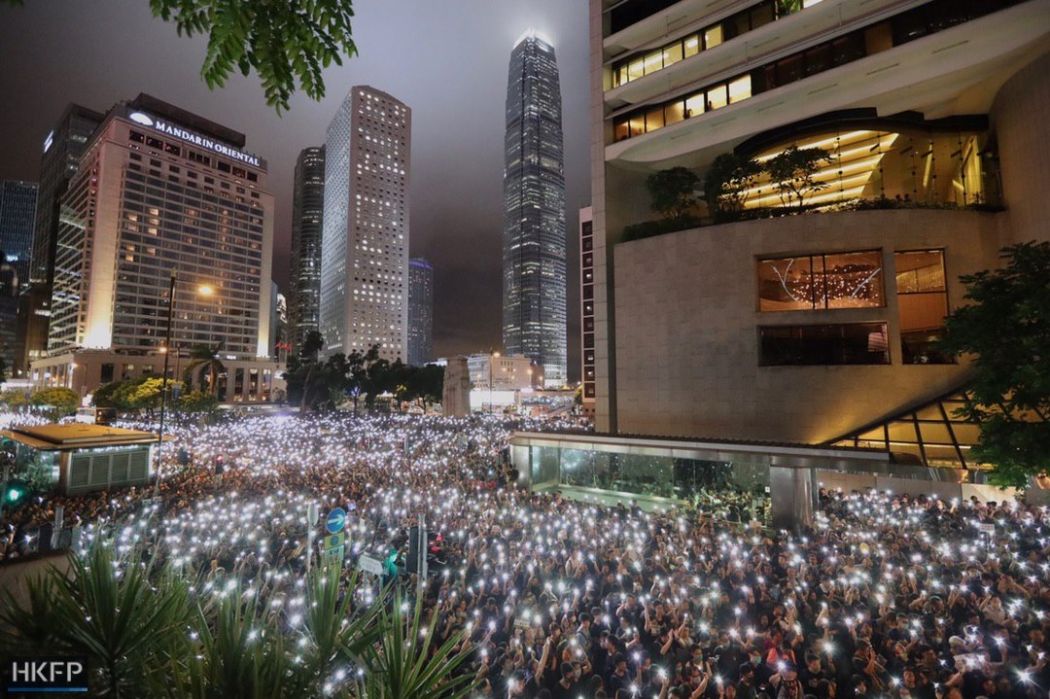
The new civil service union was established in August 2019, during the early stages of the anti-extradition bill protests and unrest. On June 20 last year, the group took part in an unofficial referendum jointly organised by 30 labour unions from over 20 industries. The polls aimed to decide whether the unions would stage a strike over the looming national security law, which was later enacted by Beijing on June 30.
The Civil Service Bureau proposed the loyalty pledge around a week after the sweeping security legislation was enforced, saying the requirement would apply to new recruits who joined the government on or after July 1, 2020. The pledge was later extended to cover over 177,000 civil servants.
On Friday, the bureau informed government workers that they had to sign and return their declaration within four weeks after they received a letter from their department. The requirement to vow allegiance was consistent with the duty of civil servants stipulated in the city’s mini-constitution and the Civil Service Code, it said.

“This has all along been what the Government and the society expect and require of them. All civil servants should in no uncertain terms acknowledge and accept these basic duties,” the bureau wrote in a statement.
A spokesman for the bureau added: “Negligence or refusal to take the oath or to duly sign and return the declaration by a civil servant casts serious doubts on his or her willingness to take up these basic duties and his or her suitability to remain in the civil service to continue discharging his or her official duties.”
According to local media citing an attachment to the declaration requirement, the government stated a list of behaviours that would be deemed as violating the loyalty pledge. It included promoting or supporting Hong Kong independence, refusing to acknowledge China’s sovereignty over Hong Kong, as well as seeking foreign powers to interfere with the city’s affairs.

Civil servants may also breach the vow if they take part in an organisation or activity that aims to “sway the governance of the SAR government,” which is defined as including the expression of a different view than the government when they speak in their official capacity.
The declaration requirement announced on Friday applies to civil servants appointed before July 1 last year. Those who joined after that date have already signed — over 4,000 of them, according to government figures. The city’s senior officials and other politically appointed civil servants have also taken an oath under the supervision of Chief Executive Carrie Lam.
Support HKFP | Policies & Ethics | Error/typo? | Contact Us | Newsletter | Transparency & Annual Report | Apps
Help safeguard press freedom & keep HKFP free for all readers by supporting our team


















latest national security stories


