🧔♂️ A friendly human may check it before it goes live. More news here
DeepSeek signals bigger, cheaper AI models with new paper
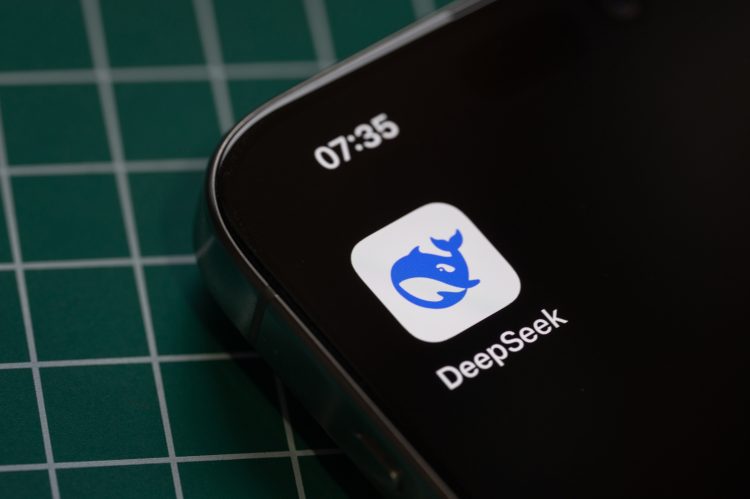
DeepSeek, a Hangzhou-based AI startup, has published a new technical paper proposing changes to deep learning architectures to improve training efficiency for large models.
The paper, co-authored by founder and CEO Liang Wenfeng and 18 other researchers, introduces Manifold-Constrained Hyper-Connections (mHC).
The team tested mHC on models with 3 billion, 9 billion, and 27 billion parameters, reporting that it scaled without major increases in computational costs.
Released on arXiv, the paper highlights ongoing research activity at DeepSeek, which has gained attention in China’s AI sector.
MHC builds on the hyper-connections concept introduced by ByteDance researchers in 2024 to address rising memory costs in large-scale training.
Industry observers see these publications as signals of future model development, with anticipation that DeepSeek could launch a new AI model ahead of the Spring Festival in February.
🔗 Source: South China Morning Post
🧠 Food for thought
Implications, context, and why it matters.
Manifold-Constrained Hyper-Connections (mHC) real-world use depends on reproducibility
- The article does not say if DeepSeek released mHC training code, hardware settings, or if outside teams verified the memory savings. These gaps decide whether others can use it beyond DeepSeek.
- DeepSeekMath released base, instruct, and reinforcement learning (RL) checkpoints under an MIT License with model use under a Model License 1. DeepSeek-V3 offers inference across frameworks 2. The deepseek-ai GitHub organization, a code hosting hub, hosts active repos 3.
- Without reproducibility data, readers cannot tell if mHC only runs on DeepSeek’s internal setup or if it works on standard cloud GPU configurations (the typical setups from public clouds). That affects adoption and any claim of lower training costs.
Cloud GPU providers can gain if mHC scales for memory-optimized training
- If mHC reduces memory use during training, cloud GPU providers with lower spec cards like NVIDIA A100 40 GB could sell tailored bundles. A100 40 GB rentals range from $0.66 per hour on budget hosts to $4+ per hour on major clouds 4.
- Verda lists A100 SXM instances (SXM is NVIDIA’s server module form factor) from $0.22 per hour 5. Civo prices NVIDIA GPUs at $0.69 per hour 6. Memory efficient setups could make 40 to 48 GB GPUs workable for larger experiments while avoiding 80 GB cards.
- Machine Learning Operations (MLOps) vendors can add tooling that applies mHC during training jobs, then sell cost focused workflows. DeepSeek-V3 consumed 2.788 million NVIDIA H800 data center GPU hours 2, which strains startup and lab budgets.
Recent DeepSeek developments

Recommended reads
 Edtech startup NativeX halts operations due to cash crunch
 MilikiRumah eyes $10m to bank Indonesia’s unbankable home buyers
 Weekly funding: China’s Galbot banks $300m
 A list of profitable startups and tech companies in SEA
 Who’s afraid of a big, bad AI bubble in 2026?
 India’s AI future: Four shifts to watch in 2026
 Firsty puts pressure on eSIM rivals with a different approach
 Bootstrapped AI coding startup profits from AI-human collaboration
 VC funds tracker: Granite Asia, Nexus Venture Partners launch new vehicles
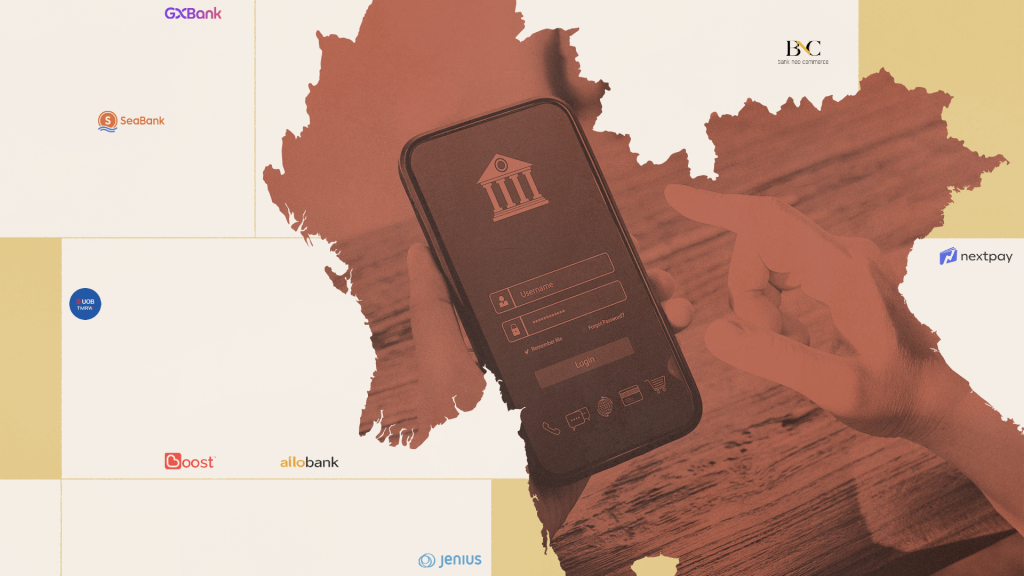
 Mapping SEA’s digital banks: Profits prove elusive despite some wins





- Premium Content It takes our newsroom weeks - if not months - to investigate and produce stories for our premium content. You can’t find them anywhere else.
 Aya Lin · · 1 min read
Meet the 80 top-funded startups and tech companies in Southeast Asia
Which Southeast Asian startups will pioneer a new economy? One way to judge – although imperfect – would be the amount of money they have raised. Using Tech in Asia’s data, we’ve generated this constantly updated list of 80 startups and tech companies in Southeast Asia that have raised the most money from investors.
To keep the list fresh, we’ve only included funding data from the past two years.
Seeking more? Search the most comprehensive database of tech companies in Asia or read our research methodology. For more auto-generated lists of startup funding data, head here.

Stay ahead in Asia’s tech landscape
This is premium content. Subscribe to read the full story.
Here are the companies in Southeast Asia that are attracting tons of investors and have the resources to spend on software, talent, and expansion.
We know this is not ideal. ⌛ Sign up in 20 seconds. Cancel anytime.
Our subscriber community includes professionals from these companies:









📅 Upcoming Events
27 February 2026
HSBC Women's World Championship Business Forum 2026
- Premium Content It takes our newsroom weeks - if not months - to investigate and produce stories for our premium content. You can’t find them anywhere else.
Aya Lin · · 1 min read50 rising startups in Southeast Asia
Which startups are on the path to becoming the next big thing? One way to tell would be when they’ve raised a new round, though funding isn’t the full story. Using Tech in Asia’s data, we’ve generated this constantly updated list of startups in Southeast Asia who’ve recently raised funding.
The list only includes companies up to the series E stage.
Seeking more? Search the most comprehensive database of tech companies in Asia or read our Research methodology. For more auto-generated lists of rising startups, head here.

Stay ahead in Asia’s tech landscape
This is premium content. Subscribe to read the full story.
Which startups are on the path to becoming the next big thing?
We know this is not ideal. ⌛ Sign up in 20 seconds. Cancel anytime.
Our subscriber community includes professionals from these companies:

📅 Upcoming Events
27 February 2026
HSBC Women's World Championship Business Forum 2026