

By Jalees Andrabi and Bhuvan Bagga, with Parvaiz Buhkari in Srinagar and Jing Xuan Teng in Beijing
The long-running border dispute between Asian nuclear powers India and China turned deadly for the first time in nearly half a century after at least 20 Indian soldiers were killed in a “violent face-off”, the army said on Tuesday.
Experts warned the high-altitude clash along the Himalayan frontier was a worrying development which could escalate, following weeks of rising tensions and the deployment of thousands of extra troops from both sides.

Brawls erupt regularly between the world’s two most populous nations across their disputed 3,500-kilometre (2,200-mile) border – but no-one has been killed since 1975.
Beijing and Delhi blamed each other for Monday’s clash in the precipitous, rocky terrain of the strategically important Galwan Valley, which lies between China’s Tibet and India’s Ladakh.
An Indian army source in the region told AFP the incident involved no shooting but “violent hand-to-hand scuffles”.
The soldiers threw punches and stones at each other, with Chinese troops allegedly attacking their Indian counterparts with rods and nail-studded clubs during the more than six-hour fight, the Hindustan Times reported.
India had earlier put the toll at three dead.

But in a statement later on Tuesday the army added that 17 more critically injured were “exposed to sub-zero temperatures… (and) succumbed to their injuries”.
The Indian army said earlier that there were “casualties on both sides”. China’s defence ministry confirmed the incident had resulted in casualties but did not give the nationality of the victims or any other details.
The United States — which has mounting frictions with China, but sees India as an emerging ally — said it is hoping for a “peaceful resolution”, and that it was monitoring the situation closely.
The UN called for both sides to “exercise maximum restraint”.
Former Indian ambassador to China and foreign secretary Nirupama Menon Rao warned that “we are at an extremely worrisome juncture in the relationship”.
“If not handled correctly… (this) can really escalate into something much bigger than we had initially imagined,” Harsh Pant from the Observer Research Foundation think-tank told AFP.
‘Attacking Chinese personnel’
Beijing claimed Indian troops “crossed the border line twice… provoking and attacking Chinese personnel, resulting in serious physical confrontation between border forces on the two sides”.

New Delhi’s foreign ministry spokesman Anurag Srivastava hit back, saying the clash arose from “an attempt by the Chinese side to unilaterally change the status quo” on the border.
The violence followed weeks of hostilities that began May 9, when several Indian and Chinese soldiers were injured in a clash involving fists and stone-throwing at Naku La in India’s Sikkim state, which borders Bhutan, Nepal and China.
But just last week, China said it had reached a “positive consensus” with India over resolving tensions at the border, while New Delhi also sounded conciliatory.
However, Indian sources and news reports suggested that Chinese troops remained in parts of the Galwan Valley and of the northern shore of the Pangong Tso lake that it occupied in recent weeks.
The prickly relationship had already been strained when India in August revoked the semi-autonomous status of Jammu and Kashmir state.
That saw the Ladakh region – partly claimed by Beijing – turned into a separate Indian administrative territory.

Taylor Fravel, an expert on China’s territorial disputes at MIT, said Beijing would have viewed the move as a “direct challenge to China’s sovereignty” over the area it claims.
“This may have been one factor leading China to adopt a much more forward posture along the LAC (Line of Actual Control, or the frontier) in the western sector (of the border),” he told AFP.
Fravel said both nations would not “want to see a major escalation”, with China’s main security priority still the US.
‘Worrying’
India and China have never even agreed on the length of their “Line of Actual Control” frontier, and each side uses different frontier proposals made by Britain to China in the 19th century to back their claims.
They fought a brief war in 1962 in which China took territory from India. Further deadly clashes followed in 1967, but the last shot fired in anger was in 1975, when four Indian soldiers were ambushed and killed along the dividing line in Arunachal Pradesh.
In 2017 there was a 72-day showdown after Chinese forces moved into the disputed Doklam plateau on the China-India-Bhutan border.
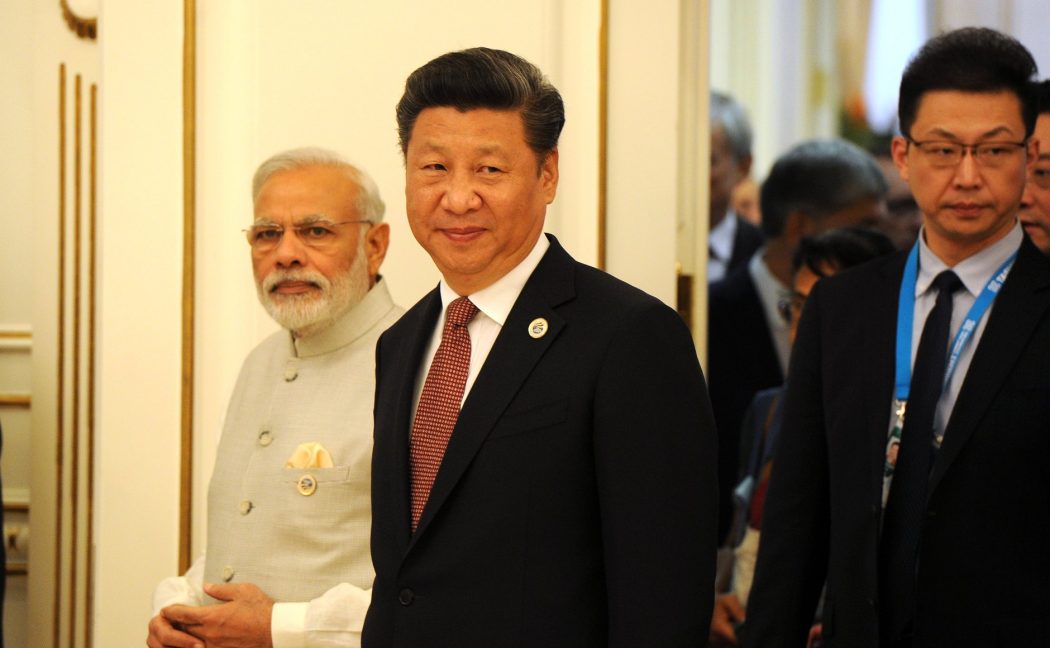
After that India’s Prime Minister Narendra Modi and Chinese leader Xi Jinping appeared to ease tensions at two summits.
India and China meanwhile have also been engaged in a show of power in the Indo-Pacific, with New Delhi allying with the US, Australia and Japan to check China’s push in the region.


