

From doing homework by torchlight to hurling flaming molotov cocktails at riot police: the character of Hong Kong’s protests has changed dramatically in five years, with young demonstrators hardened by the failure of their peaceful Umbrella Movement.
Then-student Bunny was one of thousands of Hong Kongers who camped out on the streets in a 79-day occupation that had a festival edge of good humour and patience.
Now she describes herself as a frontliner in the territory’s current summer of rage.

“I shifted my position from being rational to become more hardline over these five years,” she told AFP, asking to use a pseudonym.
“If being rational is a way out for Hong Kong, why couldn’t our demands have been met in 2014?”
On Saturday, protesters behind this summer’s huge and often violent pro-democracy rallies will mark the fifth anniversary of the Umbrella Movement.

It took off when huge crowds came out after police fired tear gas at a smaller student-led rally, and was named after the umbrellas people used to defend themselves.
Compared to the current strife — where street battles have erupted for 16 consecutive weeks — 2014’s protests were softer, with students completing classwork in the camps, recycling their waste, and the police largely avoiding direct conflict after the intial clashes.
Many of those taking part this time around say the failure to win concessions from Beijing then has led to the more violent maelstrom now engulfing the city.
Jackool, a 30-year-old theatre technician, manned the barricades back in 2014, expecting a police assault that never came.

“Umbrella Movement means a total failure to me,” he told AFP, asking to use his nickname.
Now married, he has eschewed the frontline this summer — but he spends his weekends as part of a fleet of drivers who pick up those returning from clashes.
“I may have to bear the legal consequences if the ‘kids’ are… in my car. But so what? It’s just a minor sacrifice compared to them,” he said.
He looks back at 2014 with fondness, saying it was the first time he had played a role in politics.
“We started out as nothing,” he recalled.

But much of that optimism has since vanished.
“If we lose, Hong Kong will become Xinjiang,” he said, referring to China’s western, Muslim-majority region that is blanketed by a huge security clampdown.
‘We will be back’
But as the years went by, few expected that to happen.

Many leaders of the movement were prosecuted and Beijing tightened the screws on critics.
Five dissident booksellers disappeared into mainland custody, opposition lawmakers were disqualified, a small independence party was outlawed and a foreign journalist who hosted a talk with that party’s leader was expelled.
But then the city’s pro-Beijing leader Carrie Lam tabled a now-scrapped bill proposing extraditions to the mainland, and the new democracy movement was reborn.
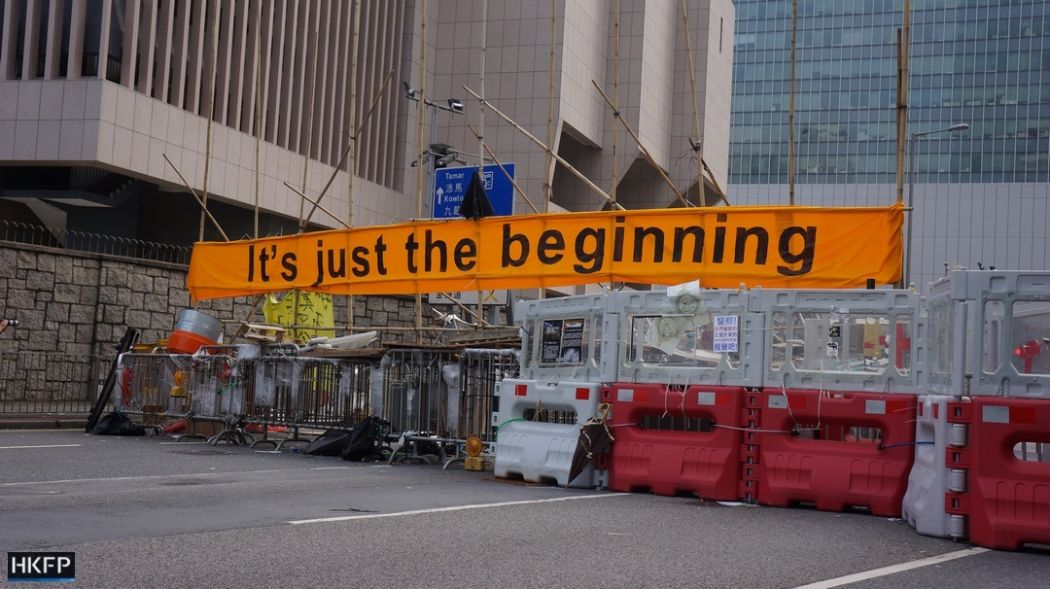
Henry Wong, 22, was a secondary school student in 2014, and spent many days at the main camp outside parliament in the district of Admiralty.
“We saw how Hong Kongers united together in Admiralty and helped each other,” he recalled. “We all had a community that was caring and a lot of us felt that was an ideal city that we wanted to live in.”
Now a medical student, he has joined a team studying the effects of tear gas, with more than 3,000 canisters fired by police so far.
Local artist Perry Dino, 53, has sketched scenes from both movements, though he says it is a harder job now the protests are not static.

“I’m optimistic seeing that many Hong Kong people have come out on the streets fearless about being arrested, let alone enduring the sun and rain,” he added.
Medical student Wong said he retained a similar sense of hope even as China rejects further concessions.
“We have proved that after 2014, we have the strength to come back again,” he said. “No matter what is waiting for us ahead, we will be back and we will continue our fight”.
“We are stronger than before,” added Bunny. “We won’t be easily worn down like in 2014.”
Hong Kong Free Press relies on direct reader support. Help safeguard independent journalism and press freedom as we invest more in freelancers, overtime, safety gear & insurance during this summer’s protests. 10 ways to support us.


