

Hong Kong press watchdogs have condemned the police over insults and “malicious jostling” of journalists during a clearance operation of protesters on Sunday night.
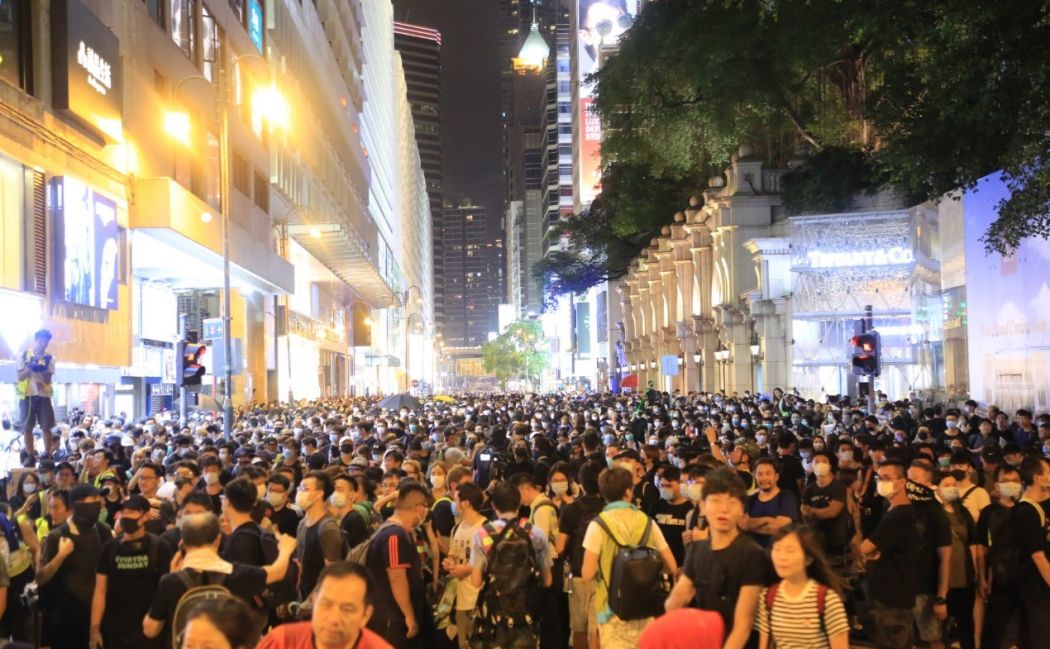
Hundreds occupied parts of Nathan Road in Mong Kok for hours after a protest outside the high-speed rail’s West Kowloon Terminus drew to a close.
The Hong Kong Journalists Association and the Hong Kong Press Photographers Association said in a joint statement that when police tried to clear the protesters, officers used their shields to push journalists and their cameras multiple times. Some also shouted at and assaulted reporters, according to the statement.

The two unions said most reporters on scene wore vests with “press” printed on them, carried press passes on them and identified themselves as journalists. They added that despite following police instructions to step away from the front line, journalists faced “malicious jostling” from the police: “We strongly condemn the incident,” the unions wrote in the joint statement.
In a case cited by both unions, a photojournalist for online news outlet HK01 was filming a dispute on Canton Road when the reporter was elbowed in the abdomen by a plainclothes officer in police vest. The photojournalist tried to ask the officer why she assaulted them but she denied doing so before retreating behind her colleagues.
The two unions said a member from the police media liaison team apologised to the photojournalist, saying he could file a complaint using existing mechanisms.

Another case cited in the joint statement involved a female Apply Daily photojournalist who was jostled by a police officer. The officer claimed the photojournalist had physically assaulted him, but when she denied doing so, the police officer was pulled away by his colleagues. The two unions said the name and number of the officer’s police ID card were concealed from sight.
According to the Police General Orders, a police officer shall carry their warrant card on them at all times provided his or her intended activities are compatible with its display. An officer in plain-clothes, when dealing with members of the public and exercising police powers, whether on or off duty, shall identify his or herself and produce a warrant card.
In a third case cited, a Metro Radio journalist was blocked by officers when filming. The journalist was allegedly told by an officer: “Journalists have no privileges. You have to move when I tell you to.”

The two unions said similar acts against journalists had repeatedly occurred during recent protests.
“We hope the police to reflect on the issue, to respect the right for media to report, to defend press freedom and to protect the public’s right to know,” they said.
HKFP witnessed a police officer scolding a student reporter from the University of Hong Kong (HKU) saying that he was “not a journalist.” The reporter was then told to leave the scene.
When HKFP asked an officer in charge of media relations about the incident, she said the HKU student news outlet was “not a recognised organisation.”

HKFP also saw uniformed officers questioning a Citizen News reporter, despite her press credentials being on display.
The reporter showed her press card to police officers, but an officer replied: “Where is your company’s office? What is Citizen News?”
Missing warrant cards
According to footage broadcasted live on social media, several police officers did not visibly carry warrant cards. In one clip, a plainclothes officer who wore a police helmet and carried a baton and shield did not display any identity documents.
When asked by protesters to show his police warrant card, the officer said: “When police are exercising their duties, we do not have to show warrant cards.”
Democratic Party lawmaker Lam Cheuk-ting, a former Independent Commission Against Corruption investigator, told reporters Monday that every police officer should show their warrant cards.
“The point of showing their id cards is to prove they are police officers and they must be responsible for their behaviours so that we can seek responsibility if there are any cases of abuse of power,” Lam said.


