

A record 11 million tourists have visited Taiwan in 2018, the government said Monday, a boon for the island as it courts holidaymakers across Asia to make up for a shortfall from China.
The number of Chinese mainlanders visiting Taiwan has dropped dramatically since the 2016 election of president Tsai Ing-wen who has refused to acknowledge Beijing’s stance that the island is part of “one China”.

Beijing still sees Taiwan as part of its territory to be reunified, despite the two sides being ruled separately since the end of a civil war on the mainland in 1949.
China has cut off official communication with Tsai’s government and stepped up military and diplomatic pressure.
Tour group numbers from the mainland took a nosedive, sparking speculation that Beijing was deliberately turning off the taps to punish Taiwan for electing Tsai.
In response, Tsai’s government went on a charm offensive across Asia, launching advertising campaigns and making it easier for people to visit, particularly from South and Southeast Asia.
That strategy — dubbed the “southbound policy” — has reaped rewards.
The 11 millionth visitor, a Japanese doctor, arrived Sunday in what Taiwan’s tourism bureau described as “a new landmark”.
The island recorded 10.7 million arrivals in 2017 and 10.6 million in 2016.
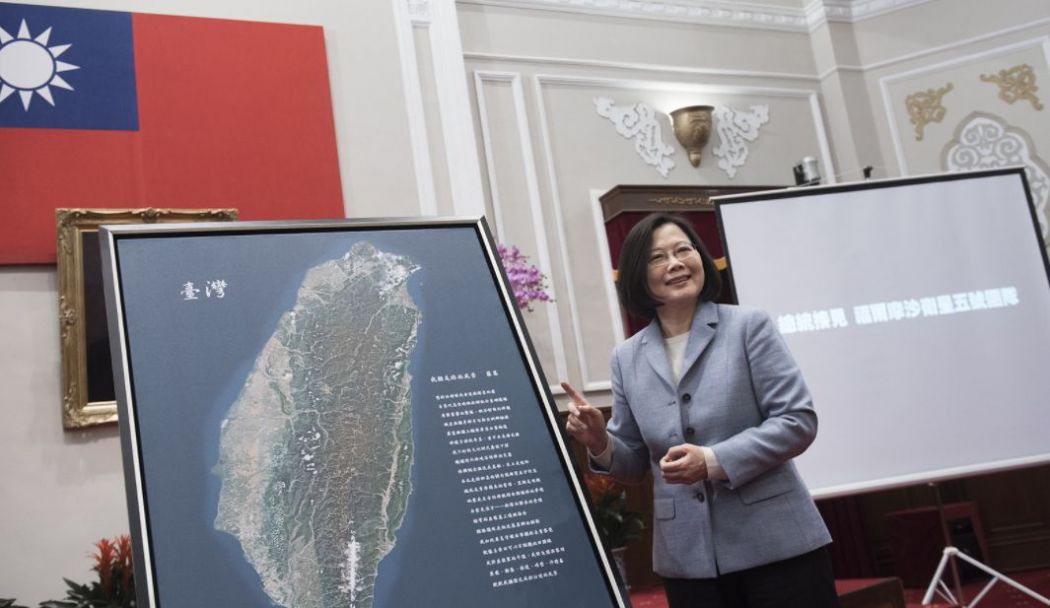
The government has yet to release a full breakdown in nationalities for 2018.
Japanese and Chinese tourists still make up the bulk of arrivals.
But last year’s data showed the number of Chinese nationals coming to Taiwan had dropped from 4.18 million in 2015 to just 2.73 million in 2017.
Some 2.46 million people from the mainland visited in the first 11 months of 2018, suggesting that decline has continued.
In contrast, arrivals from Southeast Asia rose to 2.1 million in 2017 from 1.4 million in 2015, while Taiwan has also seen increases from across the rest of Asia.
Designed to make the island less economically dependent on Beijing, the “southbound policy” is aimed at ramping up business and cultural exchanges with 16 South and Southeast Asian countries, as well as Australia and New Zealand.
Last week 152 Vietnamese who arrived on group tours went missing with authorities suspecting them of coming to work illegally.
Around 400 tourists have previously gone missing under the programme, according to the tourism bureau, although it is not clear how many of them have since been found.


