

A pro-Beijing lawmaker’s comments on Monday’s sentencing of localist Edward Leung have sparked a row, as commentators criticised him for appearing to deny details of the 1967 riots.
Lawmaker Kwok Wai-keung of the Federation of Trade Unions (FTU) shared a news article on the ruling over the 2016 Mong Kok unrest, and said that “some political parties, scholars, religious leaders have instigated the rise in the level of violence.” He said young people were the ones to suffer, whilst the instigators enjoyed fame and fortune.
But his comment was soon slammed by commentators. One said: “How dare the FTU say this – who bombed Hongkongers in 1967? Who murdered people? The FTU was the first to start riots.”

In response to the commentator, Kwok said: “The incident was some 50 years ago, you and I weren’t born yet – but you only listen to one party’s version of an event, hoping to be a foot soldier of the opposition?”
“I only know that there is a clear consensus in modern society that we want stability and not violence. It’s your problem that you don’t understand,” Kwok added.
The 1967 riots refers to large-scale unrest between leftists and the British establishment in Hong Kong. The FTU played a key organising role. During the unrest, 8,074 suspected bombs were planted, of which 1,167 were real bombs. At least 51 people died during the period, including ten police officers, and 802 were injured.
Last month, Kwok’s party colleague and former lawmaker Chan Yuen-han said the Mong Kok unrest in 2016 cannot be compared to the 1967 riots, which she said were intended to protect the interests of the underprivileged.
The Mong Kok clashes broke out during Lunar New Year in 2016, triggered by the authorities’ attempt to clear street hawkers.
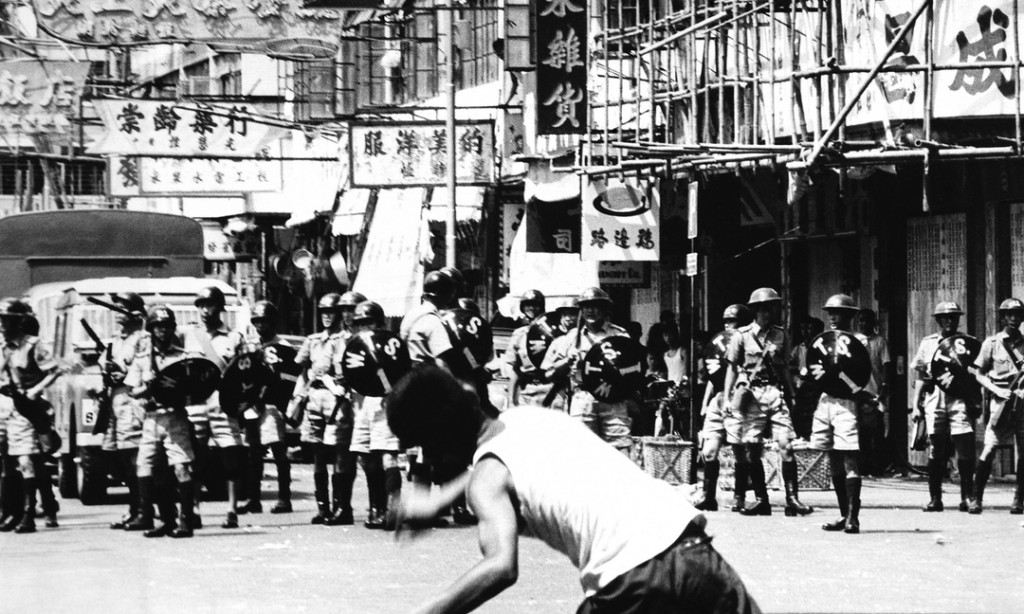
Yeung Kwong, leader of the FTU in 1967, led the “Hong Kong and Kowloon Committee for Anti-Hong Kong British Persecution Struggle” which coordinated the riots.
Yeung was given the Grand Bauhinia Medal, the top government honour, in 2001.

When Yeung died in 2015, acting chief executive Carrie Lam said: “Yeung made outstanding contribution to the labour movement and labour welfare in Hong Kong.”
Following Kwok’s reply, commentators criticised him, as one said: “Were you born 80 years ago during the so-called Nanking Massacre? If you weren’t born, why did you listen to one party’s version of an event?”
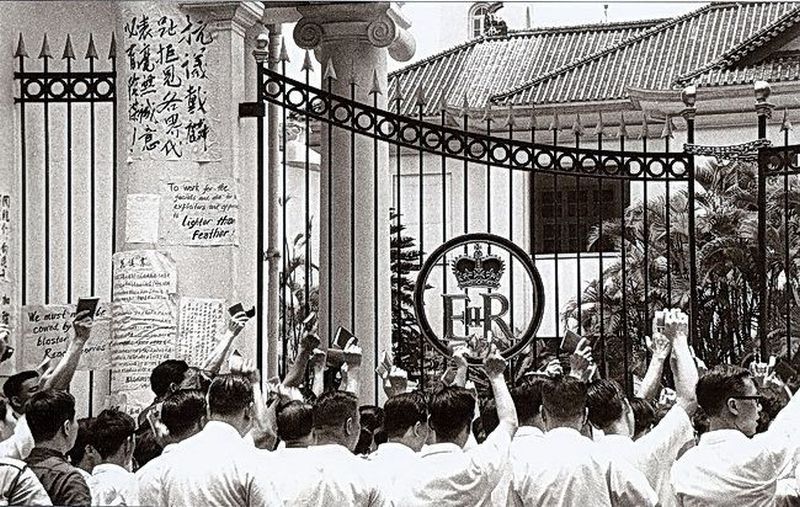
Another said: “Were there no newspapers back then? If there was no truth because we weren’t born yet, then we don’t have to study history – everyone can say they oppose violence, but not the FTU.”
A third said: “You weren’t born yet when the Chinese Communist Party took power, why do you support it then?”


