

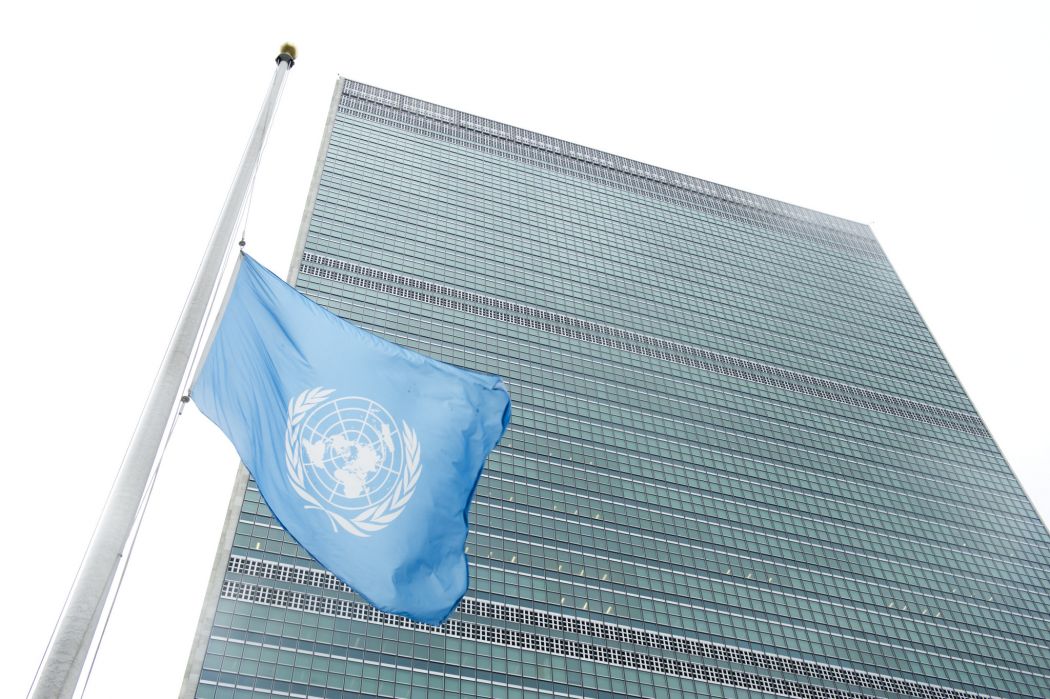
The UN Security Council on Monday dropped plans to adopt a resolution demanding an end to the violence in Myanmar in the face of strong opposition from China and instead opted for a statement, diplomats said.
The statement calls for an end to the violence, full access for humanitarian aid workers to Myanmar’s Rakhine state and for the return of hundreds of thousands of Muslim Rohyinga who have fled to Bangladesh.

It does not threaten sanctions against Myanmar’s military.
Britain and France circulated a draft resolution last month, but diplomats said veto power China, a supporter of Myanmar’s former ruling junta, had argued that a resolution was not the appropriate response to the crisis.
Following negotiations, China agreed to the formal statement to be adopted later Monday, which includes almost all of the demands of the proposed resolution but does not carry the same weight.
“The important thing is the content,” British Deputy UN Ambassador Jonathan Allen told reporters. “Gaining a very strong, unanimous statement I think was the real prize here.”
Since late August, more than 600,000 Rohingya have been driven from their homes by an army campaign in Rakhine state that the United Nations has denounced as ethnic cleansing.
Myanmar authorities say the military operation is aimed at rooting out Rohingya militants who staged attacks on police posts.
The council statement was agreed as UN Secretary-General Antonio Guterres is to travel to Manila this week to join leaders of the Southeast Asian (ASEAN) bloc for a summit.
The Rohingya refugee crisis is expected to be a top issue of discussion at the summit, to be attended by US President Donald Trump, who will dispatch US Secretary of State Rex Tillerson to Myanmar later this month.
The Rohingya have faced decades of discrimination in Buddhist-majority Myanmar and have been denied citizenship since 1982, which has effectively rendered them stateless.
More than two months after the crisis erupted, rights groups have accused the Security Council of dragging its feet and are calling for tougher measures, such as an arms embargo and targeted sanctions against those responsible for the attacks against the Rohingya.
On Friday, Human Rights Watch urged the council to ask the International Criminal Court to open war crimes investigations in Myanmar, describing the torching of villages, killing, rape and looting as crimes against humanity.
Such a move however is unlikely to win the support of China.


